Anyone who has ever cleared out a house or an apartment, after the death of a parent or grandparent, faces a fact that can be overwhelming: There is a lot of stuff left behind. Best case is the deceased had a will with instructions about where their possessions should go. Some things might be cherished by members of the family. Other items might be donated to charities. Maxsold or Kijiji? Maybe. And then there is that other awful reality: Got Junk.
In the case of a visual artist, especially a painter, the fact expands massively. Things!They are beautiful and interesting! We need to preserve them! In that frame of mind, the usual modes of managing the residue of a life don’t work.
What can be done?
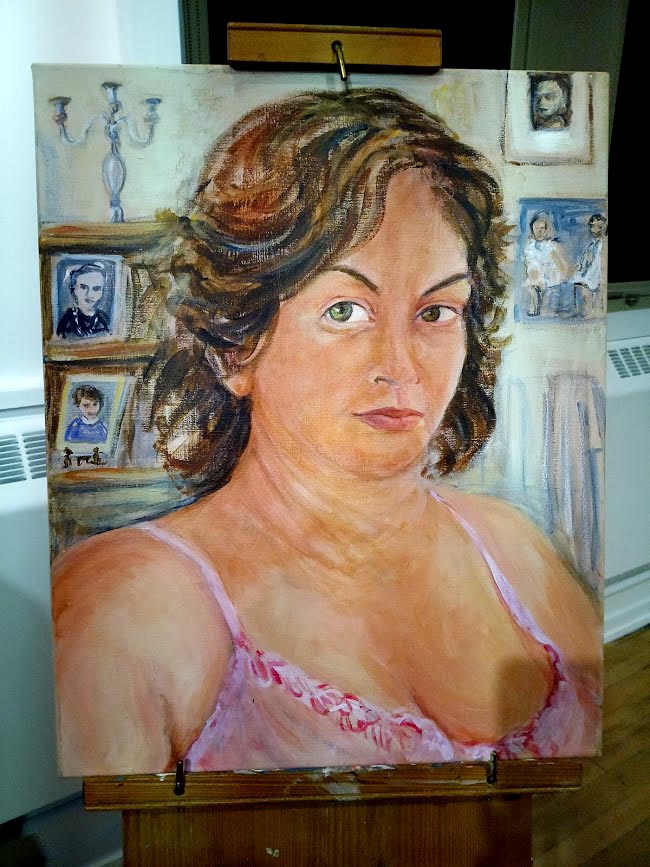
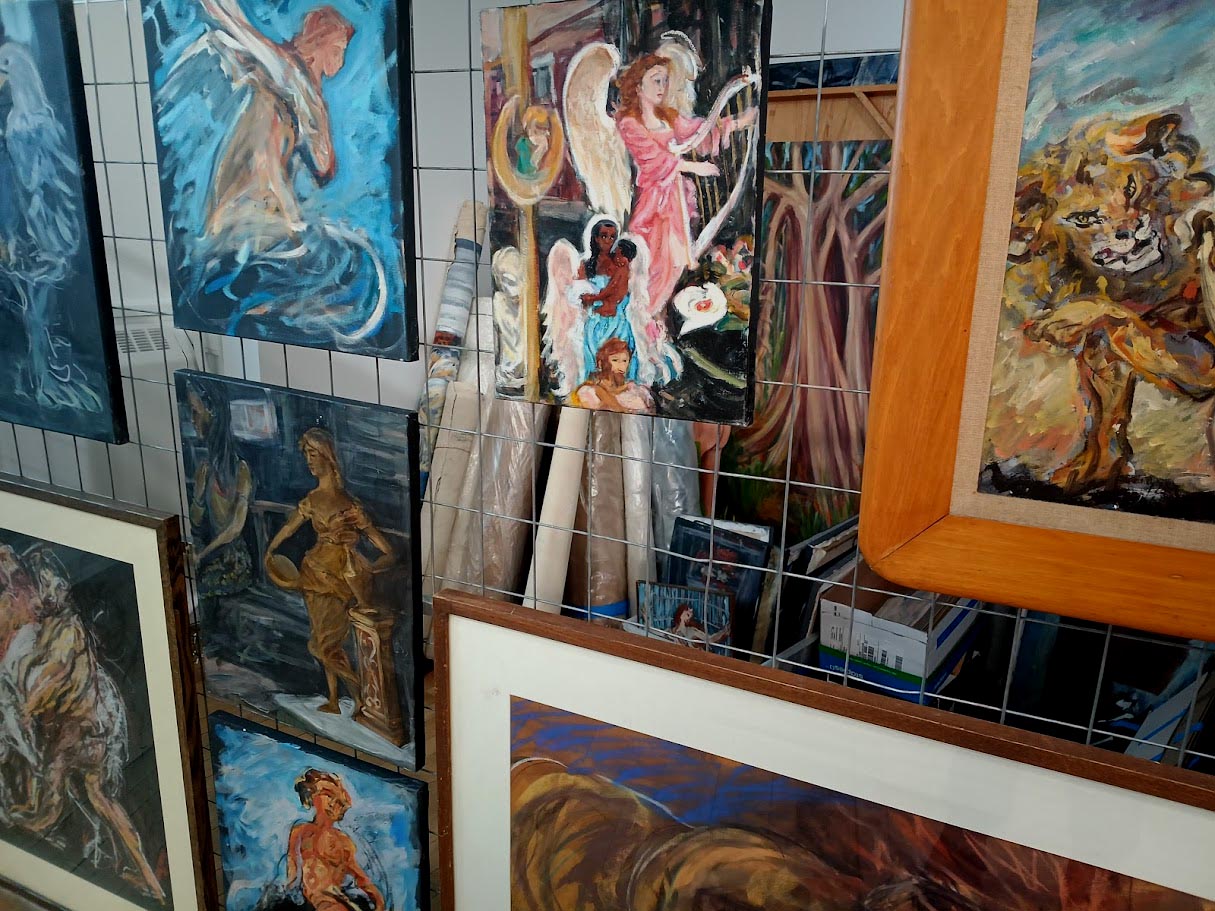
Sybil Goldstein died suddenly in 2012. She left literally thousands of paintings and drawings in this world.
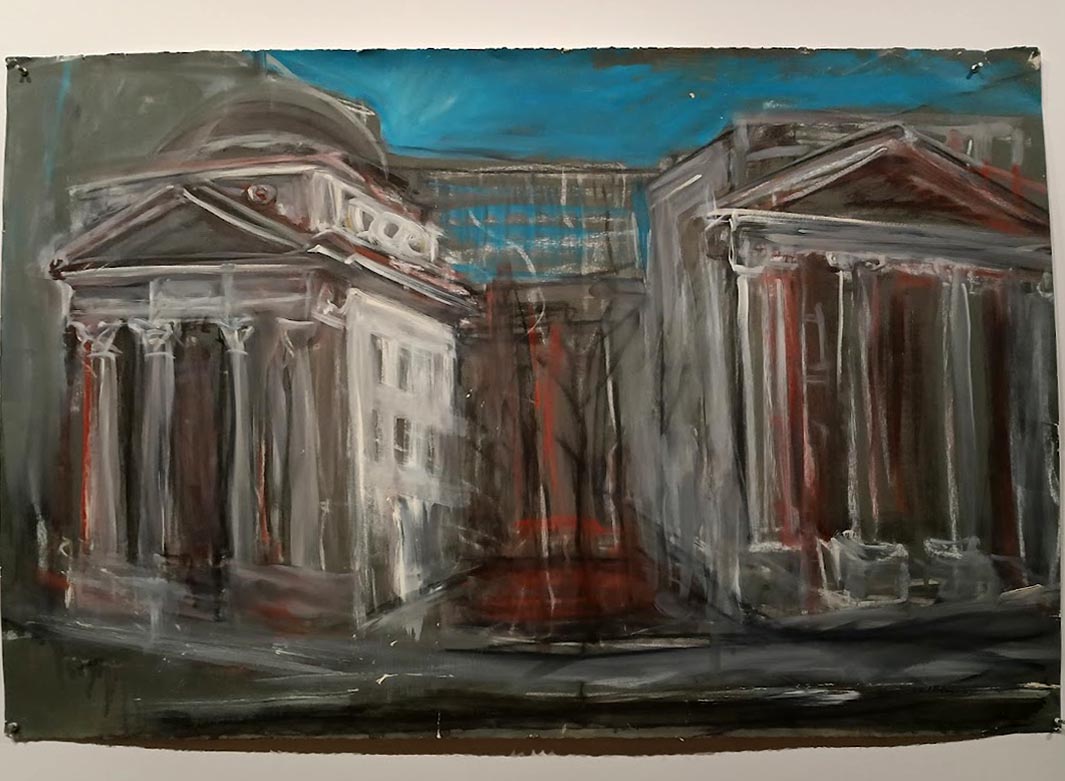
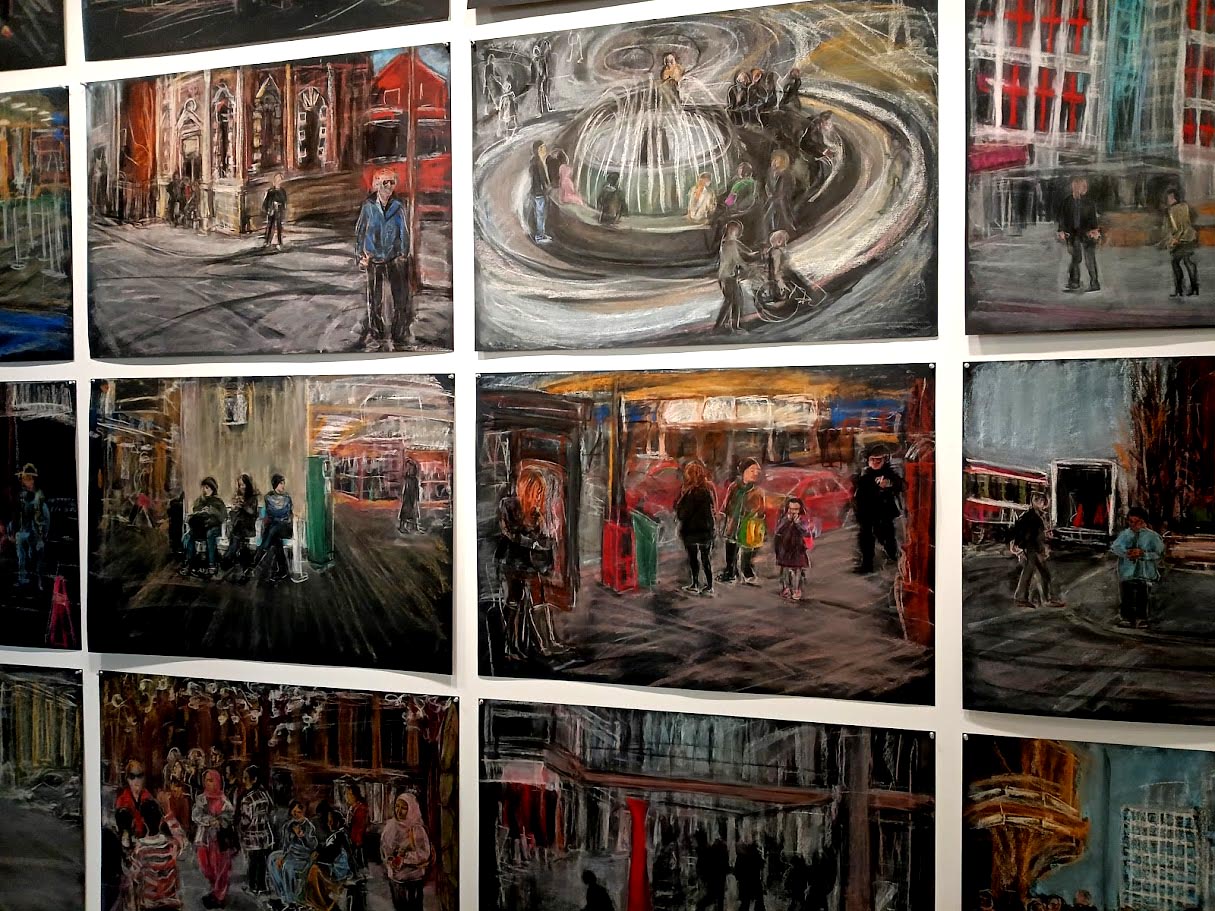
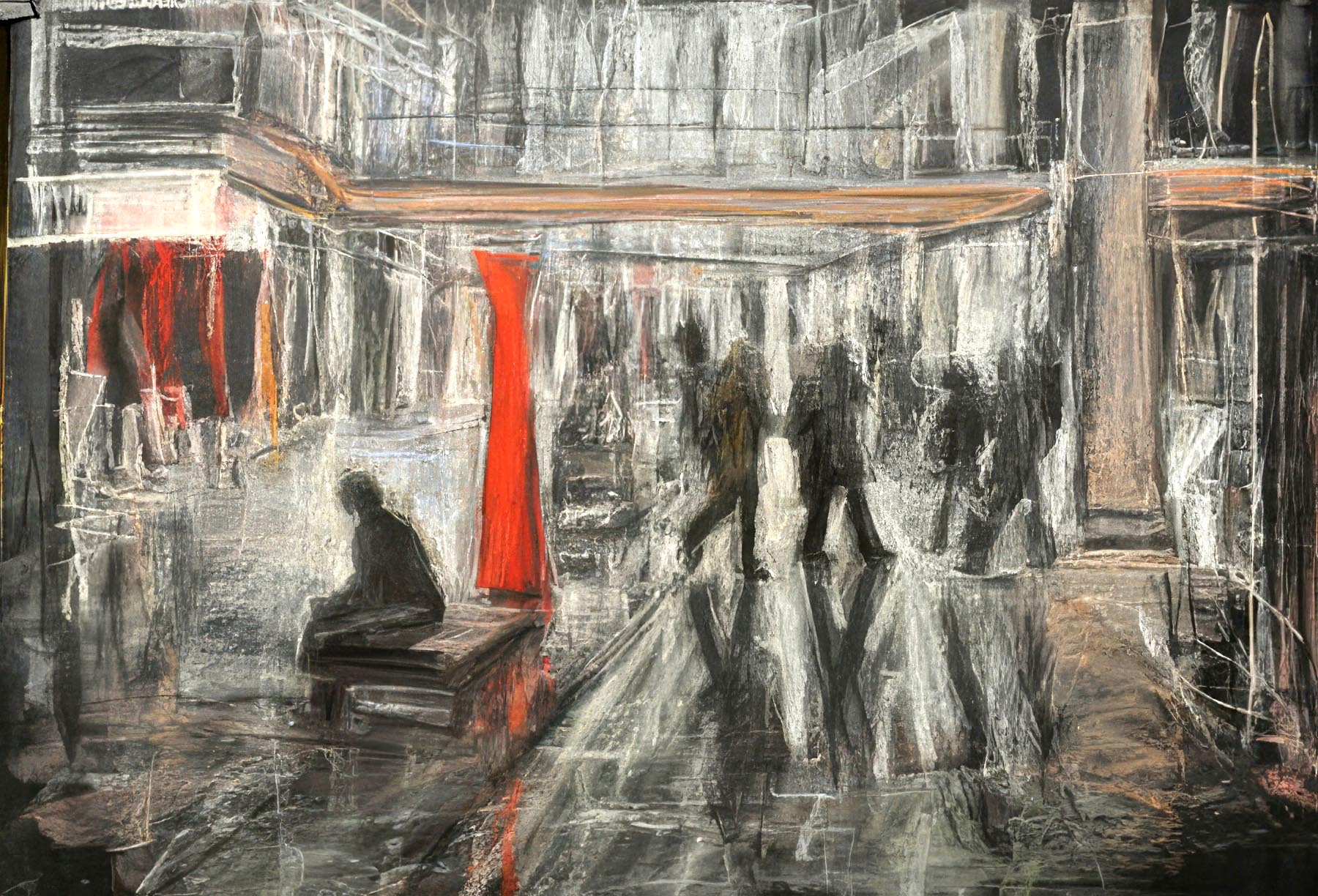
“College Street at 2 am” by Sybil Goldstein
Some of the work was sold at an auction held not long after her death. Anything unsold — the bulk of her creative output — was stored by her family. And now, thirteen years after her death, Sybil’s family has reached out to her friends in the Toronto art world with a plea to find homes for the numerous works of art.
If not, they will have to be destroyed.
Kofflerarts, an organization that supports community, decided to host this posthumous retrospective, including the surprising announcement that “visitors will have the opportunity to take home one of her original artworks once the exhibition closes.”
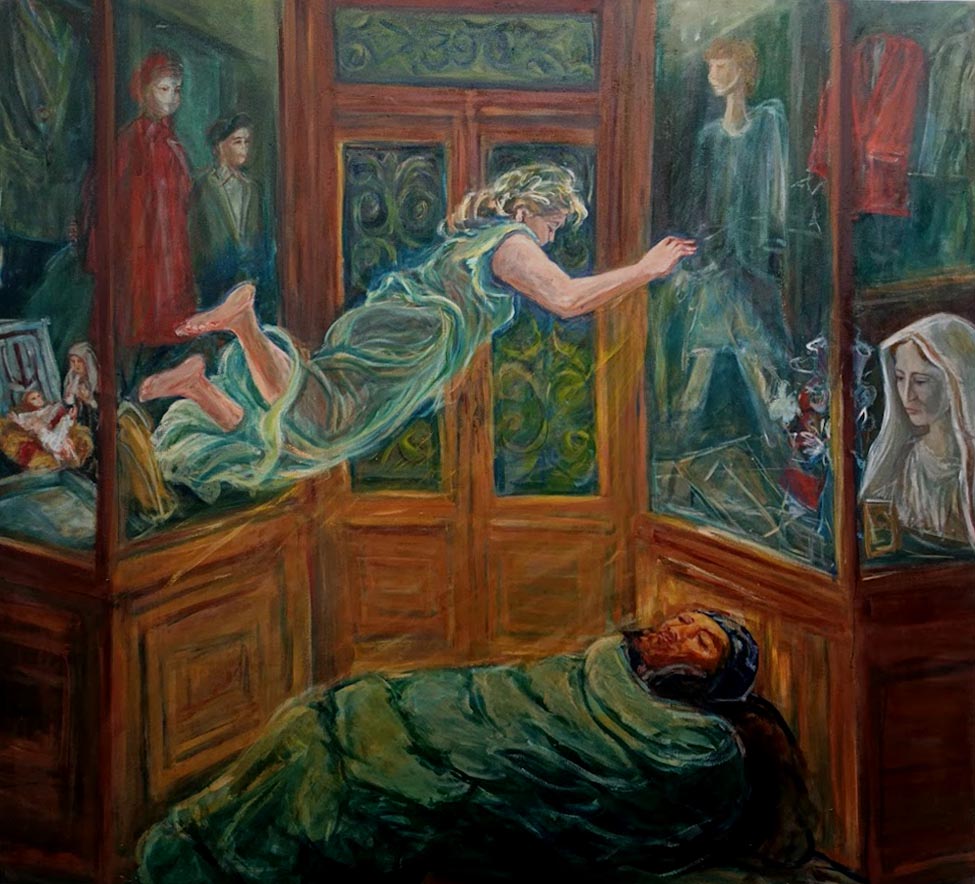
Artwork by Sybil Goldstein
Sybil Goldstein was a member of ChromaZone. In the early 1980s, as the art world turned away from the barren wastes of Conceptual Art, Minimalism, video art and performance, to the joyful excesses of Neo-Expressionism, ChromaZone hit their stride in Toronto.
What was ChromaZone?
“the celebration of the emergence of a generation that eschewed the increasingly remote and esoteric strains of formalist painting, process-oriented performance and hermetic video art for art in any medium that more actively engaged the struggles, issues, desires and pleasures of the real world.”
quote from “History of ChromaZone” by Sybil Goldstein and Andy Fabo
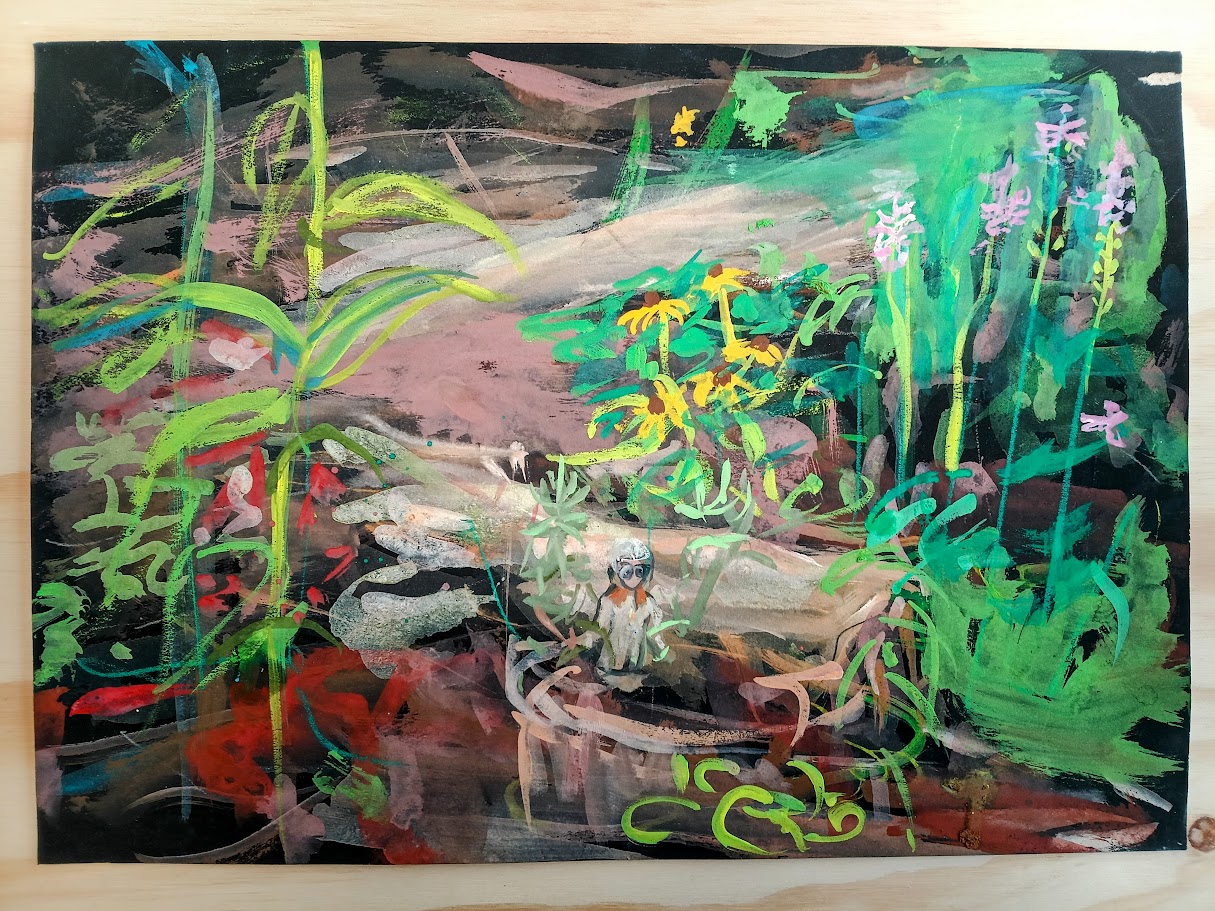
Artwork by Sybil Goldstein
Neo-Expressionism took off everywhere. It was all about sensuality, vivacity, real world politics, nature, myth and fiction, and also it was about money. Yes, suddenly there were actual objects that could be bought and sold!
It’s exciting to see numerous examples of Sybil Goldstein’s work on display at Kofflerarts, and to think about the heady days of ChromaZone and the surge of painting that flourished around the world at that time.
Installation views of Urban Myths
ChromaZone existed from 1981 to ’86, but Sybil Goldstein continued to paint until her death.
“Eatons Center” by Sybil Goldstein
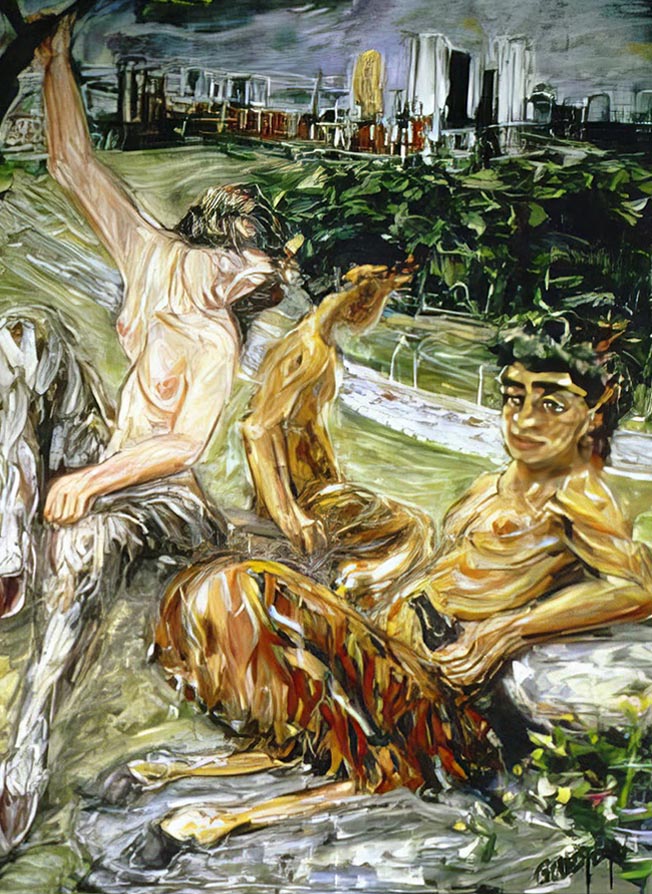
She painted everything: the streetcars and towers that define Toronto; moonlit nights and sunny meadows in the wilderness; rippling, black Ontario Lakes and rivers studded with ancient rocks; real animals and mythical beasts; friends and strangers.
Particularly in her depictions of people, in urban settings, Sybil Goldstein offers compassion. Weary commuters rising on escalators or waiting patiently in line, shoppers at the Eaton Center and the Dufferin Mall, children playing in fountains, or the homeless, just trying to survive. Often there is an angel hovering nearby or a mysterious, dreamy glow so that all seem touched by something alien and graceful, something evoking the divine, something in all of us, even when we are hanging out in the PATH food court, wondering what to have for lunch.
“Satyr Family overlooking the Don Valley” by Sybil Goldstein
The title of Tim Whiten’s exhibition at the Olga Korper Gallery is “Transpire.”
What does it mean?
After spending time at the gallery, on a snowy, darkening, late Tuesday afternoon, I decided it must mean something is happening or has happened, and these things I’m looking at, are the residue.
So, what is happening? Well…life. And, Tim Whiten reminds us, life is finite. Our days are numbered. Human skulls, reliquaries, coffins and remnants of the past are scattered about the show, to keep us in the right mindset.
Detail of Reliquaire III by Tim Whiten
Observing the human skull — clearly real and covered in gold leaf — near the entrance to the Olga Korper Gallery, was unsettling. Resting in a scalloped-edged, glass bowl, the grinning object appears to wear a ruff collar, like some Valesquez subject from the 1600s.
Installation view of Reliquaire III by Tim Whiten
The bowl is placed on a purple base, supported by yet another ornate object, an elaborate sconce, with a lot of brass flourishes.
This tableau made me think of the glamorous monster in Guillermo del Toro’s Frankenstein, in particular, the scene where he solemnly reads the poem by Percy Bysshe Shelley, about Ozymandias. (“My name is Ozymandias, King of Kings: Look on my works, ye Mighty, and despair!)
In Guillermo del Toro’s Frankenstein the monster resembles a Swedish runway model.
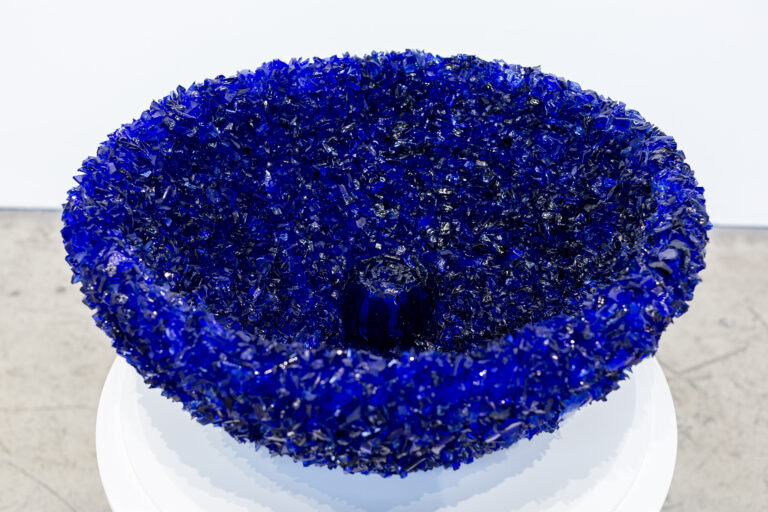
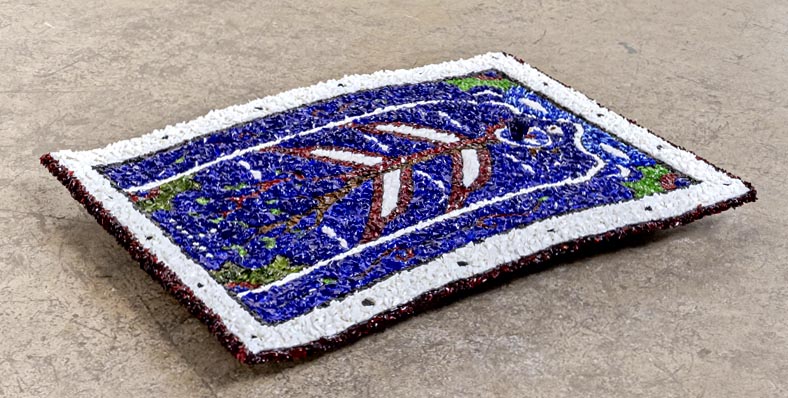
Death imagery is everywhere in this exhibition. An object resembling a house rests on the floor, bristling with crushed cobalt blue glass. It has walls, and a peaked roof, and a chimney, but there is no entrance to this house, and there is no exit. Aha, it’s a coffin. And it’s closed.
Respite by Tim Whiten
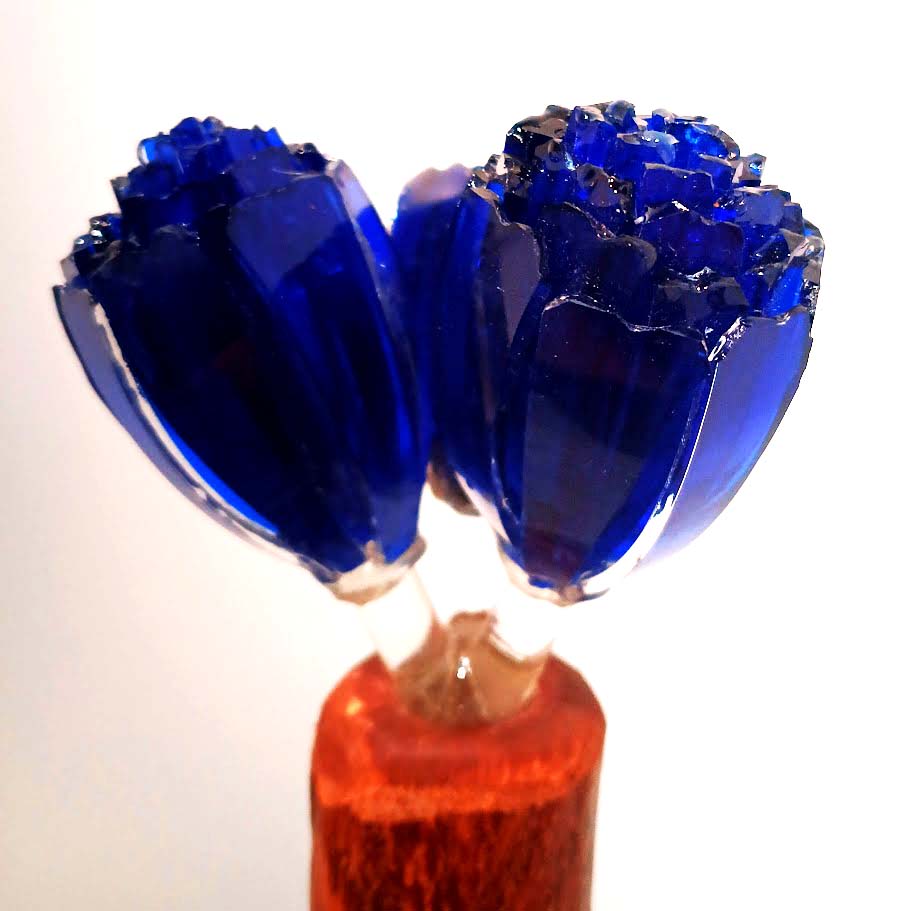
The piece below is a corn broom, coated in glittering, blue light. It’s a humble object, possibly once owned, used and touched by a departed presence and now, elevated to the status of a spiritual relic, a tangible memorial.
One, One, One (3) by Tim Whiten
The cobalt blue that Tim Whiten uses throughout the show is deep and radiant.
Detail of Stave by Tim Whiten
In many cultures, deep blue, has significance. The Turkish Nazar Boncugu (Evil Eye amulet), for example, is a talisman that can protect against evil spirits.
The nazar boncuğu is most often used in a glass bead that is pinned on the clothing of children or hung on walls of buildings or inside of cars or other possessions to protect them.
In Catholic churches the Virgin Mary is depicted in blue glass as the pure and tranquil “light of heaven.”
The Virgin Mary in the stained glass window at Chartres Cathedral
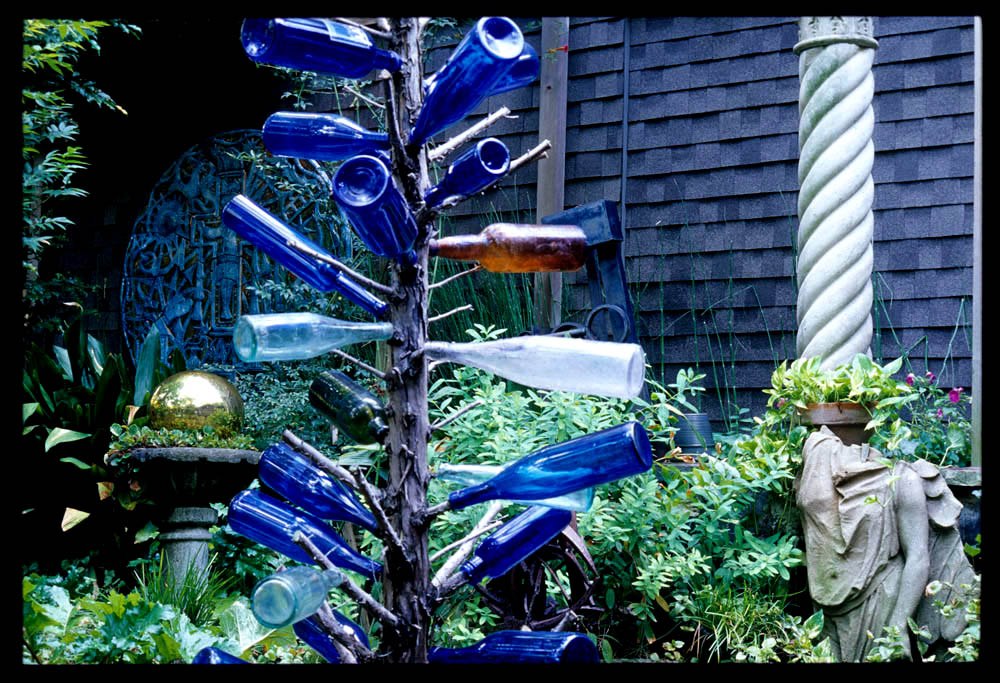
In Africa, deep blue glass was used to mark graves. Enslaved people brought this tradition to the United States.
“When African slaves arrived in the U.S., they created bottle trees from dead trees or large limbs next to their quarters and adorned them with glass bottles scavenged from garbage piles,” Doreen Howard wrote on Almanac.com. “Blue bottles were coveted, because they repelled evil and trapped night spirits to be destroyed by the rising sun. Many Milk of Magnesia bottles ended up on trees!”
“The Southern Legend of Blue Window Panes” by KellyKazek.com
Bottle trees are used to honor the dead, with blue bottles capturing the energy and memories of ancestors in a beautiful and meaningful way.
Blue is also linked to deep meditation, spiritual awakening, and a connection with higher realms. And, in this show, the objects and the sizzling blue, not only refer to death and decay. They also provide an escape to the infinite, manifest in portals, flying carpets, spiritual secrets, and meditative drawings.
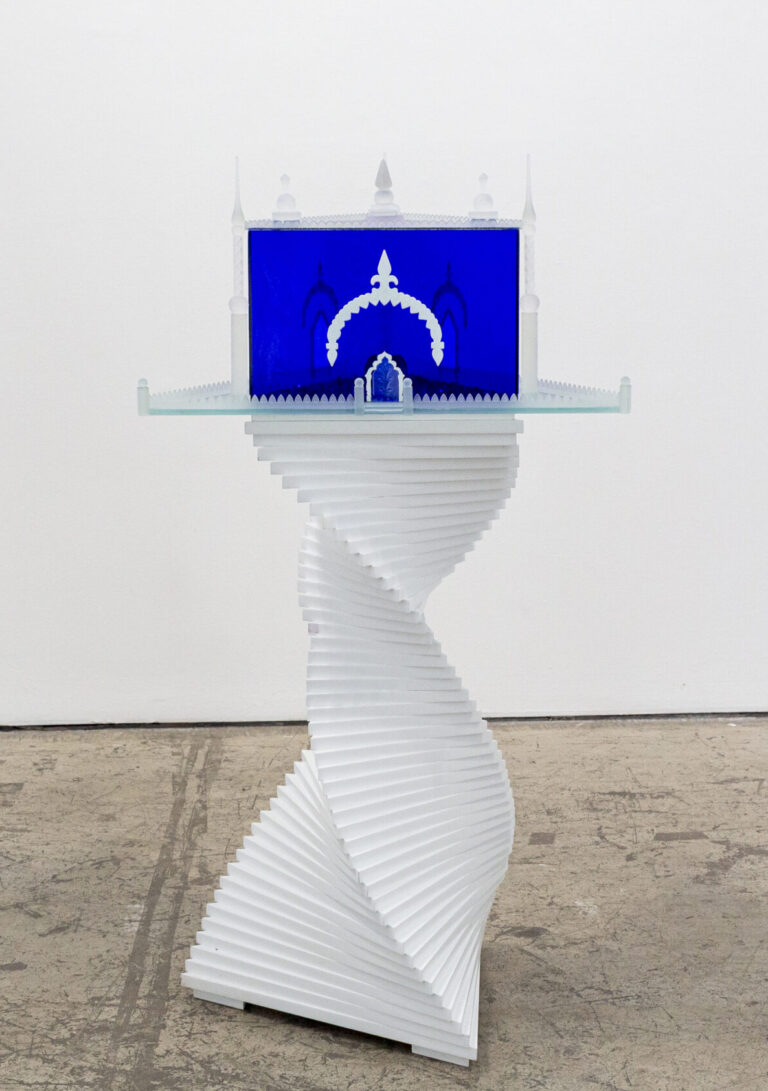
A twisted spiral staircase leads to another house. This one is an exquisite, etched glass temple It has a slightly open door. It is nearly vibrating with vivid blue light.
Spirit House by Tim WhitenDetail of “Spirit House” by Tim Whiten
The shape of a book is composed of milky, etched glass, and within is cobalt coloured glass. So maybe the blue glass is knowledge and knowledge is light?
Book of Light II by Tim Whiten
I was informed that Tim Whiten chooses not to call himself an artist. He identifies as a maker of cultural objects. I’m not sure what the difference is. To me, the obsessive exploration and experimention, and the unique and beautiful objects he creates, are very much in line with notions of the contemporary artist.
Some of the drawings make me think of Process Art from the 1960s and 70s. Just picturing how they had to be made makes me nervous. Tim Whiten would have to be walking a meditative tightrope to create these flawless images.
Saying His Name, Beyond Fire, Water, Cloud-All, Portal by Tim WhitenSaying His Name, Harmonics II by Tim Whiten
One of my favourite pieces in the show is displayed on the floor, like a colourful, molten carpet. But it’s not quite flat on the floor. It is slightly elevated and arrayed as a very subtle S-curve. Yes, it appears to be flying!
Lee Sedol is a South Korean former professional Go Player. Nearly ten years ago he ranked 2nd in international Go titles. (Lee Chang-ho, the Stone Buddha, ranked first.)
In 2016 Lee Sedol played a series of matches against AlphaGo, a computer Go program developed by DeepMind, a subsidiary of Google. Go is a complex board game, requiring strategic nuance and creativity.
Out of five games, Lee Sedol won only one. A few years later, he retired.
…losing to AI, in a sense, meant my entire world was collapsing…I could no longer enjoy the game. So I retired.”- Lee Sedol
Go is considered to require player strategy far more complicated than chess.
The artist Xuan Ye, designates this match between AlphaGo and Lee Sedol as an inspiration for their piece ‘The Insider,” included in the Erroar! exhibition at the Center for Culture and Technology.
Detail of “The Insider” by Xuan Ye
In Xuan Ye’s artwork, large textile prints replicate the AI’s infrastructure, the 1920 CPUs and 280 GPUs, from those fateful matches between Lee Sedol and AlphaGo.
There is a slightly nauseating green light cast throughout the exhibition and an incessant one-note hum, which is revealed to be the amplified drone of server fans. (I’ve noticed this particular sound is frequently part of many current media art installations.)
Installation view of “The Insider” by Xuan Ye
Augmented reality reveals enigmatic floating texts from Thomas Metzinger‘s “The Ego Tunnel.” (Thomas Metzinger, a German philosopher, has stated that consciousness is “a low-dimensional projection of the inconceivably richer physical reality surrounding and sustaining us…”)
“The Insider” links AI’s self modelling and the blind spots of human self-awareness, namely, the recursive gap where the subject can never fully grasp itself. – quote from the Erroar! handout
Maybe this artwork is about Lee Sedol’s failure in his faceoff with the more self aware, supremely intelligent, opponent. (I know this feeling: the sense of sinking deeply into defeat! I was recently hacked on Meta and tried to contact that supremely opaque entity. )
In any case, the augmented reality component of the installation was pleasantly glitchy and consequently barely legible.
Another piece in the show, called “Garrulous Guts” is supposed to simulate a “pulsing gastrointestinal system, as it vibrates chemical filled capsules.”
“Garrulous Guts” by Xuan Ye
“Garrulous Guts” video by Xuan Ye
The installation made an irritating racket and I could tell the gallery employee couldn’t wait for me to leave the exhibition so he could flip the switch and silence the damn thing.
I really like the way Xuan Ye references so many interesting thinkers in her texts, which are available in a pamphlet at the show’s venue. “Garrulous Guts” owes something to the thinking of Oswald de Andrade’s 1928 Cannibalist Manifesto, we are told.
Oswald de Andreade in an undated photo
Oswald de Andrade was a Brazilian poet and playwright and a revolutionary social agitator. After hanging around in Europe, and becoming familiar with the avant garde trends in Paris and elsewhere, he returned to Brazil and called for a rejection of dependence on European cultural imports. He founded the Anthropophagists and suggested that Brazilians could devour culture from Europe and mix it with local reality, slyly eluding to the fact that certain Amazonian tribes practised literal cannibalism.
Below is a poem by Oswald de Andrade.
The discovery
We followed our course on that long sea Until the eighth day of Easter Sailing alongside birds We sighted land the savages We showed them a chicken Almost frightening them They didn’t want to touch it Then they took it, stupefied it was fun After a dance Diogo Dias Did a somersault the young whores Three or four girls really fit very nice With long jet-black hair And shameless tits so high so shapely We all had a good look at them We were not in the least ashamed.
The show by Xuan Ye is a response to the theme for 2025–2026 programming at the Center for Culture and Technology. That theme is “Artificial Stupidity.” So refreshing!! Nice to have a break from the drumbeat of media about AI. (Will it kill us all? Is it destroying the minds of youngsters? What are the biases built into these systems? What will all the unemployed people do? Who is going to become very, very rich? …and so on…)
Another piece in the show is called “The Oral Logic.”
Installation view of “The Oral Logic” by Xuan Ye
It features a stylished skull of a saber toothed tiger, gripping a uncoiling poetic text. Sadly, this installation did not seem to be functional during my visit. The blank video screen and static roll of poetic gibberish were baffling in their stillness, and yet, they worked somehow, to amplify the theme of what the artist calls “algorithmic dysfluency.”
Detail of “The Oral Logic” by Xuan Ye
Leaving the exhibition I wandered through the shimmering October light along Philosopher’s Walk on the U of T campus. Xuan Ye’s fascinating essay “Smaller, Slower, Sloppier” made perfect reading to conclude that beautiful fall afternoon.
MOMENTA, Biennal d’art contemporain, takes place every two years in Montreal. I was lucky to have an afternoon to view at least a sliver of this ambitious event, which features 23 artists from 14 countries.
Each MOMENTA — and this is the 19th edition — has a “critical matrix,” and in 2025 it is the idea of unearthing absent or untold narratives. Titled “In Praise of the Missing Image,” this year’s event displays artworks that were created by rooting around in historical detritus to illuminate an untold story.
Mary, Queen of the World Cathedral is near Place Ville Marie, the temporary location of the Musee d’art contemporain
What was supposed to be a walk-through kept me there for hours. (Three of the five artists on display showed time-based work, in fact, looking through the MOMENTA catalogue it appears that many, if not most, of the exhibits are some incarnation of video.)
Joyce Joumaa
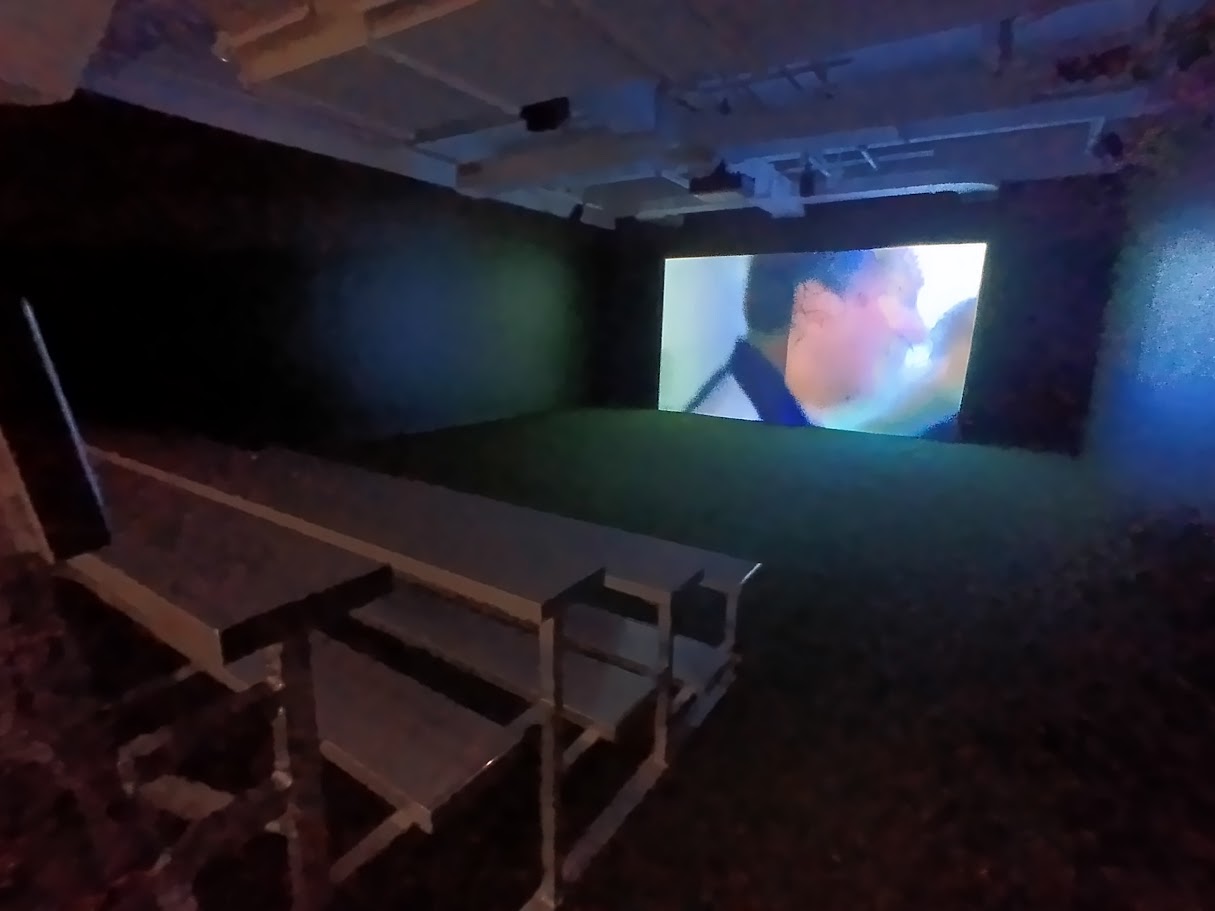
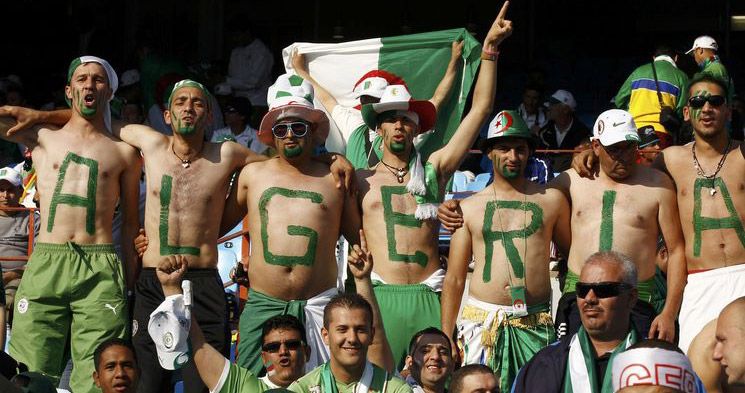
Bleacher style seating has been erected for viewing a video piece by Joyce Joumaa. This makes a lot of sense since the artwork concerns sports, specifically a 2001 soccer match between France and Algeria. On a single large screen in the darkened exhibition space an antique looking, blurry, image of the game is displayed. The broad swaths of vivid green turf are ominously overlaid with ghostly images from “The Battle of Algiers,” the famous film by director Gillo Pontecorvo, released in 1966.
Installation view of video piece by Joyce Joumaa
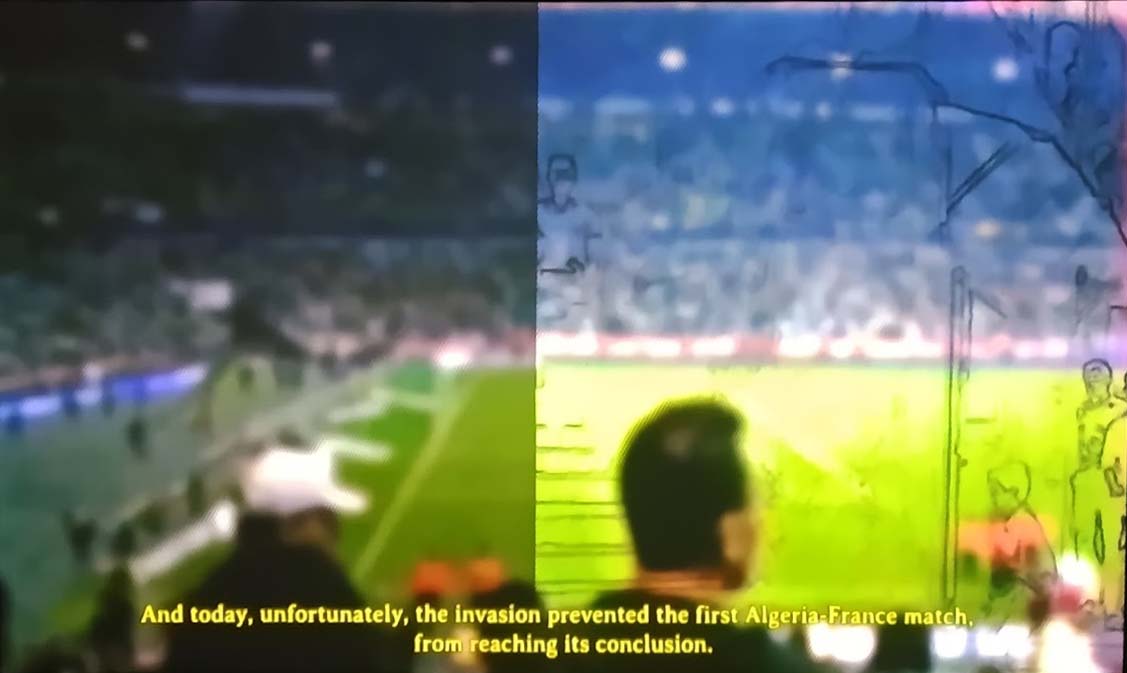
This particular game was highly symbolic. It was the first time the two countries met on the soccer pitch since 1962. It did not end well. When a group of Algerian marauders stormed the field and disrupted “the beautiful game,” politics crashed the party, somebody called the cops, the match was stopped, and the French press and officials were deeply disappointed.
Still from artwork by Joyce Joumaa. The text reads “And today, unfortunately, the invasion prevented the first Algeria France match from reaching its conclusion.”
A grinding war of independence from 1954 to ’62, in which 1.5M Alergians are said to have died, followed 132 years of vicious French colonial rule. It’s no wonder they didn’t want to play nice.
What’s going on in Algeria now? The country is still recovering from the colonial mess and a subsequent civil war, and also suffering from a continued smouldering insurgency. It does have a large economy, because of oil and gas resources, but Algerian society struggles with crime and corruption.
Sports are an outlet for endless tension and anxiety.
To this day, booing and whistling can be heard when the La Marseillaise is played during French Algerian sporting events.Toronto raptors fans behave similarly when the US National athem is played, but the game goes on.
Iván Argote
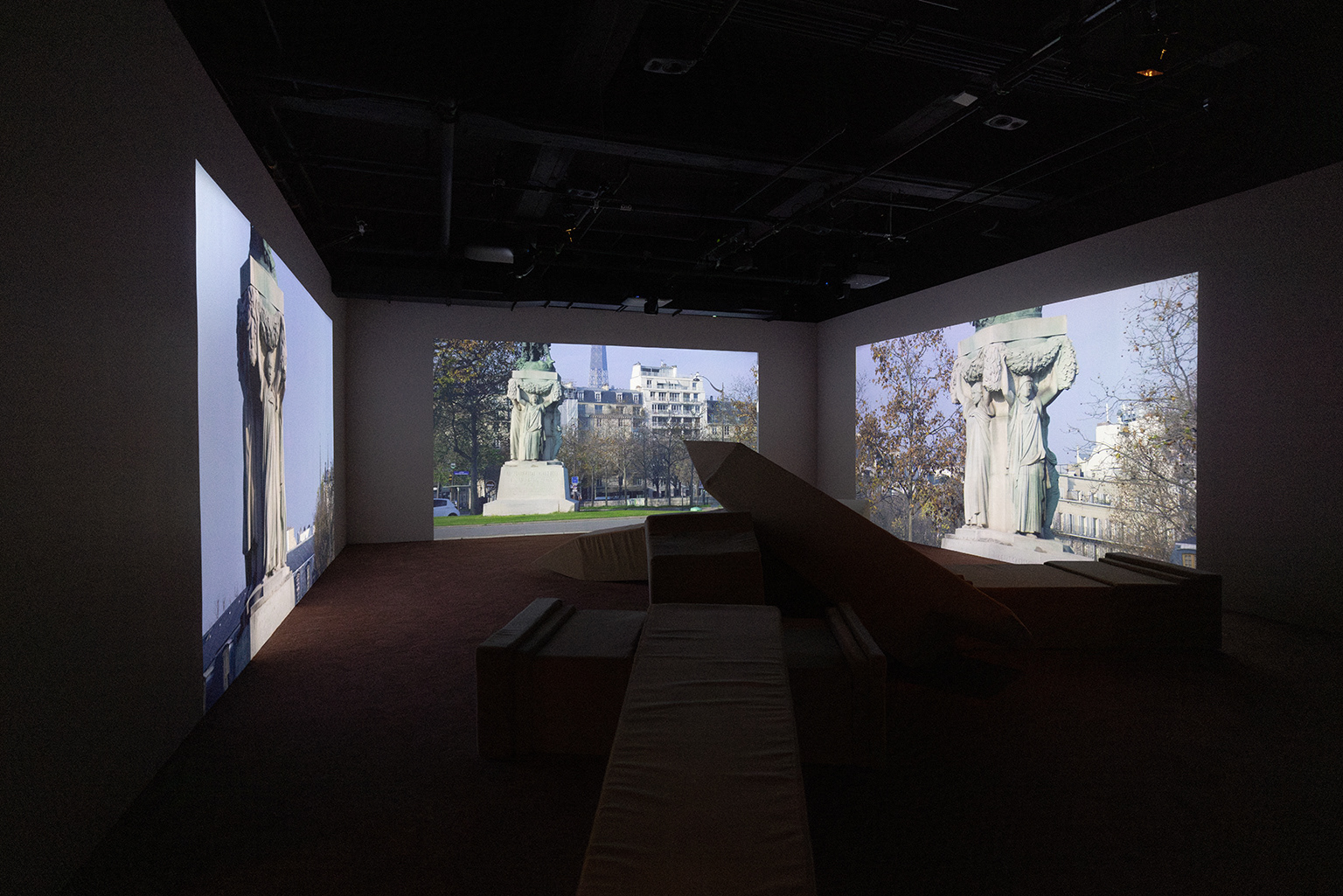
The video work by Iván Argote titled Levitate, contains three interactive channels. These multiple, giant projections surround the viewer, who is afforded a seating environment that’s plush and entirely suitable for comfortable lounging, even though it resembles chunks of shattered stone.
Installation view of Levitate by Iván Argote
The video documents three separate events, referred to as staged interventions. The Flaminio Odelisk is plucked from its historical perch in Rome and dangles from a crane. Similarly a crew arrives, throws up some traffic cones and removes the statue of a notorious French military office Joseph Gallieni, from the spot in Paris where it has stood for more than 100 years. And finally, a giant marble depiction, of Christopher Columbus — one of the defining historics monuments of the city — is driven through the streets of Madrid, on a flatbed truck. In each of these case, mayhem ensues, amid onlookers and social media.
Installation of Levitate by Iván Argote (photo by Michael Patten)
Video of installation by Iván Argote
I really enjoyed watching these famous monuments (supposedly) being toppled! And the extreme reactions.
There was some pithy texts and voiceover that were occasionally evident but they seemed mainly distracting. At this point, we are all too familiar with the looting and pillaging of various national agents and armies, and the erecting of statues to glorify villians. We don’t require a lesson! (In fact, this exhibition does frequently veer into lecturing and moral posturing, and sometimes strikes a tone of art as Sociology.)
Lee Shulman & Omar Victor Diop
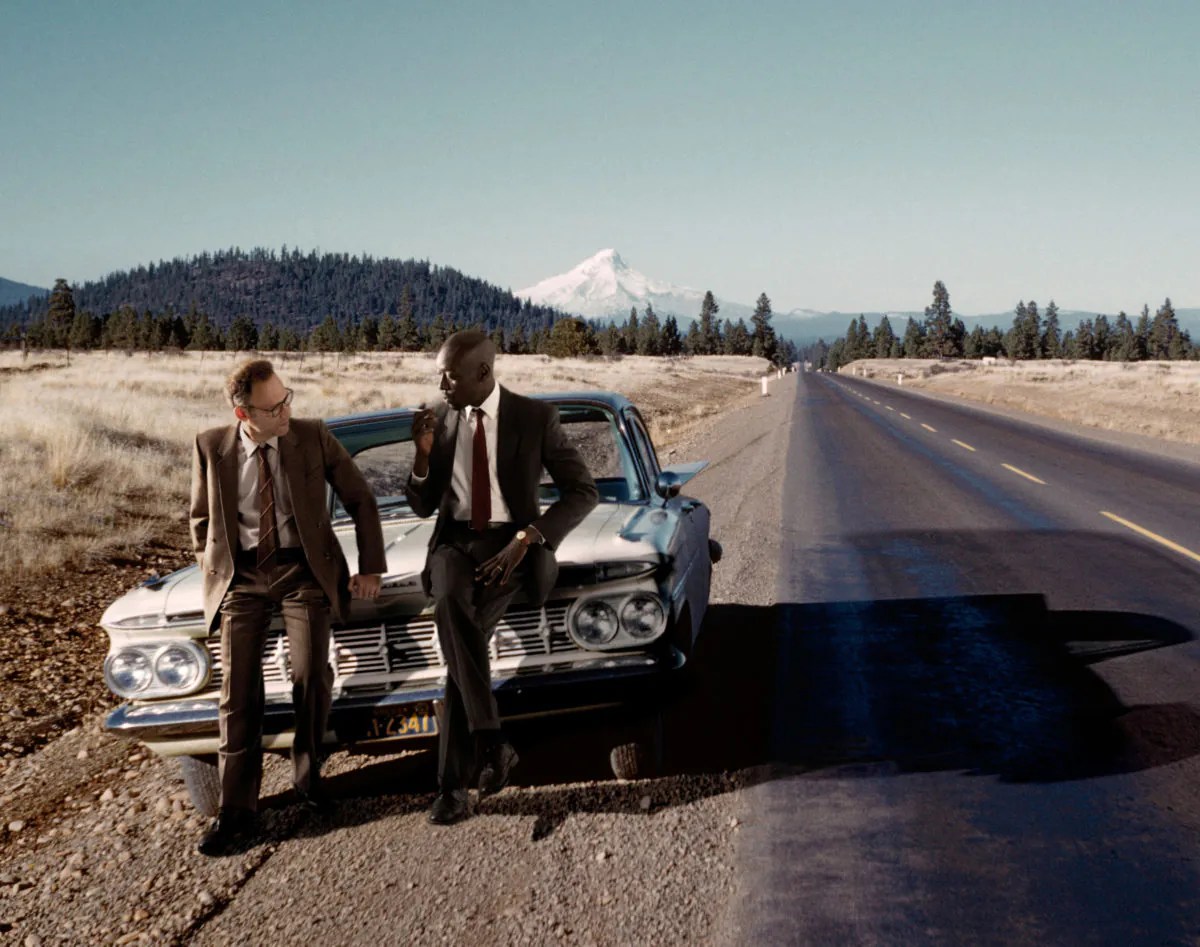
Being There_52-V1 by Lee Shulman & Omar Victor Diop
The photo works by Lee Shulman & Omar Victor Diop have a lighthearted appeal. Maybe its the absurdity itself that creates a somewhat uncomfortable underlying sensation. The big American car from the late 50s, the great outdoors, the road, and the slim elegant black man, conversing intently with his white counterpart. Not impossible, but from what we know of that era, unlikely.
Being There_27 by Lee Shulman & Omar Victor Diop
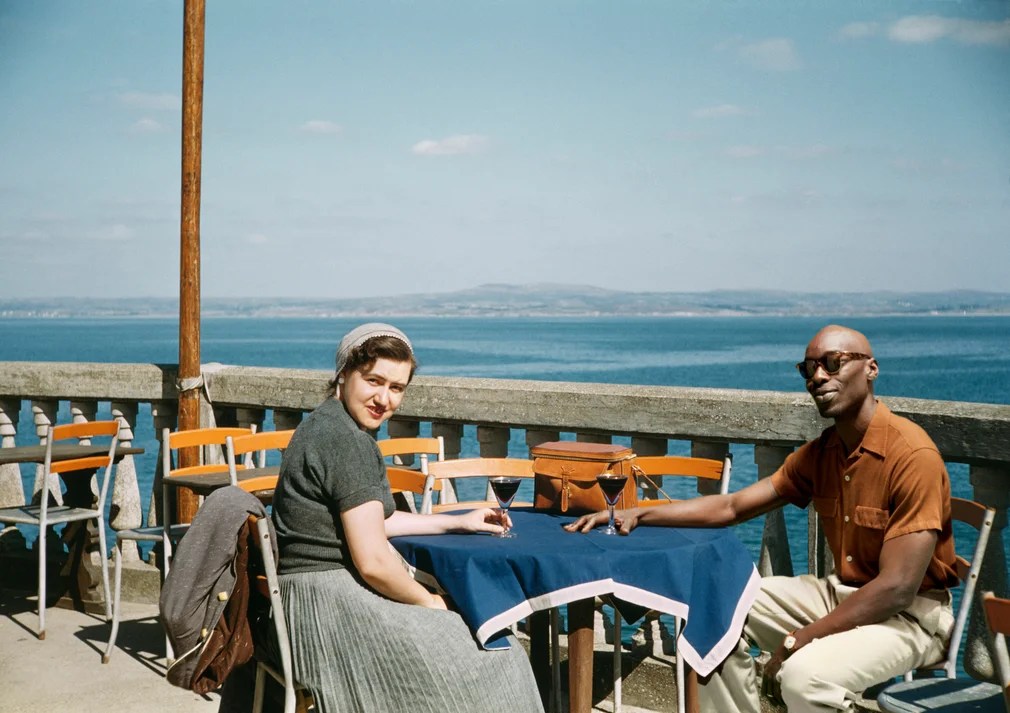
The photos create a mythic past where racism and exclusion did not exist. Omar Victor Diop, who has skillfully inserted himself into this dreamy Hawaiian vacation from the 1960s (above) looks more than a little surprised to find himself there.
Artwork by Lee Shulman & Omar Victor Diop
All the participants in this casual family photo appear relaxed and content, an idyllic afternoon in the outdoors, circa 1955. Except…
Sanaz Sohrabi
Watching the video by Sanaz Sohrabi, I felt like I should be taking notes or at least I should have done the preparatory reading before the class. I could barely keep up. Her video, called An Incomplete Calendar is densely packed and heavily researched.
Still from An Incomplete Calendar by Sanaz Sohrabi
It focuses on the years between 1950 and 1970: involves a Venezualan choir which toured the OPEC states promoting unity; shows some of the Western modern art housed in Iranian cultural edifices; displays an endless parade of stamps, letters, magazines, posters and other archival materials from the era to demonstrate struggles among the oil producing nations. It’s a little overwhelming.
Still from An Incomplete Calendar by Sanaz Sohrabi
Something included in this video that it was really great to learn about was the sculpture by Japanese artist Noriyuki Haraguchi,which is in the Tehran Museum of Contemporary Art. The sculpture consist of a low-slung rectangular steel structure, filled with thick, opaque waste oil with a glossy surface. Haraguchi exhibited the Oil Pool sculpture at “Documenta 6” in 1977 and it was then acquired by the Museum. I love this piece!
OIl Pool by Noriyuki Haraguchi
In a bizarre incident in 2022 a performance artist Yaser Khaseb, accidently plunged into the pool while performing an aerial exhibition. As a result, the Tehran Museum of Contemporary Art fired its director. The performance artist, although apologetic, was philosophical about the event. “A work of art can be reborn in contact with other works. From the interaction between two works, a new work can be produced,” he said.
Still from An Incomplete Calendar by Sanaz Sohrabi
Weirdly, I noticed the music or sound in all of the video works at the MAC had a startling simularity. I guess you could call it minimalist: a sort of one-note drone, rising and falling subtlely, sometimes featuring emotionless voiceover. I guess the viewer is obliged to hear it as a cue, signifying “this is serious.” Did the trend begin with the Ken Burns Vietnam documentary? Possibly.
I exited the basement gallery, with its many darkened rooms, into the brilliant sunshine of a Sunday afternoon in beautiful Montreal.
September 21, 2025, Montreal
I was just in time to witness a Pro Palestinian demonstration, moving slowly along St. Catherine, as I slipped into my favourite Montreal Cathedral for a last look before my trip back to TO.
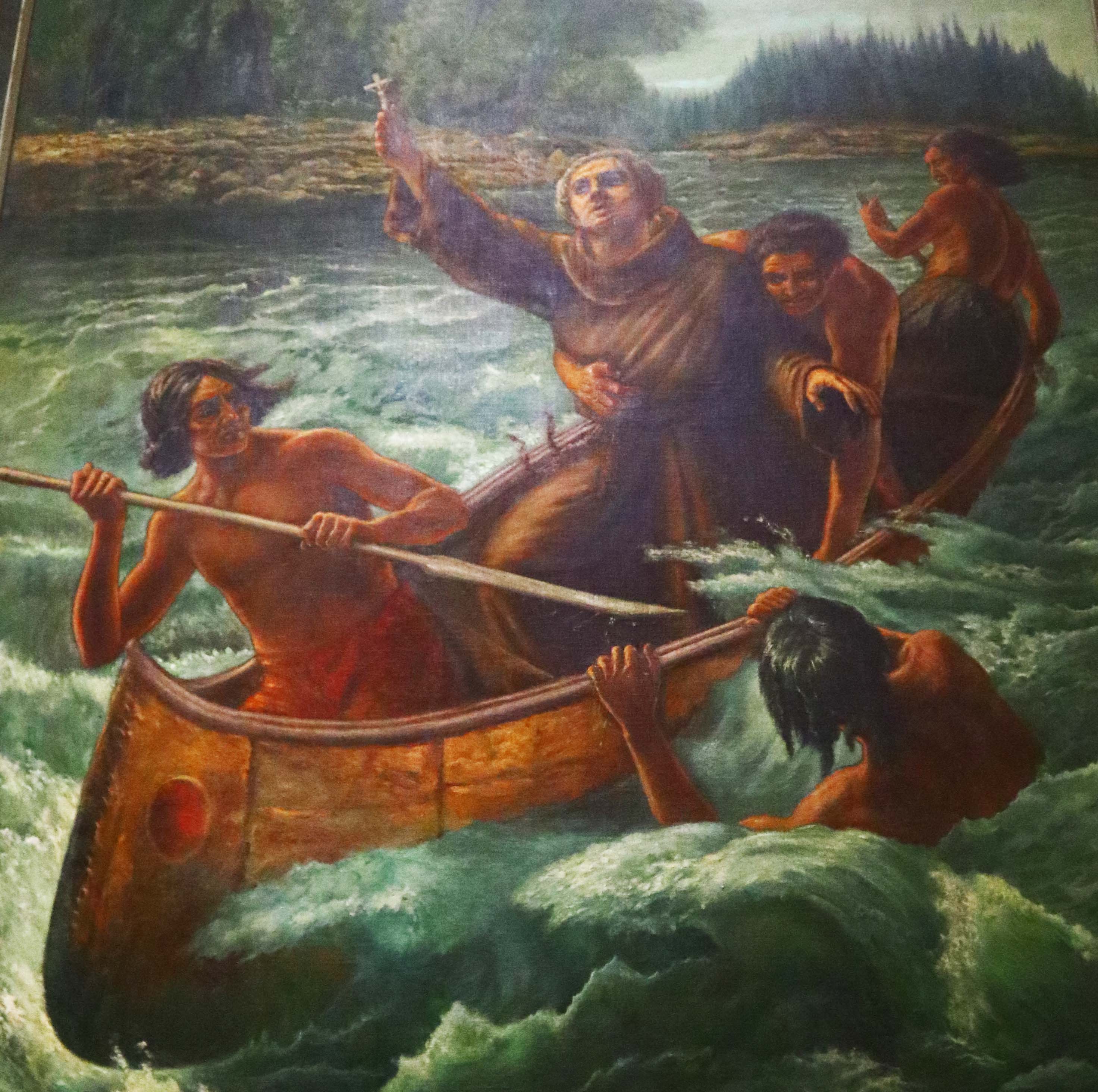
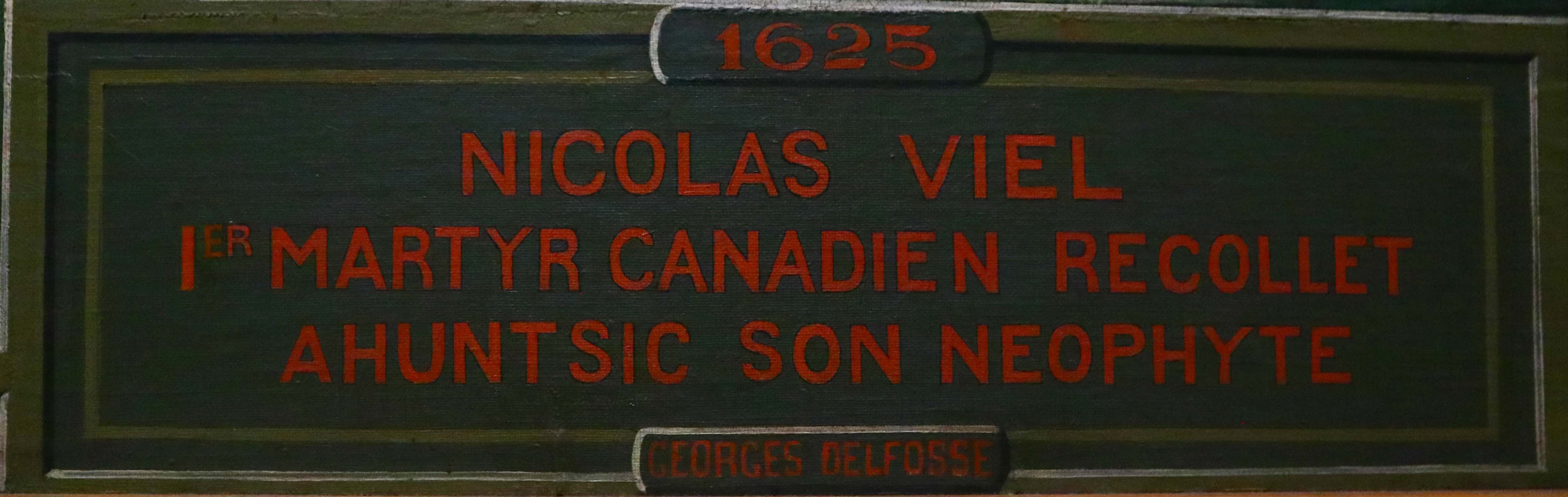
I guess one could call it “living in contradiction,” as is our fate these days, but the paintings in the church appeared to be an extension of the missing images exhibit. Could they have been created by Kent Monkman I wondered? Is this an elaborate ruse?
Painting by Georges DelfossePainting by George Defosse
But no, I determined. No, apparently not, they are sociological depictions from another era.
The towering 53rd Street Atrium of the Museum of Modern Art seemed less crowded than during prior visits. The galleries less packed with frantic visitors. In fact, the streets themselves seemed less grid-locked and less raucous. Maybe it’s the “congestion pricing” impact? Or maybe it’s the policies of the current Administration?
Whatever the reason for the relative tranquillity, it was truly uplifting to wander through the show called Jack Whitten: The Messenger without feeling jostled, and to appreciate the achievements of this artist and more broadly, the achievements of so many American artists, caught now — like the rest of us –in this period of fear and dismay.
“Black Monolith II (Homage to Ralph Ellison The Invisible Man),” by Jack Whitten
“Acryclic, onion, eggshell, molasses, copper, salt, herbs, rust, coal, ash, chocolate and razor blade.” These are a list of the substances Jack Whitten used to create the painting “Black Monolith II (Homage to Ralph Ellison The Invisible Man”), shown above. The painting, and many others of this period, is composed of hundreds of tiles, cut from sheets of dried acryclic embedded with varied ingredients and assembled into a painting. Jack Whitten called this invented technique “acrylic tesserae.” “Each tesserae is a piece of light,” he said, “The message is coded into the process.”
A lush jazz soundtrack (John Coltrane, Miles Davis and Thelonious Monk and others) plays throughout the show’s galleries, referencing Jack Whitten‘s love of jazz.
Installation view “Jack Whitten: The Messenger” at the Museum of Modern Art
Many of the tributes and dedications he attached to his work honor the black musicians, writers and artists that impacted him during his six decades of living in New York City and making art, which he invariably viewed as experimental.
“Homecoming for Miles Davis” by Jack WhittenCloser detail of “Homecoming for Miles Davis” by Jack Whitten
Shown above, “Homecoming for Miles Davis” was also made of hardened acrylic tiles, which in this case he spattered with white paint, a la Jackson Pollock, and put together into this dazzling painting, described by the artist as a “cosmic net attempting to capture Miles’ soul.”
“Atopolis: for Eduourd Glissant” by Jack WhittenDetail of “Atopolis: for Édouard Glissant” by Jack Whitten
The tiles in the painting shown above, named for Édouard Glissant, the French writer, poet, philosopher, and literary critic from Martinique, were infused with metallic, phosporescent and organic materials from aluminum to anthracite.
Repeatedly, this artist states he is interested in innovation. He wants to make abstract art that changes the course of painting.
Trained as a cabinet maker, Jack Whitten, made specialized tools to apply paint. He painted standing up for decades, smoothing paint in layers with a rake-like tool which is on display at the Museum.
Tool used by Jack Whitten to paintJack Whitten at work in Studio in the 1970s, using “The Developer”
He called the rake-like tool “The Developer.” He added layer upon layer of paint, raking and merging the color until he had the effect he wanted, which was “sheets of light.”
“Tripping” by Jack Whitten
The photograph above doesn’t convey the startling, glowing, gem-like quality that some of Jack Whitten’s paintings hold. He “combed” the layers of paint to create colours found nowhere else and experimented like an alchemist, adding recycled glass, pulverized mylar, gold dust and numerous other substances to the paint to get the effect he was after.
In some paintings, the artist would bury items into the gallons of paint he poured onto wood panels. These items — bits of wire or wood, staples, insects, floor sweepings — he called “Disruptors,” since through the raking process they disrupted the smoothed surface to reveal transformations below.
Installation view of “Siberian Salt Grinder” by Jack WhittenDetail of “Siberian Salt Grinder” by Jack Whitten
I couldn’t help thinking about the giant squeegee paintings by Gerhard Richter. Like Jack Whitten, Gerhard Richter explored the relationship between painting and ph0tography in his earlier works. Later, the element of unpredictability was major in both of these artist’s big beautiful paintings of sweeping horizontals.
“Abstract Painting (726)” by Gerhard Richter
Political turmoil was a factor in the creative development of both men. Gerhard Richter was born in 1932 in Dresden, Germany, into the mayhem of WWII and its aftermath. Jack Whitten was born in 1939 in Bessemer, Alabama, at the height of Jim Crow. He grew up in Civil Rights movement and the era of political assasinations in the USA and, of course, the Vietnam War.
“Black Table Setting (Homage to Duke Ellington)” by Jack Whitten
I particularly liked looking at Jack Whitten’s paintings of screens, or screen-like images.
“Khee II” by Jack Whitten
The painting above is part of his Greek Alphabet Series. It has a mysterious quality of movement, as remote images seem to shift and rearrange themselves from within, like poor reception in an analog TV screen.
“Gamma Group I” by Jack Whitten
Jack Whitten said every colour carries ” a lot of psychological meaning” and he sought to avoid the “story telling” that automatically occured by using colour. His black and white paintings from the Greek Alphabet series of paintings, resemble a flickering screen, dissolving into abstraction.
I say to people, “Take everything you have ever felt, everything you have ever smelled, every sound you have ever heard, every sensation you have ever had that you have felt through your fingertips. Take all of that and compress it.” You would get an understanding of abstraction. – quote from Jack Whitten in the MOMA exhibition notes.
His sculptural work, on the other hand, tells a lot of stories:
Sculptural works by Jack Whitten
…stories about the African diaspora, the history of art in the Mediterranean, trash and found junk, labour and work and many other topics.
Some of his paintings too, are depictions of fragments of a changing world. His painting shown below, which suggests apps on a screen, was made in honour of Obama’s election.
“Apps for Obama” by Jack Whitten
The showstopper, however, for many of the New Yorkers on that relatively quiet day at the Museum of Modern Art, has to be the painting titled “9.11.01.” Jack Whitten witnessed the World Trade Center’s destruction and produced an enormous painting in honour of the victim’s of that event.
“9.11.01” by Jack WhittenDetail of “9.11.01” by Jack Whitten
I spent some very somber moments in front of this painting, recalling not just the appalling catastrophe of that moment, but the following days and months, when the country, and indeed much of the world, was so unified in the shared shock and horror at that violent act. It seems like a long time ago.
Yann Pocreau “The Lapse in Between” at Division Gallery
Yann Pocreau is a photographer who is not really into taking pictures. In his show at the Blouin Division Gallery, he seems so over it: the pointing and clicking to capture a moment in time. In fact, you get the feeling, looking at much of the work of Yann Pocreau, that he has decided there are more than enough photographs in this world.
“A Light Shift 01” by Yann Pocreau
Yann Pocreau often uses found imagery — maybe he rummages through boxes of old snaps and negatives at vintage purveyors — and then he adjusts. He crops what he finds, blows it up, prints on reactive surfaces, floods with zones of subtle colour, double exposes, amplifies flaws and creases.
Detail of “les décalages 01-06” by Yann Pocreau
The result is a tension between form and content that hovers insistently in an appealing and unresolved push and pull. The absence of context creates a new kind of object, simultaneously empty and full of meaning. The piece shown above, for example: What is it all about? Are the family members triumphant survivors of Europe in ruins? Or, are they contented boaters on Lake Simcoe, heading to a summer of cottage renovations? Are the embedded brass diagonals defining the creases of a treasured snapshot — carried for years by someone — honoring a single happy moment prior to disaster? Or, are we shown the brass lines to emphasis the powerful, pictorial composition?
Installation view of “les décalages 01-06” by Yann Pocreau
The title of the artworks above is “les décalages.” The word “décalage” means shift. (“Découpage” is something else entirely. Don’t mix it up.) Lacking context, meaning shifts, gaze shifts and attention shifts.
“The found landscapes (stained views” by Yann Pocreau
The “found landscapes” above are washed lightly with a pale sepia. Otherwise, they are basically unaltered. There is a certain nostalgia inspired by these pictures, and an innocence around imagery. They make me think about family rituals of my childhood, where film was developed, following an outing or vacation, and the snapshots — all of them, no matter how banal — were carefully mounted and labeled in a oversized photo album with a thickly padded cover.
“The lapse (the pool)” by Yann Pocreau
No amount of Photoshop editing or Instagram filters could manufacture this pair of images so rich in narrative potential, and embodying the brief summer of adolescence.
“A light shift 05” by Yann Pocreau
Other works are printed on surface so gleaming, slick and metallic that the original image is impossible to discern (as above.)
“Serendipity” by Yann Pocreau
One of the pieces, titled “Serendipity,” above, is composed of six brass plates under plexiglass. Who knew that brass could be so dense and luxurious?
When brass corrodes, it can undergo dezincification, a process in which zinc is lost and copper is left behind. Mild dezincification may simply cause a cosmetic change, namely, the colour of the surface turning from yellow to pink, but severe dezincification can lead to the weakening of brass and even its perforation.
— Preventing and Treating the Dezincification of Brass – Canadian Conservation Institute (CCI) Notes 9/13
A slight, shifting glimpse of fushia, emanating from the painted backs of the copper plates, is caught in the plexi. Maybe we are being reminded of the potential for dezincification?
Detail of “fantasme colores – tropicalia” by Yann Pocreau
In a small room at the far end of the gallery were some examples of earlier work by Yann Pocreau. In this tropical dreamscape (above) the image content is a set up for the depiction of light and colour, and the evolution of the work of this artist.
In his show at The Image Center Yann Pocreau moves even further away from what we think of as photography and slips into a kind of reverie on light itself. Subjects disappear entirely and only light is captured and admired.
“Entre le bleu la nuit: Cyanotypes exposed with lunar and solar light (9.5 hours and 45 minutes)” by Yann Pocreau
In this composition in shades of blue, Yann Pocreau uses an early percursor to photography: the cyanotype, in which various iron compounds are exposed to light and fixed with water. (Cyanotypes were used to create industrial blueprints up until very recently.)
“Les Plates Aveugle” (The Blind Plates) by Yann Pocreau
“The Blind Plates” is described as an “inkjet print with applied gold leaf.” In this case it seems irrelevant to use photography at all. It could be a minimalist painting. Why not?
Detail of “Reconciliations (Spectrums)” by Yann Pocreau
The image above was printed on silk. It shimmered very slightly when a passing viewer created a nearly imperceptible breeze.
Installation view of “Lumière 01” by Yann Pocreau
The gallery is dark and the sound of an old fashioned slide projector adds an ASMR element to the show. The slides are simply layers of light and go to the heart of this dreamlike exhibition. I really wished there was somewhere to take a nap in the deserted space.
Detail of “Les Impermanents” by Yann Pocreau
A installation of “pierced cabinet cards” arrayed on an extended light table is another large piece at The Image Center exhibition.
According to Wikipedia “The cabinet card was a style of photograph that was widely used for photographic portraiture after 1870.”
These fascinating cards — pictures of individuals who lived over a hundred years ago, posed with grave formality — have been pierced to display images of stellar constellations, shining through the paper in the darkened gallery. Poetic and empathetic, this piece connects on many levels.
Yann Pocreau explains it best:
My journey over the last few years has been punctuated by exhibitions whose driving force is cosmic vertigo, this new relationship to the world and its phenomena, from the Universe to the center of the Earth. Between a simple dialogue with science, with a certain existentialism, I think and produce projects that attempt to address the macro and micro links that shape and design our environment, our way of understanding it.
The Culture: Hip Hop and Contemporary Art in the 21st Century, at the AGO
It is definitely fun to wander through the AGO’s big, bold show about Hip Hop. The organizers illuminate multiple forms of expression, trying to get at some central defining aspect of what is described as a “musical and pop cultural movement.”
“Black Power ” by Hank Willis Thomas
Clearly, that central something is Black culture, and the overturning of Eurocentric ideas of what can be culturally significant.
Hip Hop, in all its manifestations, may now be global, digital and corporate (absorbed and marketed so heavily, it is, like the show’s title, The culture) and yet, some unique vitality, dynamically expressed by Black, Latine, and Afro-Caribbean youth, in 1970s Bronx, endures to this day. Hip Hop continues to transform, explode and multiply, even against the backdrop of today’s bizarre political denial.
The Culture is organized around six themes: Language, Brand, Adornment, Tribute, Pose, and Ascension.
Language
Hip-hop is intrinsically an art-form about language: the visual language of graffiti, a musical language that includes scratching and sampling, and, of course, the written and spoken word.
— Extracts from exhibition text
Language, in this show, starts with the spoken word. “Call and-response chants, followed by rap rhymes and lyrics overlaid on tracks, are the foundations of hip-hop music.” (Quote from the exhibition text.)
Music is playing at a decent volume throughout the AGO’s fifth floor.
You can check out the AGO playlist below:
“The Culture” Playlist is available on Spotify
The shows is sprawling, and some of the objects are traditional museum fare.
Art work by Adam Pendleton
The painting by Adam Pendleton (above) has an old school graffiti feel, as per language inscribed on the street. Weirdly, there is no mention of graffiti on the Pace website showcasing the work of Adam Pendleton. His visual art is included in prestigous collections around the world and often described as relating to “process and abstraction.”
“Six Bardos: Transmigration” by Julie Mehretu
More paintings in the show, like that of Julie Mehretu (above) don’t actually contain legible language, but here too, the debt to graffiti is clear. Julie Mehretu’s dealer is the Mariam Goodman Gallery and on the Mariam Goodman website we read about the artist’s “visual articulation of contemporary experience.”
I like the way this show schools us in how to look at certain art, particularly a contemporary painting like those above, i.e they are connected to graffiti.
The Brand, Adornment and Pose sections of the exhibition get a bit intertwined, in my view. They are all about how an individual uses technological communication to define themselves in the public sphere.
Snoop Dog 213 by Craig Boyko
Hip Hop has been around for a long time! Snoop Dog was once the personification of the cool, west coast version of the genre. He went on to host a cooking show with Martha Stewart, and recently performed at Donald Trump’s inauguration.
It’s hard to even remember a time when baggy sweatpants and sneakers were not worn everywhere, by everyone.
In fact, you could walk through any shopping mall in North America and find an endless assortment of gear attributable to some Hip Hop connection. How about that hoodie I got on sale at Old Navy?
“Cardi B Unity” by Hassan Hajjaj
Cardi B, the reigning Queen of Rap, is the recipient of a vast number of accolades, awards, firsts, and mosts. In this photograph by Hassan Hajjaj she confronts the camera with supreme confidence, portrayed as the “international blend of music, fashion and consumer culture” that she is.
I liked the way the show approaches the matter of pose in the hip hop, particularly as it applies to the women in this arena. Endorsements are power for women, just like for their male counterparts.
Maya Jacket by Moncler
And who can forget the iconic red jacket from Drake’s “Hotline Bling” video? Apparently, the inclusion of this so-called Maya Jacket, by Moncler, in the famous video, locked in the brand’s connection to hip hop culture.
I think I prefer the more unexpected, even daring items in the show, as opposed to the merely manufactured. The piece (below) by Lauren Halsey is a good example.
“auntie fawn on tha 6” by Lauren Halsey
Composed of layers of synthetic hair, in brilliant shades, it has an intensity and power that strikes me as so of the moment and at the same time so reminiscent of some ancient adornment.
I found one piece in the adornment section shocking.
“Nation” by Deana LawsonDetail of “Nation” by Deana Lawson
This photograph by Deama Lawson contains an inset of George Washington’s false teeth, which were made from the teeth of enslaved Black people. The cheek retractor looks like a kind of torture object me, as repellant as the set of teeth. But that’s not how Deana Lawson sees it.
There is a nobility and majesty of a lot of gold that’s worn, and how it’s appropriated in hip-hop, and how I think hip-hop actually channels ancient kingdoms.
— Deana Lawson, exhibition notes
Ascension
And, of course, you can’t talk about Hip Hop without mentioning the deathiness that hovers on the sidelines and occasionally takes center stage.
“Street Shrine 1: A Notorious Story (Biggie)” by Robert Lugo
This funerary urn featuring a graphic depiction of the Rapper Notorious BIG captures the glamourization of violent death that has haunted the world of hip hop.
In these dark times it was uplifting to sit in the luxurious Ace Hotel and listen to one presentation after another on how to solve the most critical issues we face concerning the environment, society and the global economy.
Young, attractive, well-dressed people can do it! They have ideas! They have deep pockets!
Even the tagline for the Design TO Festival — “Designing for a sustainable, just, and joyful future” — is like a jolt of sunshine in an otherwise bleak February, as across this country we wait for our economy to tumble off a cliff, and on the other side of the continent LA lay in smoldering ruin, under the relentless California sunshine.
Ace Hotel
Design TO is Toronto’s huge design festival. Net Positive is the name of just one out of dozens of events. Net Positive consists of a series of presentations by a diverse group of sustainability enthusiasts. (What does Net Positive even mean, I wondered? Answer: For an enterprise to become “net positive”—it has to give more to the world than it takes.)
Here are some slim summaries of a few of the presentations I heard that day:
Juan Erazo is a member of Culturans, a Mexico City organization which “uses art, culture and social innovation to imagine and create sustainable cities.”
Juan Erazo told us all about chinampas, a centuries-old agricultural system that was once used throughout Mesoamerica and parts of South America. I was stunned to learn that chinampas endure to this day, even in the southern part of Mexico City.
Chinampas are an articulated set of floating artificial islands built in a traditional way. They are an ancient method of sustainable agricultural, still in use in Mexico City and elsewhere.
Roughly 700 years ago the megalopolis which is now CDMX was once a small city beside a lake. At that time the chinampas were thriving, fed everyone and exported food. Unfortunately, the lake was drained, paved over, and 25 million people moved in. Now, Mexico City has almost no water — everything liquid has to be imported — and that was one point of the presentation. “You have a lake in Toronto.” Juan Erazo warned. “Don’t throw it away!”
Aaron Budd is another exciting presenter. He works on a project close to my heart: The Ontario Line!
Aaron Budd is employed by SvN — the architecture/planning enterprise engaged in building the new subway — and he leads the company’s Regenerative Practice. He quoted Kate Raworth , stating the phrase: “Great places are social. Great places are ecological.”
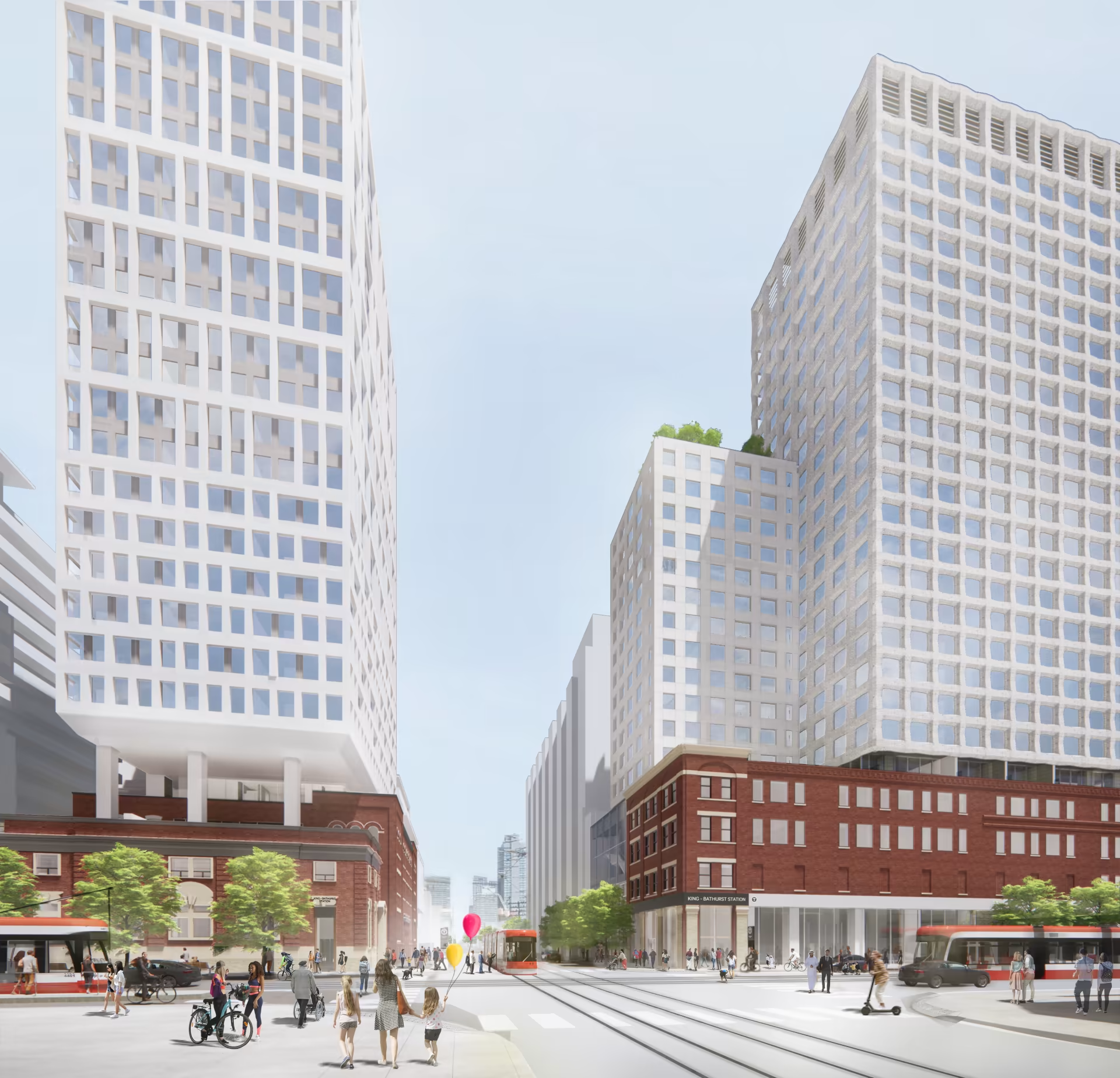
I was very excited to learn that the Ontario Line is being constructed to provide the infrastructure for 30 story residential structures above each subway stop. The Ontario Line will provide housing in transit oriented communities to more than 227,000 people.
Rendering of the future King-Bathurst Transit Oriented Community
Because we live in Toronto we can become mired in a skeptical mindset. We might wonder: Will I live long enough to see these majestic towers over the new, fully functional, Ontario Line? It’s hard to say. But in the meantime, it was great to listen to Aaron Budd describe these communities and to let us know that through his work at SvN he “strives toward the creation of new housing, public spaces and delivering positive social and ecological change.”
April Barrett is a young woman who spoke to us about her interest in Speculative Design, which explores future possibilities and societal impacts of emerging technology and shifting cultural and social trends.
One of her projects concerns the socio-environmental impact of Data Centers and their waste heat use potential. Specifically, April Barrett visited the Dublin suburb of Tallaght, where the heat generated by the Amazon Data Center — a gloomy, featureless edifice — heats the town, including hospitals, university and public buildings, commercial enterprises, and apartment towers.
Maybe we could do the same thing in Toronto?
This Data Center, a former Loblaws, is located in Brampton, Ontario.
I googled Anna Tsing and found her ideas so applicable to our current situation vis a vis our neighbour to the south. I’m going order the book, but not from Amazon.
Precarity is the condition of being vulnerable to others. Unpredictable encounters transform us; we are not in control, even of ourselves. Unable to rely on a stable structure of community, we are thrown into shifting assemblages, which remake us as well as our others. We can’t rely on the status quo; everything is in flux, including our ability to survive.
— quote from Anna Tsing “The Mushroom at the End of the World”
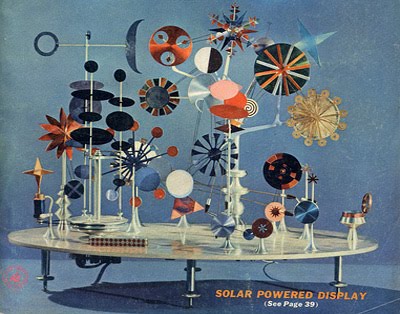
April Barrett is looking for alternatives to Big Tech. She told us all about Low Tech Magazine, degrowth as a technological heuristic, ultra-lite web design, letting go of scalability, and finally, she mentioned “The Solar Do Nothing Machine,” created by Charles and Ray Eames, in 1957, which is just kind of fun.
The Solar Do Nothing Machine by Ray and Charles Eames
Netami Stuart is a landscape architect at Waterfront Toronto. The project — the Port Lands — has been a massive undertaking for her, as she manages collaborative teams and multi-million dollar budgets.
Currently, 290 hectares of southeastern downtown – including parts of the Port Lands, South Riverdale, Leslieville, and the East Harbour development site – are at risk of flooding from the Don River and can’t be revitalized until they are flood protected. The Port Lands flood protection project will protect these lands, allowing them to be redeveloped. It involved building a new river valley though the Port Lands, which has created a new island called Ookwemin Minising (formerly known as Villiers Island), and re-naturalizing the mouth of the river.
— Description of the Port Lands project from Waterfront Toronto website
Earlier in the Port Lands project
Netami Stuart talked about building 1,000 meter of new river channel and flood plain, 13 hectars of new coastal wetland, and 4 hectars of terrestrial habitat, basically fashioning a new Don River flowing into Lake Ontario. After seven years of work Netami Stuart was excited to let us know the end is in sight. The new parks are opening in the spring and summer of 2025 and housing development is to follow.
$1.25 billion in municipal, provincial, and federal funding was awarded to the Port Lands Flood Protection project in 2017.
I walked through the Port Lands site several times last summer and fall. Spectacular! The winding river, the hills and valleys, the red and yellow bridges.
There was so much to feel good about at the Design TO Net Positive event. At least for a few hours to share the optimism of the designers of a sustainable, just, and joyful future.
It was a way to shake off — at least temporarily — that sinking feeling I’ve had since I came across a picture of what some cynics among us are calling the “painting of the year.”
Painting executed January 29, 2025
This photo depicts a wall at the FBI Academy in Quantico, Virginia as it is painted with grey semi-gloss to cover what were previously known as the core values of the FBI: Respect, Accountability, Leadership, Diversity, Compassion, Fairness, Rigorous Obedience to the Constitution and Integrity.
It was surprising to find myself entirely alone in the the center of one of the world’s largest cities. There were a few birds chirping and in the distance a security guard was eating his lunch, but otherwise, the sculpture garden at the Museo de Arte Moderno in Mexico City’s Chapultepec Park, was entirely deserted.
Bougainvillea growing along the fence surrounding the sculpture garden.
This sculpture garden functions as a repository of historical works. It also includes some contemporary pieces.
Detail of “Ovi” by Hersúa“Ovi” by Hersúa, gives the impression it will topple over at any second.
Hersúa, also known as Manuel Hernández Suárez, made this piece, above, in 1986. It seems that all around the world, modernist sculpture of a certain period, had a similar look. 1986 was long before the Internet flashed every damn thing to every corner of the globe, and yet, this piece could have been shown in Toronto or New York or Mexico City at the same time. Clearly, artists are open-minded and responsive to the zeitgeist.
Richard Serra had a huge show at the Museum of Modern Art in 1986 and looking at those long ago installation pictures made me think of the piece by Hersúa.
Installation view of Richard Serra show at MOMA 1986
Whether in Mexico or New York, it takes a lot of confidence to make giant, perilously balanced artworks, out of cement or cast iron.
“El Corazon Sangrante (The Bleeding Heart)” by Fernando González-Gortázar
I really liked being the only viewer of this artwork by Fernando González-Gortázar, who died a couple years ago. He was an important architect in Mexico. This piece, in the midst of the tranquil park, the surroundings littered with dry, dusty leaves, was so vivid and lively … and so extremely red.
“La Gran Puerta (The Big Gate)” by Fernando González-Gortázar
The artwork above, also by Fernando González-Gortázar, is an enormous gate to a park in Guadalajara, made in 1969.
“El Barco Mexico 68” by Manuel FelguérezDetail of “El Barco Mexico 68” by Manuel Felguérez
I did not know about the Mexican post war art movment that broke away from the realism of Diego Rivera and his crowd. It was called the Generación de la Ruptura and Manuel Felguérez was part of it. According to Manuel Felguérez the idea was to make Mexican art more abstract, and hence, universal.
Two sculptures by Manuel Felguérez: “Puerto 1808” and “El Cabillito” in the background.
Apparently, Manuel Felguérez was supportive of the Cuban Revolution. News of those sympathies reached his few American collectors and any sales he had in the US took a nose dive. I can see the impact of Russian Constructivism in his massive sculpture above, made in honor of the 200th anniversary of Mexico’s independence from Spain. It’s strange to think about how cultural currents flow around the world.
“Tunel Plegado” by Alberto Castro Leñero
This piece, by Alberto Castro Leñero, looks strikingly contemporary. There is a good reason for that. It was created in 2022. It’s a bold, inventive structure, hinting at all kinds of ambiguous subject matter (craft objects, religious iconography, scientific models) and yet, pleasingly, unfixed.
I did find a couple of pieces by Mexican woman artists in the sculpture garden.
“Mujer Sentada (Woman Sits)” by Rosa Castillo
Anything I read about Rosa Castillo first mentions her brother, who was a more well-known and successful artist. Rosa Castillo was born in 1910, in a rural village, and mainly worked as her brother’s helper. This sculpture I found very affecting. All over Mexico City you can women with a similar mein, setting up shop on the sidewalk, making delicious food and keeping the whole place running.
“Mujer reclinada o recostada (Woman reclining or Lying down) by Tosia Malamud
Tosia Malamud arrived in Mexico at age 4 when her family fled the Soviet government in Ukraine. Like Manuel Felguérez, her interests ran counter to the muralist movement which was popular when she graduated from art school. She also found it too nationalistic, and too dominated by men.
She was another Mexican artist who sought a more abstract, universal theme, however, there is something mysteriously circular in the way that pre-Columbian Mexican art influenced her work. The sculpture below, for example, is graceful, semi-abstract and blithly devoid of nationalism.
This is a “Chac mool” figure from Chichen Itza, excavated by Augustus Le Plongeon. It is thought to have first appeared in Mezoamerican in the 9th century.“Somos Fragmentos (We are Fragments)” by Maribel Portela
This giant purple head by Maribel Portela, another female artist, was really enjoyable to look at and think about. For me, it was a signal: start practising meditation!
“Bosque desnudo (Naked Forest)” by Ricardo Rendon
One of the interesting things about the piece above, is that it is made from the seized trunks of illegally logged trees. Ricardo Rendon, one of the younger artists whose work is included in the garden, states that he is interested in the dematerialization of the object. I can imagine this fragile forest gradually wearing away to nothing in the copious rain, sun and diesal fumes of Mexico City.
“El Temple del Deseo (The temple of desire)” by Kiyoto Ota
This giant solitary breast rising from a gently sloping expanse of dry leaves and grass is a bit unsettling. Kiyoto Ota is presently working on a Uterus series. He decided to visit Mexico in the 1980s. He left his native Japan and never went back.
I passed a few, very pleasant hours in this lovely sculpture garden and I soon found, as I went on wandering around, that sculpture is everywhere in CDMX.
Pre-Columbian….
Pyramid of the Sun at Teotihuacan
…and post.
The Virgin of Guadalupe, the Patron Sain of Mexico
This year’s Art Toronto — the 25th Anniversary event — exuded confidence, sophistication and depth. It was great to wander the vast expanse of the Metro Toronto Convention Center and get lost in the labyrinths and eddies of unfettered display.
There were more than 100 exhibitors. Galleries from across the country were represented. I also noticed some European and South American galleries, as well as a number from our friends in the USA.
There were many people-watching opportunities!
This vivacious, well-dressed group attended last year’s Art Toronto and were expected to return again this year, although, sadly, I did not spot them.
This exhibition has the feeling of an exciting shopping mall. What follows is a tiny and utterly subjective view of the tumult of art and commerce that is Art Toronto.
I was definitely happy to see work by favourite artists, from Toronto and elsewhere.
Carol Wainio, in her signature faded, dreamy palette, continued her exploration of haunting folklore from the distant past.
“Direction Home” by Carol Wainio was presented by Paul Petro Contemporary ArtDetail of “Direction Home” by Carol Wainio
There was some Witch Queer Volcanology on display in the form of one of the spectacular Fastwurms textile pieces.
“Sundoro” by Fastwurms was presented at Paul Petro Contemporary Art
I liked looking at the mysterious weapon, lifting off into the mist, by Wanda Koop.
“Seeway – Green with Lights” by Wanda Koop presented by Blouin Division
There were many artist’s works I had not encountered previously. I had questions.
I was trying to figure out what drew the artist, Nicholas Crombach, to this particular shade of red flocking, in his wildly complex sculptural piece. Maybe its a particular representation of vitality? Or maybe he’s referencing the way precious items are sometimes tucked away in red velvet?
Weisels by Nicholas Crombach
I enjoyed the desolate emptiness created by the painter Ulf Puder, in this large work hovering between geometry and realism.
“Sand” by Ulf Puder, shown by Bonne Choice Gallery
The photo piece below, by Kris Munsya, has a cinematic feel of futuristic mutation occuring in a lush, tropical site. I want to know more!
“Airplane Mode – Genetic Bomb” by Kris Munsya exhibited by Galerie Robertson Ares
I was in awe of this extra large lino cut print, produced on hand-made gampy paper. The giant print, by Alex Kumiko Hatanak, was part of an installation at the McMichael Gallery booth.
“Faultines and Loneliness” by Alex Kumiko Hatanaka Detail of “Faultines and Loneliness” by Alex Kumiko Hatanaka
This photo of a house was fascinating. It looked a lot like a green monopoly piece. I learned it was part of something called the Lenora Drive Project, in which a Willowdale developer allowed artists to get creative with a half dozen condemmed bungalows.
“Title Deed” by An Te Liu presented by Bonne Choice
It took me a while to figure out that An Te Liu, the artist responsible for “Title Deed,” is the same artist who makes the very appealing sculptures, shown at Blouin Division last year.
“Broken Window” by Anahita Norouzi shown by Nicholas Roberts Gallery
Anahita Norouzi‘s photo piece made me want to know more about this barren landscape and the spectacular explosion implanted there.
Detail of “Broken Window” by Anahita Norouzi
There were some special shows put together by individual curators, including a “Focus Exhibition” titled ‘the place to which we return.’ It was described as engaging viewers with ideas of “home” and what that notion means to them.
“Regrounding” by Marigold Santos
The painting above, by Marigold Santos, was part of the “Focus Exhibition.” It was quite stunning to stand before this painting and bask in the field of yellow. The painting of a corpse dissolving into a landscape, although fascinating and intricate, is almost incidental to this powerful sweep of colour.
Detail of “Regrounding” by Marigold SantosArtwork by Renee Condo presented by Blouin Division
Another piece in the Focus Exhibit is this one by Renee Condo. I’d seen the big, beautiful beadwork pieces by Renee Condo before, at the Blouin Division space. They have a joyful, high-octane buzz and effectively pull beadwork into a contemporary space.
“There Are No Footprints Where I go” by Meryl McMaster
In many indigenous cultures crows are valued for their intelligence and spiritual significance. They are seen as messengers from the spirit world, holders of universal wisdom, and protectors against evil forces.
This piece by Meryl McMaster, also part of the Focus Exhibition, has a quiet power and mystery.
Detail of “There Are No Footprints Where I go” by Meryl McMasterDetail of “There Are No Footprints Where I go” by Meryl McMaster


















 annetteandquebec