Kofflerarts
Sybil Goldstein/URBAN MYTHS
Anyone who has ever cleared out a house or an apartment, after the death of a parent or grandparent, faces a fact that can be overwhelming: There is a lot of stuff left behind. Best case is the deceased had a will with instructions about where their possessions should go. Some things might be cherished by members of the family. Other items might be donated to charities. Maxsold or Kijiji? Maybe. And then there is that other awful reality: Got Junk.
In the case of a visual artist, especially a painter, the fact expands massively. Things! They are beautiful and interesting! We need to preserve them! In that frame of mind, the usual modes of managing the residue of a life don’t work.
What can be done?
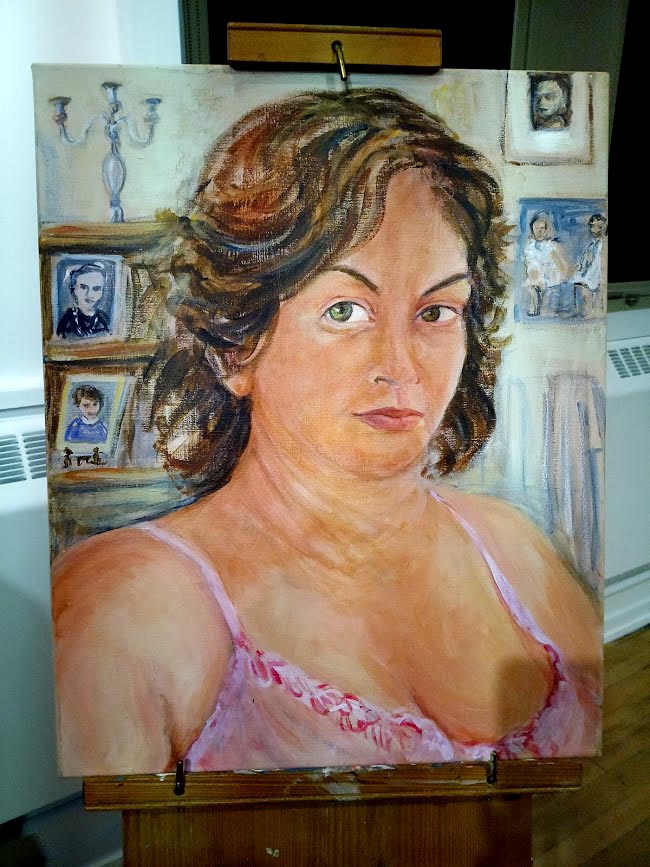
Sybil Goldstein died suddenly in 2012. She left literally thousands of paintings and drawings in this world.
Some of the work was sold at an auction held not long after her death. Anything unsold — the bulk of her creative output — was stored by her family. And now, thirteen years after her death, Sybil’s family has reached out to her friends in the Toronto art world with a plea to find homes for the numerous works of art.
If not, they will have to be destroyed.
Kofflerarts, an organization that supports community, decided to host this posthumous retrospective, including the surprising announcement that “visitors will have the opportunity to take home one of her original artworks once the exhibition closes.”
Sybil Goldstein was a member of ChromaZone. In the early 1980s, as the art world turned away from the barren wastes of Conceptual Art, Minimalism, video art and performance, to the joyful excesses of Neo-Expressionism, ChromaZone hit their stride in Toronto.
What was ChromaZone?
“the celebration of the emergence of a generation that
eschewed the increasingly remote and esoteric strains of formalist painting, process-oriented performance and hermetic
video art for art in any medium that more actively engaged the struggles, issues, desires and pleasures of the real world.”
- quote from “History of ChromaZone” by Sybil Goldstein and Andy Fabo
Neo-Expressionism took off everywhere. It was all about sensuality, vivacity, real world politics, nature, myth and fiction, and also it was about money. Yes, suddenly there were actual objects that could be bought and sold!
It’s exciting to see numerous examples of Sybil Goldstein’s work on display at Kofflerarts, and to think about the heady days of ChromaZone and the surge of painting that flourished around the world at that time.
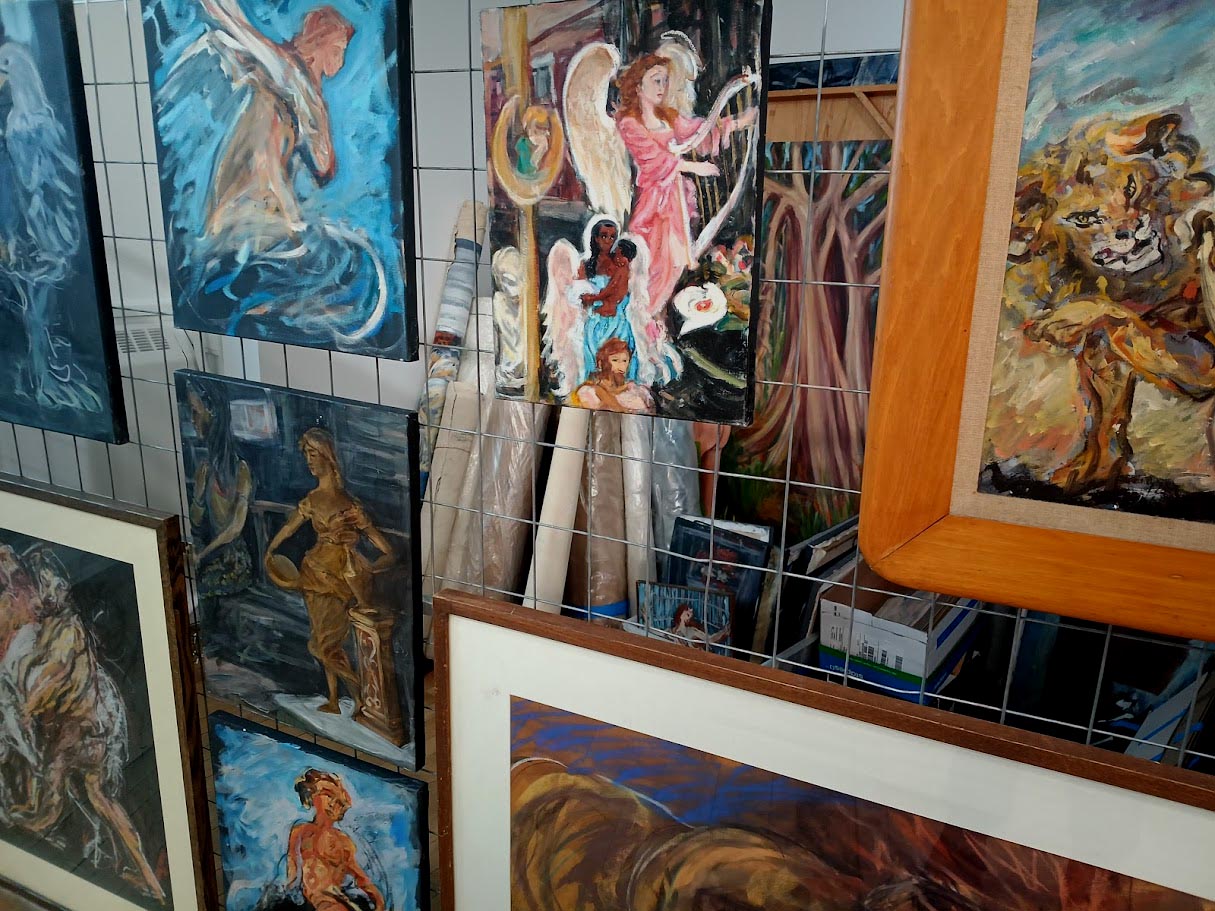
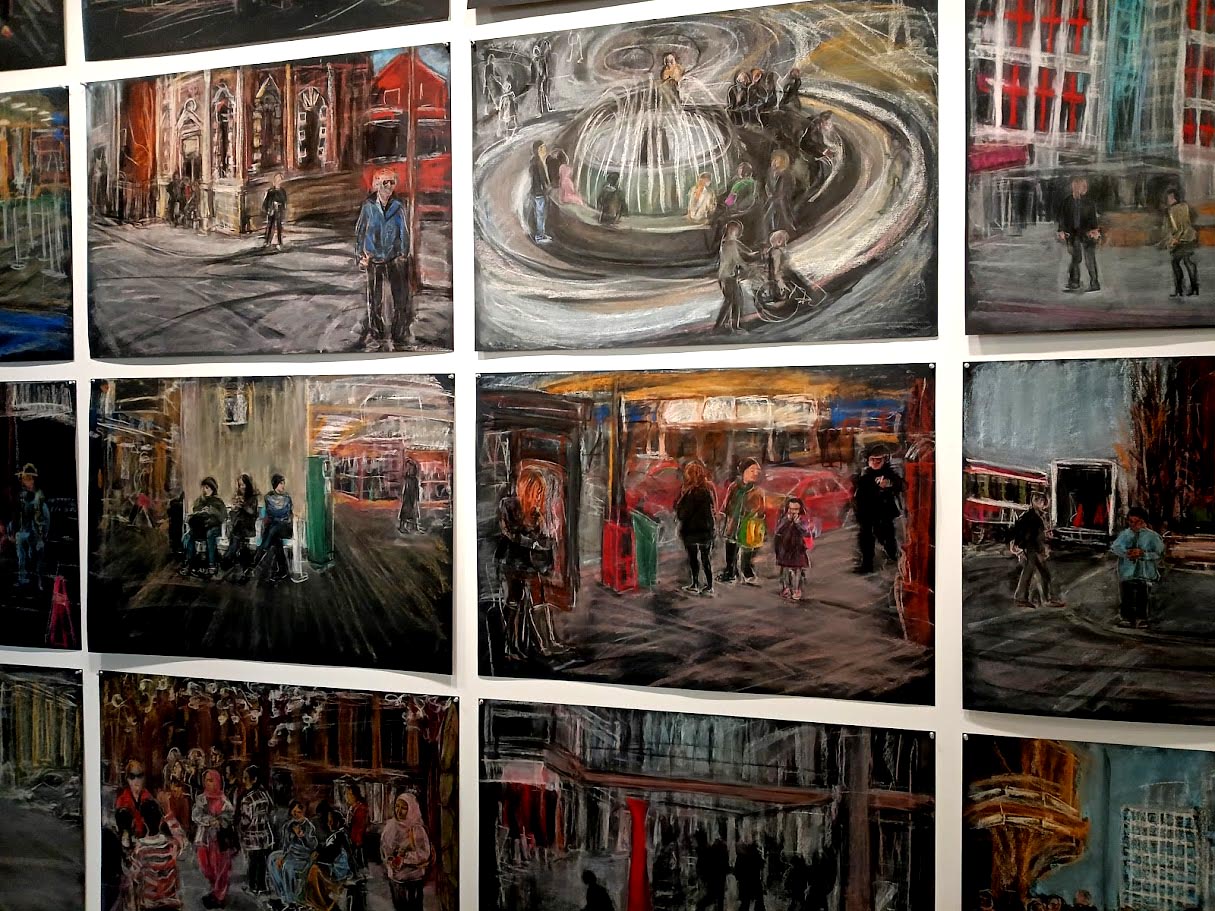
ChromaZone existed from 1981 to ’86, but Sybil Goldstein continued to paint until her death.
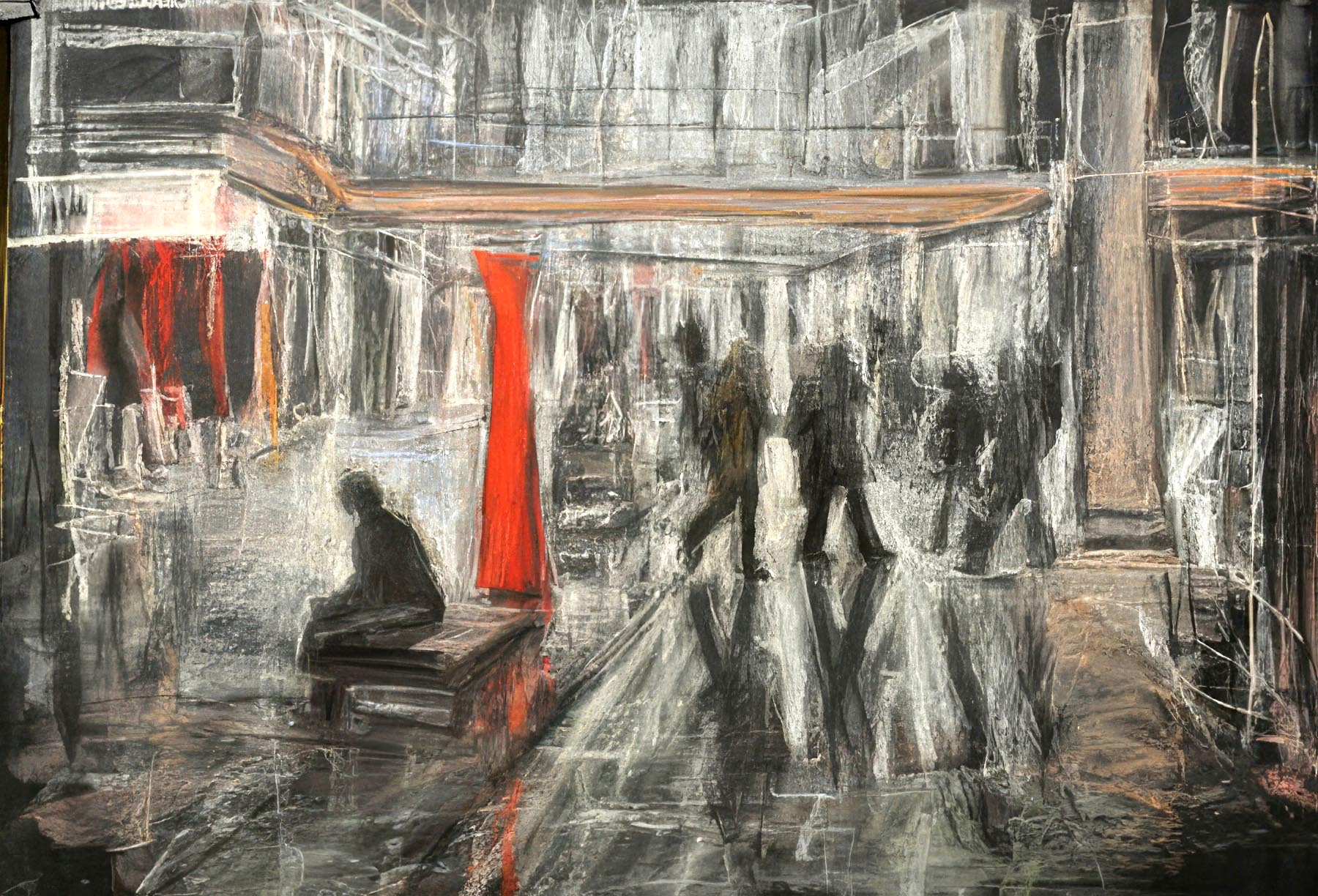
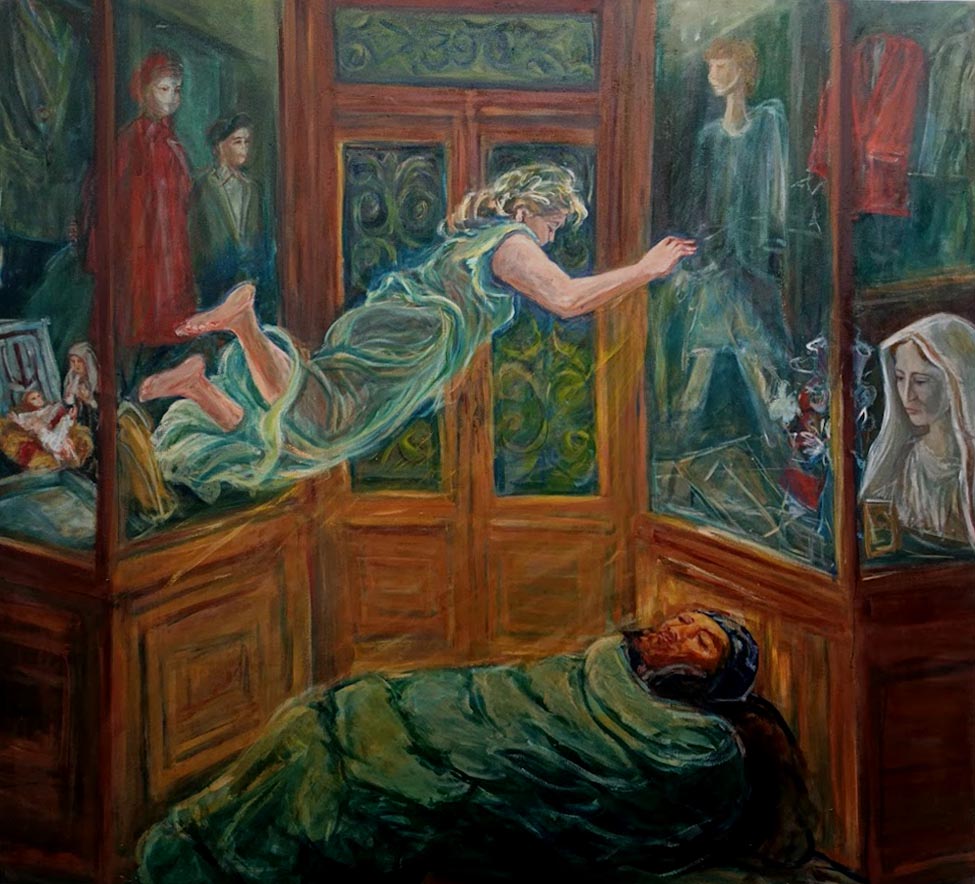
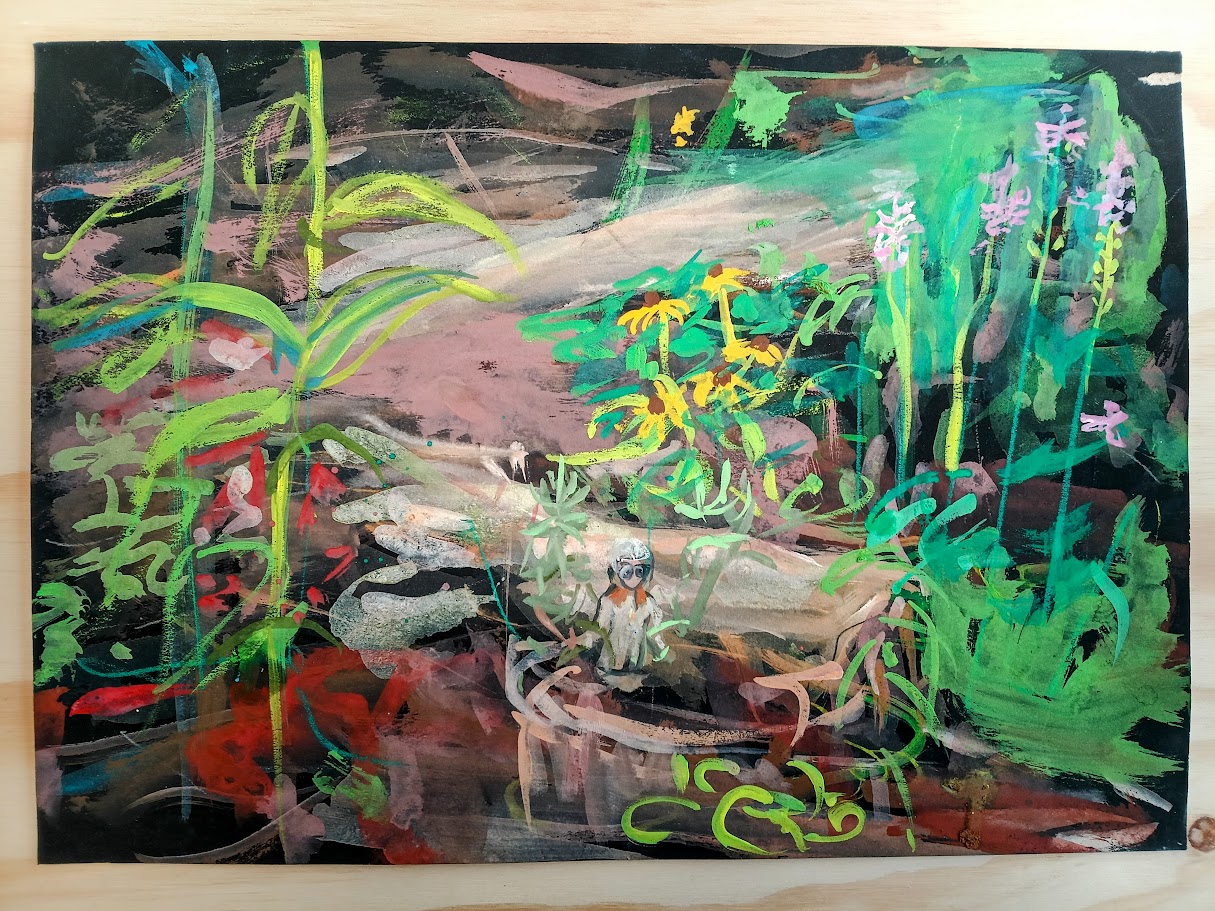
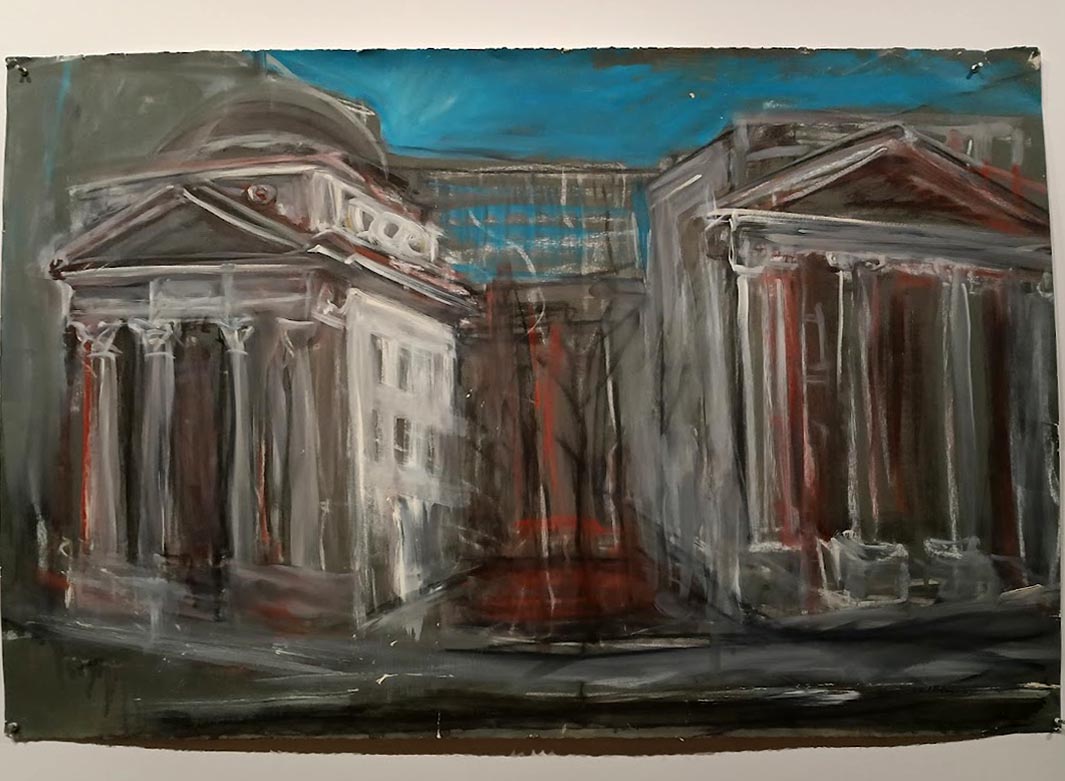
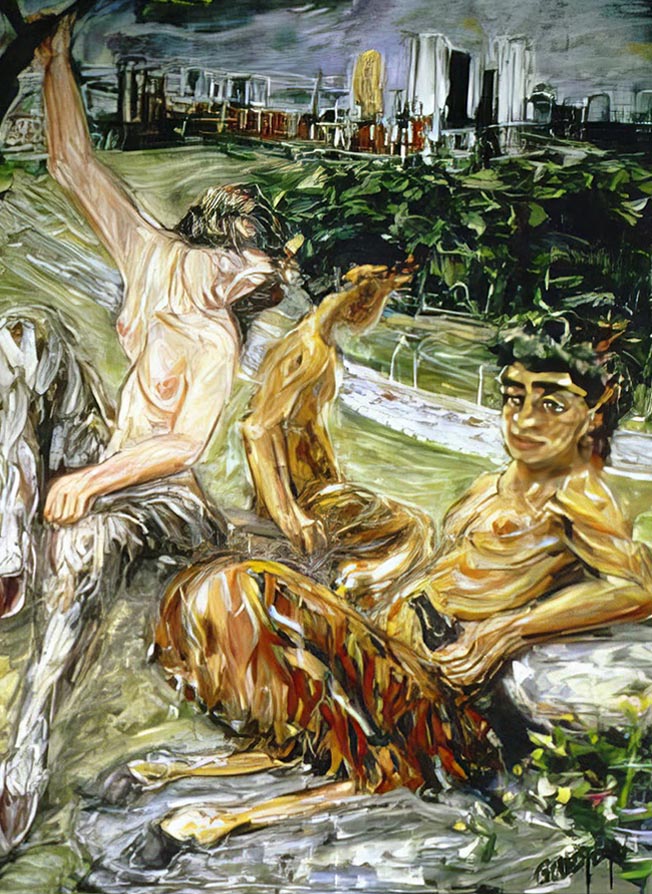
She painted everything: the streetcars and towers that define Toronto; moonlit nights and sunny meadows in the wilderness; rippling, black Ontario Lakes and rivers studded with ancient rocks; real animals and mythical beasts; friends and strangers.
Particularly in her depictions of people, in urban settings, Sybil Goldstein offers compassion. Weary commuters rising on escalators or waiting patiently in line, shoppers at the Eaton Center and the Dufferin Mall, children playing in fountains, or the homeless, just trying to survive. Often there is an angel hovering nearby or a mysterious, dreamy glow so that all seem touched by something alien and graceful, something evoking the divine, something in all of us, even when we are hanging out in the PATH food court, wondering what to have for lunch.

 annetteandquebec