August 14, 2024

Portraits as Portals: Psychic Mediums Read Unknown Artists

A Project by Jennifer Fisher and Jim Drobnick at Art Windsor-Essex

I have learned that we are all psychic to some degree. Call it premonition, gut feeling, hunch, sixth sense, intuition — we all have it. A medium, however, is a psychic person who has special abilities, in particular, the ability to communicate with beings on the other side of life, i.e. they function as a door or portal to those residing in the spirit world.

Jennifer Fisher and Jim Drobnick, also known as the collaborative entity DisplayCult, go deep into the world of the psychic medium to explore the etheric energy that resides in an artwork. Rummaging through their own collection as well as distant corners of the basement of Art Windsor-Essex (AWE) the artists selected seven portraits by unknown artists and presented them to psychic mediums for a “reading.”

What ensues is a sort of Russian doll series of portraits.

Portrait by Unknown Artist from the Art Windsor-Essex collection. This was one of the portraits used in the exhibition Portraits as Portals. This portrait, in particular, had a disturbing impact on more than one of the psychic mediums.

First, we have the actual portraits. These pictures are at various levels of skill and sophistication. They are mostly oil paintings on canvas or board. There is at least one embroidery, shown below.

Portrait by Unknown Artist from the Art Windsor-Essex collection. This was one of the portraits used in the exhibition Portraits as Portals.

All the portraits share a certain charm, as well as poignancy. Perhaps it’s because of their status as abandoned, forgotten works. Like all art, they hold a power, a tightly coiled energy, as they encapsulate a physical remnant of an individual’s creative journey, no matter how distant in time.

Portrait by Unknown Artist from the Art Windsor-Essex collection. This was one of the portraits used in the exhibition Portraits as Portals.

The second set of portraits is provided through the psychic medium’s descriptions of the artists, the creators of these unknown items.

Installation view of Portraits as Portals exhibition, shows a psychic medium and the portrait she is reading.

We might learn what the artist looked like, what they were wearing, their state of mind, their reasons for doing this particular work, where they were physically, and, where they were in terms of their place in society. We might learn about their feelings and various problems, like depression or debt, or any combination of the preceding.

How a psychic medium acquires or develops these skills is baffling to me.

Excerpt of video of psychic medium, from Portraits as Portals exhibition

The psychic medium gazes at a portrait, with intensity, and soon enough, a message, or a vision, is received. We learn, for example, “…he may have used alcohol to avoid his feelings coming up..,” or, “…he actually didn’t want to do this…”

Show above is one of the psychic mediums from the Portraits as Portals exhibition. “This individual had a very strong political stance,” she notes.

Concurrently, the viewer is looking at the video portraits of the psychic mediums themselves.

I suppose the group of psychic mediums depicted here, is fairly average, in terms of looks, dress and demeanour. My sense is, this could be any random twelve people on the Dufferin bus, at rush hour.

Show above is one of the psychic mediums from the Portraits as Portals exhibition. This woman was distraught because various dark feelings she picked up from one of the portraits.

The videos are definitely a spectacular element of this exhibition. Giant, ultra high resolution, flat screen monitors are placed vertically, snug against the gallery walls, each displaying a mesmerizing, nearly life-size, image of a psychic medium against a dark background. The psychic medium’s voice emerges from directional speakers placed in the ceiling, so that the viewer, seated on a low bench, is enveloped by sound and image.

Installation view “Portals as Portraits: Psychic Mediums Read Unknown Artists”

And finally, we have the largest Russian doll, the fourth portrait, the meta portrait, which suggests a society in transition and upheaval, one recoiling from the spectacle of war, fearful of looming climate change, technological transformation, and one where an interest in psychics, and all manner of paranormal gifts, is on the rise. This interest in psychic phenomenon was particularly strong during the pandemic and continues today.

I was very excited to get to this absorbing exhibition and to think about the lasting power of objects. The Arts Windsor-Essex, new to me, is a true contemporary art venue. On another floor was an exhibition called Love Languages with works by Erika de Frietas and David Bobier among others and I was fortunate to take that in too.

Installation view of Love Languages, detail of piece by Erika deFreitas

Just across the river, of course, lies the Detroit Institute for the Arts, and the stunning Diego Rivera murals, room upon room filled with Picassos, Cezannes and Van Goghs, a sprawling current show of work by Tiff Massey. And just a few blocks away is the Museum of Contemporary Art Detroit (MOCAD,) which currently has a show by the US-based, Botswana-born artist and educator Meloko Megosi.

Space of Subjection: Black Painting V, 2022 by Meloko Megosi

It’s a four hour drive.

May 26, 2024

Ghosts of Canoe Lake: Marcel Dzama at the McMichael Gallery

As a repository of Canadiana in all its splendour, the McMichael Gallery in Kleinburg does not disappoint. Sited within 100 acres of majestic forests, the gallery building — with its log and barn-board walls, massive, rough hewn field-stone fireplaces and floor to ceiling plate-glass — is a treasure trove of Group of Seven artworks.

Weirdly, six members of the Group of Seven are interred on the grounds of the gallery, at the McMichael cemetery.

Wait…One is missing…Where is Tom Thomson?

No one knows. And that mystery is at the heart of the current show by Marcel Dzama. The show’s title, Ghosts of Canoe Lake, refers to Tom Thomson’s disappearance, which occured while he was paddling on Canoe Lake, in 1917.

“Canoe Lake, Sunset” by Tom Thomson

On entering the gallery, a dreamy triptych, filled with colour and wildly imaginative imagery, announces the themes of the exhibition: Tom Thomson himself, his death and subsequent ascendence as the essential Canadian artist; the vividly alive natural world — flooded and on fire — and the strange cast of surreal creatures and characters that reside within it.

“After the Fire Before the Flood” by Marcel Dzama

Detail of “After the Fire Before the Flood” by Marcel Dzama

Marcel Dzama has declared he is “obsessed with Tom Thomson” and that the show is an homage to the artist who died at the age of 39.

Installation by Marcel Dzama

In the center of the Gallery sits a large tent, festooned with oversized polka dots, imagery which Marcel Dzama has been painting for some time.

“The Tent” by Tom Thompson

It really does reference the beautiful little tent that Tom Thomson painted so long ago, when he worked as a Fire Ranger in Algonquin Park. Of course, Marcel Dzama’s tent is a little more circusy, and within, we are presented with another form of the artist’s work: Film.

Installation view of artwork by Marcel Dzama
Still from “To Live on the Moon (For Lorca)” by Marcel Dzama

The film is fun to look at, featuring a whacky plot where Tom Thomson is dispatched and a riotous funeral parade follows. Hillarious, absurdist, Dadaist, surrealist, and yet, like all the paintings and other objects in the show, completely and uniquely Marcel Dzama!

“Aurora Borealis (or a light in the sky like a bat over the land” by Marcel Dzama

Blue and grinning, looming over the show, is a giant what looks like paper mache moon. It’s so familiar! It’s an image that is repeated in multiple forms in the exhibition. It took me a while to figure out it’s reference to the movie “A Trip to the Moon,” made in the year 1902 by Georges Melies.

Installation view of artwork by Marcel Dzama
“To Live on the Moon (for Lorca)” by Marcel Dzama
Still from film by Marcel Dzama

The show is rife with art historical references. Picasso’s dove makes an appearance, frequently the sky’s are painted like the turbulent Starry Night imagery of Van Gogh, birds behave as they do in M.C. Escher’s work, the famous Lawren Harris portrait of his wife Bess is reinterpreted by Marcel Dzama, and, the artist Garcia Lorca has several pieces dedicated to him in this exhibition.

We can not abandon such beauty” by Marcel Dzama

But it is the Group of Seven, and Tom Thomson in particular, that has transfixed the artist. Maybe Tom Thomson represents that longing to be close to the grandeur of the Canadian landscape, a desire that is so often a function of simply dwelling in this part of the world.

And yet, as Marcel Dzama acknowledges, at this juncture, the world is turned upside down. The show is quite somber. War and corruption are everywhere. The seas are rising and the forests are on fire.

“Lady of Fire” by Marcel Dzama

A book, by Guy Maddin, which accompanies the exhibition, contains the following mournful poem.

When painting the evening,
While the world is unease,
The young northern painter,
Painter of trees.
Your evening has ended,
The moon is out low.
Hit your head upon it,
And sleep in the waters below.
That pale horse rider,
Has come here so soon.
When there’s war on the earth,
And blood on the moon.
— Tom’s Blood Moon, 
Marcel Dzama

May 5, 2024

DECADE: 10 Years of Creation at Youngplace

Beleaguered, in decline, challenged, crumbling, struggling…. These are some of the words used in the local press and social media to describe the current state of the Toronto art scene. There are many reasons: the pandemic screwed everything up, capricious corporations pulled funding, everything is turned into a condo tower, money just keeps flowing upwards, and a glass of wine costs twenty dollars. But is there something more fundamental going on, could it be the nature of Late Stage Capitalism!?

Painting by Ruth Adler
Assemblage by Ruth Adler from “DECADE” at Koffler Centre for the Arts

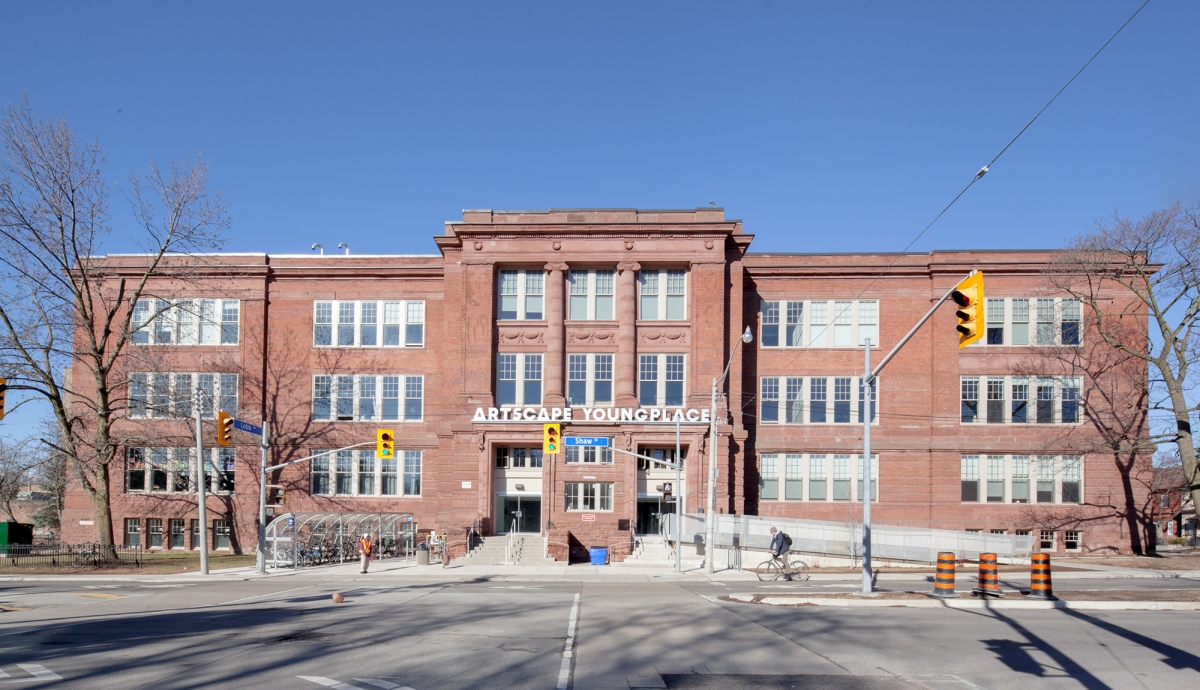
In this context, seeing the exhibition at Koffler Center for the Arts was not just fun, uplifting and hopeful, but also illustrative of the importance of artist’s spaces in this city. The Koffler Center is housed in the Youngplace building, which opened as a cultural center in 2014 and is currently one of the Artscape facilities in Receivership. All the artists in the show are, or were, until recently, part of the Youngplace community.

The stated goal of the exhibition is to shine a light on Youngplace: “this iconic arts hub.”

Painting by Ruth Adler
Assemblage by Ruth Adler

Lining the wall of the entrance to DECADE are fabric and paint assemblages by Ruth Adler. This artwork strikes me as generous, open and approachable. It’s all about surface and shape, colour, pattern and movement. It feels light-hearted and celebratory, and I really like the way this artist repurposes materials.

Ruth Adler has had a studio at Youngplace for 10 years. This fact reminded me of the documentary about Brian Eno I saw this week, at the annual Hot Docs Film Festival. (Actually it was more of a film experience, created using generative technology.) Toward the conclusion of this event Brian Eno talked a lot about the importance of creative ecologies, as opposed to the myth of the solitary genius. I assume this idea of creative community applies to all the artists in this show.

Although she works with many different kinds of materials, Ruth Adler thinks of herself as a painter. Matthew Schofield is another painter in the show. Whenever I see paintings by this artist it feels like he’s tapping into my own memory banks. That’s because he delves into the arena of quirky personal snapshots, family pictures, keepsakes, memorials that are entirely personal, and yet, universal.

Paintings by Matthew Schofield
Painting and detail by Matthew Schofield

These beautiful paintings are tiny, some just 4″x 4.” They are identical in size to the original snapshots. They have a glittering, gemlike quality which is quite mesmerizing. I want to get closer and closer to them, and peer into the captured moments.

Painting by Matthew Schofield

It was very exciting to see the work of Midi Onodera. This artist has some interesting relationships with machines.

Excerpt from Soliliquy bny Midi Onodera

The excerpt above is a hilarious interaction between the artist and a chatbot named Faux Midi.

There is a lot of literature on line these days about how chatbots and GPT entities are prone to all kinds of malfeasance. They are liars, people pleasers who will say anything just to keep talking. They are prone to hallucinations. They can easily be hypnotised to spout misinformation. In other words, these things can’t be trusted! Some of the exchanges between Midi Onodera and Faux Midi make this fact abundantly clear.

The other piece by Midi Onodera was produced especially for the exhibition and weaves together colorized, moving mages of the corridors and stairways of the Youngplace site at 180 Shaw Street. It was wonderful to look at until I started feeling seasick.

Excerpt of 2397 by Midi Onodera

Speaking of weaving, textiles played a big role in the DECADE show.

I was obliged to read the catalogue to know what I was looking at when I viewed the elegant, attenuated weavings by Shabnam K. Ghazi. In fact, these wall hangings are composed of shredded paper which has been woven into a fragile, delicate fabric. The recombined paper contains screenprinted depictions of the artist’s writings, describing her earliest memories.

Wall hangings
Artwork by Shabnam K. Ghazi

In this convoluted, painstaking process the artist has found a way to physically manifest her language and her earliest recollections.

Two pieces by Barbara Astman are in the show. One is a lovely tapestry in muted tones. It takes a while to recognize the fragments of contemporary glamour, fashion and advertising imagery in this piece. The form of tapestry, a traditionally female pursuit, originated in Ancient Egypt. Tapestry weave pieces, using linen, were found in the tombs of both Thutmose IV (d. 1391 or 1388 BC) and Tutankhamen (c. 1323 BC.)

Tapestry
Tapestry by Barbara Astman
“Daily Collage” by Barbara Astman

The other piece by this artist is a collage using news feed type imagery. I really like the way Barbara Astman uses the pictures we are relentlessly bombarded with everyday and repurposes them for her own amusement.

Detail of “Daily Collage” by Barbara Astman

Massive quilts by Carolyn Murphy are on display. They take quilting, another so-called feminine art, into the realm of spare and airy abstraction. These quilts have a Russian Constructivist vibe. The very appealling texture is created by the dense stitching which ambles every which way in curving patterns. It was a good move by the Koffler gallery to place a large sign nearby, stating the obvious: Do Not Touch.

Quilt by Carolyn Murphy

Among my favourite artworks in this show were the paintings by Gillian Iles. She has created a sprawling installation composed of about eight separate paintings, produced on Tyvek and other materials, tied and stretched haphazardly. The installation resembles a temporary dwelling or encampment, ramshackle, derelict and unsafe.

“All and Nothing” by Gillian Iles
Detail of installation by Gillian Iles

Within this structure, Gillian Iles has strewn intense images: Light blasts a tiny, vulnerable tent under the arch of a heavy black night sky; a wrecked, abandoned vehicle is overgrown with random vegetation; a fire nearly out of control towers over onlookers; and — is it dawn or more flames? — something is blazing fiercely through a hidden path in the woods.

Detail of “All and Nothing” by Gillian Iles

Detail of All and Nothing by Gillian Iles
Detail of installation by Gillian Iles

David Liss, the esteemed director/curator of MOCCA, curated the exhibition. In a video loop playing in the gallery he talks about how interacting with art — not on line but in real life — is essential to the human experience. He invites visitors to the show to celebrate Artscape Youngplace and the decade since it was founded, and to “consider and imagine what the next decade will look like.”

February 28, 2024

Judy Chicago: HERSTORY at the New Museum, NYC

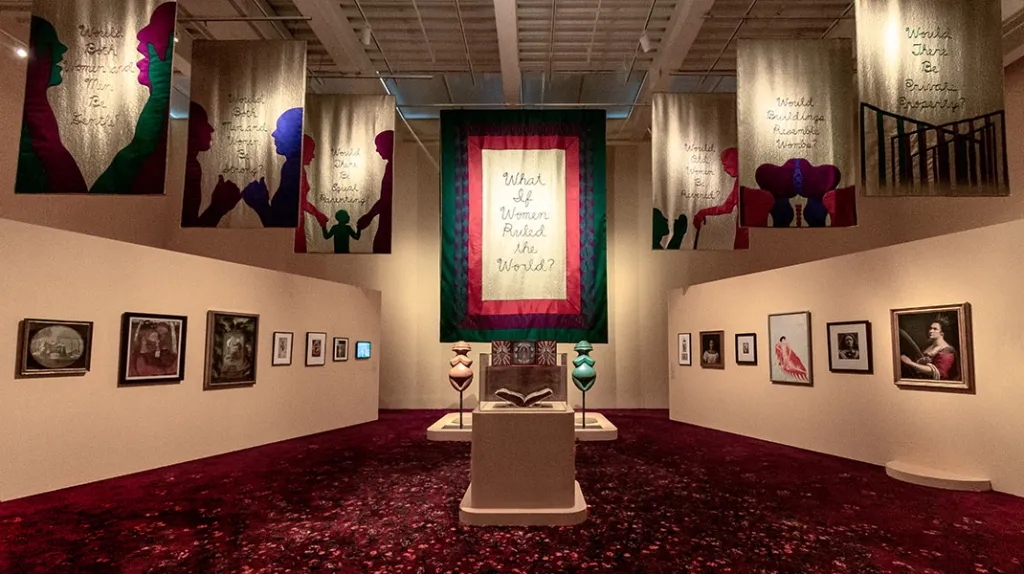
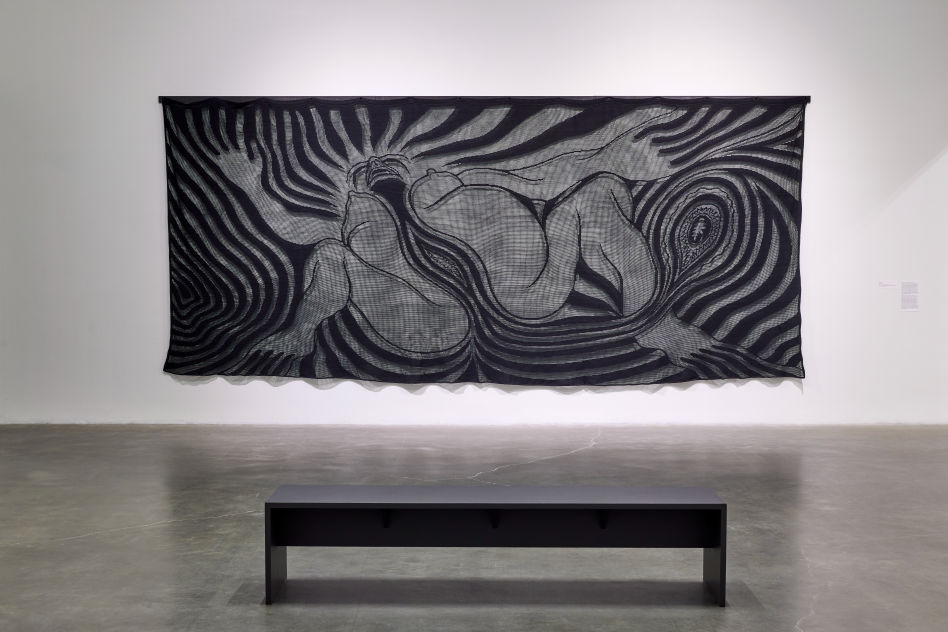
In one of the pieces from her massive retrospective at the New Museum — covering sixty years of art making — Judy Chicago invites us to consider a simple question: What if Women Ruled the World? The responses are compiled in a sprawl of hopeful texts, manifest in needlework, that most feminine of forms.

“There would be no wars.” “The Earth would be saved by humanity instead of being destroyed by it.” “The first step would be to abolish gender norms and deconstruct the entire hetero-patriarchal, racist and classist system that surrounds us.” “Not one mass shooter in the US was female.” “There is no need for violence when we use our hearts.”

In anyone else’s hands this piece might come off as naive or reductive, but there is something about Judy Chicago’s method — what she refers to as “call and response” collaboration — through which she is able to harnass an outpouring of honesty from many participants. The result is that the artwork has a powerful impact. It is urgent and exciting.

Installation view of “What If Women Ruled the World” by Judy Chicago
Detail of “What if Women Ruled the World” by Judy Chicago

This is a big show, going all the way back to painted car hoods Judy Chicago produced in the mid sixties.

Installation view of Herstory by Judy Chicago

And then there were the wonderful smoke performances from the seventies.

Immolation by Judy Chicago

But these early artworks are not the reason for Judy Chicago’s giant retrospective at the New Museum.

“Herstory” will showcase Chicago’s tremendous impact on American art and highlight her critical role as a cultural historian claiming space for women artists previously omitted from the canon.

New Museum description of Judy Chicago: Herstory

It is this role as a cultural historian which Judy Chicago fully inhabits in her artwork called “City of Ladies.” The piece is a show-within-a-show in which nearly ninety artworks by notable women from history are on display.

Installation view “The City of Ladies” by Judy Chicago
Hilma af Klint, Group IX/UW, The dove, no.2 (1915) from “The City of Ladies”
Gluck (Hannah Gluckstein), Portrait of Miss E.M. Craig (1920) from “The City of Ladies”

In an interview about “The City of Ladies” Judy Chicago often mentions a certain “Christine.” It took me a while to figure out she meant Christine de Pizan, who wrote “The Book of the City of Ladies” in 1404. Christine de Pizan lived from 1365 to 1430 and is thought to be the author of some of the very first feminist pieces of literature.

From compendium of Christine de Pizan’s works.
Shows the author lecturing to a group of men. Created in her scriptorium in Paris in 1413.

A brochure provided by the New Museum is a compendium of the women included in the show, and contains a short but detailed biography of each: Hilma af Klint, Claude Cahun, Leonora Carrington, Elizabeth Catlett, Emily Dickinson, Artemisia Gentieschi, Zora Neale Hurston…among many others.

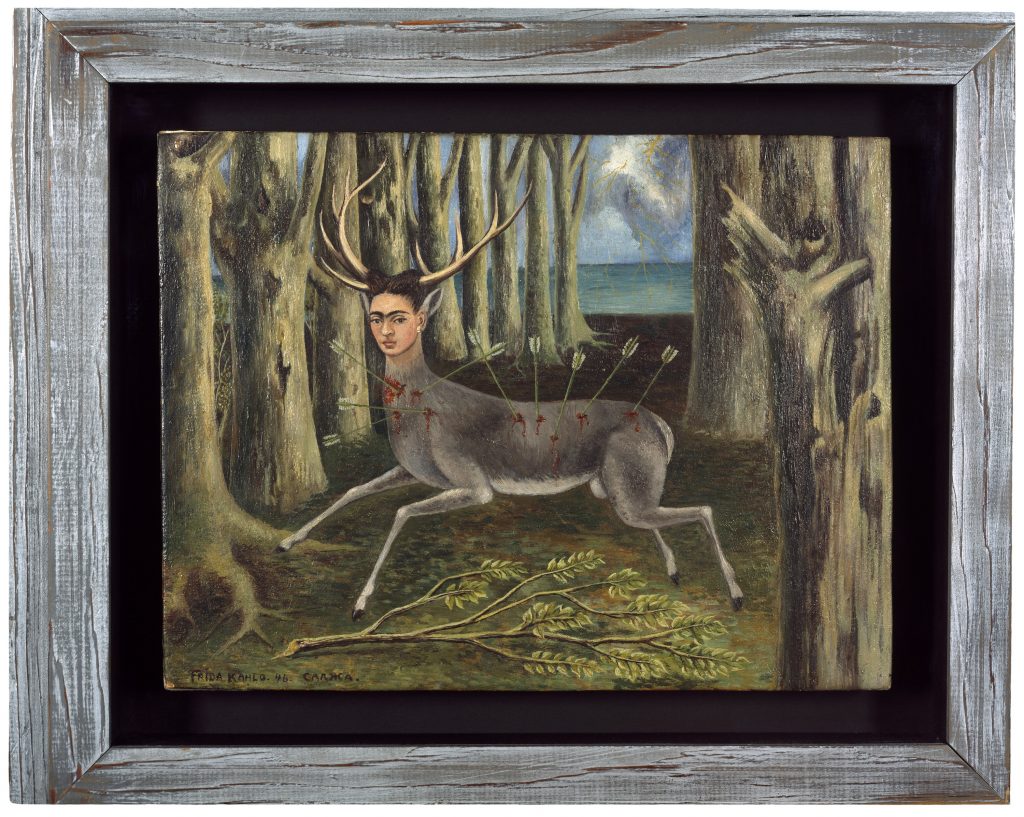
Wounded Deer, by Frida Kahlo (1946) from “The City of Ladies”

As Judy Chicago says: “If you bring Judy Chicago into the museum, you bring women’s history into the museum.”

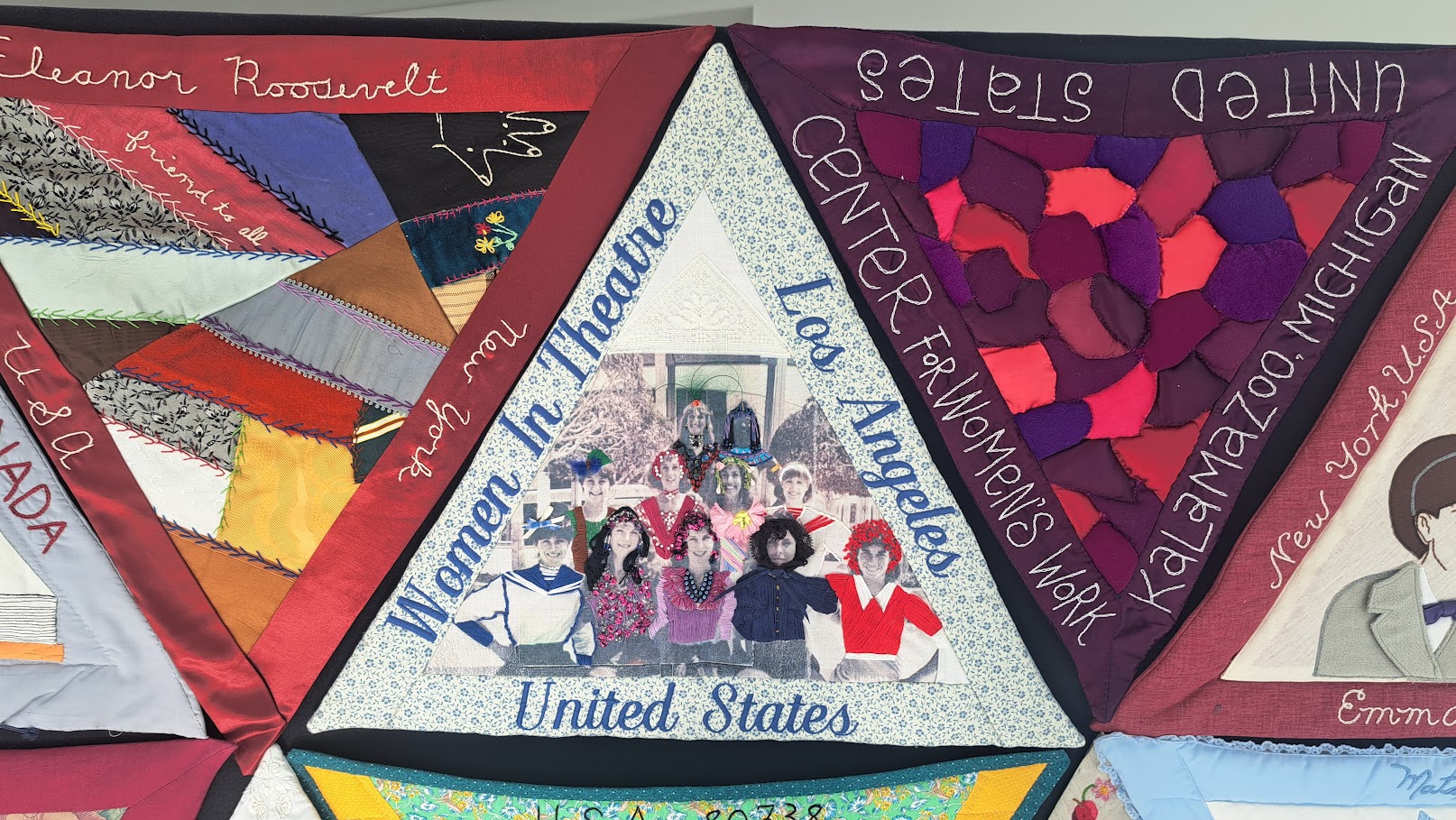
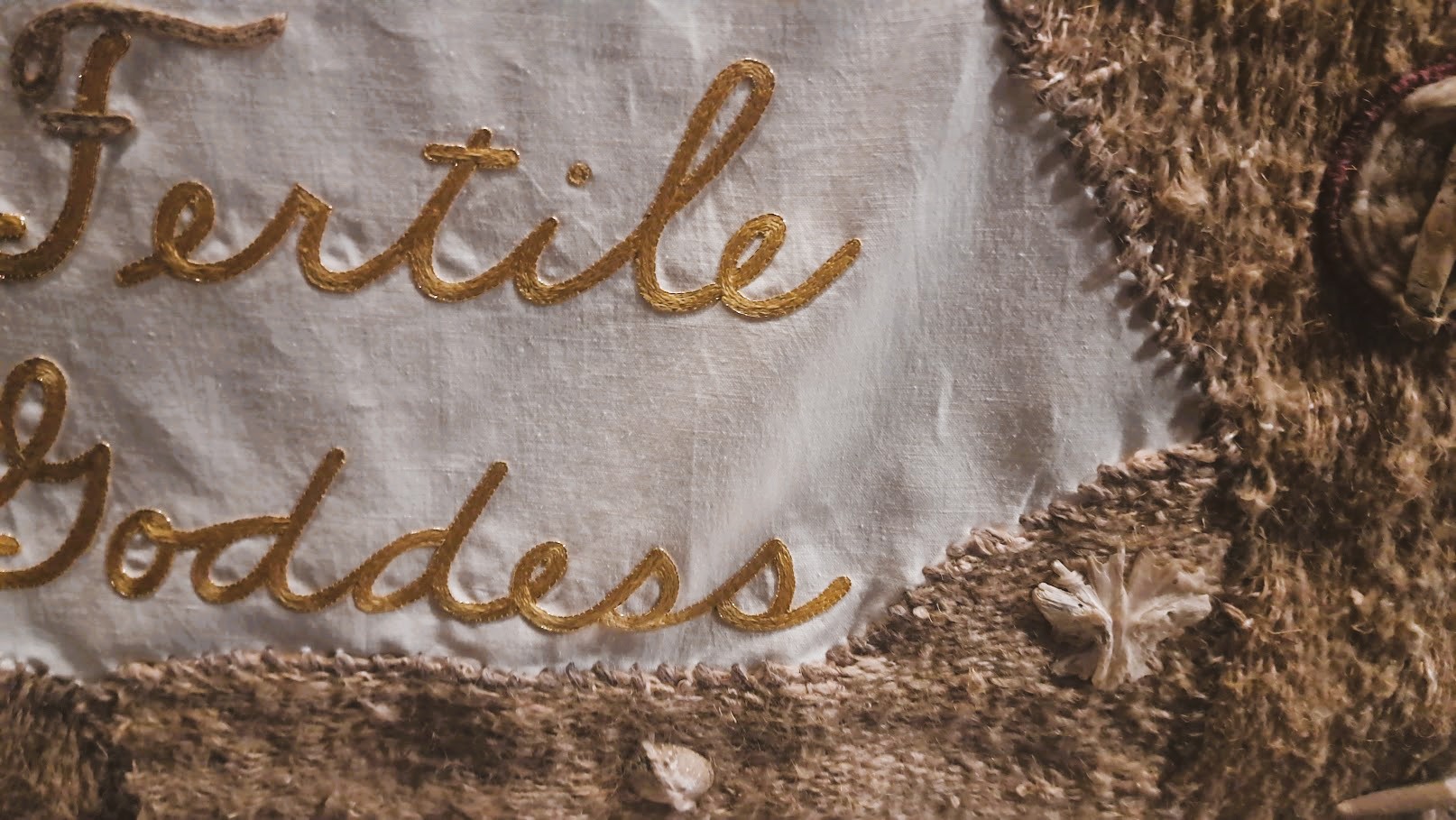
“The International Honor Quilt,” another “call and response” project,  is composed of 539 individual triangular quilts, produced by women from around the world. Each triangle celebrates a woman, a women’s group or a feminist issue, and together they create a joyful depiction of global female solidarity.

Installation view “The International Honor Quilt” by Judy Chicago
Detail of “The International Quilt of Honor” by Judy Chicago

Mostly global icons, like Queen Elizabeth II, are represented, but there are also lots of obscure women’s groups and a few mythological, religious, fictional women make the cut, for example: Deborah, Demeter, Eve, Isis, Nancy Drew, Persephone, Virgin Mary and, weirdly, the Loch Ness Monster.

Depiction of Nessie

Parts of the show seem too binary. Are all women good because they can give birth and all men are evil warmongers? That part of the show — despite the beauty of the massive collaborative tapestries — struck me as an illustration of the limits of second wave feminism.

Tapestry by Judy Chicago

I prefered looking at her most recent work, where she meditates on death and the climate crisis.

Artwork by Judy Chicago

But wait, the big thing, the thing I heard about for decades, the thing that defines Judy Chicago — “The Dinner Party” — was not there. It was a ghostly presence throughout, constantly referenced, but absent.

I was obliged to journey to Brooklyn, change to the 2/3 at Hoyt, past Grand Army Plaza and The Botanic Gardens, onward, to Eastern Parkway and the stately Brooklyn Museum, where Judy Chicago’s famous work is permanently lodged.

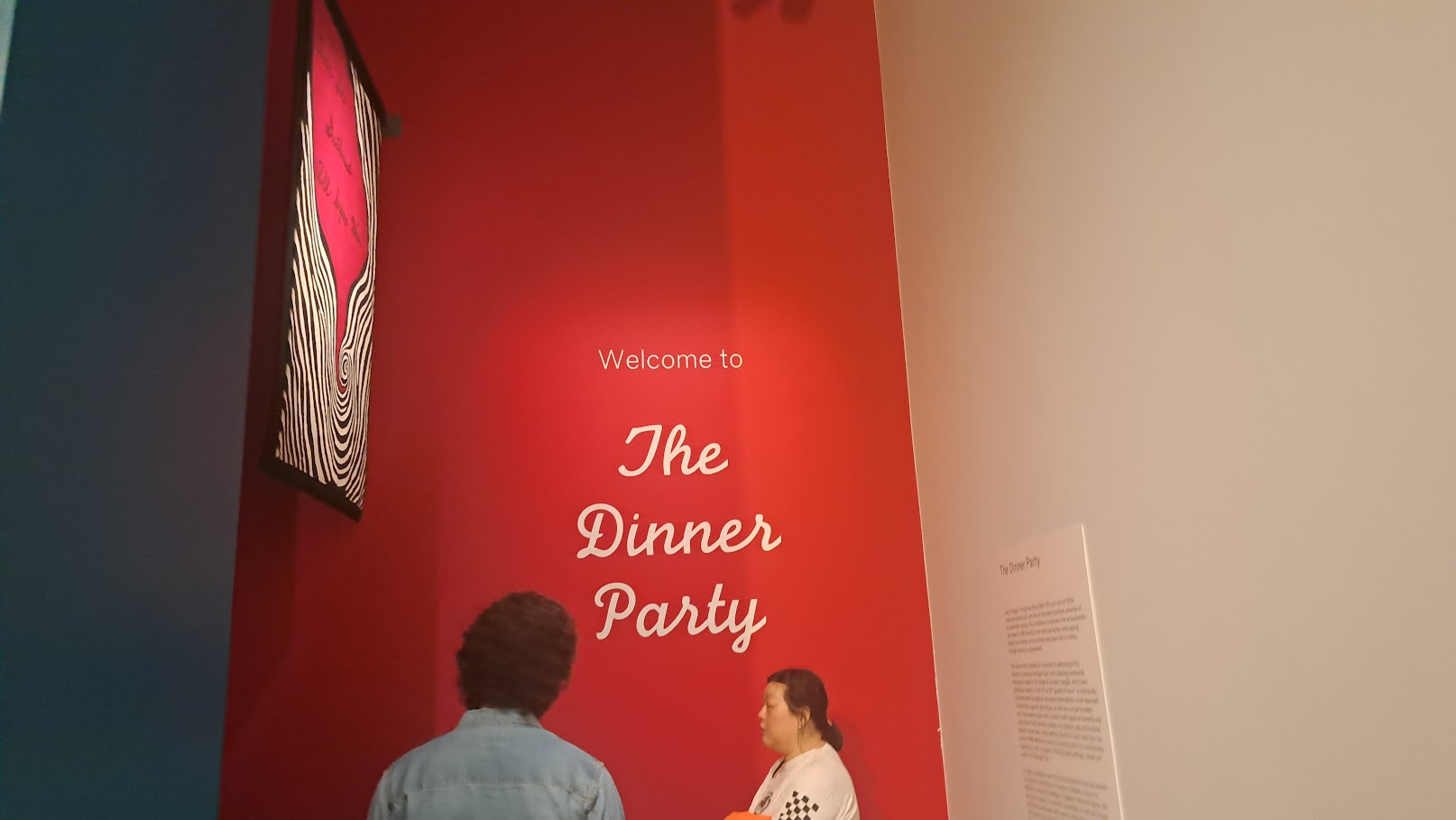
Entrance to “The Dinner Party” by Judy Chicago at the Brookly Museum

“The Dinner Party” by Judy Chicago
Detail of “The Dinner Party” by Judy Chicago

It was a long trip, but it was worth it.

January 13, 2024

Ron Giii – “The Effect of Temperature”

at Paul Petro Contemporary Art

It’s mid-January and winter has arrived on Queen Street. As I round the corner from Ossington and walk east, the scene is windswept, bleak and grey. Not so, however, within Paul Petro Contemporary Art. Paintings and works on paper by Ron Giii are on display, and suddenly I am in an atmosphere suffused with life, heat and light.

“Volume and Heat” by Ron Giii
Installation view “The Effect of Temperature” by Ron Giii

The title of the exhibition, “The Effect of Temperature,” points to the climate crisis which looms over us all. Many of the names of the small works — The Hot Sun, The Melting Greenland Glaciers, Somali Famine — overtly reference the global menace of our heating planet.

Here’s a quote about the climate threat, from the artist, which is posted on the gallery website:

This exhibit is humbly aware of a greater nature the laws of nature have, and climate change is the reality we have designated. My small paintings cannot cry at the dangers coming amidst the deluge.

Ron Giii

The small works on paper, which have a powerful intensity, make me think of those NASA photographs from the Webb Telescope, of distant suns, dying or being born. On the other hand, they are reminiscent of infinitesimally small things too. Cells for instance or pictures of mitochondria itself.

“Time is the Daughter of Space” by Ron Giii
Installation view “The Effect of Temperature” by Ron Giii

A few of the small paintings on paper appear to have been ripped apart and put back together with strips of clear tape.  According to Paul Petro these artworks “… were destroyed by the artist during a bipolar disorder episode last year following which the artist attempted to repair the works by puzzling them back together and taping the tears. In conversation, it was agreed that these works would be consolidated with archival tapes on the verso, with the assistance of a paper conservator, to stabilize them, and that these works would be shown in order to provide a level of transparency that would welcome his disability into the conversation.  Giii has subsequently referenced the Japanese kintsugi concept of repair, and finding the beauty in the broken in this work. He has lived with the challenges posed by bipolar disorder, and an original misdiagnosis of schizophrenia, for most of his adult life.”

“Fusiona” by Ron Giii

In talking about his work Ron Giii acknowledges the influence of various philosophers, of geometry, of his long term interest in quantum physics and, most recently, of the writings of the British evolutionary biochemist Nick Lane.

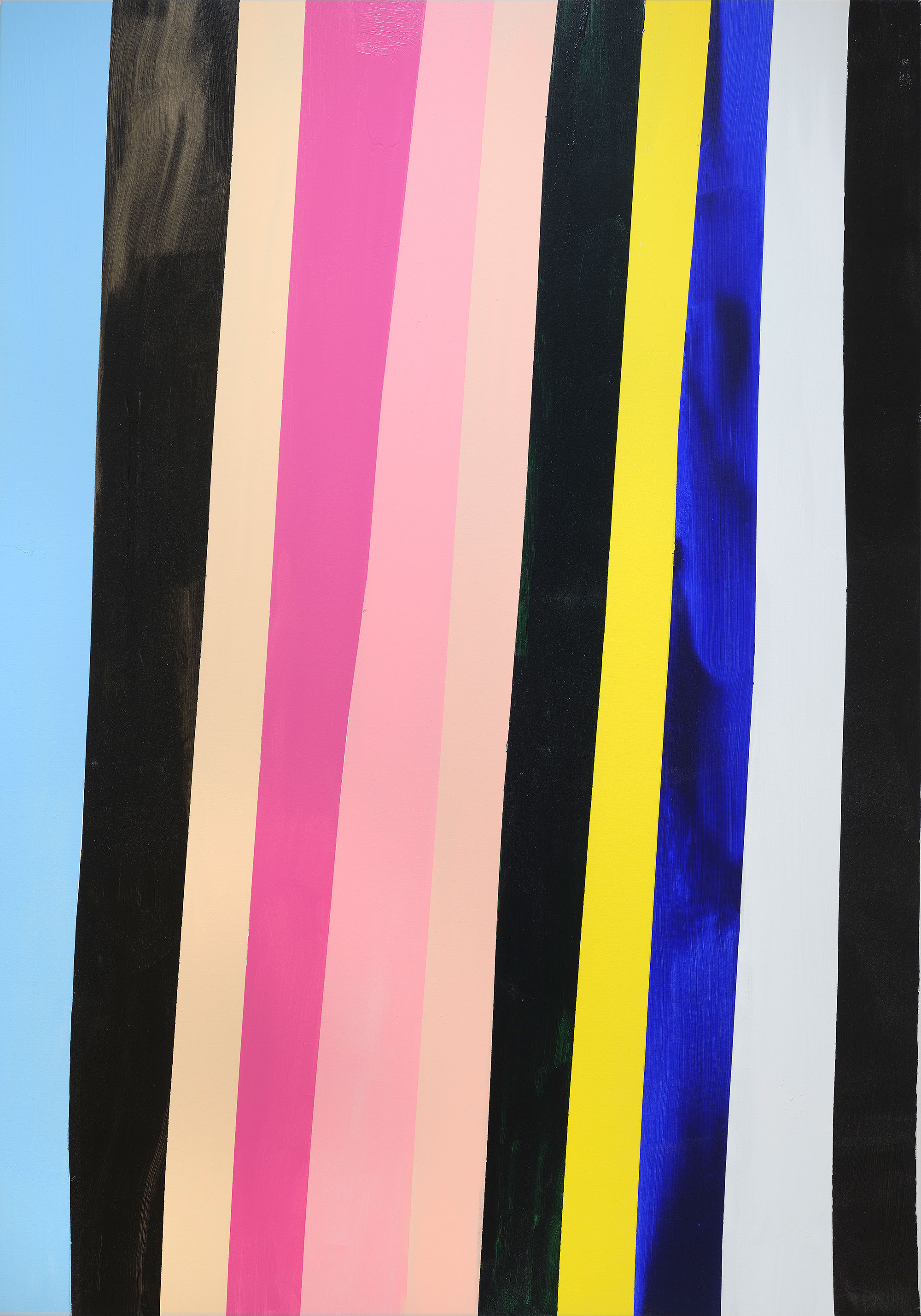
“Parallel Membranes 2” by Ron Giii

For Ron Giii, it was Nick Lane’s research into the origins of life and his descriptions of various electrochemical processes that directly inspired the striped paintings, which he calls parallel membranes, a phrase that turns up in Nick Lane’s book Transformer: The Deep Chemistry of Life and Death. 

Stripes are a thing for many artists. Here are just a few examples:

Danel Buren used colored stripes, in site-specific situations, as a way of relating art to its setting. As a Frenchman, he was comfortable with the classic French fabric motif.

“Suspended Painting” by Danel Buren

Canadian artist, Guido Molinari, sought pure abstraction in his work. To that end he completely eliminated the horizontal from his canvases, and thus any suggestion of depth.

“Untitled” by Guido Molinari

Frank Stella was also looking to eliminate by using stripes. In his case, it was emotion. The stripes did it. They got rid of all that messy action painting splatter and opened the door to minimalism.

“The Marriage of Reason and Squalor” by Frank Stella

And just upstairs from the Ron Giii is an exhibition of ink washes by Francesco De la Barra.  Here, the artist deploys stripes as a unifying motif in this dreamy suite of sensuous, poolside imagery. 

“Chemise B 12” by Francesco De la Barra

So far, Ron Giii’s stripes are my favourite.

January 4, 2024

Koffler Center of the Arts

The Synagogue at Babyn Yar: Turning the Nightmare of Evil into a Shared Dream of Good

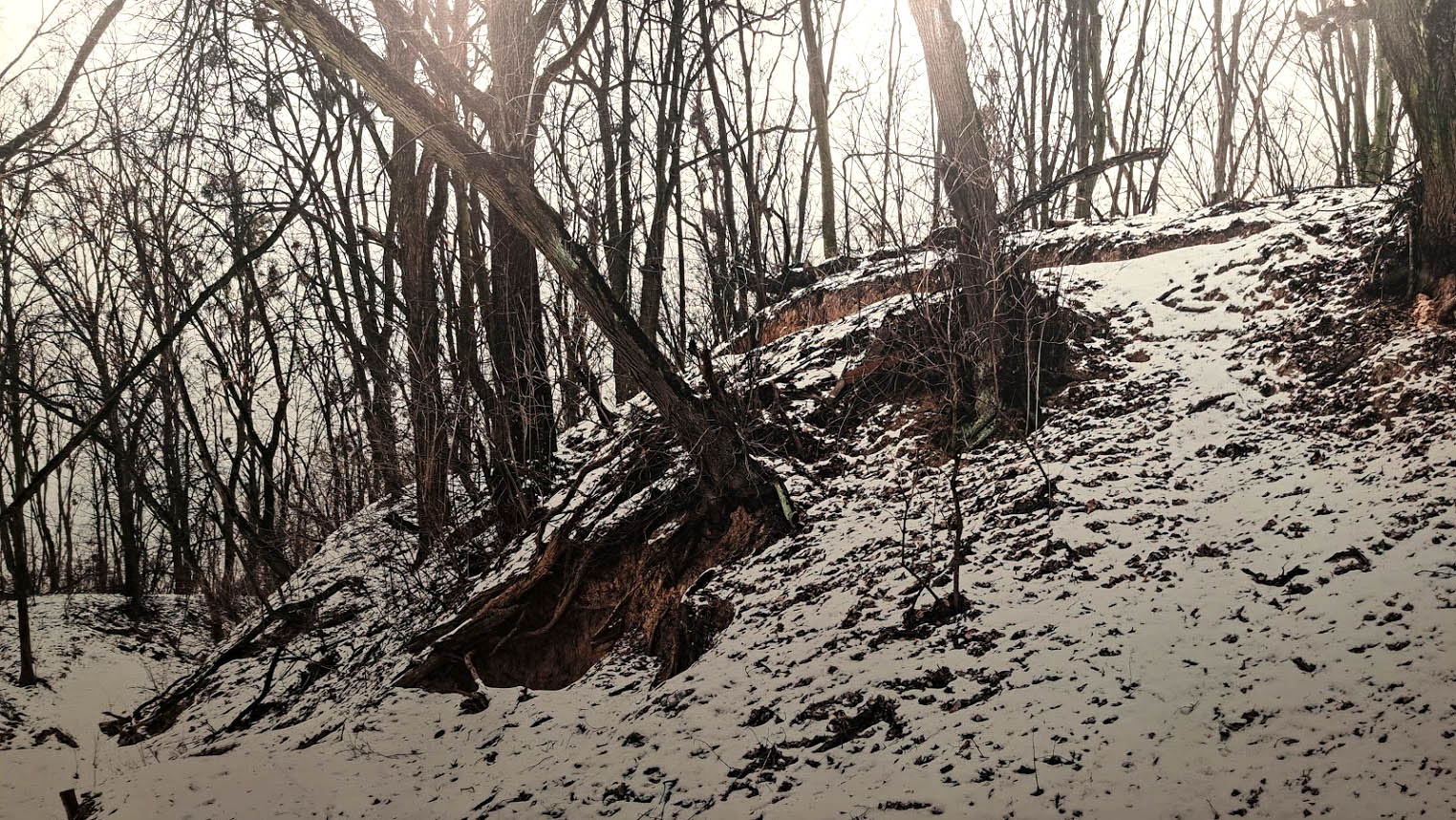
Giant photographs by Edward Burtynsky — leafless trees arrayed on a snowy incline — cover the walls of the current exhibition at the Koffler Gallery and provide a backdrop to the main subject of the show.

Installation detail from “The Synagogue at Babyn Yar”

That subject is the Synagogue at Babyn Yar, an extraordinary and entirely unique Jewish temple, built on the edge of a ravine — presumably the ravine depicted in Edward Burtynsky’s photo murals — which was the site of the horrifying massacre of much of Kyiv’s Jewish population. 

An aerial photograph of the Babi Yar ravine taken by the German air force

The slaughter took place on September 29, 1941. More than 33,000 men, women and children were murdered on that date. 

Until the conclusion of the war, and then after 1945 under the Soviets, any memorializing of the events at Babyn Yar was suppressed. It wasn’t until 1991, when Ukraine became independent, that monuments were erected at the site. In the exhibition catalogue essay, by curator Robert Jan Van Pelt, The Synagogue at Babyn Yar is described as one of the more “playful interventions on the site, to be constructed over an extended period.” It was completed in 2021.

The Synagogue was designed by Swiss architect Manuel Herz. It is constructed of wood, specifically 100 year old oak from the regional forests. With brilliantly painted interiors, wood was the traditional material used to build synagogues in Eastern Europe (none of which survive) since the seventeenth century.

Handshouse Studio, Replica of the roof and bimah of the Gwoździec synagogue in the Polin Museum, Poland

In writing about this project Manuel Herz, explains that while starting from the idea of a book, his proposal was to create a sort of “pop-up version,” one that is opened or unfolded by a ritualized group effort.

Who doesn’t love a pop-up book?

If we conceptualize the synagogue as a building typology in its purest essence, we can consider it as a book. During the religious service, a congregation comes together, to collectively read a book – the Siddur (the book of prayers) or the Bible. The shared reading of the book opens a world of wisdom, morals, history and anecdotes to the congregation. It is this notion that informs the design of the new Babyn Yar Synagogue.

Manuel Herz, architect and designer of the Synagogue at Babyn Yar

When it is not being used the Synagogue is folded in on itself. Weathered grey in colour, the temple forms a tall, slim rectangle that appears to hover above the ground on a platform.

The Synagogue at Babyn Yar in its closed configuration.
The Synagogue in its pop-up state at Babyn Yar
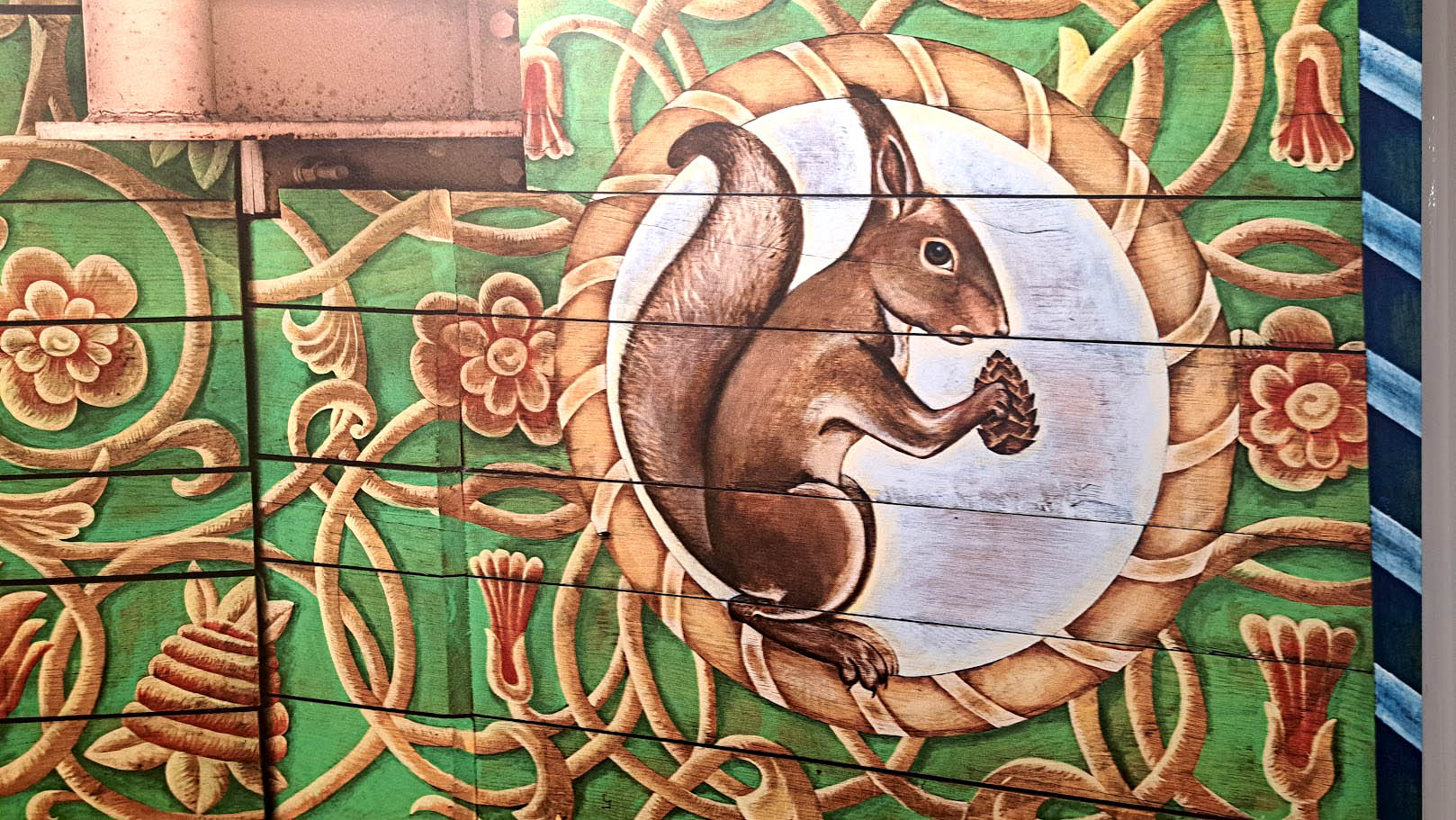
The walls are covered with prayers and painted with images of animals and plants. The ceiling indicates the night sky on that date, depicting flowers as constellations.
Visitors to the Synagogue

The exhibition contains maps of the ravine, numerous photographs documenting the past and present at the site, a scale model of the Synagogue, writings and poetry describing the terrible events that took place, films discussing the construction process, and finally, an enclosed space where the visitor to the exhibition is able to view a simulation of the night sky at that date and time and place, and observe as it transforms into the decorated Synagogue ceiling. 

Ceiling design, based on night sky September 29, 1941, over Kyiv
Detail of installation from The Synagogue at Babyn Yar

Detail of installation from The Synagogue at Babyn Yar

The show includes selections of poetry by Yevgeny Yevtushenko, a Russian poet born in Siberia in 1933. 

Yevgeny Yevtushenko in 1962

Yevtushenko became known in Russia and internationally during the Khrushchev era, when his poem about Babyn Yar was published. “No monument stands over Babi Yar. A drop sheer as a crude gravestone. I am afraid,” is how the poem begins.

Here are a few key dates in the recent history of Ukraine:

1918 – Ukraine declares independence after Russian Revolution.

1921 – Soviet rule established as Russian Red Army conquers two-thirds of Ukraine.

1932 – At least seven million peasants perish in man-made famine during Stalin’s collectivisation campaign.

1941-44 – Ukraine suffers terrible wartime devastation during Nazis occupation.

1945 – Allied victory in Second World War leads to conclusive Soviet annexation of west Ukrainian lands.

1986 – A reactor at the Chernobyl nuclear power station explodes, sending a radioactive plume across Europe.

1991 – As the Soviet Union heads towards dissolution, Ukraine declares independence.

2004 – Orange Revolution mass protests force pro-European change of government.

2014 February – Maidan Revolution ousts pro-Kremlin government over stalled European Union association deal. Russia subsequently seizes Crimean peninsula and launches insurgency to occupy parts of eastern Ukraine.

2022 February – Russia launches full-scale invasion of Ukraine., President Zelensky rallies resistance to the invasion. Russia initially takes large areas of eastern Ukraine as part of its attempt to overthrow the government.

A volunteer walked me through the exhibition at the Koffler Gallery. He was a nice guy and very informative. 

“Have you visited Ukraine?” I asked him.

“No,” he said, “I would like to. But now is not a good time.”

October 19, 2023

Inter/Access:

Remember Tomorrow – A Telidon Story

There was a warm, fuzzy feeling at Inter/Access on the evening of October 19, 2023. The organization was celebrating 40 years as a center dedicated to expanding the cultural significance of art and technology.

Installation view of “Remember Tomorrow: A Telidon Story” at Inter/Access.

Before that evening I did not know that Inter/Access was originally named Toronto Community Videotex or TCV, and that it was first set up as a non-profit, artist run corporation to provide tools for artists using Telidon.

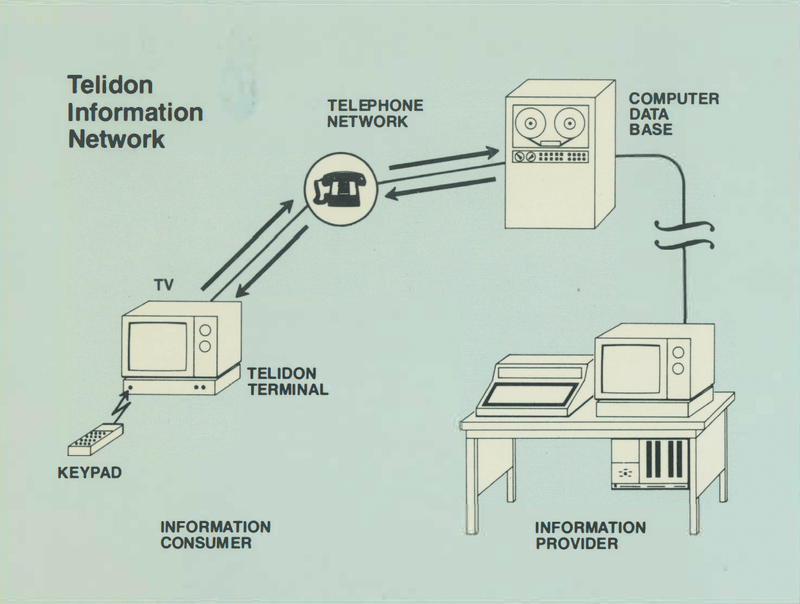
Yes, Telidon. The Telidon program, a television-based information-sharing system that allowed users to browse computer databases, was developed by the long gone Canadian government department called the CRC (Communications Research Center.) The program began officially on August 15, 1978 and ended on March 31, 1985.

“Transmitting Information over Telephone Lines,” diagram from Inter/Access website.

Wandering around the show I got the feeling the Telidon developers were so close to something, groping around in the virtual landscape — blindly, unable to quite make it happen — but knowing, absolutely, they were there, at the beginning of something.

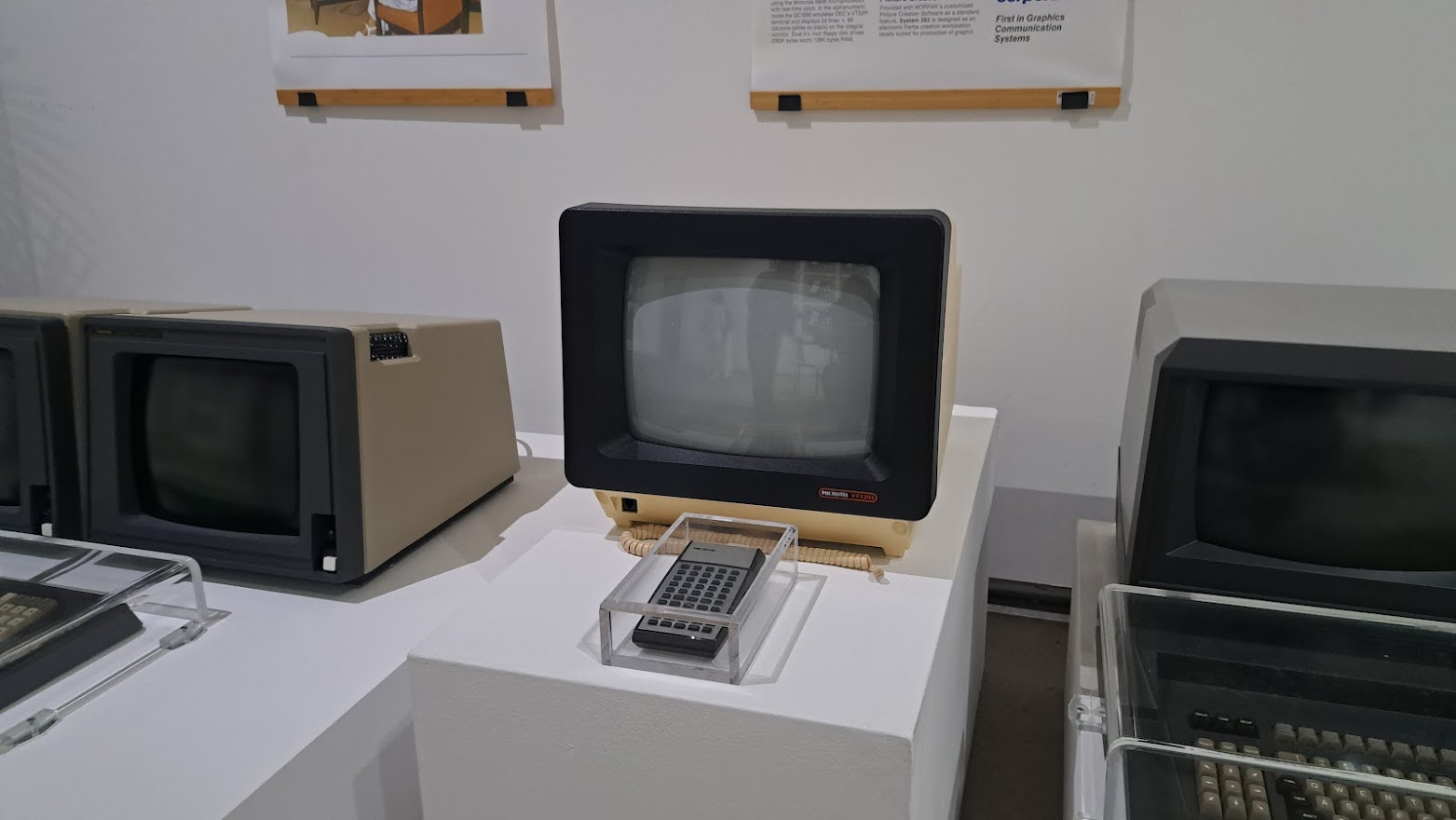
A Telidon Terminal

Telidon was a proto-type for the Internet. It was a 24/7 source for information. All you needed, as a user, was a Telidon terminal and a keypad. It was interactive! I think it was the interactivity part that really got the original Telidon artists hooked.

Detail of “She Seemed to be in Transit” by Johanne Daoust, produced using Telidon

The concept of simultaneity was another idea that was intoxicating to artists. Toronto gallerist Paul Petro, one of the original founders of TCV and an artist using Telidon, spoke during the evening about the excitement of hosting an art opening in three different cities, at the same time!

An early “selfie” created with Telidon by Paul Petro

The images created with Telidon have a blythe, cheerful, pop art look. They are rendered in time as layers load and intersect in a satisfying, somewhat hypnotic, display.

Installation view of “Remember Tomorrow – A Telidon Story” at Inter/Access

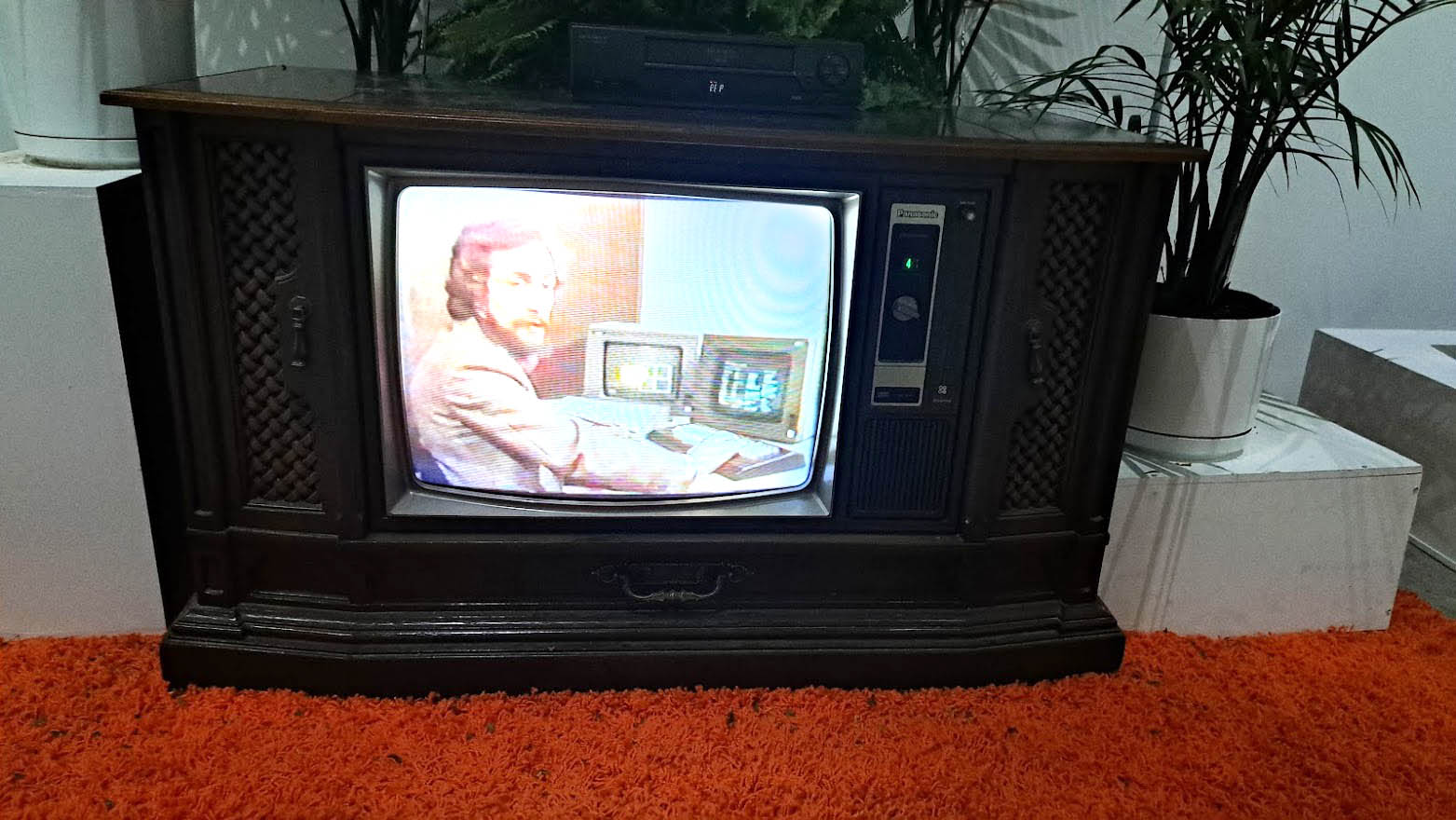
This exhibition explores the allure of Eighties hardware and, well, I guess you could call it lifestyle. Big television sets that look like credenzas, potted palms and wow, orange shag have been lovingly installed in the Inter/Access gallery.

Installation view of “Remember Tomorrow – A Telidon Story” at Inter/Access

Lots of obsolete hardware is on display. By lifting a telephone receiver and pressing “rewind” and then “play” on a tape deck the gallery visitor can listen to interviews with participating artists. (Unfortunately several of the taped interviews had been inadvertently erased during the exhibition because users were unaware of the lost art of “removing the tab” from a cassette tape to prevent just this type of mishap.)

Installation View of “Remember Tomorrow – A Telidon Story” at Inter/Access

The exhibition catalog, put together by curator Shauna Jean Doherty, contains the most endearing story about the Telidon artworks selected for the Venice Biennale of 1986. Created on a series of floppy disks and “playable only using specialized hardware” the artworks were indeed shipped to Italy for the big show, but because of technical difficulties they were never put on view, and instead sat in a cardboard box for four decades.

The whole show has a sort of elegiac feel to it. Maybe it’s about mourning the loss of innocence in regard to technology.

The past is but the beginning of a beginning, and all that is or has been is but the twilight of the dawn…”

Douglas Parkhill, one of the father’s of Telidon, quoting HG Wells in a report chronicling Telidon’s history, from the exhibition catalogue.

The developers definitely did have a romantic view of that brief, Telidon moment. There were some catchy words and phrases that picked up the “beginning of the beginning” vibe and quickly rose and fell: Whatever happened to “informatics,” “Instant World,” “Telematic Culture” or the “Information Paradigm?”

Detail of Installation view, “Tomorrow Remembered – A Telidon Story” at Inter/Access

But it hasn’t all disappeared. Thanks to John Durno, head of Library Systems at the University of Victoria, an operational Telidon decoder does exist and numerous Telidon artworks have been restored and are ready to be returned to Venice for a conference this year.

Detail of Telidon image by Rob Flack

“Sherry” Telidon image by Glen Howarth
“Telidon Commercial,” Telidon image by Don Lindsay

1983..1983…1983…? To be honest, I can’t recall anything specific about that fateful year. Fortunately we now have the Internet to fill in the blanks:

  •  In 1983:
  • The metric system of weights and measures was officially adopted by the Canadian federal government.
  • 25 Red Brigades were sentenced to life for kidnapping and murdering Italian Christian Democrat politician Aldo Moro in 1978.
  • Singer and drummer of The Carpenters, Karen Carpenter, died from complications caused by eating disorder anorexia nervosa, age 32.
  • Though already available in Japan and Europe, Sony and Philips released their CD players in the US and Canada. Though a compact disc player costs over $1000, they prove to be extremely popular.
  • Michael Jackson’s Thriller went to number 1 in the US 200 Billboard album charts for 37 weeks, setting a world record for the amount of time an album stays at number 1.
  • Astronauts Peterson and Musgrave perform the first spacewalk of the shuttle program during NASA’s STS-6 mission. The spacewalk lasts over four hours.
  • Israel and Lebanon sign an agreement to take a step towards peace.
  • The Internet took a step towards its creation as ARPANET (Advanced Research Projects Agency Network) was moved to TCP/IP (Transmission Control Protocol and Internet Protocol).
  • Arcade game Mario Bros. was released in Japan. The arcade game, produced by Nintendo paved the way for future Mario games to become one of Nintendo’s greatest creations.

September 23, 2023

Erika DeFreitas at Doris McCarthy Gallery: “It’s because of the shimmer, the verge, and the yet.”

In her short remarks at the Doris McCarthy Gallery, Erika DeFreitas explained the title of her current exhibition. She mentioned that “the shimmer” refers to the spiritual; by “the verge” she means the beginning, and “the yet” for her, is the future.

I really like the idea of “the shimmer” in particular. It’s so vague and yet so evocative of something delicate, fleeting and gorgeous, and as I wandered through the show I found the “shimmer” discernable in many of the works on display. Erika DeFreitas explores what could be called the paranormal, with a light, but sure, touch.

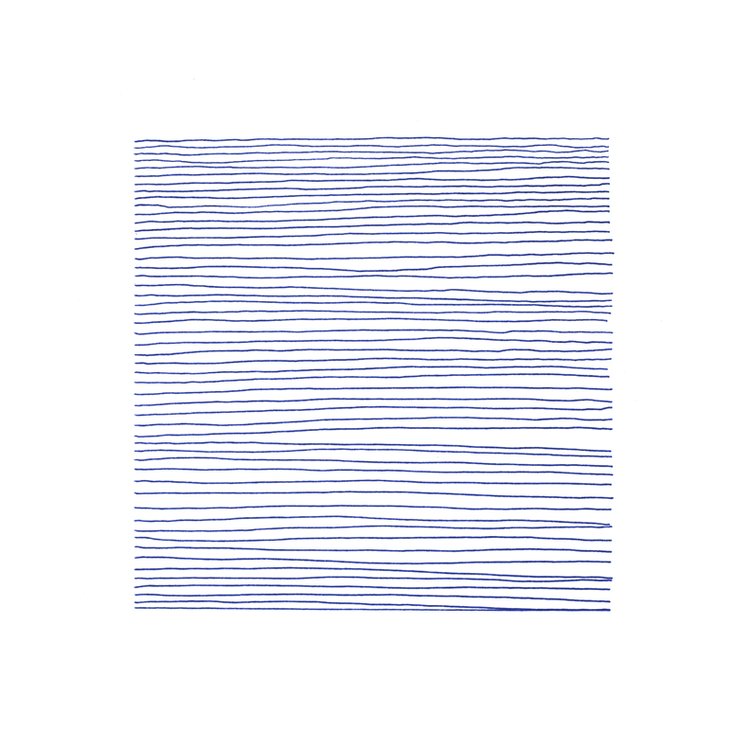
For one thing, she communicates with the dead. In particular, she gets in touch with deceased female artists. During the pandemic lockdowns, Erika DeFreitas describes herself as “conversing” with Agnes Martin, by re-creating a series of approximations of Agnes Martin’s quintessential line drawings.

Picture of line drawing
Detail of art piece by Erika deFreitas titled “the responsibility of the response (in conversation with Agnes Martin)

Another long deceased presence in the show is that of Gertrude Stein, who died in 1946. Erika DeFreitas considers her ongoing series of sculptural works titled “(if you look closely she moves)” as a kind of response to the 1922 play by Gertrude Stein called Objects Lie on a Table.

…DeFreitas asked a psychic medium to request Stein’s permission to collaborate. The medium informed DeFreitas that Stein has been working with her all along.

List of works from the exhibition: description of (if you look closely she moves)
Assemblage by Erika DeFreitas titled (if you closely she moves)

Death is a recurrent subject for this artist.

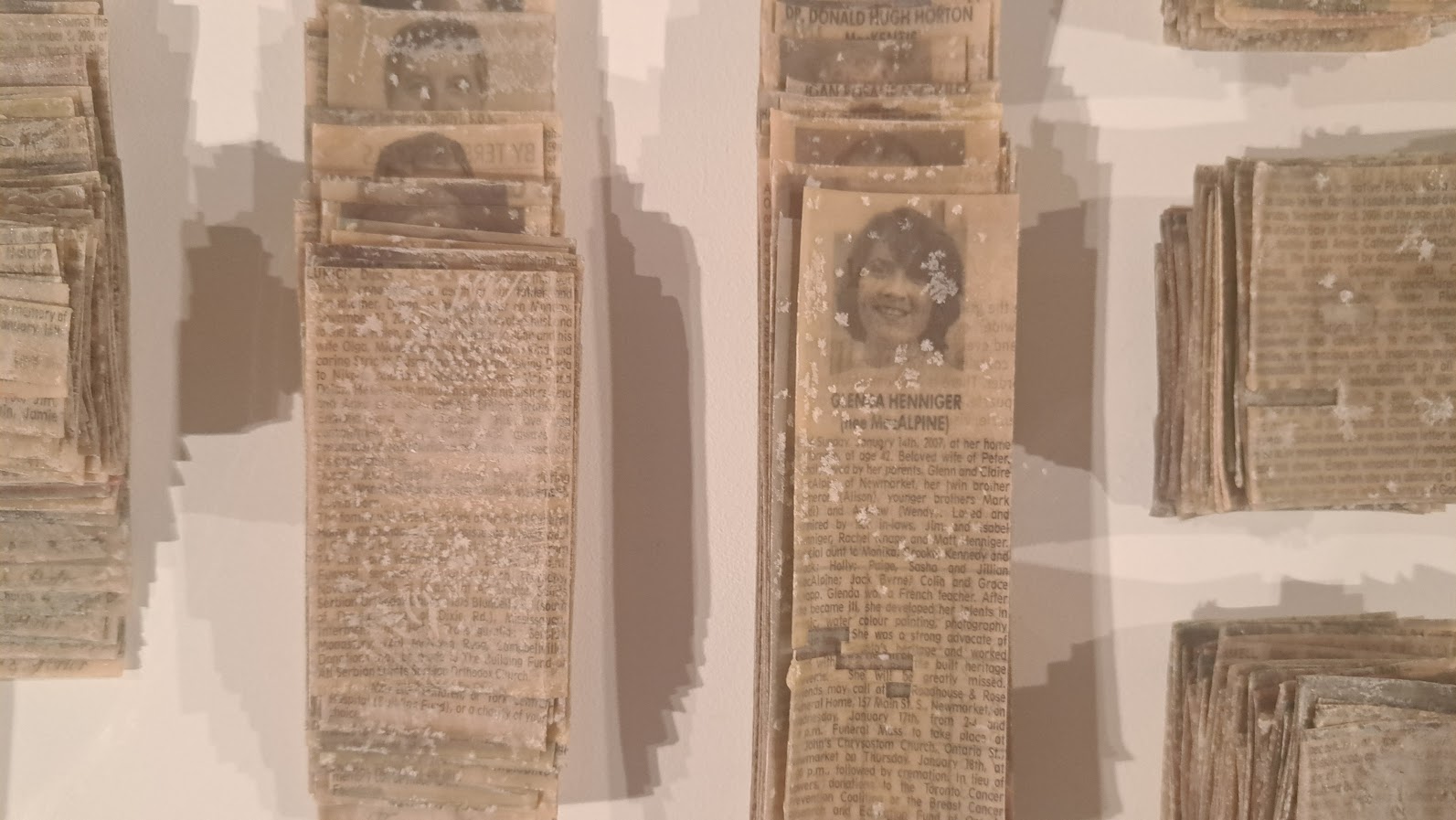
I really liked looking at the piece she did using individual obituaries clipped from newspapers and preserved using beeswax.

Detail of art work by Erika DeFreitas titled “In Lieu of”

The tiny stacks, obsessively ordered, have a tombstone like quality. The viewer is compelled to read the text and gaze at the photos of long dead strangers, sort of like wandering through the Mount Pleasant Cemetery

Detail of artwork by Erika DeFreitas titled “In Lieu of”

Erika DeFreitas is a little more playful when she collaborates with her mother, Cita, or channels her deceased grandmother, Angela.

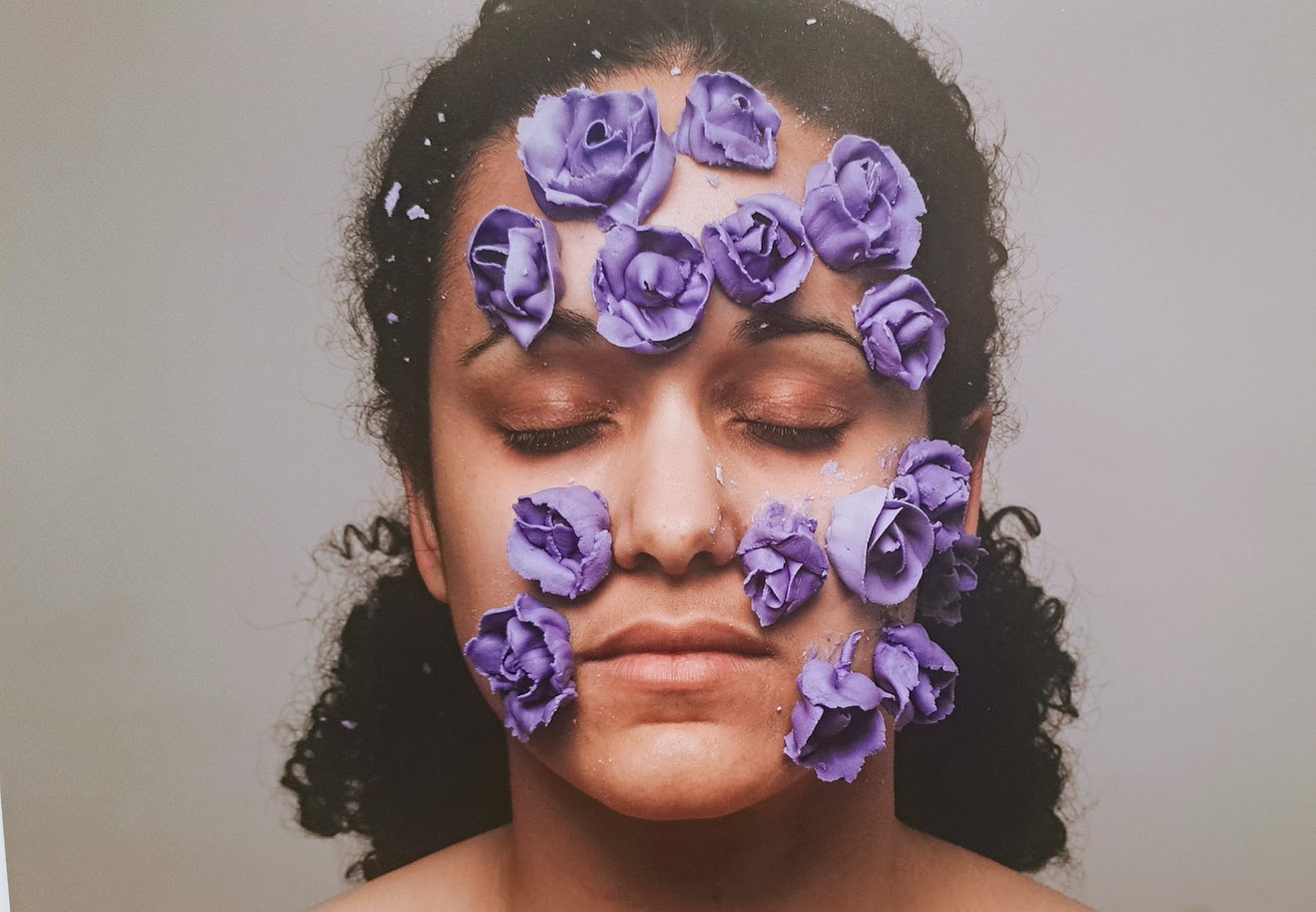
Picture of series of photographs showing decorated faces
Photo series by Erika DeFreitas titled “The Impossible Speech Act”
decorated face
Detail of “The Impossible Speech Act” by Erika DeFreitas

In the photo series above, Erika DeFreitas and her mother have created “death masks” using cake decorating techniques passed down from Angela. The icing sugar hardens but gradually melts against warm (living) flesh.

Apparently Erika DeFreitas’ grandmother, a Trinidadian, would adorn statues of Black Madonnas with jewelry and gorgeous fabrics. Her granddaughter has continued this practice with a contemporary twist.

Detail from “The Black Madonna of Great Echoes” by Erika DeFreitas

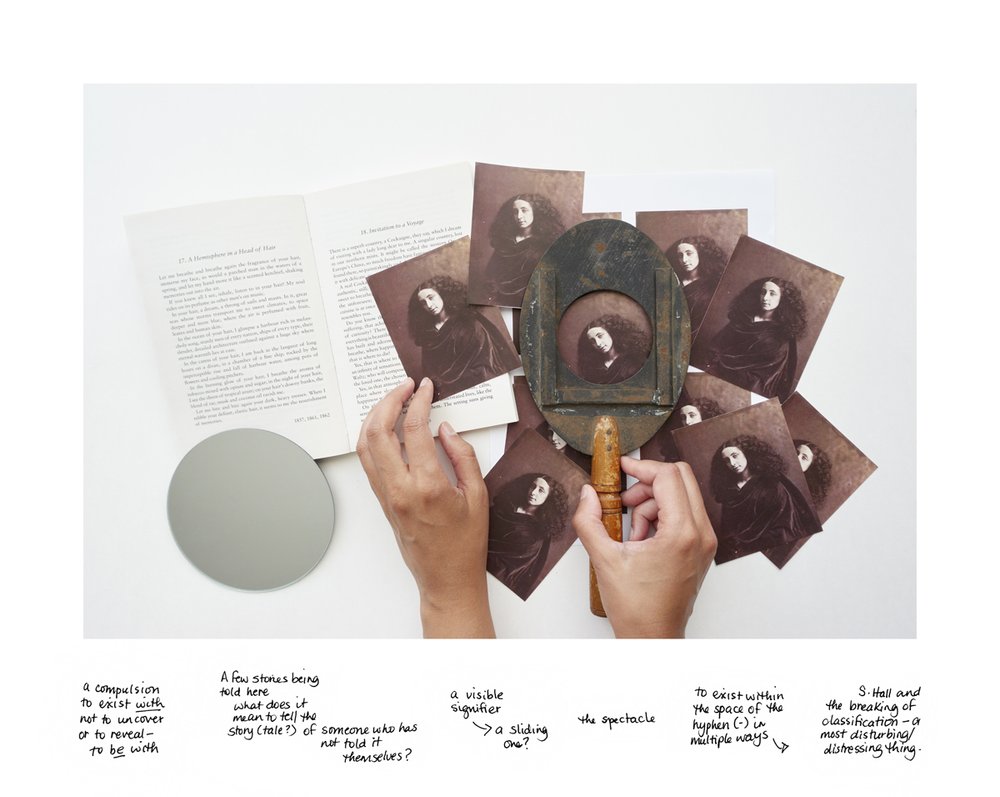
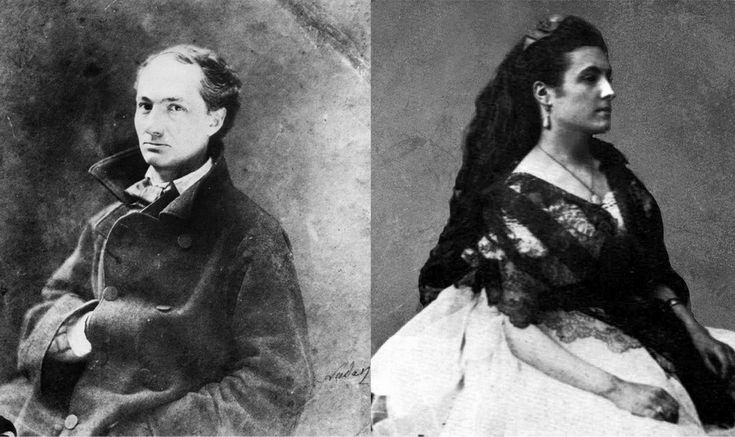
Another long deceased artist that interests Erika deFreitas is Jeanne Duval. (It’s a long story.) There’s a big, complicated piece in the show, featuring many large photographs, and its all about a painting by Gustave Courbet. The full title of this painting is: The Painter’s Studio: A real allegory summing up seven years of my artistic and moral life.  It was painted in 1855 and currently is located in the Musée d’Orsay in Paris, France.

Courbet was a leader of the Realist movement and a rebel against the prevailing cliched Romanticism of the day. Apparently, he was always in political trouble in France and ultimately had to disappear to Switzerland, where he died at the age of 58.

Erika deFreitas focuses on a portrait that is missing from this very famous and massive picture. (It was more than 19 feet wide.) She has done some careful research and found that Jeanne Duval was erased from the picture. Jeanne Duval was Baudelaire’s girlfriend. When they had a fight, the poet — Courbet’s champion — demanded her likeness be removed.

Detail of art work by Erika DeFreitas titled “arriver savant moi, devant moi”
Photographs of paintings and hands
Detail of art work by Erika DeFreitas titled “arriver savant moi, devant moi”

Erika DeFreitas gets deeply into this erasure. It holds a lot of meaning for her. The piece is like a detective’s notes revealing how the artist gets closer and closer to something. To me, although I liked looking at the images and thinking about how things were, this does strike me as art world gossip from about 170 years ago.

photo of Baudelaire and Jeanne Duval
Baudelaire and Jeanne Duval

It’s kind of great, however, that the painting, shown below, is still stirring people up, all these years later.

Painting by Gustave Courbet
The Painter’s Studio: A Real Allegory Summing up seven years of my artistic and moral life” by Gustave Courbet

September 18, 2023

Liz Magor at MOCA: “The Separation”

What about all the forgotten items? What about the stacks of coffee lids, the candy wrappers, the plastic bags in soft pastels, the crenillated foil cups, and sparkly bits of paper stuffed in a gift bags, the trays — presenting so many things! — artfully coated in silver or gold? What about the big gulp holders — the really big ones — with plastic straws poking out the top? What about the hard — infuriating, practically unbreakable — plastic encasements for purchased items? What about the cigarette butts, the liquor bottles, the beer cans, the unwanted toys, empty bottles, scattered gravel, moldy cookies, moth eaten blankets, matted fake fur, dead animals, shells, gum, junk, garbage, trash?

We’re talking about the metier of Liz Magor, in her exhibition titled The Separation, on view at MOCA.

On entering the exhibition the viewer is faced with an expanse of shiny, hard mylar boxes. The boxes are brightly lit from above. They sparkle. They attract.

Installation view of “The Separation” by Liz Magor

The lighting fixtures are kind of hilarious and create a bit of a fun house atmosphere.

Details of installation by Liz Magor

I wander through the box array, anticipating. I don’t know what exactly — but something — something that is going to be exciting, in some way. And that is where everything starts to slow down.

Detail of installation “The Separation” by Liz Magor

Liz Magor presents the material that slips by us moment to moment, all the stuff that we ignore. As she does that, we are obliged to consider a lot of things, but mostly transience and permanence, and, as strange as it may sound, the whole idea of time rushing by.

Detail of installation “The Separation” by Liz Magor

Many of her sculptures, protected in their big, clear boxes, are casts of the original objects they represent. They are facsimiles, removed from their original function, context and incidental narrative, to exist in another realm altogether. Maybe that’s what she is referring to in the exhibition title (“The Separation.”) She has removed these bits of our material lives and “separated” them from their predictable stream of existence.

Artwork by Liz Magor
Art work by Liz Magor

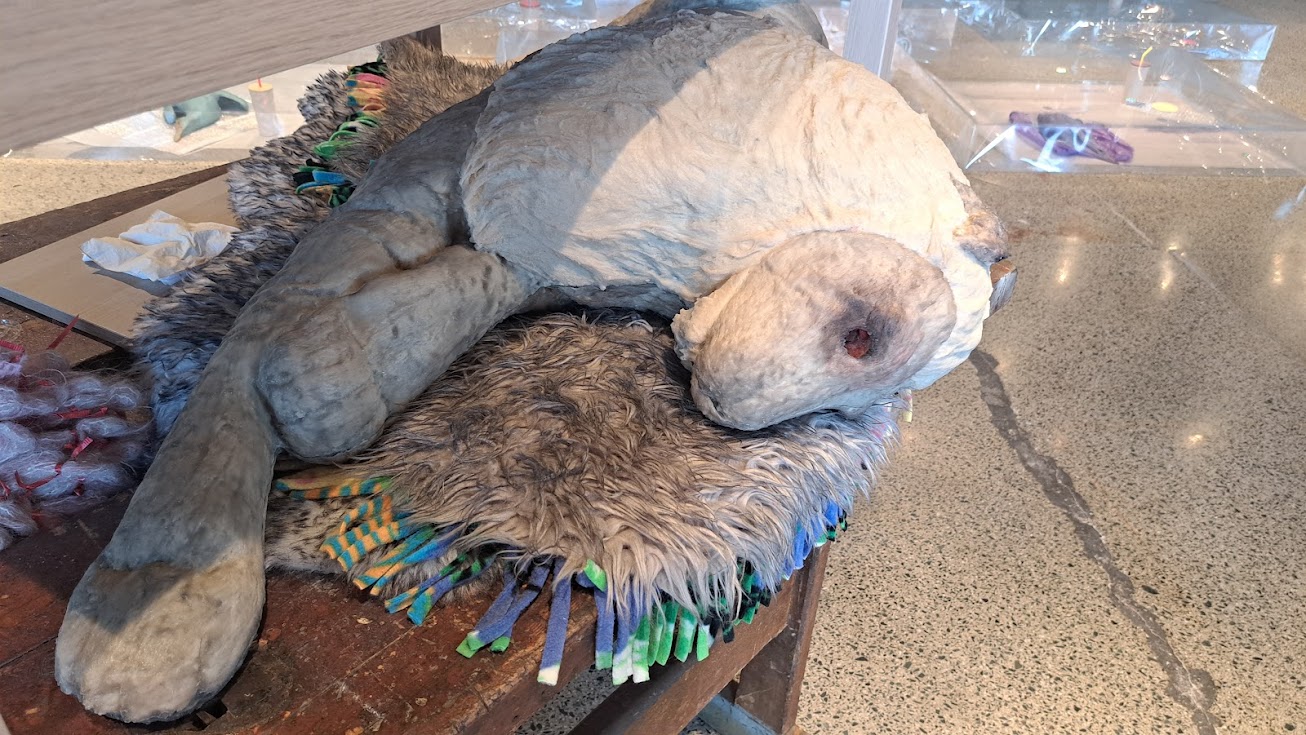
There are a few structures on the pheriphery, — hammered together Ikea and antique, worn work tables — holding cast sculptures of stuffed (or sometimes just dead) animals, lying in sympathetic poses, insisting on our attention.

Art work by Liz Magor

(In fact, I may have won this lion creature, above. It was some years ago, at the ex, prior to the pandemic. Yes, it was a shooting game! Oh god, look at him now.)

Artwork by Liz Magor
Details of sculpture by Liz Magor
Artwork by Liz Magor

There are lots of video’s online featuring Liz Magor talking about her work. She has a very calm, amused presence, although she always seems to be talking about being a “worrier.”

Something I got from watching one of the videos is her connection to minimalism. She is drawing our attention to particular objects. Don’t start looking for some allegory, metaphor or moral. She’s not hectoring us about being consumers, urging us the Save the Whales, or read Wittgenstein. She’s all about: “What you see is what you see,” as Frank Stella famously said.

The videos are worthwhile. I definitely liked watching her make stuff and talk about her interest in death.

Liz Magor at Susan Hobbs: “Style”

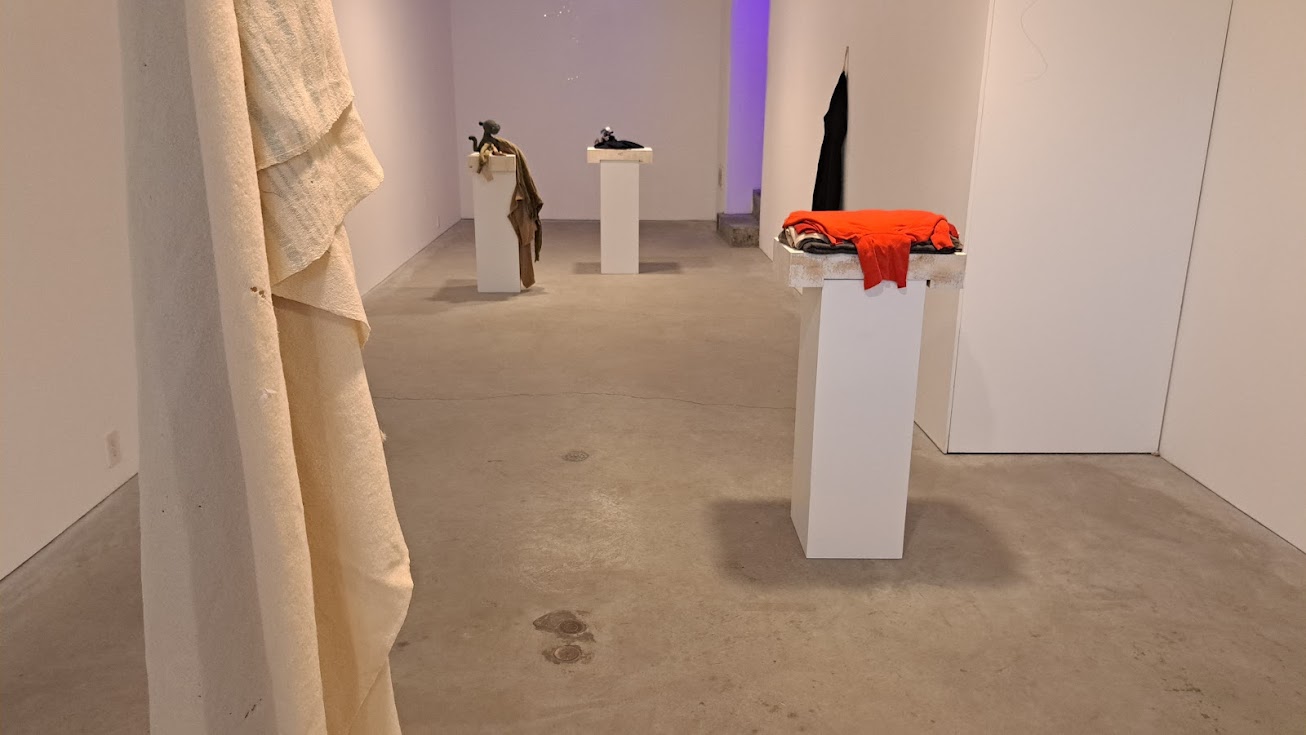
More work by Liz Magor can be seen at Susan Hobbs. The show, titled “Style,” is really beautiful and concise, comprised mainly of clothes slightly eaten by moths. Found objects — mostly stuffed animals, also possibly moth eaten — attend the garments, embrace them and present them for our viewing.

Sculpture by Liz Magor
Installation view of Liz Magor show “Style” at Susan Hobbs

The gallery has helpfully provided some instructions on dealing with moths. I know from experience this has been a problem over the past few years in my Toronto neighborhood.

Clean your closet, combine sunlight with vigorous brushing, heat-treat woollen items in an oven set to the lowest heat, freezing (but only if the change from warm to cold is abrupt) for at least 72 hours, hide the rest of your clothes in compression bags. In executing some of the solutions above, the garment is stripped of its function and tended to as an object that needs our intervention. Our attempt to fix the problem only adds to our conception that we hold control, but all things have a lifespan with and without us.

from Susanhobbs.com
Details of sculpture by Liz Magor

The artwork of Liz Magor strikes me as so efficient! As in “The Separation” at MOCA, in viewing “Style” we are obliged to consider the limits of our possessions, the past and future of our prized wearable items, and so too of our own limits. Hmmmm.

Sculpture by Liz Magor

April 26, 2023

Wolfgang Tillmans – To Look Without Fear

Wednesday nights, 6:00 to 9:00 PM, the Art Gallery of Ontario is free. I went to check out the big, new photography show of work by Wolfgang Tillmans.

The place was crowded, especially the 5th floor, where this show is located, and there is a definite “date night” vibe, as numerous young, stylish couples swan about, having intense conversations concerning “visual democracy” and the “amplification of social awareness,” two themes Wolfgang Tillmans identifies as central to his creative role.

Icestorm by Wolfgang Tillmans

When I Googled this artist’s name I was amazed at how much fawning press he gets. “It was a Monday, and Tillmans, dressed in blue Puma sweatpants, Adidas running shoes, and a navy-blue hooded sweatshirt, was standing next to a conference table, drinking a coffee, with several young employees gathered around him.”  Navy-blue! This was in the New Yorker. It occured to me that a big part of the critical fascination with his work is on the level of personal charisma. It’s hard to separate him from the work.

The reason I started to work with images from the very beginnning was that I wanted to be involved with what was going on in the world

quote from Wolfgang Tillmans, exhibition guide to the “To look without fear” show at the AGO

He is of his time and he knows what’s going on. His attention wanders from subject to subject, always with a enviably casual air: his friends, abstraction, nightlife, architecture, plant life, his friends, technological change, sea and sky, mundane objects, his friends, clothing (on and off), astronomy, the military, abstraction, his friends and more, and more.

Installation shot of “To Look Without Fear” by Wolfgang Tillmans

“Venus Transit, edge” by Wolfgang Tillmans

Yes, most of us carry around hundreds of images on our phones, evidence of our passing interests, friends, vacations, ideas of beauty, irony, parrots possibly or today’s lunch, a dress I’m thinking of buying, all sorts of confusion. Every passing interest, even the briefest momentary focus that slips through our visual field, is documented and retained. We hoard images. Or, maybe we post them on Instagram and TikTok. Occasionally a few of our photographs are really good. Wow! They might equal or even surpass the work of Wolfgang Tillmans in how they define the moment — not just our moment — but The Moment.

Wolfgang Tillmans embodies all that, harvesting images and spewing them back. He is Everyman, his interests approximating those of his demographic cohort. (Except he is better, cooler, taller, much more interesting.) And his work is in museums around the world. And, he is the artist. He wants us all to look without fear and so, without judgement, and to really see the world. He is just a messenger, conveying something larger than himself.

Photograph by Wolfgang Tillmans

“After Party” by Wolfgang Tillmans

In 2010 I saw a massive exhibition of the photographs of William Eggleston – prints from 1961 to 2008 — at the LA County Museum. In the catalogue from that show, Eggleston is called the “master of color photography, a poet of the mundane, and proponent of the democratic treatment of his subjects.” He definitely has something in common with Wolfgang Tillmans. (Do all photographers have this “democratic” impulse?)

Photograph by William Eggleston

William Eggleston’s daughter, Andra Eggleston, explains his appeal when she talks about growing up in Memphis, where her father’s career began, and how that city shaped his images. “It was a wonderful, magical, dark, rich, beautiful, ugly, complicated place,” she says. (I feel the same way about Winnipeg!) William Eggleston, got it all down, in colour. Wolfgang Tillmans gets it all down too, but nothing as specific as his hometown somewhere in Germany. He taps into his generation’s observations, through representing his restless, wandering attention.

Photograph by Wolfgang Tillmans (Love, hands in air)

This massive show is organized roughly chronilogically. Some of his earliest works are on display, sort of grimey, murky smears of grey made in a copy shop in Germany with a Canon-NP-9030 laser photocopier. (These were made back in the early 80s. He had the confidence to carefully preserve them. Now that is presience.)

Photograph by Wolfgang Tillmans

Some of the prints are beautifully framed, most are unframed, taped to the walls or clipped and hung from pins. Some are ridiculously large, others snapshot size, some glossy, other matte, grouped or single, pulled out of magazines, laid on tabletops under glass.

“Ostgut Free Swimmer” by Wolfgang Tillmans
“I don’t want to get over you” by Wolfgang Tillmans

Sometimes he forgets and tumbles into cliche and naivety, for example, the grid of shots of the Concorde….

Detail of Installation by Wolfgang Tillmans

…or his piece from the Neue Welt (New World) series.

“young man, Jeddah” by Wolfgang Tillmans

But we forgive him, because he says: “the camera is like a tool for me to see and record much more than I can possibly understand in that moment” and we can all relate to that idea.