September 18, 2023

Liz Magor at MOCA: “The Separation”

What about all the forgotten items? What about the stacks of coffee lids, the candy wrappers, the plastic bags in soft pastels, the crenillated foil cups, and sparkly bits of paper stuffed in a gift bags, the trays — presenting so many things! — artfully coated in silver or gold? What about the big gulp holders — the really big ones — with plastic straws poking out the top? What about the hard — infuriating, practically unbreakable — plastic encasements for purchased items? What about the cigarette butts, the liquor bottles, the beer cans, the unwanted toys, empty bottles, scattered gravel, moldy cookies, moth eaten blankets, matted fake fur, dead animals, shells, gum, junk, garbage, trash?

We’re talking about the metier of Liz Magor, in her exhibition titled The Separation, on view at MOCA.

On entering the exhibition the viewer is faced with an expanse of shiny, hard mylar boxes. The boxes are brightly lit from above. They sparkle. They attract.

Installation view of “The Separation” by Liz Magor

The lighting fixtures are kind of hilarious and create a bit of a fun house atmosphere.

Details of installation by Liz Magor

I wander through the box array, anticipating. I don’t know what exactly — but something — something that is going to be exciting, in some way. And that is where everything starts to slow down.

Detail of installation “The Separation” by Liz Magor

Liz Magor presents the material that slips by us moment to moment, all the stuff that we ignore. As she does that, we are obliged to consider a lot of things, but mostly transience and permanence, and, as strange as it may sound, the whole idea of time rushing by.

Detail of installation “The Separation” by Liz Magor

Many of her sculptures, protected in their big, clear boxes, are casts of the original objects they represent. They are facsimiles, removed from their original function, context and incidental narrative, to exist in another realm altogether. Maybe that’s what she is referring to in the exhibition title (“The Separation.”) She has removed these bits of our material lives and “separated” them from their predictable stream of existence.

Artwork by Liz Magor
Art work by Liz Magor

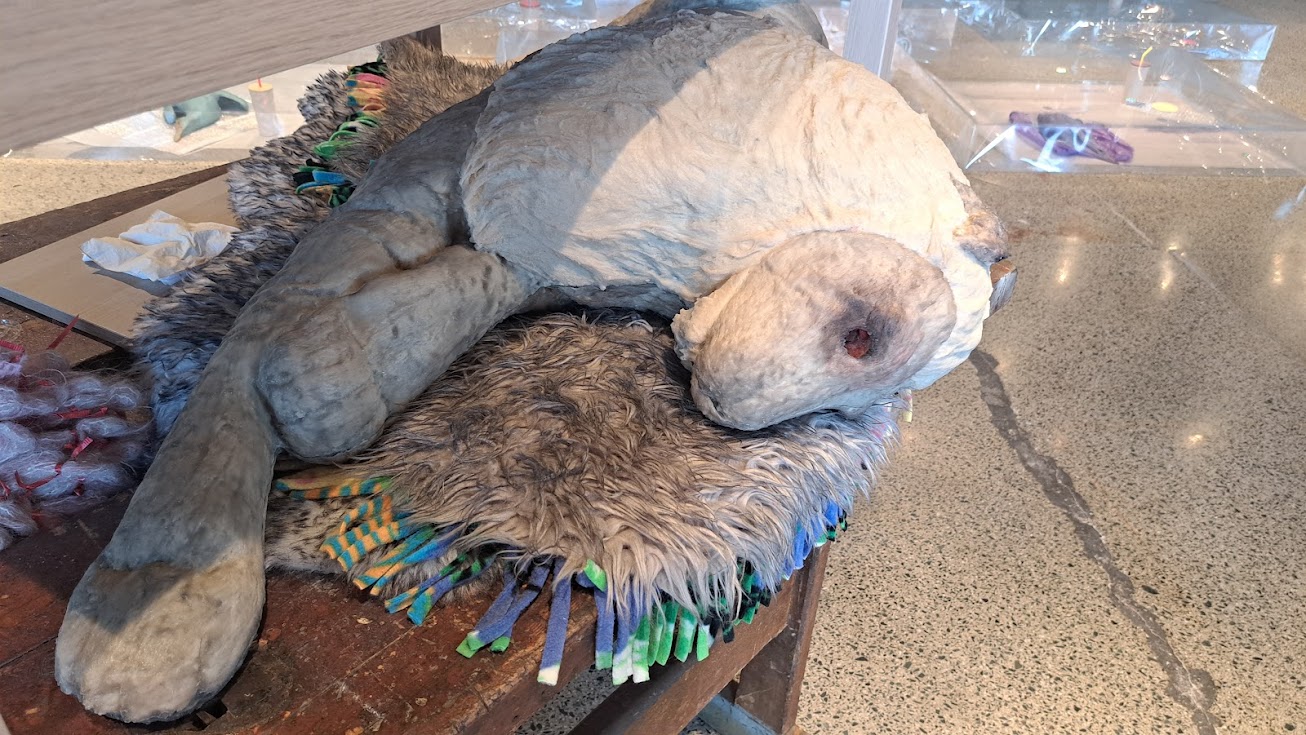
There are a few structures on the pheriphery, — hammered together Ikea and antique, worn work tables — holding cast sculptures of stuffed (or sometimes just dead) animals, lying in sympathetic poses, insisting on our attention.
Art work by Liz Magor

(In fact, I may have won this lion creature, above. It was some years ago, at the ex, prior to the pandemic. Yes, it was a shooting game! Oh god, look at him now.)

Artwork by Liz Magor
Details of sculpture by Liz Magor
Artwork by Liz Magor

There are lots of video’s online featuring Liz Magor talking about her work. She has a very calm, amused presence, although she always seems to be talking about being a “worrier.”

Something I got from watching one of the videos is her connection to minimalism. She is drawing our attention to particular objects. Don’t start looking for some allegory, metaphor or moral. She’s not hectoring us about being consumers, urging us the Save the Whales, or read Wittgenstein. She’s all about: “What you see is what you see,” as Frank Stella famously said.

The videos are worthwhile. I definitely liked watching her make stuff and talk about her interest in death.

Liz Magor at Susan Hobbs: “Style”

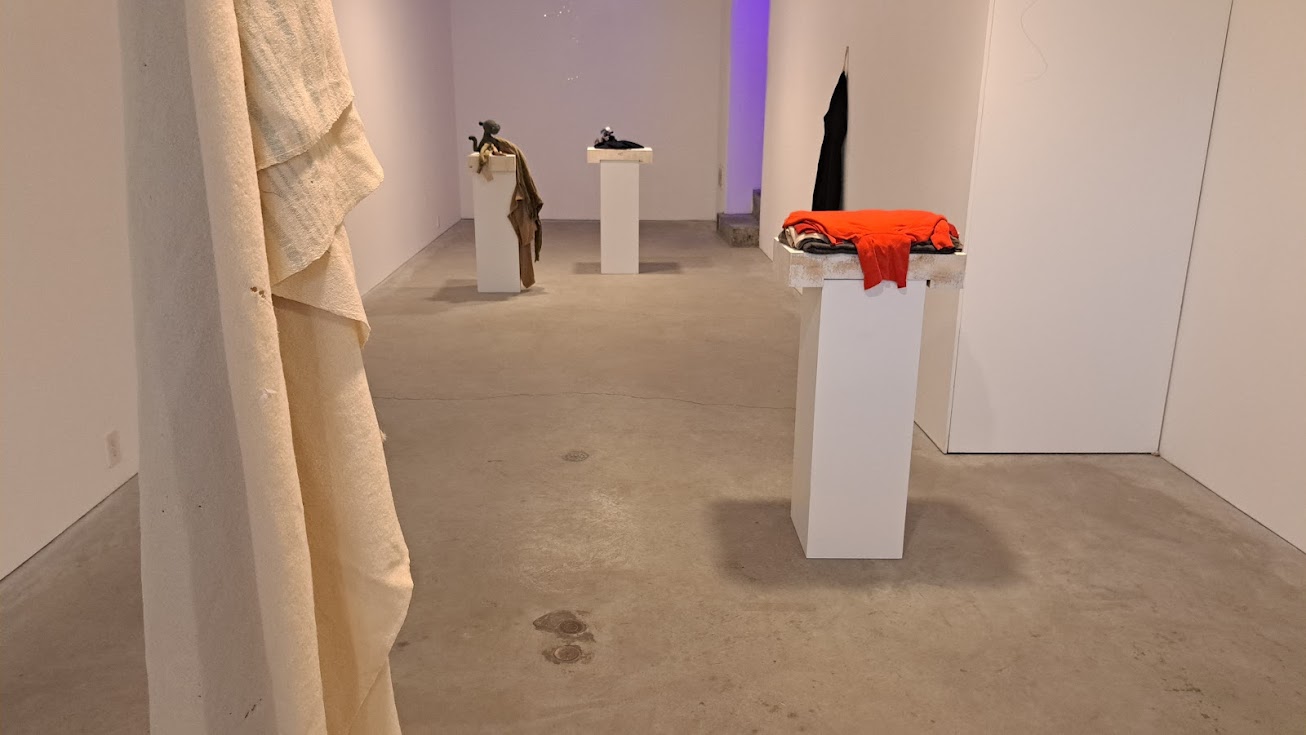
More work by Liz Magor can be seen at Susan Hobbs. The show, titled “Style,” is really beautiful and concise, comprised mainly of clothes slightly eaten by moths. Found objects — mostly stuffed animals, also possibly moth eaten — attend the garments, embrace them and present them for our viewing.

Sculpture by Liz Magor
Installation view of Liz Magor show “Style” at Susan Hobbs

The gallery has helpfully provided some instructions on dealing with moths. I know from experience this has been a problem over the past few years in my Toronto neighborhood.

Clean your closet, combine sunlight with vigorous brushing, heat-treat woollen items in an oven set to the lowest heat, freezing (but only if the change from warm to cold is abrupt) for at least 72 hours, hide the rest of your clothes in compression bags. In executing some of the solutions above, the garment is stripped of its function and tended to as an object that needs our intervention. Our attempt to fix the problem only adds to our conception that we hold control, but all things have a lifespan with and without us.

from Susanhobbs.com
Details of sculpture by Liz Magor

The artwork of Liz Magor strikes me as so efficient! As in “The Separation” at MOCA, in viewing “Style” we are obliged to consider the limits of our possessions, the past and future of our prized wearable items, and so too of our own limits. Hmmmm.

Sculpture by Liz Magor

March 26, 2023

MOCA/NOT MOCCA

MOCA is the Museum of Contemporary Art Toronto. It was, previously, the Museum of Contemporary Canadian Art (MOCCA), located for more than 12 years on once trendy (now pandemic battered) Queen Street West. Going back further, MOCCA was founded on the Art Gallery of North York, which originated in 1999. MOCCA went dormant from 2015 to 2018 after which time it emerged as MOCA, at 158 Sterling Road, in a former auto parts factory, and there, it identified itself with the globalized world of the 21st century.

MOCA, Museum of Contemporary Art, Toronto

Remediation – Kapwani Kiwanga

Kapwani Kiwanga‘s exhibition at MOCA, (see above) titled “Remediation,” is original, playful, uplifting to visit and a breath of fresh air. (This is something we desperately need as spring is so far not arriving.)

Installation view of “Remediation” exhibition by Kapwani Kiwanga

The botanical world has a role in most of the pieces in this show. In fact, one definition of remediation is a way to cleanse soil of toxins, specifically using plant life.

The large, see-through, feather-light, air-filled shapes the artist created are also about plants. She calls them vivariums. I was informed that Kapwani Kiwanga is referencing vivariums in their historical role, as methods to transport life, particularly plant life, from one place to another. This could be a metaphor with all kinds of ominous connotations, but the thing about this artist’s work is that it’s not heavy-handed/didactic. The visitor can just enjoy looking at these strange and surprising objects amid the ponderous concrete pillars that dominate the second floor at MOCA.

One of Kapwani Kiwanga’s Vivariums
Installation view of Vivarium by Kapwani Kiwanga. The variums are named as follows: Vivarium: Cytomixis, Vivarium: Adventitious, Vivarium: Apomixis. The names reference botanical anatomy.

 Originally The Vivarium, I learned on Wikipedia, was the name for the enclosures where ancient Romans kept living things used in their entertainments. Various wild animals, mainly imported from Africa and the Middle East, like tigers, crocodiles, ostriches, elephants and aurochs waited in The Vivarium for their cue. Gladiators waited elsewhere.

“The Marias” installation view of work by Kapwani Kiwanga
Detail of The Maria by Kapwani Kiwanga

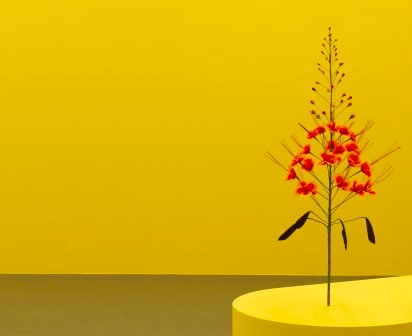
This artist doesn’t flinch from using a range of materials in her work. These delicate paper flowers — the piece is called “The Marias” — are surrounded by dazzling yellow plinths and walls. They’re pretty enough, but the artist has created them because of their unique properties and historical function.

…the flower on show, native to Latin America, was known by the locals for its abortive powers. The chemicals in the flower were used by enslaved women to break the reproduction of servitude.

from “Remedition” exhibition booklet

On the main floor of MOCA Kapwani Kiwanga has produced a massive installation composed almost entirely of sisal. She has said that she “considers how various natural materials become witnesses to history. ” Sisal, for example, played a big economic role in Tanzania. When the prices plummeted because of synthetic immitations, the country suffered.

Art work by Kapwani Kiwanga

The material, in the form in which the artist uses it, has a fascinating colour, texture and the unique, undulating lightness which the artist uses to create artfully draped, other-worldly environments. It’s so hard to refrain from touching it!

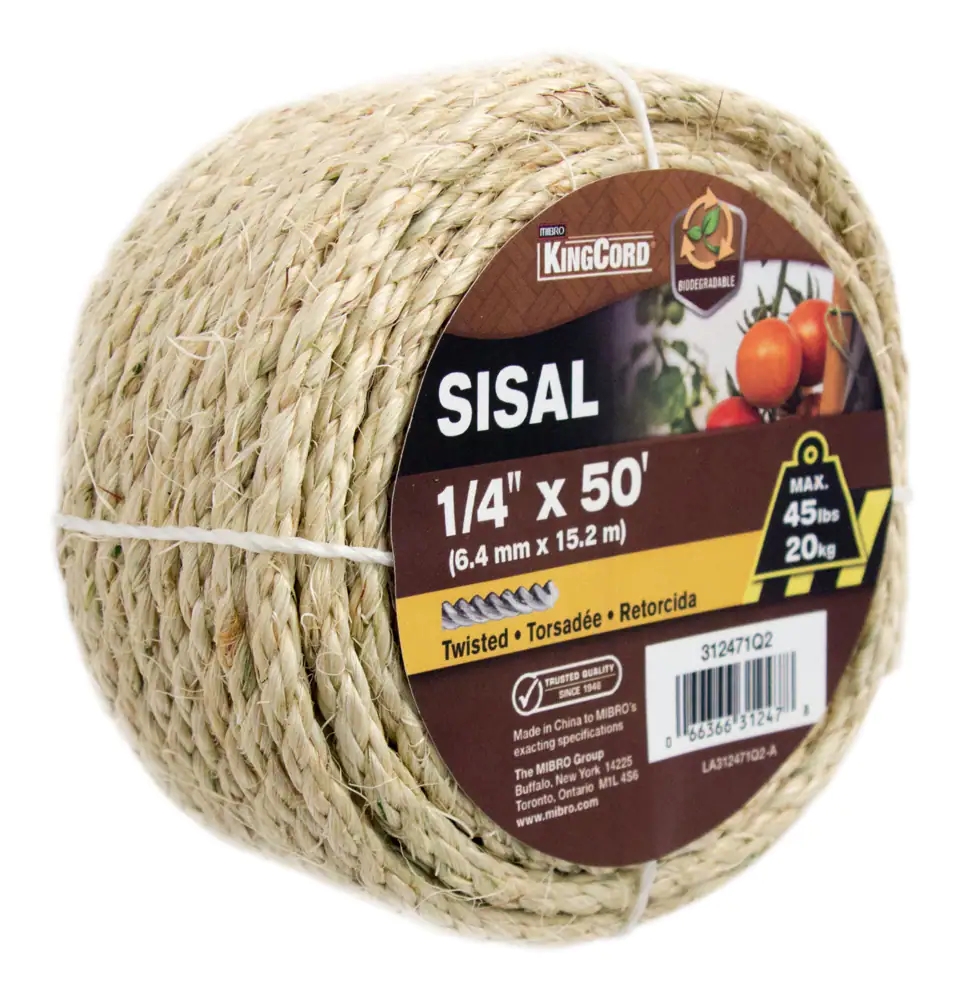
Sisal recently rebounded on the world markets. The roll above is availabe at Canadian Tire for about $5.00

A video piece included in the show, was shot in Tanzania, where soil is a reddish colour and coats everything in the dry season. We see the artist cleaning the lush roadside vegetation in a gesture of maybe aesthetic intervention or perhaps its a symbolic, sishyphean act of appreciation.

Detail of “Vumbi” by Kapwani Kiwanga

I like the fact that this mesmerizing piece is open to interpretation.

I know so little about Tanzania: an East African country with vast wilderness areas. They include the plains of Serengeti National Park, a safari mecca populated by elephants, lions, leopards, buffalos, rhinos, and Kilimanjaro National Park, home to Africa’s highest mountain. Offshore lie the tropical islands of Zanzibar, with Arabic influences, and Mafia, with a marine park home to whale sharks and coral reefs

Giraffe in Lake Manyara National Park, Tanzania

Trade Show – Susan for Susan

Trade Show is another exhibition presently on display at MOCA. Susan for Susan is the name of the design collaboration between Kevin Watts and John Watts. (One of the MOCA volunteers at the show told me the mother of John and Kevin Watts is the Susan in question. Nice.)

How brutalist would it be to have a concrete table in your kitchen, hanging from the ceiling by thick chains? I did not realize it was something I always wanted. That would be a place to have some serious conversation, espcially with the right lighting, a battery of flourescents maybe.

Detail of “Trade Show” installation by Susan for Susan

Susan for Susan has created an installation that gestures toward the idea of an apartment, employing industrial materials in a coarse state. I think they are trying to get at a return to “truth to materials.”

Something called a gantry (which is a bridge-like overhead structure with a platform supporting equipment such as a crane) pulls the whole thing together. This gadget gives the installation an overarching absurdist twang which is very appealing.

Detail of “Trade Show” installation by Susan for Susan

The mirror has an amusing quality. It’s like one of those magnifying mirrors, sometimes screwed into the bathroom wall, except the”accordian” attachments are oversized which means the whole thing can be pulled out and adjusted as required to get the right view.

Detail of installation by Susan for Susan

My favourite is the vase, evidently created from a medical device used to set extreme fractures.

Ouch.