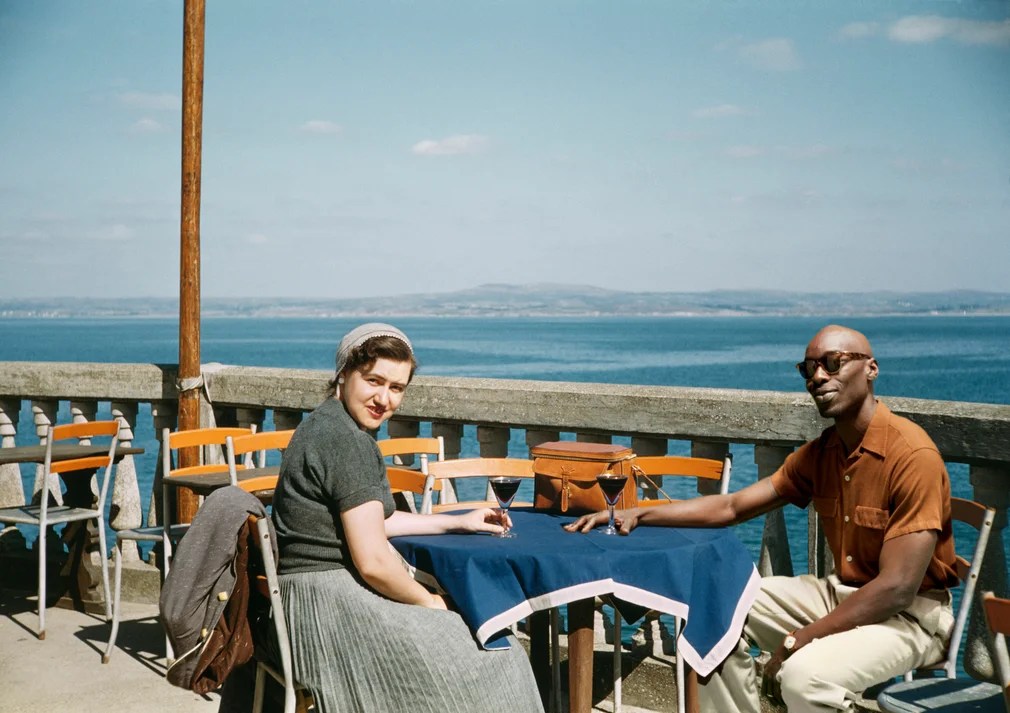
“In Praise of the Missing Image”
Biennale d’art contemporain, Montreal
MOMENTA, Biennal d’art contemporain, takes place every two years in Montreal. I was lucky to have an afternoon to view at least a sliver of this ambitious event, which features 23 artists from 14 countries.
Each MOMENTA — and this is the 19th edition — has a “critical matrix,” and in 2025 it is the idea of unearthing absent or untold narratives. Titled “In Praise of the Missing Image,” this year’s event displays artworks that were created by rooting around in historical detritus to illuminate an untold story.

I dropped in to the Musee d’art contemporain de Montreal (MAC), one of the organizations participating in MOMENTA. (Incidently, it is temporarily housed in the basement of Place Ville Marie (close to Mary, Queen of the World Cathedral) while the main museum site is under renovation until 2029.)
I was completely engaged by this exhibition!
What was supposed to be a walk-through kept me there for hours. (Three of the five artists on display showed time-based work, in fact, looking through the MOMENTA catalogue it appears that many, if not most, of the exhibits are some incarnation of video.)
Joyce Joumaa
Bleacher style seating has been erected for viewing a video piece by Joyce Joumaa. This makes a lot of sense since the artwork concerns sports, specifically a 2001 soccer match between France and Algeria. On a single large screen in the darkened exhibition space an antique looking, blurry, image of the game is displayed. The broad swaths of vivid green turf are ominously overlaid with ghostly images from “The Battle of Algiers,” the famous film by director Gillo Pontecorvo, released in 1966.
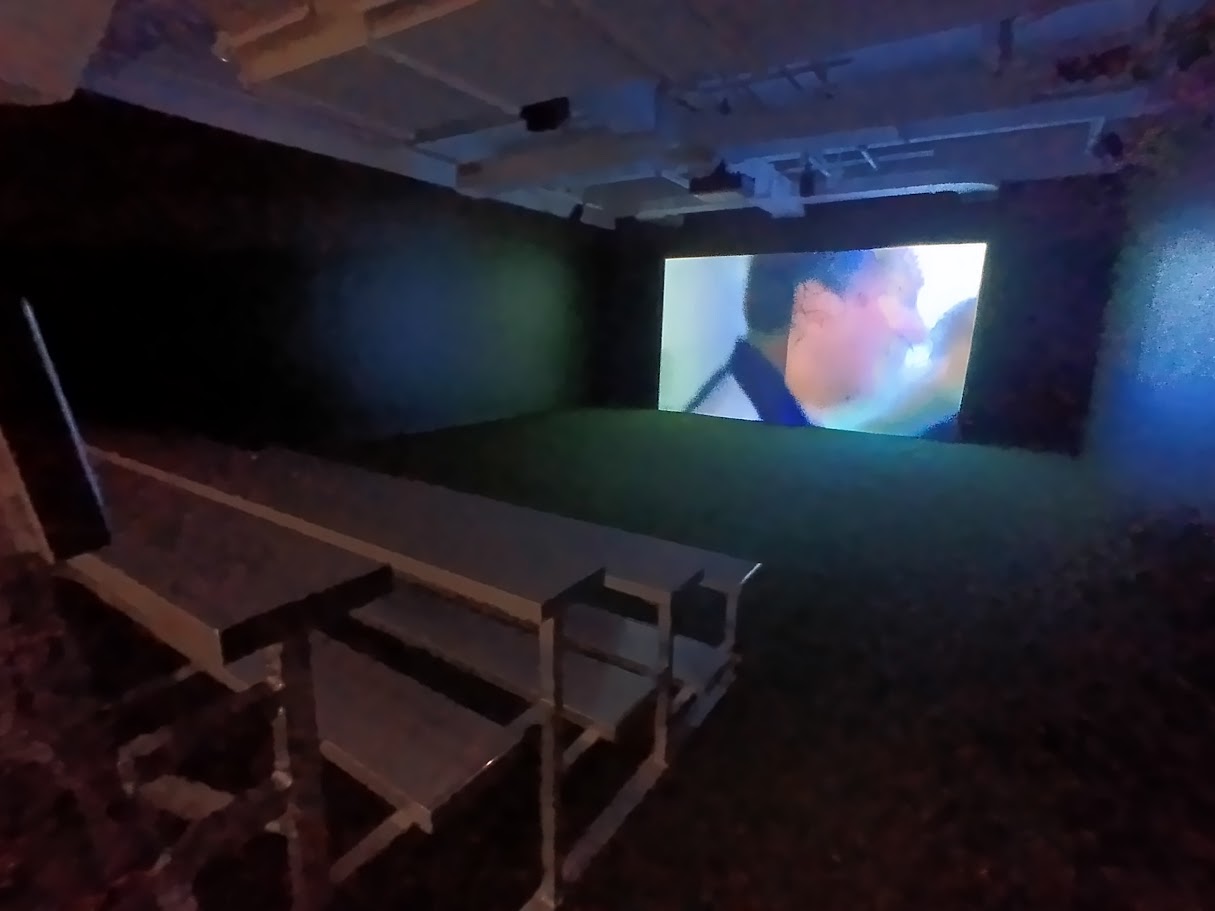
This particular game was highly symbolic. It was the first time the two countries met on the soccer pitch since 1962. It did not end well. When a group of Algerian marauders stormed the field and disrupted “the beautiful game,” politics crashed the party, somebody called the cops, the match was stopped, and the French press and officials were deeply disappointed.
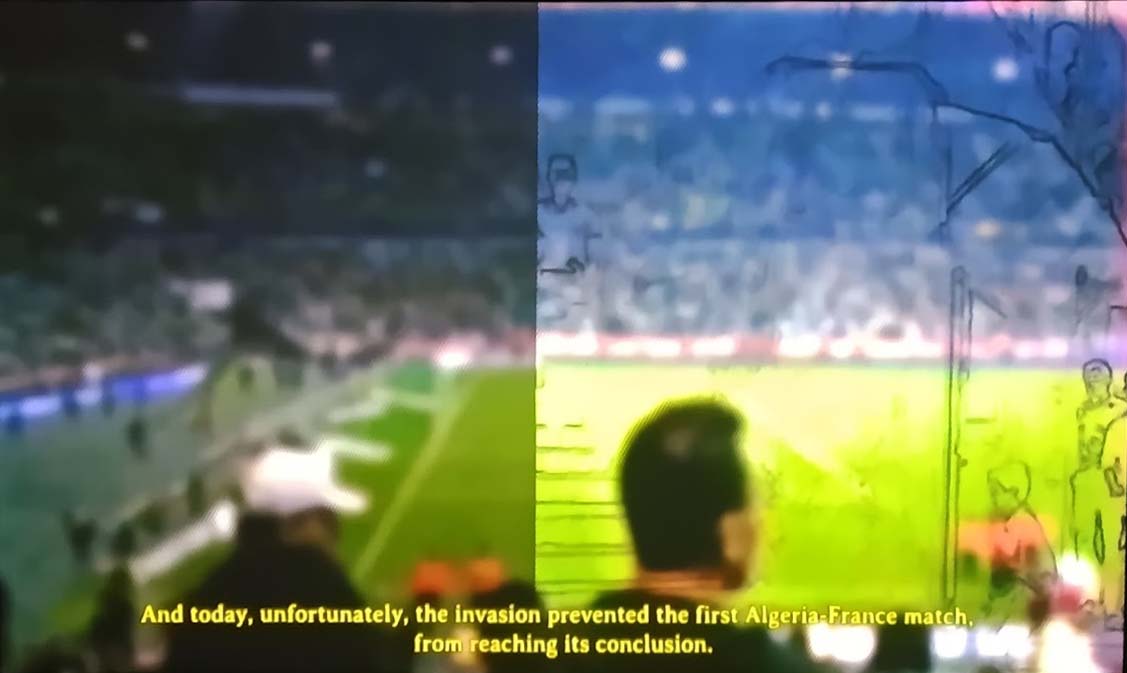
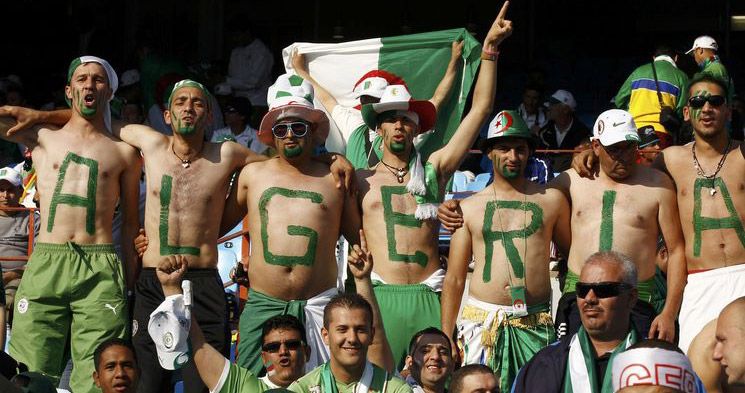
A grinding war of independence from 1954 to ’62, in which 1.5M Alergians are said to have died, followed 132 years of vicious French colonial rule. It’s no wonder they didn’t want to play nice.
What’s going on in Algeria now? The country is still recovering from the colonial mess and a subsequent civil war, and also suffering from a continued smouldering insurgency. It does have a large economy, because of oil and gas resources, but Algerian society struggles with crime and corruption.
Sports are an outlet for endless tension and anxiety.

Iván Argote
The video work by Iván Argote titled Levitate, contains three interactive channels. These multiple, giant projections surround the viewer, who is afforded a seating environment that’s plush and entirely suitable for comfortable lounging, even though it resembles chunks of shattered stone.

The video documents three separate events, referred to as staged interventions. The Flaminio Odelisk is plucked from its historical perch in Rome and dangles from a crane. Similarly a crew arrives, throws up some traffic cones and removes the statue of a notorious French military office Joseph Gallieni, from the spot in Paris where it has stood for more than 100 years. And finally, a giant marble depiction, of Christopher Columbus — one of the defining historics monuments of the city — is driven through the streets of Madrid, on a flatbed truck. In each of these case, mayhem ensues, amid onlookers and social media.
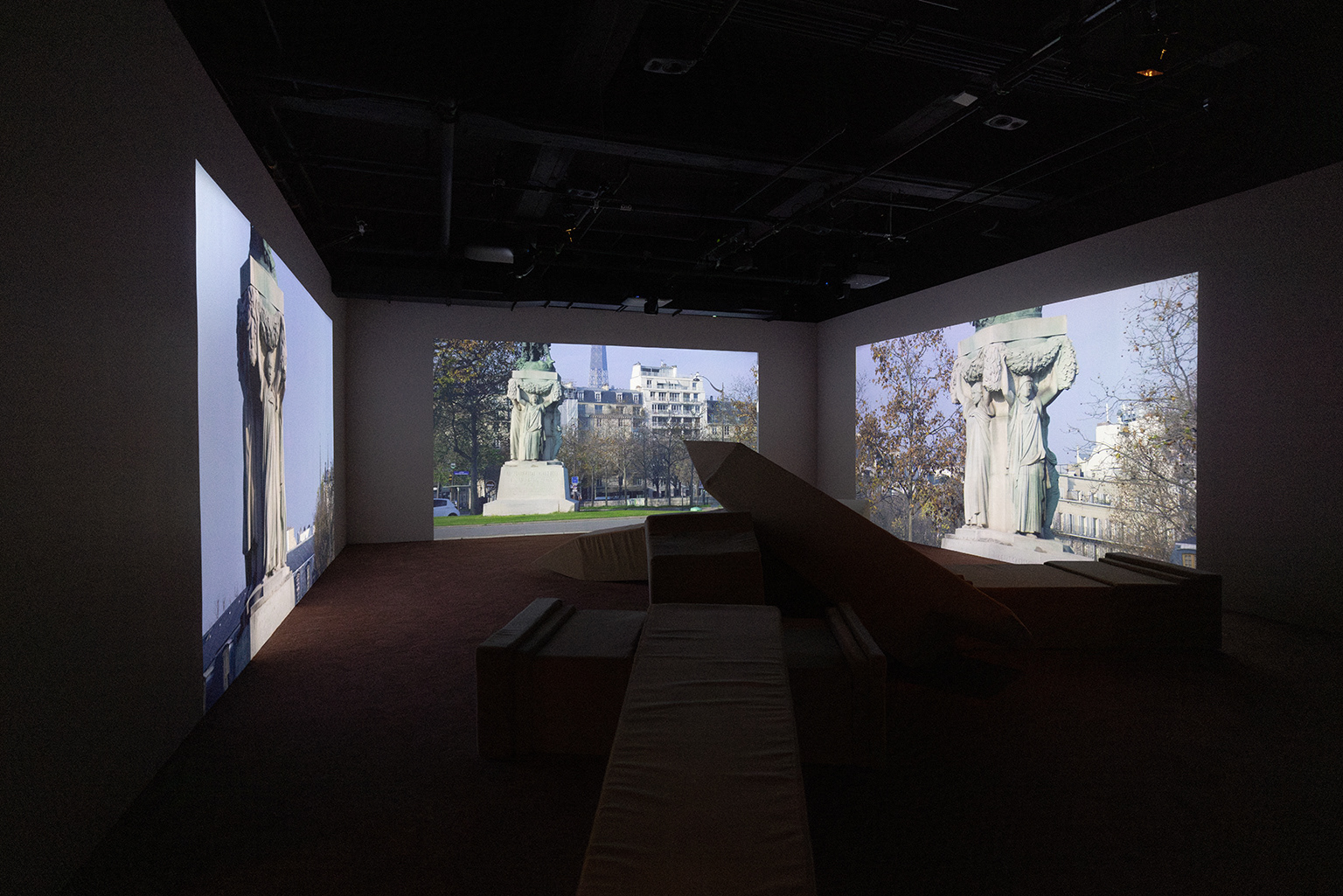
I really enjoyed watching these famous monuments (supposedly) being toppled! And the extreme reactions.
There was some pithy texts and voiceover that were occasionally evident but they seemed mainly distracting. At this point, we are all too familiar with the looting and pillaging of various national agents and armies, and the erecting of statues to glorify villians. We don’t require a lesson! (In fact, this exhibition does frequently veer into lecturing and moral posturing, and sometimes strikes a tone of art as Sociology.)
Lee Shulman & Omar Victor Diop
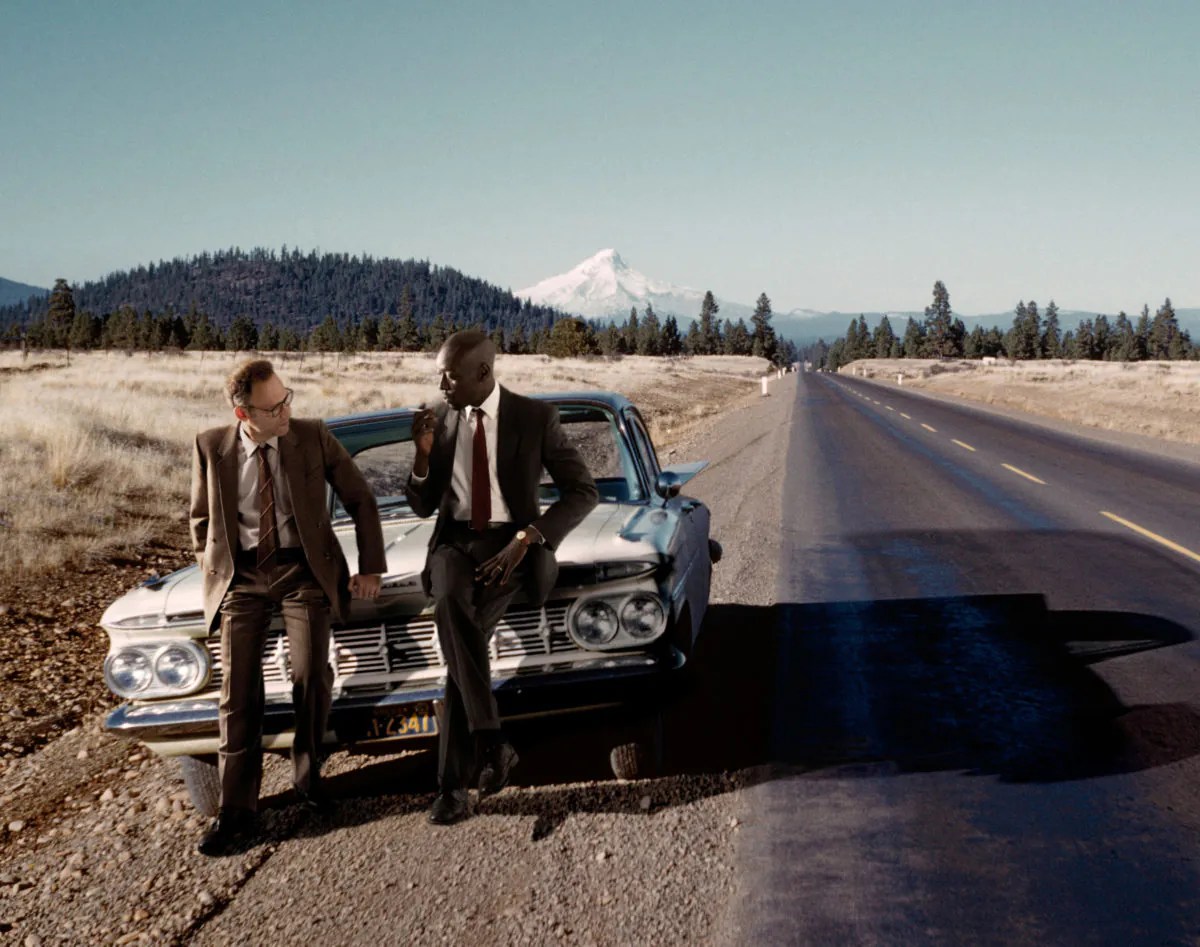
The photo works by Lee Shulman & Omar Victor Diop have a lighthearted appeal. Maybe its the absurdity itself that creates a somewhat uncomfortable underlying sensation. The big American car from the late 50s, the great outdoors, the road, and the slim elegant black man, conversing intently with his white counterpart. Not impossible, but from what we know of that era, unlikely.

The photos create a mythic past where racism and exclusion did not exist. Omar Victor Diop, who has skillfully inserted himself into this dreamy Hawaiian vacation from the 1960s (above) looks more than a little surprised to find himself there.

All the participants in this casual family photo appear relaxed and content, an idyllic afternoon in the outdoors, circa 1955. Except…
Sanaz Sohrabi
Watching the video by Sanaz Sohrabi, I felt like I should be taking notes or at least I should have done the preparatory reading before the class. I could barely keep up. Her video, called An Incomplete Calendar is densely packed and heavily researched.

It focuses on the years between 1950 and 1970: involves a Venezualan choir which toured the OPEC states promoting unity; shows some of the Western modern art housed in Iranian cultural edifices; displays an endless parade of stamps, letters, magazines, posters and other archival materials from the era to demonstrate struggles among the oil producing nations. It’s a little overwhelming.

Something included in this video that it was really great to learn about was the sculpture by Japanese artist Noriyuki Haraguchi,which is in the Tehran Museum of Contemporary Art. The sculpture consist of a low-slung rectangular steel structure, filled with thick, opaque waste oil with a glossy surface. Haraguchi exhibited the Oil Pool sculpture at “Documenta 6” in 1977 and it was then acquired by the Museum. I love this piece!

In a bizarre incident in 2022 a performance artist Yaser Khaseb, accidently plunged into the pool while performing an aerial exhibition. As a result, the Tehran Museum of Contemporary Art fired its director. The performance artist, although apologetic, was philosophical about the event. “A work of art can be reborn in contact with other works. From the interaction between two works, a new work can be produced,” he said.

Weirdly, I noticed the music or sound in all of the video works at the MAC had a startling simularity. I guess you could call it minimalist: a sort of one-note drone, rising and falling subtlely, sometimes featuring emotionless voiceover. I guess the viewer is obliged to hear it as a cue, signifying “this is serious.” Did the trend begin with the Ken Burns Vietnam documentary? Possibly.
I exited the basement gallery, with its many darkened rooms, into the brilliant sunshine of a Sunday afternoon in beautiful Montreal.

I was just in time to witness a Pro Palestinian demonstration, moving slowly along St. Catherine, as I slipped into my favourite Montreal Cathedral for a last look before my trip back to TO.
I guess one could call it “living in contradiction,” as is our fate these days, but the paintings in the church appeared to be an extension of the missing images exhibit. Could they have been created by Kent Monkman I wondered? Is this an elaborate ruse?


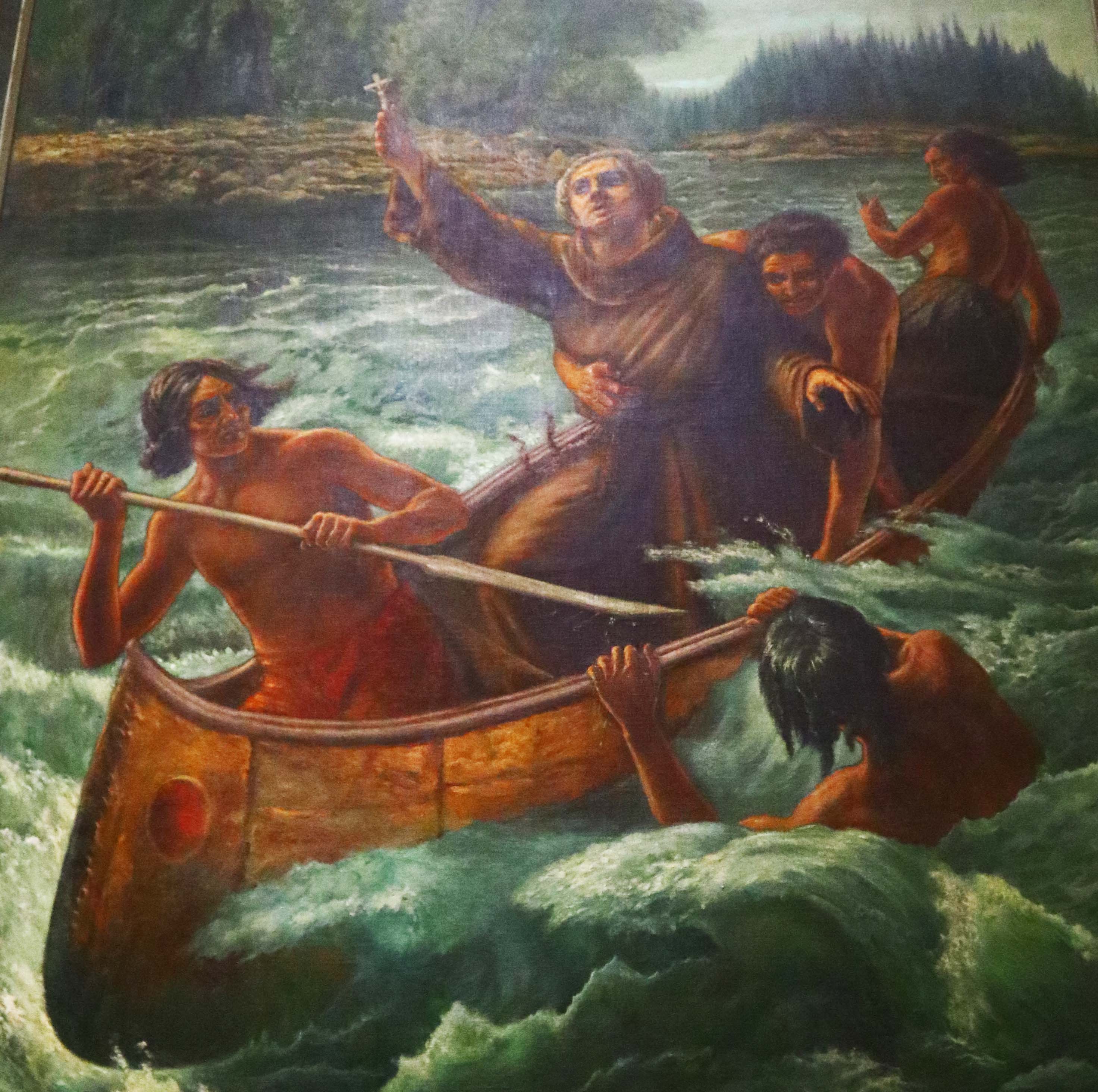
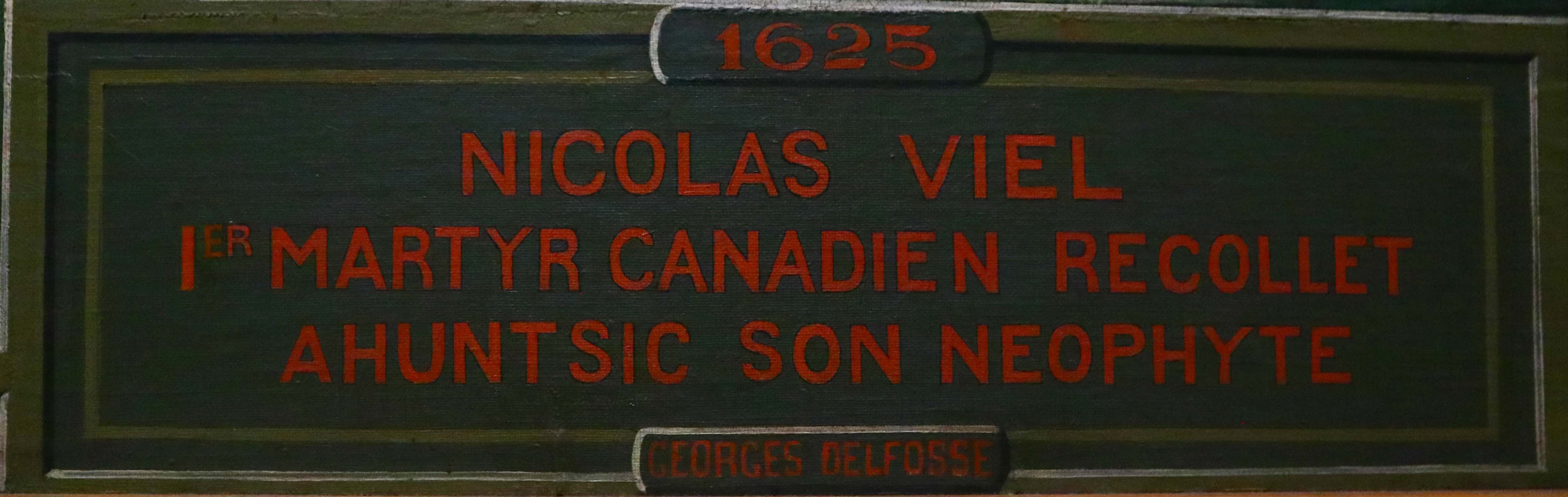
But no, I determined. No, apparently not, they are sociological depictions from another era.
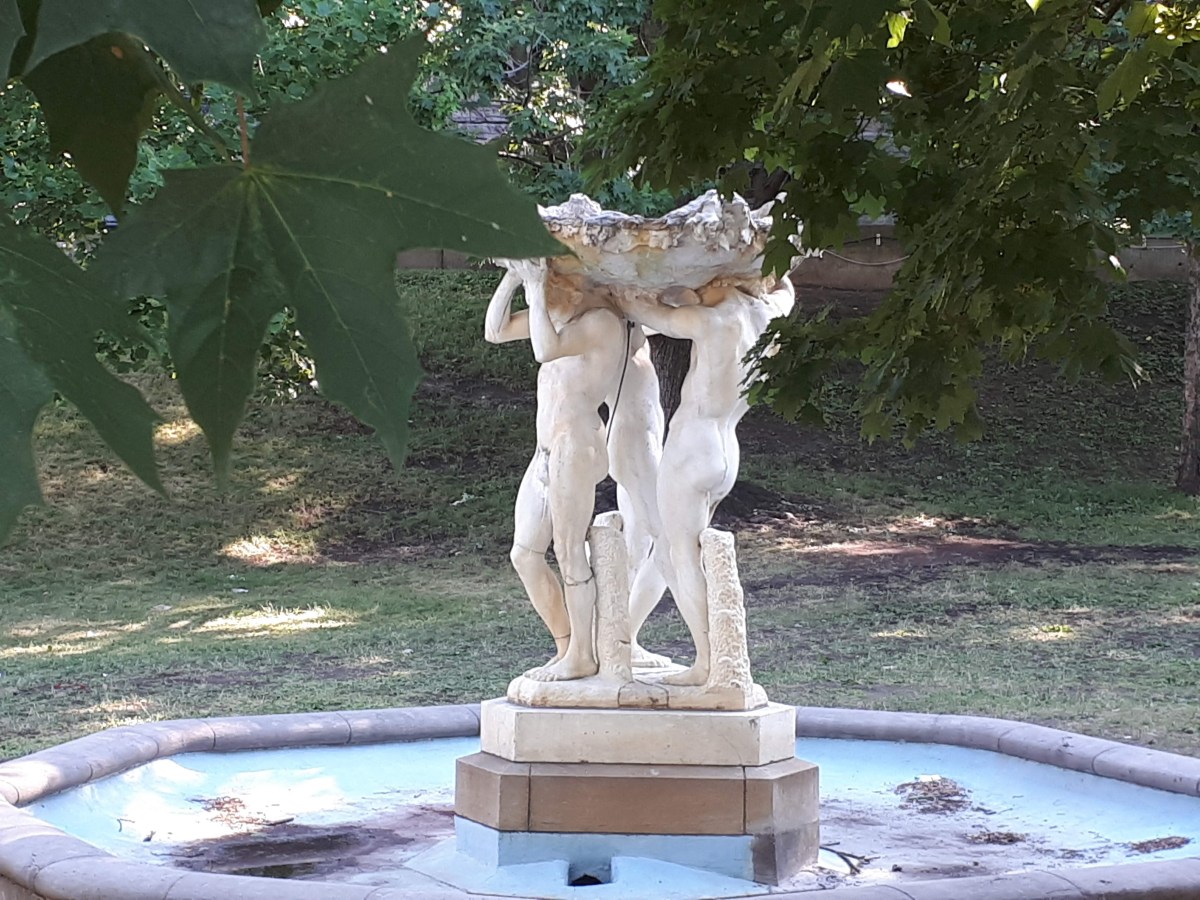
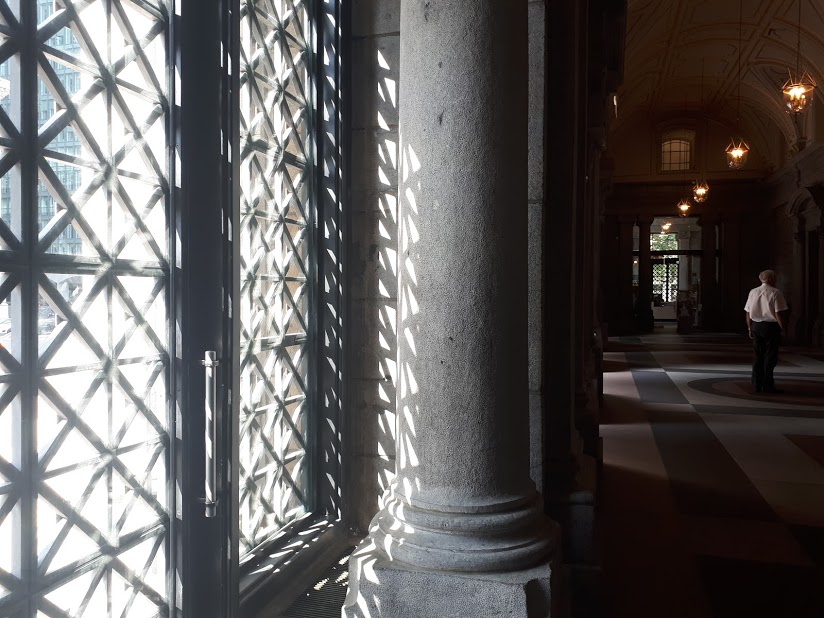
 Saint Marguerite Bourgeoys teaching her indigenous pupils in 1694 on ground belonging to the
  Portrait of Saint Marguerite Bourgeoys
 Detail of “The Prophets” by Richard Ibghy and Marilou Lemmons
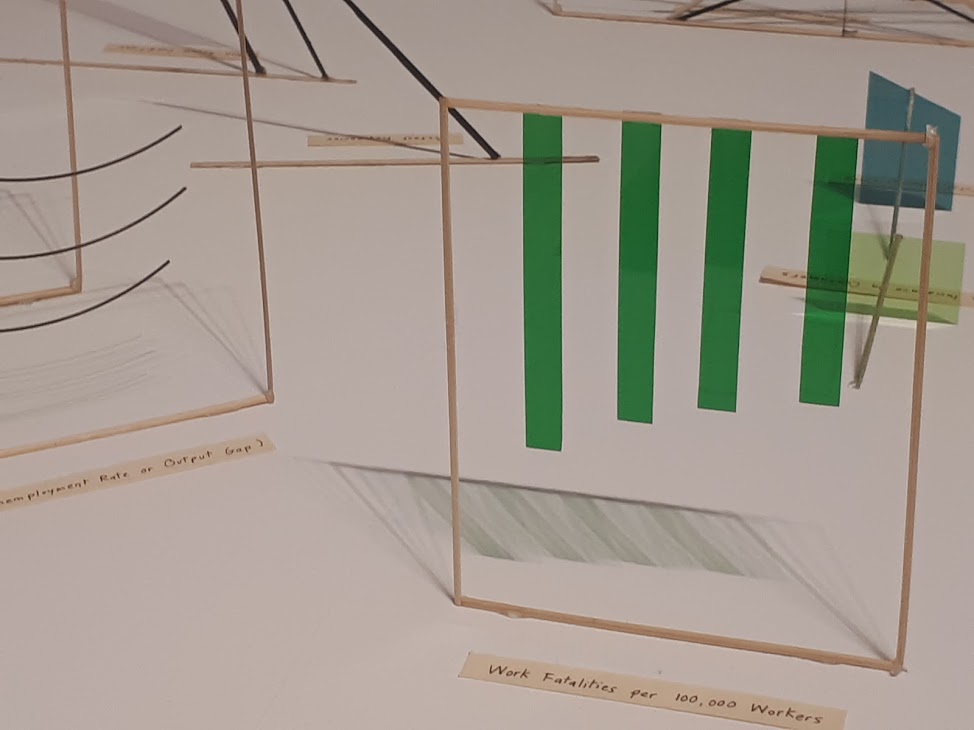 Detail of “The Prophets” by Richard Ibghy and Marilou Lemmons
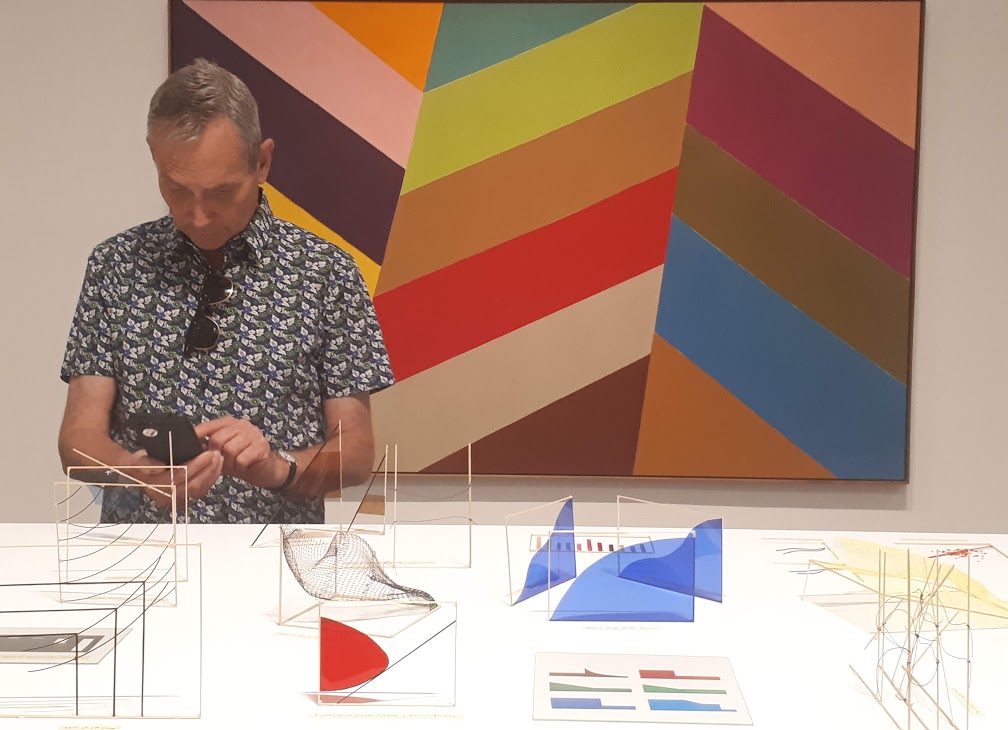 Museum goer photographing art work by Richard Ibghy and Marilou Lemmons, while standing in front of a painting by Jack Bush
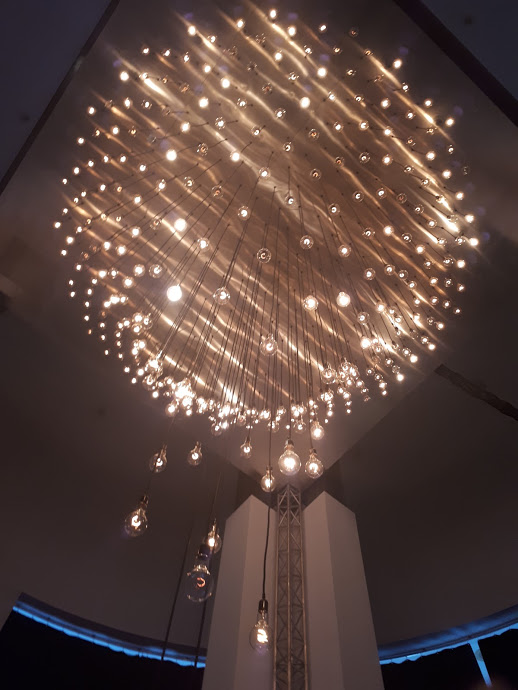 Pulse Spiral by Rafael Lozano-Hemmer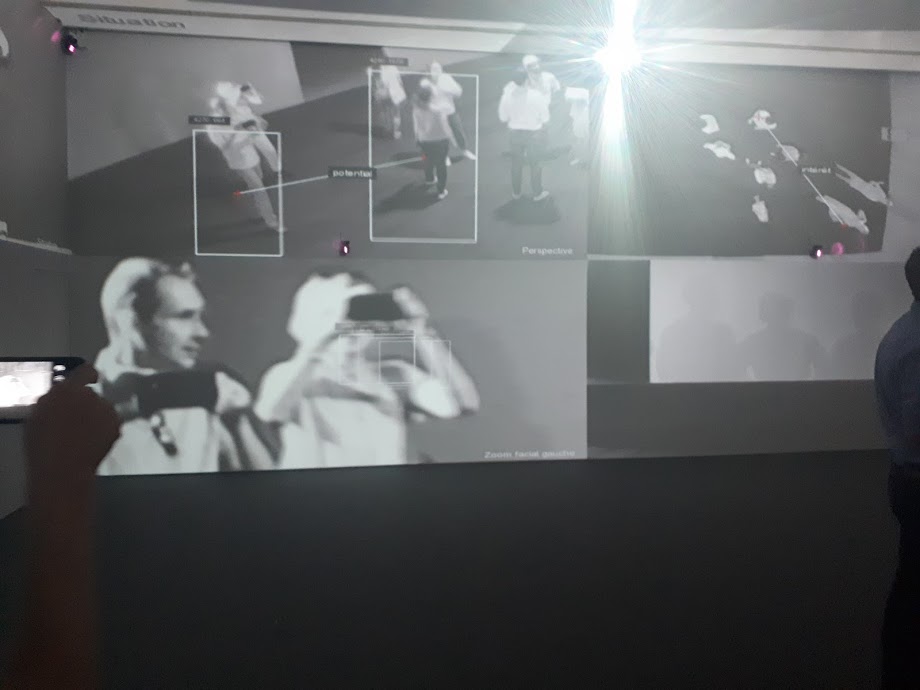
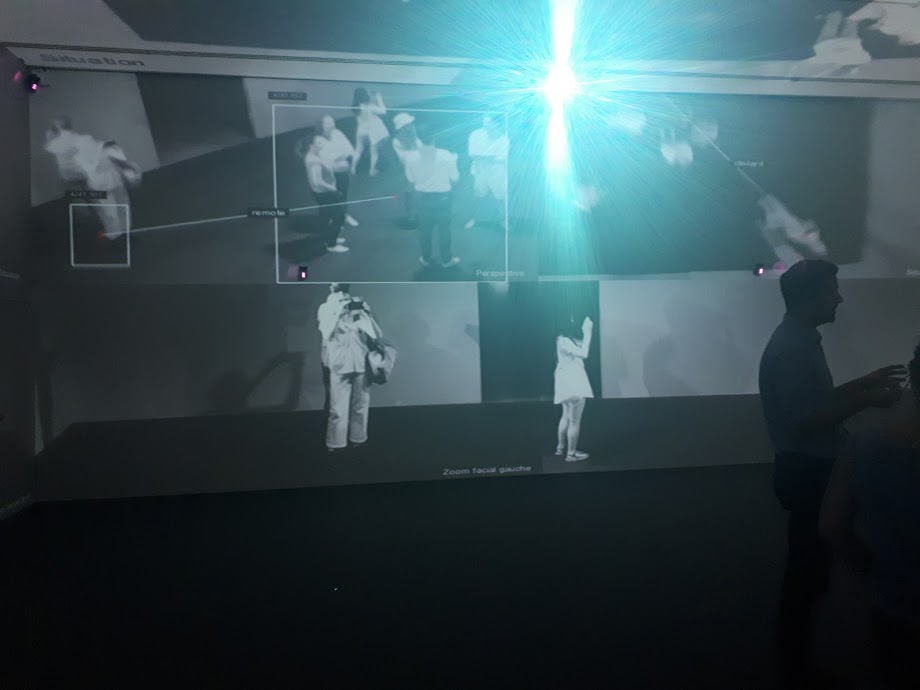 Installation shots from Zoom by Rafael Lozano-Hemmer
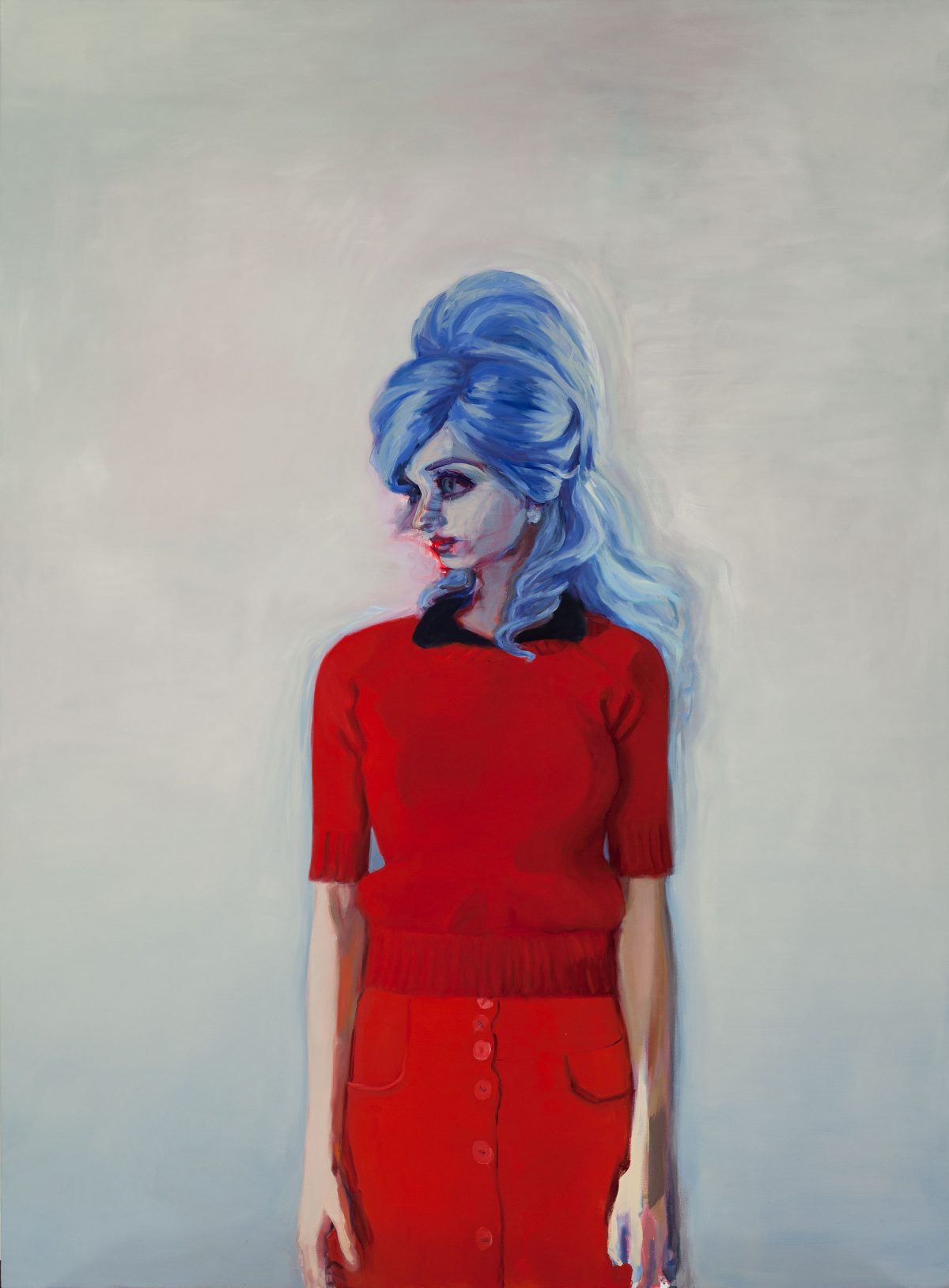 “Earthling (Red Sweater)” by Janet Werner
 annetteandquebec