October 24, 2015

The Gardiner Museum

Bone China is actually made from animal bones; specifically a minimum of 30% bone ash, mixed into a paste with calcium phosphate.  Kent Monkman alludes to this fact in his installation entitled The Rise and Fall of Civilization at The Gardiner Museum, where he has created a diorama-like buffalo jump.

20151024_155520

Detail from The Rise and Fall of Civilization by Kent Monkman

The bison approach the precipice as traditional taxidermied animals, shepherded by a glamorous Cher-like beauty of ambiguous gender.  As they leap to their death they are transformed into cubist sculptures and their remains, below, are a heap of china shards (maybe referencing Julian Schnabel’s Plate Paintings of the late 70s?)

20151024_155821

20151024_162738

Detail from The Rise and Fall of Civilization by Kent Monkman

The walls of the installation are covered with large drawings approximating those rendered in the Lascaux caves during Paleolithic times.  The mash-up of iconic imagery from art history next to the buffalo jump scene, (an activity that commenced more than 12,000 years ago on the North American plains) ties history and art history together.  It’s a big subject.

20151024_155310

Detail from The Rise and Fall of Civilization by Kent Monkman

According to Wikipedia, ” The Blackfoot Indians called the buffalo jumps “pishkun”, which loosely translates as “deep blood kettle”.  They believed that if any buffalo escaped these killings then the rest of the buffalo would learn to avoid humans, which would make hunting even harder.  In Kent Monkman’s installation, the bison appear to be resurrected and trot away from the scene of carnage on delicate hooves; flattened, spindly, attenuated ideas of what they once were, appearing now in the style of 20th century sculpture.

20151024_155904

Detail from The Rise and Fall of Civilization by Kent Monkman

A few years ago, while camping in Manitoba’s Riding Mountain National Park I came up fairly close to a massive bison. Maybe it was my imagination but it seemed to me this animal gave me a look of pure hatred.  Is there such a thing as genetic memory?  Did this creature recall that 50 million of his kind where wiped out by white people?  (I also have the weight of global warming on my shoulder.)

bison

In his article titled The Age of Exhaustion, Joshua Mitchell, writing about the current state of politics in the US, comes up with some very depressing conclusions.  It doesn’t matter if we can trace our ancestry directly to “Buffalo Bill” Cody or not, in still Puritan America we are either pure or stained, guilty or innocent.

I am this or I am that; and therefore no reasoned discussion or argument you might offer need trouble me, for deeper than my capacity to reason is who I am, and who you are—‘white,’ ‘black,’ ‘male,’ ‘female,’ ‘heterosexual,’ ‘homosexual,’ ad infinitum

But Joshua Mitchell is writing about the USA.  In Canada we shook off the politics of division and came up with a hopeful alternative.  The US election is more than a year away.   Soon enough Donald Trump may just blow over.

trump

Donald Trump may blow over soon

Strolling through the Gardiner Museum I came upon another artwork with a subtle and graceful cultural mash up.

20151024_161344

20151024_161404

Mother Teresa Bowl by Carl Beam

Carol Beam’s 1982 earthenware bowl shows Mother Teresa in prayer surrounded by halo of a First Nation’s headdress.  It is a beautiful sketch of Mother Teresa, someone I have always tried to emulate (and failed).

July 4, 2015

I am elated to be recovered from at least a month of labyrinthitis and to stroll up the Rail Path to Miller Street, in the intoxicating heat of this Saturday afternoon in July.

Katzman Contemporary

Part Time, Deep Time by Meghan Price

First let’s think about textiles (domestic, temporal, decorative, familial, utilitarian and in the realm of craft; the human story told in placemats, dresses and rugs) and now geology (just the opposite, encompassing the study of the Earth, the solar system, nearly incomprehensible time frames, confounding forces, speculative theory; a trail of continents, boulders, pebbles to puzzle over.)  In her exhibition at Katzman Contemporary, titled Part Time, Deep Time Meghan Price investigates this unlikely pairing and comes up with some fresh and unpredictable objects and images that seem to allude to the groping for understanding of some deep questions through the humble, practical arts.

MaghanPrice-11

Metamorphic by Meghan Price

MaghanPrice-13

Detail of Metamorphic by Meghan Price

I really liked looking at Metamorphic, the sculpture shown above.  The artist hand-stitched geological markings onto paper to create an embroidery of a massive boulder.  The manifestation of this eccentric idea is bold and exciting.

Meghan Price takes her knowledge of textile skills into new territory.  She weaves wire, layers and folds it, literally bastes it to rocks.

price-17

Detail of Erratics by Meghan Price

MaghanPrice-19

Detail of Wire by Meghan Price

MaghanPrice-6

Installation view of Stratigraphy by Meghan Price

In her piece Stratigraphy Meghan Price creates a sculpture reminiscent of a typical geologists core sample, except this one is made of screen printed fabric, variously patterned and compressed, and looking quite a bit like a towel display at Pottery Barn.

mprice_stratigraphy_web_5

Detail of Stratigraphy by Meghan Price

I recently saw an exhibition at the Textile Museum of Canada called Artist Textiles.  A number of the most familiar artists of the twentieth century (Warhol, Picasso, Dali, Matisse) were included.  In every case the artist textiles were images by these extremely famous artists printed onto fabric.  The same images could just as easily been been printed onto bookbags or mousepads.  It was like the gift shop took over the Museum.  Meghan Price, on the other hand, goes so deep into this domain that it becomes abstract, open ended and encompassing all.

EX-2015-Artist-Textiles-03

Number Please? scarf by Salvador Dali


Thin Air, Bright Light by Yi Xin Tong

While walking around the gallery I learned that Yi Xin Tong was born in Antarctica.   I couldn’t help wondering if his short films (stop action GIFs), made from found imagery of various situations playing out in a dramatically barren, snow and ice landscape, were related to this fact in some way.  Do these silent, dreamlike tableau equate to memories of early years in the deepest south?

Tong_Install+5

Installation view of short films by Yi Xin Tong

01_how_to_capture_penguins

How to Capture Penguins by Yi Xin Tong

The films, some only a second or two in length, some with a single image which flickers slightly, read as mysterious messages from another time and a stark realm.  I like the efficiency at work here, the way so much content and formal nuance is packed into these succinct artworks.

Yi Xin Tong’s carved inkjet prints on paperboard share that sense of ‘less is more.’  Quite literally, in this case, since the artist excavates the boards, tearing out the former depictions to create mysterious and playful new images upon an expressive and unifying ground of swirling striations and gouges.

5-1

Piano Factory II by Xi Yin Tong

3

Arwork by Yi Xin Tong

May 9, 2015

….More Scotiabank CONTACT Photography Festival

There are CONTACT exhibitions everywhere in Toronto this month; a coffee shop around the corner from me on Dundas West, the local organic supermarket even!  Hard to get a good look at them through the vegetable misters, but they are there.

Bau-Xi Photo – Chris Shepherd

Chris_Shepherd_Kennedy_Station_Platform_Bench_Toronto___20225_360

Kennedy Station Platform by Chris Shepherd

Is the essential character of a city reflected in its transportation systems or do the systems help to create the character?  Think of the glamour of Montreal’s metro; its bold graphic styling and silently approaching trains, or the romance of New York’s subway, permanently embedded like its famous black and white, art deco tiles.  Relatively, Toronto’s underground transportation has seemed somewhat mundane, workaday and all about function.

Chris_Shepherd_Pape_Exit_Hallway_Toronto___Edition_of_1_20649_360

Pape Exit by Chris Shepherd

Chris Shepherd gets at the heart of the form and function connection in his exhibition at Bau Xi Photo.  (I am actually the owner of some subway shots Chris Shepherd and I think it is because of looking at these photographs that I began to appreciate the aesthetic of Toronto’s subway.)  Sadly, it is not glamour or romance that is at the core of Toronto; it is work.  And the Toronto subway is in total harmony.  The photographs of Chris Shepherd show us the modest pathways to our daily grind and reveal their perfection.

From BlogTO I learned the following:

The colours were chosen to discourage rowdy behaviour and loitering rather than for aesthetic reasons.  Consequently, they have that institutional quality of hospital or penitentiary walls.  For many years, Torontonians grumbled that their subway stations looked like public washrooms.  But now, decades later, the remaining designs have become Modernist classics.

There has been a recent flurry of TTC projects to improve and concurrently embellish the existing underground system.  It’s exciting to see a little civic preening going on in this city so focused on dogged achievement.

At Dufferin Station, Winnipeg artists Eduardo Aquino and Karen Shaski (of spmb) add blooms of pure colour, and big pixilated images to transform one of the most heavily used and rundown station of the Bloor line.  Chris Shepherd documents this unrestrained use of colour so well.  We can only hope it does not lead to loitering or rowdiness.

Chris_Shepherd_Dufferin_Station_Mezanine_Toronto___Edit_24360_360

Dufferin Station by Chris Shepherd

And finally the hoardings have come down at Union Station.  Big, messy,  sketchbook style line drawings by Stuart Reid are revealed.  The drawings, depicting TTC riders, have been blown up and transposed onto glass panels.  They are fresh, unexpected, thoughtful, sensitive and kind of a shock relative to the relentless TTC grids and tiles.

20150506_122538 20150506_122552 20150507_084647

Union Station panels by Stuart Reid

My current work address is near the Ferry terminal at the bottom of Bay Street.  Wandering around the area at lunch time gives me the feeling the plastic wrap is coming off.  Everything is shiny, clean and has that new car smell.

Across the street from me, draping the exterior of the Westin Harbour Castle Conference Center at 11 Bay Street is a public installation (also part of the Scotiabank CONTACT Photography Festival) titled Best Beach by Sarah Anne Johnson.  The piece is particularly stunning when seen from within the Waterpark food court at mid-day.  At that time the whole place is flooded with light and Sarah Anne Johnson’s piece looms over the oblivious diners, glowing and shimmering in the daylight.

20150520_131037 20150520_131000

Views of Sarah Anne Johnson’s piece Best Beach from the Waterpark food court at 10 Bay Street

It is a huge photograph and it sweeps across the entire end of the food court’s massive plane of windows like some giant playground graffiti, messy, dripping, flourescent and joyful.

20150508_124420

Best Beach by Sarah Anne Johnson

MOCCA  – Part Picture

The exhibition at MOCCA, called Part Picture, is also associated with the Scotiabank CONTACT event.  On entering the show there is a statement clarifying the curatorial rationale for the pieces included.  The artists in this exhibition, declares the statement, must be:

  1. young
  2. reacting against digital photography, and,
  3. combining photographs with another creative medium, like painting or sculpture

Why Jan Groover is included I do not know?  She was born in 1943 and became well known in the 1970s for close up, vaguely feminist, domestic interiors.  Maybe its because they are truly painterly and reminiscent of a Braque still life in purples, greens and reds?  In any case I appreciated seeing these beautiful photos.

20150509_141628

Untitled by Jan Groover

Painterly too are the photos by James Welling.  It’s interesting that James Welling has worked for Brioni (the Italian fashion conglomerate) because these prints resemble nothing so much as pretty dress fabric.

20150509_141649

14Y by James Welling

Works by Ryan Foerster are more in line with the stated intentions of the show and truly take photography into another realm.  Eschewing the tradition of pristine craftsmanship in a dust free darkroom, Ryan Foerester uses mangled photo plates, chance and accidents of light, dirt and debris to create wonderfully expressionist pieces with a particular Petri-dish gore appeal that reads as post apocalyptic.

20150509_141537

Artwork by Ryan Foerster

Ellen Carey’s Mourning Wall is composed of spent Polaroid plates.  They have a dreary, grey, funerary look and are arranged in the finest tradition of minimalist sculpture.  This piece made me think about the brief flowering of unique technologies.  (How exciting Polaroid once was!  Why did I throw my Commodore 64 in the trash?!)  Ellen Carey extends the metaphor of obsolescence, death and decay with the Rust Belt aesthetic of this work.

20150509_141904

Mourning Wall by Ellen Carey

Slick reams of photo paper tumble in heaps; snapshots sprout cables or have little blanket covers attached; but more typically, in this show, photographs take on a more painterly look, moving away from documentation, the traditional province of photography, and closer to objecthood, and marketability.

20150509_142545

68 by Mariah Robertson

May 7, 2015

May is like a door opening to the pleasures of summer.  May!  April is so last month.

Scotiabank CONTACT Photography Festival

Photographic images are so utterly ubiquitous in art — and everywhere — and so wildly diverse in their intent and content that I just don’t think of photography as a singular medium with a singular historical trajectory.  However, since the Scotiabank CONTACT Photography Festival, on from May 1 to 31, declares itself a “celebration of photography” I am playing along and thinking photography first, art second.

Ryerson Image Center

At the Ryerson Image Center I was transfixed before Phil Solomon’s eight channel piece called Empire X 8.  All eight screens of the Salah J. Bashir New Media Wall display the same direct view of the Empire State Building, but the time of day is different, and evolving, on each.  The continually changing environments — inky night where the building glitters like a jewel in the black sky, desperate grey dawn where scraps of garbage flutter on updrafts around the famous icon, rippling sunsets of orange and pink backlighting the building — play off one another, within the sleek matte grid of images.

20150507_124904

Installation shot of Empire x 8 by Phil Solomon

The static shots are from uptown, facing toward lower Manhattan, but the peripheral landmarks seem wrong.  The World Trade Center is gone and there is no sign of the Freedom Tower — so we have a time frame — but gone too is the World Financial Center, and hmmm, instead of the Hudson River banked by the shores of New Jersey, there appears to be a hulking military bargelike installation floating near the west side of the island.  Small planes and choppers roam the sky.  The soundtrack is weather only: wind, rain, rumbling thunder.

20150507_124300

Still of single channel of Empire x 8 by Phil Solomon

For anyone who has been even mildly hooked on Grand Theft Auto this is familiar terrain; it’s a real (unreal) image, manufactured in some digital sweatshop somewhere, from one of the Liberty City Series.  The images are so smooth, dense and controlled, endlessly fascinating to view, and like Andy Warhol’s famous 8 hour Empire movie of 1964, are a blank slate upon which so much meaning can be heaped.

CRI_106679

Still from Empire 16 mm film by Andy Warhol

Also at the Ryerson Image Center are the photographs of Mark Rowedel, this year’s winner of the Scotiabank photography award.  At first look the photographs of Mark Rowedel appear to be traditional fine art photography in the style of maybe Ansell Adams: technically masterful, documenting nature’s grandeur, black and white (mostly), devoid of humans or animals, deep, meditative.

image

Photograph by Mark Rowedel

Coming a little closer and the formal and compositional elements are seen to be bold and radical, particularly the use of deep black swaths of shadow enveloping the foreground, dramatic arcs, gaps and crosses.

ea0092ad1dc251618c51768b16861735

Nevada Test Site Aluminum Bunker by Mark Rowedel

Closer still and these photographs release their emotional impact; often creating a sense of folly, loneliness, despair.

Ruwedel-camper

Oh-My-God Hot Springs #6 by Mark Rowedel

th

Central Pacific #18 from the Series “Westward the Course of Empire”

The stylized titled printed in pencil are sometimes hilarious.  Could there really be a churned up expanse of desert known as ” The Devil’s Golf Course?”

The Devil's Golf Course

The Devil’s Golf Course by Mark Rowedel

In other works Mark Rowedel gives a nod to Robert Smithson and Ed Ruscha adding another layer of interest to these intense photographs.  They are in dialogue with important art of the recent past.

April 28, 2015

The Power Plant – John Akomfrah

The Unfinished Conversation, the three channel video installation by John Akomfrah, is so dense with ideas and images that I was obliged to make a return trip to The Power Plant and watch it multiple times.  Projected in a hushed room, on massive screens, and featuring a sound track that is at least as rich and layered as the visual component, I found every viewing of this artwork a rewarding experience.

20150429_120016

Installation view of The Unfinished Conversation by John Akomfrah

The cultural theorist Stuart Hall is the ostensible subject of the piece and his personal and professional life is effectively traced within it.  Visually and structurally, Stuart Hall functions as a fulcrum – around which a kaleidoscope of images swirl – illuminating societal and cultural forces at work, first in his home country of Jamaica, and then in Britain in the 50s, 60s and 70s.  John Akomfrah seemed to have access to the BBC archives as these distant eras are brought to life with so much fascinating material, including TV programming from the time, news footage, photographs and sound recordings.

20150429_122351

Installation view of The Unfinished Conversation by John Akomfrah

Stuart Hall came to the UK as a Rhodes Scholar in 1951.  He produced important academic writings, particularly theories of mass communications and he expanded the idea of cultural studies in the academic world.  But he hardly confined his activities to academia.  He was also a prolific journalist, television personality, champion of the arts, and is often referred to as the “Godfather of Multi-Culturalism” for his work in these various media on immigration, race and the politics of power.  Stuart Hall died in 2014.

20150430_133419

20150429_120356

Stills from The Unfinished Conversation by John Akomfrah

“Identity is an ever unfinished, endless conversation” is a (paraphrased) statement made by Stuart Hall in the video.  His own identity was shaped in the intensely race conscious Jamaica in which he felt an outsider even in his own family.  He longed to be part of the modern world and for West Indians of that era the UK was an escape and a second “home,” to which, he decided soon after his arrival there, he would never belong.

The sixties in the UK were not just about mini skirts, the Beatles and Mandy Rice Davies!

profumo_2443150b

Mandy Rice Davies and Christine Keeler

With a focus on the impact of British colonialism around the world a steady drumbeat of upheaval is referenced in the artwork: Conflicts like the Soviet Invasion of Hungary and the Suez Crisis; social movements like the protests by the Campaign for Nuclear Disarmament, natural disasters of every kind, the 1963 Profumo scandal, workers strikes, the beginning of the wars in Asia, mass immigrations, the travails of the poor in Northern England, Civil Rights demonstrations, the rise of consumerism are all depicted in this piece.  These events affected and changed the individual known as Stuart Hall, along with millions of other individuals.

20150429_122033

Installation shot of The Unfinished Conversation by John Akomfrah

Readings from William Blake, Charles Dickens, Virginia Woolf, Mervyn Peake and others, lectures and personal reminiscences by Stuart Hall, and music, particularly jazz of the era, along with sounds of all kinds are woven together to add much of the emotional resonance of the artwork.  The audio reaches a kind of crescendo at the point where Mahalia Jackson sings an extraordinary version of Silent Night, tears streaming down her face, within a melange of images including an actual birth.

unfinished-conversation-13

Mahalia Jackson in still from The Unfinished Conversation by John Akomfrah

Below is an (incomplete) list of countries and the dates they achieved independence from the United Kingdom.

  • 1922 – Egypt
  • 1932 – Iraq
  • 1947 – India
  • 1956 – Sudan
  • 1957 – Ghana
  • 1958 – Sierra Leone
  • 1960 – Nigeria
  • 1961 – Tanzania
  • 1962 – Uganda, Jamaica
  • 1963 – Kenya
  • 1964 – Zambia, Malawi
  • 1966 – Botswana, Lesotho, Barbados
  • 1967 – Yemen
  • 1970 – Fiji
  • 1971 – Qatar, Bahrain
  • 1974 – The Bahamas
  • 1980 – Zimbabwe

April 19, 2015

A Space Gallery

Hermann Nitsch, the Austrian artist, born in 1938, and famous for his bloody “Aktions,” recently had a planned exhibition in Mexico City cancelled because of the protests of animal rights activists.  Torn apart animal carcasses, buckets of blood and offal, fake crucifixions, ritual animal slaughter are all part of Hermann Nitsch’s performance art.  Numerous volunteers assist in these events which are described as “life affirming mass intoxications.”  Old Hermann Nitsch began to do this work in the 60s as the Theatre of Orgies and Mysteries.  “Splatter paintings” by Hermann Nitsch are exhibited at the Saatchi Galleries in London.

Hermann-Nitsch-2-397x600@1x

Hermann Nitsch

Here in Toronto’s A Space, in an exhibition titled A Non-Space at A Space, by the Art Collective Postcommodity, video documentation of the slaughter of a single sheep is on display.  Relative to a Hermann Nitsch bacchanalia, and its bloody methaphoric stew including the Catholic Church as well as Broadway, this is a simple act.  The sheep is butchered in the bathtub of the Gallup Motel by an attractive woman identified only as a former Miss Navajo beauty contestant.  We see Miss Navajo lead the docile animal from the sunny, southwestern exterior to the motel’s bathtub.  The animal’s throat is slit.  It quickly dies.  The carcass is expertly skinned and the body is rendered into meat.

20150418_153225 20150418_153207 20150418_153505

Stills from Gallup Motel Butchering by Postcommodity

Butchering of livestock is routine and takes place around the world in factories, farms and probably bathtubs. Ms. Navajo’s ancestors in Gallup, would have been slaughtering animals for many thousands of years in this region.  But not sheep.  Sheep are European imports.  Sheep arrived in North America around 1600. (I wrongly identified the animal as a goat in my original post.)  It would have been an entirely different kind of video – more action and adventure – if, for example, an antelope (actually a Pronghorn), indigenous to North America, were brought back to the Gallup Motel.

Pronghorn

Pronghorn (North American antelope)

The event in the motel room was recorded at various angles by at least four cameras.  The images are projected big and on every wall of the rather small space.  It’s oppressive, even alarming.  The viewer is hemmed in by the flashing knife, the gore, the tugging and snapping of bones, tendons, vertebrae as the blood circles the tub’s drain.  It struck me that this profound act, performed in a spirit of cultural empowerment, within the down market motel room, is enough.  The fast edits and multiple supersized screens are superfluous.

20150418_153412

20150418_153434

Stills from video installation by Postcommodity Art Collective

In the room next door the Postcommodity Art Collective presents a two channel surveillance video of residences of the affluent middle class in the Santa Fe area called My Second Home, But I Have a Very Spiritual Connection With This Place.  (I love surveillance video and the quiet dark room was a relief after all the slaughter in the bathtub.)  I guess the point is the houses have that adobe look in historical accord with the surroundings.  I have never been to Santa Fe but oddly enough you can see the adobe look in some of the suburbs of Winnipeg, which takes appropriation to a whole other level.

Winnipeg

Winnipeg interpretation of the Santa Fe style

In the writing that accompanies the exhibition the terms “settlers” and “colonizers” are used.  The show’s curator, Ellyn Walker, in a short bio, is compelled to identify herself as a “settler” of Scottish and Italian descent.  What does this racial identification by the curator mean?  Is this the politically correct end game in which ancestry must be declared and then judgement is passed?  I find this a depressing trend.

April 18, 2015

All over the city today I am seeing tank tops, patios at capacity, flip-flops, Daisy Dukes.  The rush to embrace summer is irresistible.  We are in love.

Images Festival

Casey Wei presents Chinatown Center Mall Happenings!

How often have I walk down Spadina, past the Chinatown Center, and barely registered it is there?  Thanks to Casey Wei I have now visited this mall, twice.

20150414_180225

Chinatown Center, 222 Spadina

The mall is packed with glittering things but short on shoppers.  There is a drowsy atmosphere.  Could be the weather is to blame.

20150414_181245

Jewelry store in Chinatown Center

Like the larger, newer Pacific Mall in Markham, Chinatown Center ostensibly caters to ethnic Chinese  who want the feel and products of a Hong Kong shopping center.

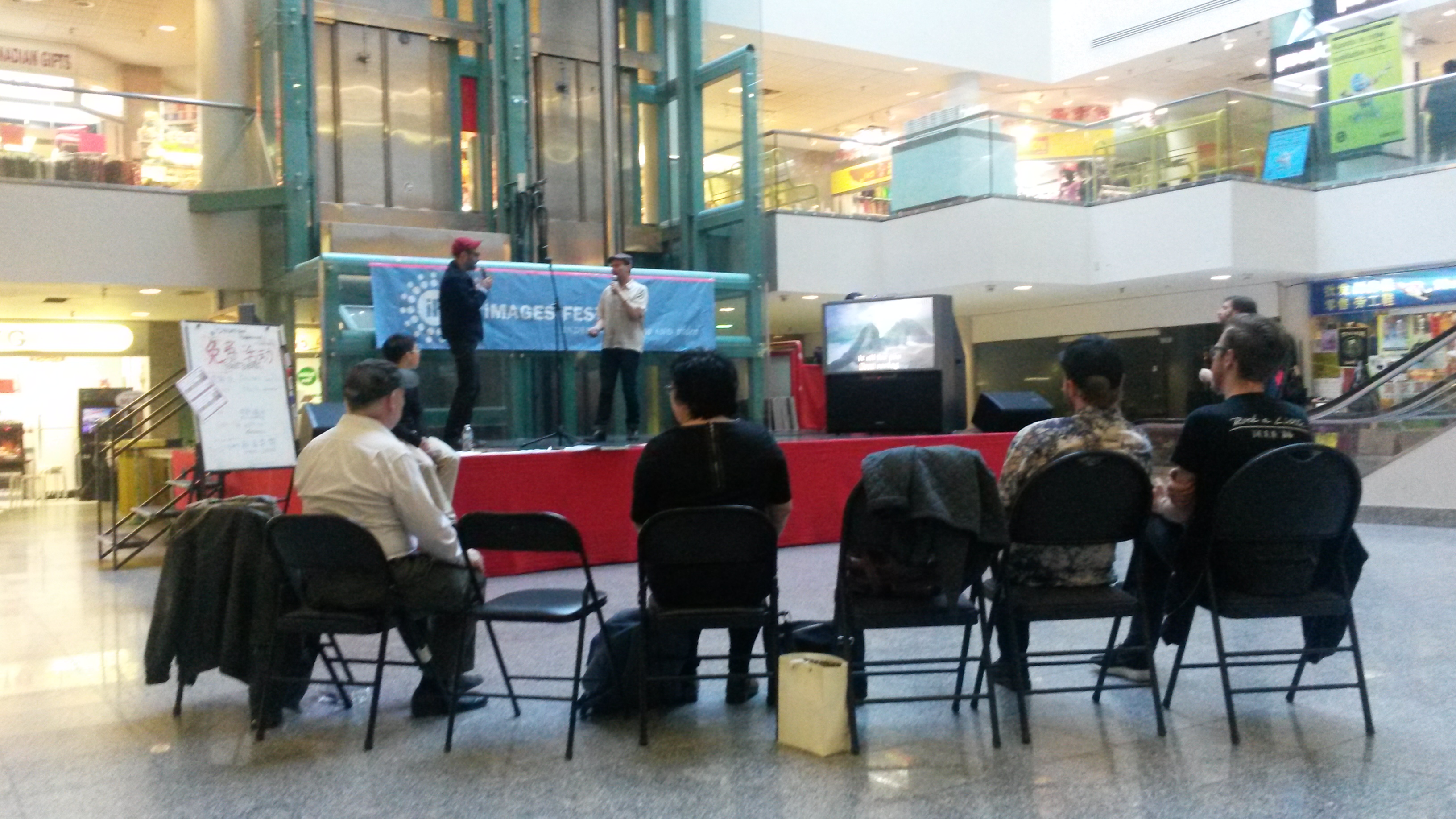
Casey Wei set up shop on the ground floor where occasional passers by gaze down from the upper galleries.

20150417_182240

Chinatown Center

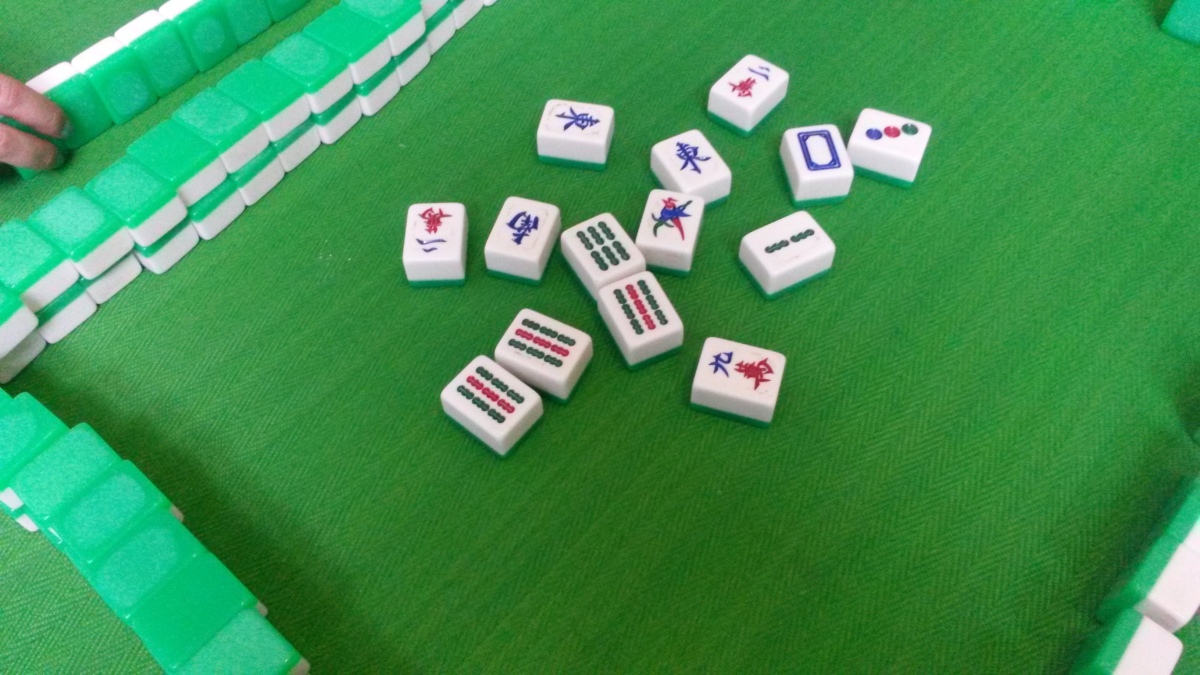
There are a handful of artists around and a few members of the local community.  As an art piece it is shapeless, open ended and slowed down, stretching out to nine days.  It feels good: relaxed, friendly, natural. There is playful banter. The Karaoke is at times quite accomplished.  (I was almost ready to sing “You’re So Vain” but backed out.)  The mahjong tiles clatter in the corner.  The shop owners don’t seem to have much expectation of customers.

20150417_180531 20150414_180846 20150417_181624

Snapshots of Casey Wei presents: Chinatown Center Mall Happenings!

One of the organizers mentioned the piece is about “engagement”.  It worked for me.  I have a new familiar stop in Chinatown.  For Casey Wei I think engagement means something different and here is where ancestry comes into play. (If Casey Wei did this in the PATH for instance, around King and Bay, it would be a wholly different kind of engagement.)

chinatown

Chinatown Center Mall Happenings! by Casey Wei

Here is not so much a place to shop as a place to catch a mood.  At least I don’t think anyone goes to Chinatown Center to buy a smartphone, or a pair of jeans.  My sense of the virtually deserted Chinatown Center is that it is a sentimental destination, one that evokes a life left behind on the other side of the world.  Casey Wei, a young woman with an Asian face and name, but whose bio suggests she grew up in this country, may be trying to plumb that sentimentality towards greater self understanding.

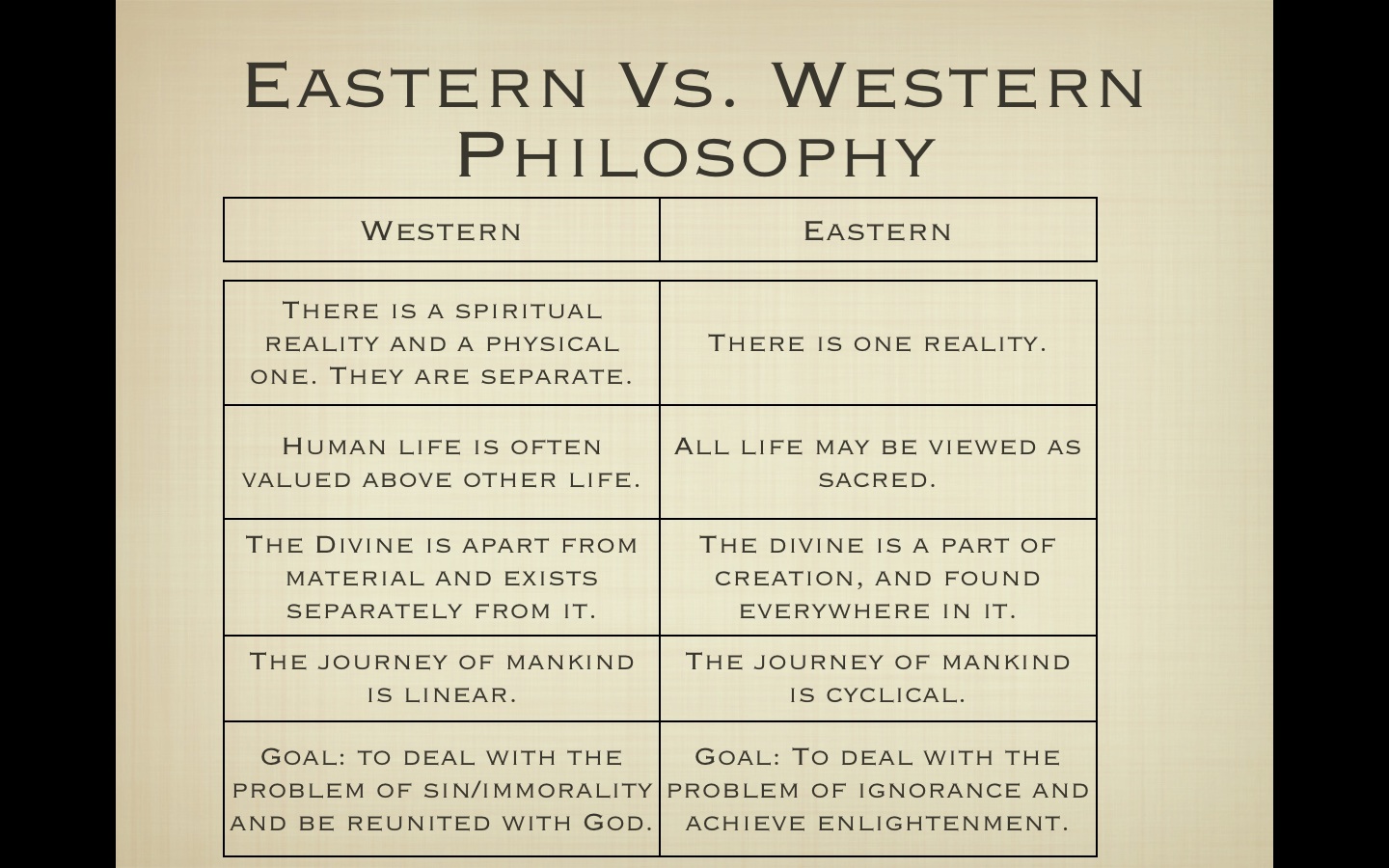
I’m thinking about a friend whose parents are Chinese and who was born and raised in Scarborough.  He got into Eastern philosophy, not through his parents, but via Western culture at a particular moment.  Later he and his wife adopted a Chinese baby.   They raised their daughter in the USA and then they all went on an extended trip to China to try to understand, well, themselves.

philosophychart

March 28, 2015

March marches on: cold, windy, glare, barren.

Clint Roenisch Gallery – Eli Langer and Jennifer Murphy

Caravansary Of Joy is the title of a joint exhibition by Eli Langer and Jennifer Murphy at the capacious Clint Roenisch Gallery on St. Helen’s Avenue. The two artists are a couple.  Other than that fact, the exhibition is composed of two separate and distinct shows.

The paintings by Eli Langer, occupying the front of the gallery, are a pleasure to look at mainly because they are so uncomplicated.  This artist is pushing paint around in a serious way but anything external to that activity is irrelevant.  There is no agenda, narrative, political pitch, intellectual or iconoclastic posture.  I like this feeling of having nothing between the paintings and me; nothing I have to sort out or disagree or agree with.  Its relaxing and calming to look at these paintings and there is a crystalline lightness to them that makes it hard to look away.

Eli-Langer-16x20_5

Winter Flowers by Eli Langer

IMG_9864ed-1100x1423

The Three Sisters by Eli Langer

Eli Langer did provide a sheet of notes available for viewers of the paintings.  They reinforce the calm, open, meditative qualities the art works possess.  A few lines from the notes are excerpted below:

Painting is experimental.  I want to get lost.  Turn off the logocentric mind.  Trip up purposeful reflex that seeks     familiarity in recognizances.

I work without plans.  I want the painting to surprise me with its directness.

Painting is truly free of its history in 2015.

IMG_9846ed-1100x1434

Her Cabinet by Eli Langer

Eli Langer is talking about getting into the zone where creativity is effortless and assured.  It’s exciting and mysterious to see how that Zen-like stillness comes through in the work.  Also in the notes Eli Langer writes about the idyllic, creative period he recently experienced, in a supportive relationship with his partner, Jennifer Murphy.

Jennifer Murphy’s work occupies the back of the gallery space.

IMG_0764

Installation of art work by Jennifer Murphy

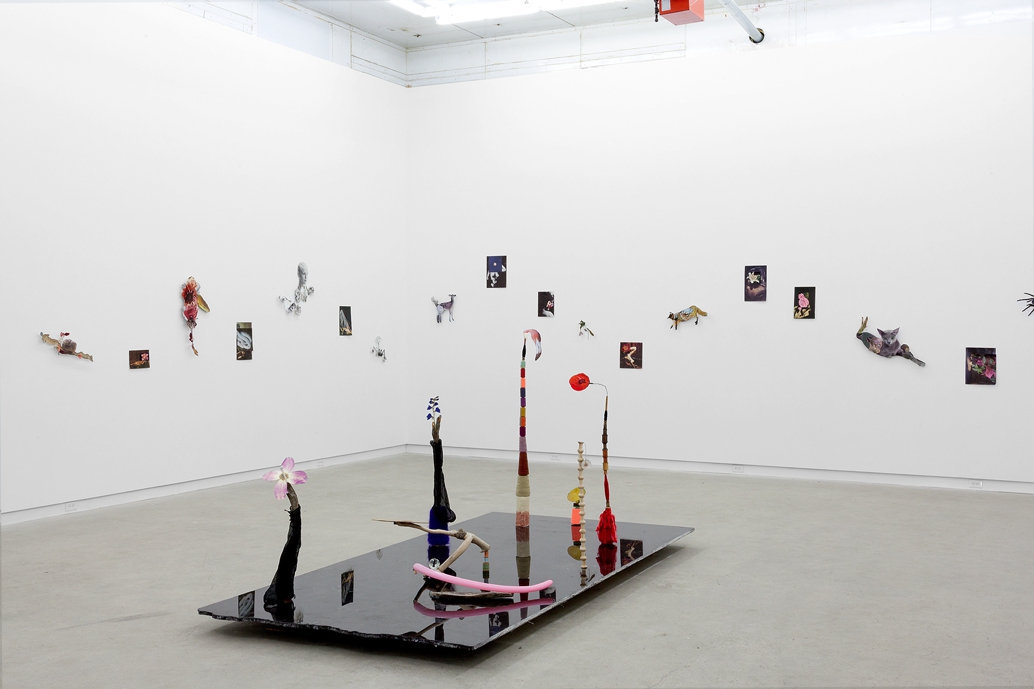
A polished granite platform holds sculptural works in the center of the room and around the walls the artist’s collage pieces are pinned, at varying heights.

Who among us has not, at one time or another, cut pictures out of a magazine and glued them down to make something new?  Jennifer Murphy has the uncanny ability to create art works using this technique.  Suspended on long pins, like insect specimens, a parade of beast portraits, interspersed with somewhat more conventional portraits of women, are displayed.

20150328_155420

20150328_155311

Art works by Jennifer Murphy

As varied as the animal kingdom itself the pieces share a fragile spindly-ness and jewel-like allure.  I recall certain aunts of mine wearing brooches like this: a leopard with an “emerald” eye for instance.  The frankencat, shown below, has such a coquettish pose, but maybe that’s just something about cats.

20150328_155353

Art work by Jennifer Murphy

The sculptural pieces in the exhibition have the look of  a surrealist’s garden: weird, ungainly, texturally patchworked and  punctuated with fizzing colour.

20150328_155632

Sculpture by Jennifer Murphy

One of the tiniest pieces has a wonderful “Twilight Zone” sensibility.  It’s as if the doe-eyed ingenue is trapped in another dimension.

20150328_155750

Detail of sculpture by Jennifer Murphy

20150328_155731

20150328_155830

Details of sculpture by Jennifer Murphy

In fact all the objects by Jennifer Murphy – composed of humble materials, found objects, scraps of fabric and various castoff print media – evoke an alternate universe.  It’s similar to this universe, but adjusted a bit, for private aesthetic purposes.


Daniel Faria Gallery – Valerie Blass

Just next door, at the Daniel Faria Gallery: A glittering arm holds aloft a crack pipe, miniature figures melt together in lurid sexual embrace, whacked together scrap wood has an anthropomorphic expressiveness, a life-size sculpture of cliched female desirability studies “herself” in a distorting mirror.  These are some of the pieces constituting an exhibition by Valerie Blass.  Exploring notions of identity, objectification and self-delusion, Valerie Blass adds an ambiguous overlay of autobiography by titling the exhibition My Life.

20150328_161201

Art work by Valerie Blass

20150328_161134

Art work by Valerie Blass

Artspeak - VALÉRIE BLASS - "MY LIFE"

Detail of Sois gentille by Valerie Blass

The technical virtuosity and versatility of the artist is impressive.  She boldly takes on all media to trawl the psycho sexual depths.

Dr.-Mabuse-psychanalyste-4-682x1024

Dr. Marbuse Psychoanalyst by Valerie Blass

Dr. Marbuse was a fictional hypnotist and criminal who featured in Fritz Lang movies.   Is the artist suggesting that hypnotic self absorption is implicated in the fracturing of identify?

20150328_160604

20150328_160610

Details of Dr. Marbuse Psychoanalyst by Valerie Blass

A grinning homunculus, looking like something out of a medieval relief, inhabits the “face” of the mirror gazer above.

20150328_160727

Artwork by Valerie Blass

In another piece, the same curtain of silky blond hair is present.  This time the hair is out of context, set in a provocative display with a hand, a foot and pale pink panties.  Parts only, no woman required.  It’s the definition of fetish.

Something about the piece made me think of Andrea Dworkin and the feminist sexual wars of the eighties.  At that time feminists defined themselves as either sex-positive or sex-negative.  This was mainly because of the theories of Andrea Dworkin which condemned all objectification of women and all pornographic imagery.  She was truly a crusader and was famous for saying things like “Intercourse remains a means or the means of physiologically making a woman inferior [and is] the pure, sterile, formal expression of men’s contempt for women.”  That kind of talk turned a lot of her feminist, lefty allies against her.  Today, pornography has won.  It’s everywhere. Andrea Dworkin was the hardest of the hard-line feminists and the strange upshot of her ideas is that the Christian Right championed then and they still do today.

March 21, 2014

Knots of people loitered on the street like teenagers as the sun started to have some real meaning.  It was an afternoon to saunter.

Trinity Square Video

The work on display at Trinity Square Video, called The Cloud of Unknowing, by Ho Tzu Neyen, put me off lunch.   The camera lingered over plates of rotting food and maggots, appalling skin diseases, obese half naked people, fetid water and a heavy set man wearing a Depend.

Cloud-image-1024x576

Still from The Cloud of Unknowing by Ho Tzu Neyen

The soundtrack could be described as ambient metal or dark ambient with an overlay of heavy breathing and occasional bursts of quite good drumming.  There is no dialogue.   A collection of vaguely surrealistic and improbable tableau vivant were linked with a cloud/steam/fog image.  At the conclusion of the presentation a fan switches on somewhere and a  steamy vaporous cloud wafts into the dark viewing room as the screen fades to a blinding white. It’s disorienting.

Showing video in art galleries has always been challenging.  On this Saturday afternoon I became aware of an apparent new trend in the medium: a material manifestation (literal fog or cloud in this case) of the onscreen work.

(Fog was one of the key components of a memorable art piece I saw in London by Olaf Elliason called The Weather Project.  In that case viewers in the Tate Modern’s Turbine Hall became so spaced out they lay on the floor, staring up at the fog shrouding a dim sun in the mirrored ceiling far above.  The fog created a dreamlike atmosphere and seemed to release all kinds of inhibitions. )

index

The Weather Project by Olaf Elliason

Ten minutes away from Trinity Square Video, at the Georgia Scherman Project, there is an anything goes atmosphere as an art installation/perfume launch is underway.  The space is very dark and very fragrant.  A short black and white video loop is playing is which a model clomps up a circular stairway in what appears to be a dank cave or grotto of some sort.  The soundtrack is ambient metal.  No dialogue.  The floor is littered with black confetti which has been heavily doused in the fragrance.  The artist wants to create a particular atmosphere.  At the counter – I mean desk – sachets of Andrea Maack’s upcoming fragrance “Dual” are handed out.

The gallery staff mentioned the plan for the video to go viral.  You never know what’s going to catch on.  More than 40 million people have watched: Double Rainbow.

Maack Dual samples

Samples of the fragrance “Dual” by Andrea Maacke

The idea for the black confetti underfoot – more material manifestation – is that the public will inadvertently track it out into the neighbourhood and disperse the olfactory offering up and down Tecumseh Street and beyond.

Susan Hobbs Krista Buecking

Next door at Susan Hobbs I thought I was in more conventional terrain.  Big, beautiful framed art pieces hung on the walls.  But at the moment of entering the gallery a soundtrack is triggered: swelling violins and “This Magic Moment’ by the Drifters spills into the space.

In the exhibition, titled Matters of Fact, Krista Buecking creates exquisitely subdued atmospheric fades and then suspends hard edged graphics above them on the encasing glass.

For me, although the music was an endearing touch, the art pieces could totally stand alone.  It did strike me as amusing, that whereas the media artists want some ambient element scattered about, the painter selects an old school emotional torch song to create an atmosphere.

MOF codified form B

codified form B by Krista Buecking

Mist, fog, dreaminess, atmosphere.  Those seems to be the themes for this beautiful sunny afternoon.

March 7, 2014

Today a 25 year old man was rescued by the authorities as he tried to walk from Detroit to Toronto on the ice of Lake St. Claire.  He had been on the ice for a couple of days when found, improperly dressed and without a cell phone or life jacket.  “He was in the beginning stages of hypothermia,”  said the commander of the Coast Guard cutter who spotted him, “It took him a long time to formulate his thoughts.”  This guy could not have been thinking clearly from the start.  It’s March now.  The sun has a new strength.  Soon all this ice and snow will disappear and be forgotten.

Barbara Edwards Contemporary Art – Medrie MacPhee

The oil paintings by Medrie MacPhee, on display at the Barbara Edwards Contemporary Art, point to a cycle of change.  Awakening, destruction and renewal are quite literally the subject matter of this work, as embodied in that epic domestic event: the home renovation.

The Force of Things

The Force of Things by Medrie MacPhee

Openings are excavated as layers of surface are ripped away.  Heaps of material lie in ruins, shredded, frayed and broken.  Orientation is subjective as up or down could be anywhere.

Bayou II web

Bayou II by Medrie MacPhee

In most of the painting familiar building materials are rendered: lathing, flashing, duct work, sheet rock, even bits of copper pipe.

20150307_144943

Detail from painting by Medrie MacPhee

These paintings of a domestic interior in upheaval bring up lots of ideas: the mayhem of war zone collateral damage, the destruction of security and relationships, psychological states of painful renewal, transition, damage, change.

I haven’t gone through a homeowner renovation but I notice that when people talk about these traumatizing experiences they invariably use the word “nightmare.”  I imagine it could be nightmarish to witness the demolition phase.  In most of the paintings a looming black void is present.  Maybe its about a feeling of dread that must occur when the sledgehammers come out and you know there is no turning back.

Study cuts 1

The New House by Medrie MacPhee

The Look

The Look by Medrie MacPhee

Formally these paintings are so interesting to look at.  They have churning quality which somehow emerges through the compositional elements being strung together with attenuated shadows, cracks and slab-like edges.  In some pieces it appears the artist has used canvas like paper collage, adhering layers like a construction site patch job that adds to the sense of heaving movement.

One of the most absorbing pieces is in fact a paper collage.  It has a lightness and freshness that is very appealing.

.Rummage web

Rummage by Medrie MacPhee

There is a Portuguese bakery a couple of doors up Bathurst from Barbara Edwards Contemporary Art.  We dropped in after the show and totally obliterated some flakey, cream filled confections.

20150307_154705