
Design TO Festival – Net Positive
In these dark times it was uplifting to sit in the luxurious Ace Hotel and listen to one presentation after another on how to solve the most critical issues we face concerning the environment, society and the global economy.
Young, attractive, well-dressed people can do it! They have ideas! They have deep pockets!
Even the tagline for the Design TO Festival — “Designing for a sustainable, just, and joyful future” — is like a jolt of sunshine in an otherwise bleak February, as across this country we wait for our economy to tumble off a cliff, and on the other side of the continent LA lay in smoldering ruin, under the relentless California sunshine.

Design TO is Toronto’s huge design festival. Net Positive is the name of just one out of dozens of events. Net Positive consists of a series of presentations by a diverse group of sustainability enthusiasts. (What does Net Positive even mean, I wondered? Answer: For an enterprise to become “net positive”—it has to give more to the world than it takes.)
Here are some slim summaries of a few of the presentations I heard that day:
Juan Erazo is a member of Culturans, a Mexico City organization which “uses art, culture and social innovation to imagine and create sustainable cities.”
Juan Erazo told us all about chinampas, a centuries-old agricultural system that was once used throughout Mesoamerica and parts of South America. I was stunned to learn that chinampas endure to this day, even in the southern part of Mexico City.

Roughly 700 years ago the megalopolis which is now CDMX was once a small city beside a lake. At that time the chinampas were thriving, fed everyone and exported food. Unfortunately, the lake was drained, paved over, and 25 million people moved in. Now, Mexico City has almost no water — everything liquid has to be imported — and that was one point of the presentation. “You have a lake in Toronto.” Juan Erazo warned. “Don’t throw it away!”
Aaron Budd is another exciting presenter. He works on a project close to my heart: The Ontario Line!
Aaron Budd is employed by SvN — the architecture/planning enterprise engaged in building the new subway — and he leads the company’s Regenerative Practice. He quoted Kate Raworth , stating the phrase: “Great places are social. Great places are ecological.”
I was very excited to learn that the Ontario Line is being constructed to provide the infrastructure for 30 story residential structures above each subway stop. The Ontario Line will provide housing in transit oriented communities to more than 227,000 people.
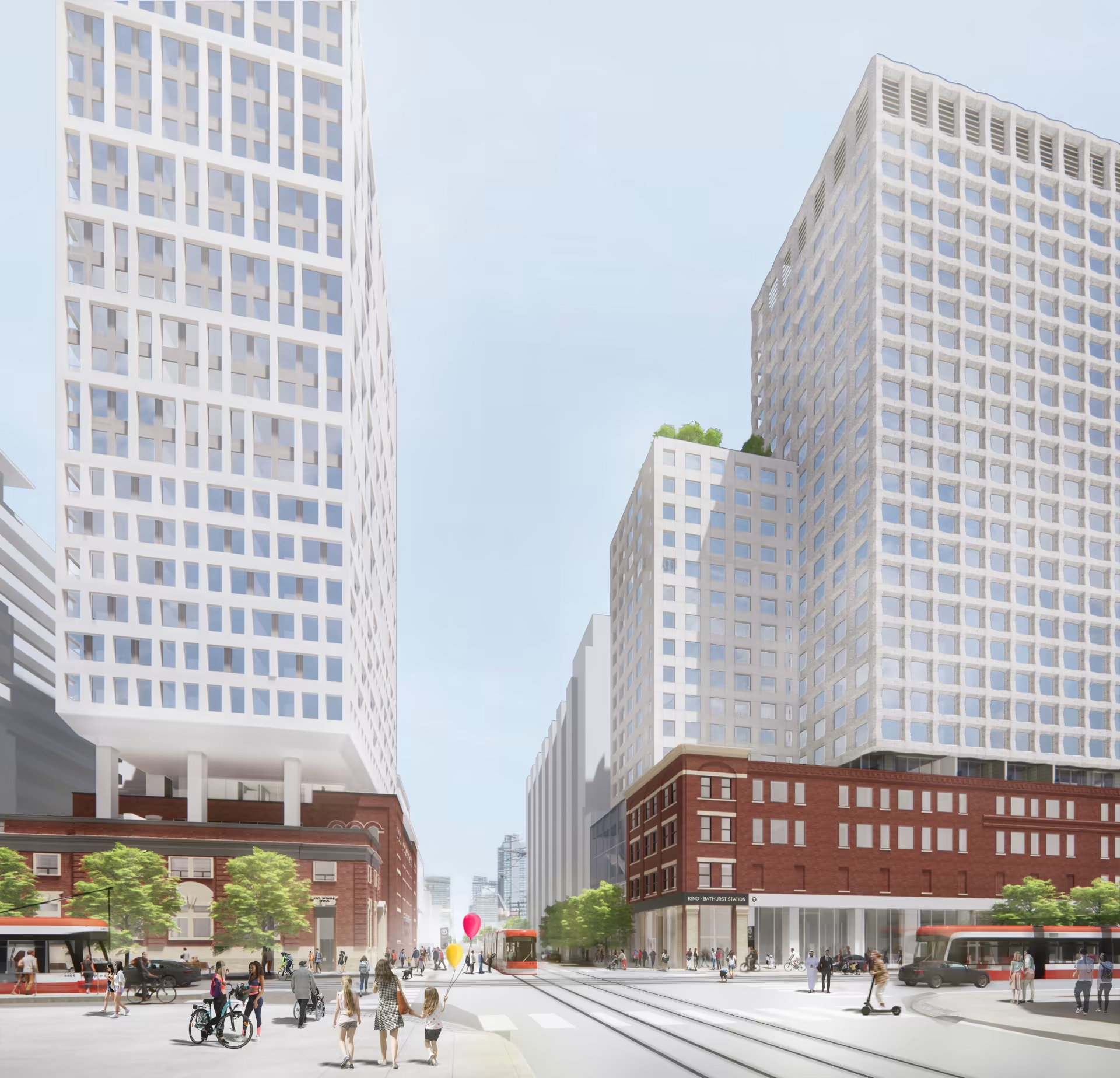
Because we live in Toronto we can become mired in a skeptical mindset. We might wonder: Will I live long enough to see these majestic towers over the new, fully functional, Ontario Line? It’s hard to say. But in the meantime, it was great to listen to Aaron Budd describe these communities and to let us know that through his work at SvN he “strives toward the creation of new housing, public spaces and delivering positive social and ecological change.”
April Barrett is a young woman who spoke to us about her interest in Speculative Design, which explores future possibilities and societal impacts of emerging technology and shifting cultural and social trends.
One of her projects concerns the socio-environmental impact of Data Centers and their waste heat use potential. Specifically, April Barrett visited the Dublin suburb of Tallaght, where the heat generated by the Amazon Data Center — a gloomy, featureless edifice — heats the town, including hospitals, university and public buildings, commercial enterprises, and apartment towers.
Maybe we could do the same thing in Toronto?

April Barrett talked a lot about Anna Tsing and her book “The Mushroom at the End of the World.”
I googled Anna Tsing and found her ideas so applicable to our current situation vis a vis our neighbour to the south. I’m going order the book, but not from Amazon.
Precarity is the condition of being vulnerable to others. Unpredictable encounters transform us; we are not in control, even of ourselves. Unable to rely on a stable structure of community, we are thrown into shifting assemblages, which remake us as well as our others. We can’t rely on the status quo; everything is in flux, including our ability to survive.
— quote from Anna Tsing “The Mushroom at the End of the World”
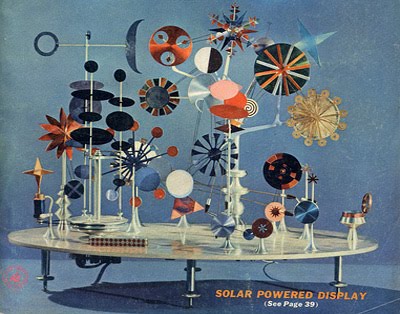
April Barrett is looking for alternatives to Big Tech. She told us all about Low Tech Magazine, degrowth as a technological heuristic, ultra-lite web design, letting go of scalability, and finally, she mentioned “The Solar Do Nothing Machine,” created by Charles and Ray Eames, in 1957, which is just kind of fun.
Netami Stuart is a landscape architect at Waterfront Toronto. The project — the Port Lands — has been a massive undertaking for her, as she manages collaborative teams and multi-million dollar budgets.
Currently, 290 hectares of southeastern downtown – including parts of the Port Lands, South Riverdale, Leslieville, and the East Harbour development site – are at risk of flooding from the Don River and can’t be revitalized until they are flood protected. The Port Lands flood protection project will protect these lands, allowing them to be redeveloped. It involved building a new river valley though the Port Lands, which has created a new island called Ookwemin Minising (formerly known as Villiers Island), and re-naturalizing the mouth of the river.
— Description of the Port Lands project from Waterfront Toronto website

Netami Stuart talked about building 1,000 meter of new river channel and flood plain, 13 hectars of new coastal wetland, and 4 hectars of terrestrial habitat, basically fashioning a new Don River flowing into Lake Ontario. After seven years of work Netami Stuart was excited to let us know the end is in sight. The new parks are opening in the spring and summer of 2025 and housing development is to follow.

I walked through the Port Lands site several times last summer and fall. Spectacular! The winding river, the hills and valleys, the red and yellow bridges.
There was so much to feel good about at the Design TO Net Positive event. At least for a few hours to share the optimism of the designers of a sustainable, just, and joyful future.
It was a way to shake off — at least temporarily — that sinking feeling I’ve had since I came across a picture of what some cynics among us are calling the “painting of the year.”

This photo depicts a wall at the FBI Academy in Quantico, Virginia as it is painted with grey semi-gloss to cover what were previously known as the core values of the FBI: Respect, Accountability, Leadership, Diversity, Compassion, Fairness, Rigorous Obedience to the Constitution and Integrity.
 annetteandquebec