January 22, 2026

Kofflerarts

Sybil Goldstein/URBAN MYTHS

Anyone who has ever cleared out a house or an apartment, after the death of a parent or grandparent, faces a fact that can be overwhelming: There is a lot of stuff left behind. Best case is the deceased had a will with instructions about where their possessions should go. Some things might be cherished by members of the family. Other items might be donated to charities. Maxsold or Kijiji? Maybe. And then there is that other awful reality: Got Junk.

In the case of a visual artist, especially a painter, the fact expands massively. Things! They are beautiful and interesting! We need to preserve them! In that frame of mind, the usual modes of managing the residue of a life don’t work.

What can be done?

Sybil Goldstein died suddenly in 2012. She left literally thousands of paintings and drawings in this world.
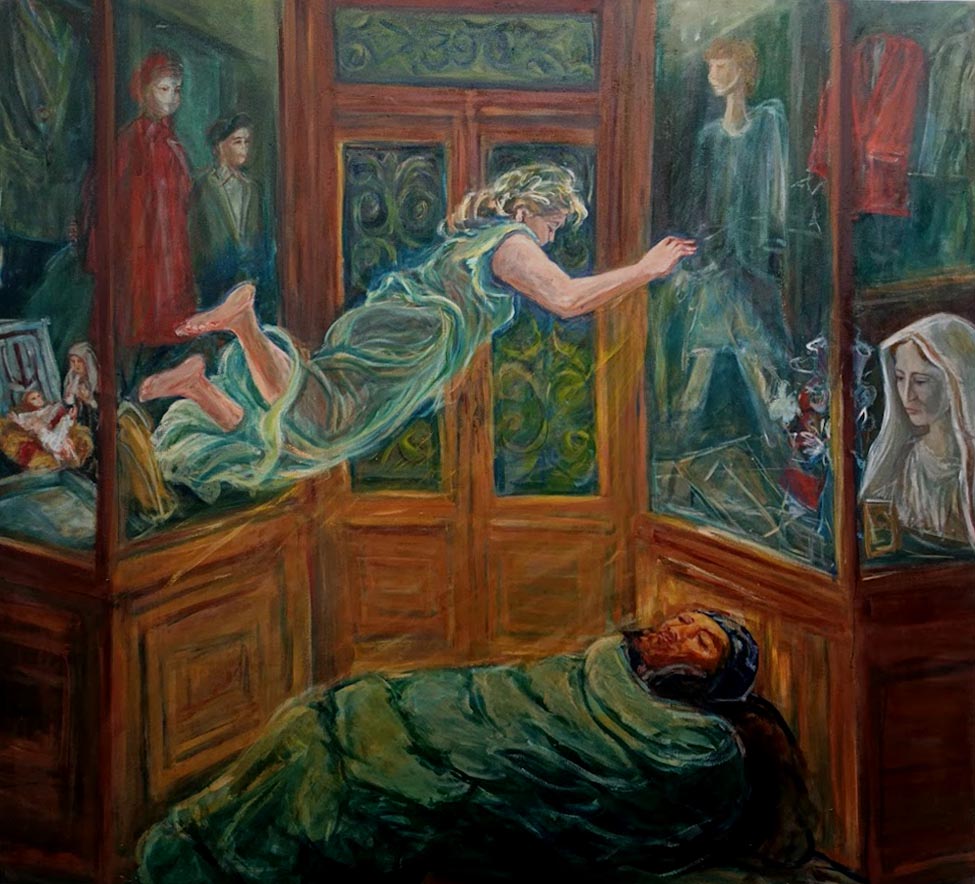
“College Street at 2 am” by Sybil Goldstein

Some of the work was sold at an auction held not long after her death. Anything unsold — the bulk of her creative output — was stored by her family. And now, thirteen years after her death, Sybil’s family has reached out to her friends in the Toronto art world with a plea to find homes for the numerous works of art.

If not, they will have to be destroyed.

Kofflerarts, an organization that supports community, decided to host this posthumous retrospective, including the surprising announcement that “visitors will have the opportunity to take home one of her original artworks once the exhibition closes.”
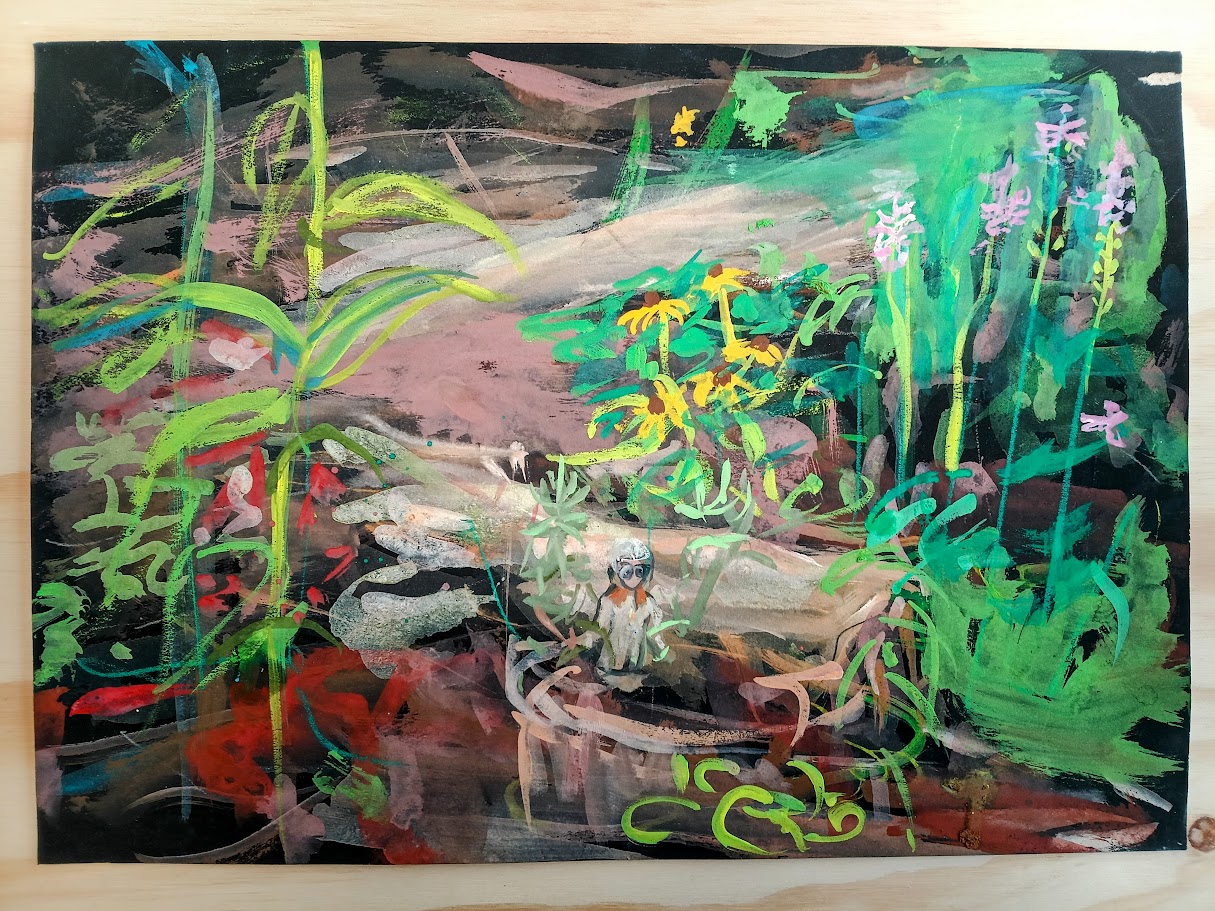
Artwork by Sybil Goldstein

Sybil Goldstein was a member of ChromaZone. In the early 1980s, as the art world turned away from the barren wastes of Conceptual Art, Minimalism, video art and performance, to the joyful excesses of Neo-Expressionism, ChromaZone hit their stride in Toronto.

What was ChromaZone?

“the celebration of the emergence of a generation that
eschewed the increasingly remote and esoteric strains of formalist painting, process-oriented performance and hermetic
video art for art in any medium that more actively engaged the struggles, issues, desires and pleasures of the real world.”

  • quote from “History of ChromaZone” by Sybil Goldstein and Andy Fabo
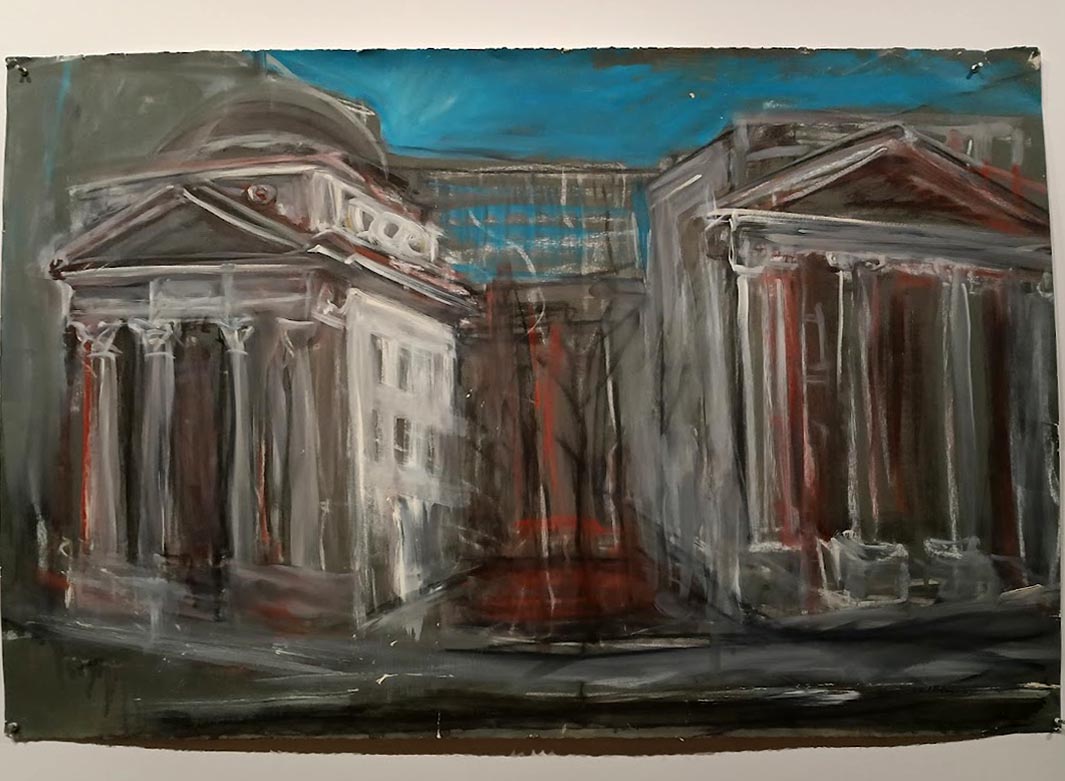
Artwork by Sybil Goldstein

Neo-Expressionism took off everywhere. It was all about sensuality, vivacity, real world politics, nature, myth and fiction, and also it was about money. Yes, suddenly there were actual objects that could be bought and sold!

It’s exciting to see numerous examples of Sybil Goldstein’s work on display at Kofflerarts, and to think about the heady days of ChromaZone and the surge of painting that flourished around the world at that time.
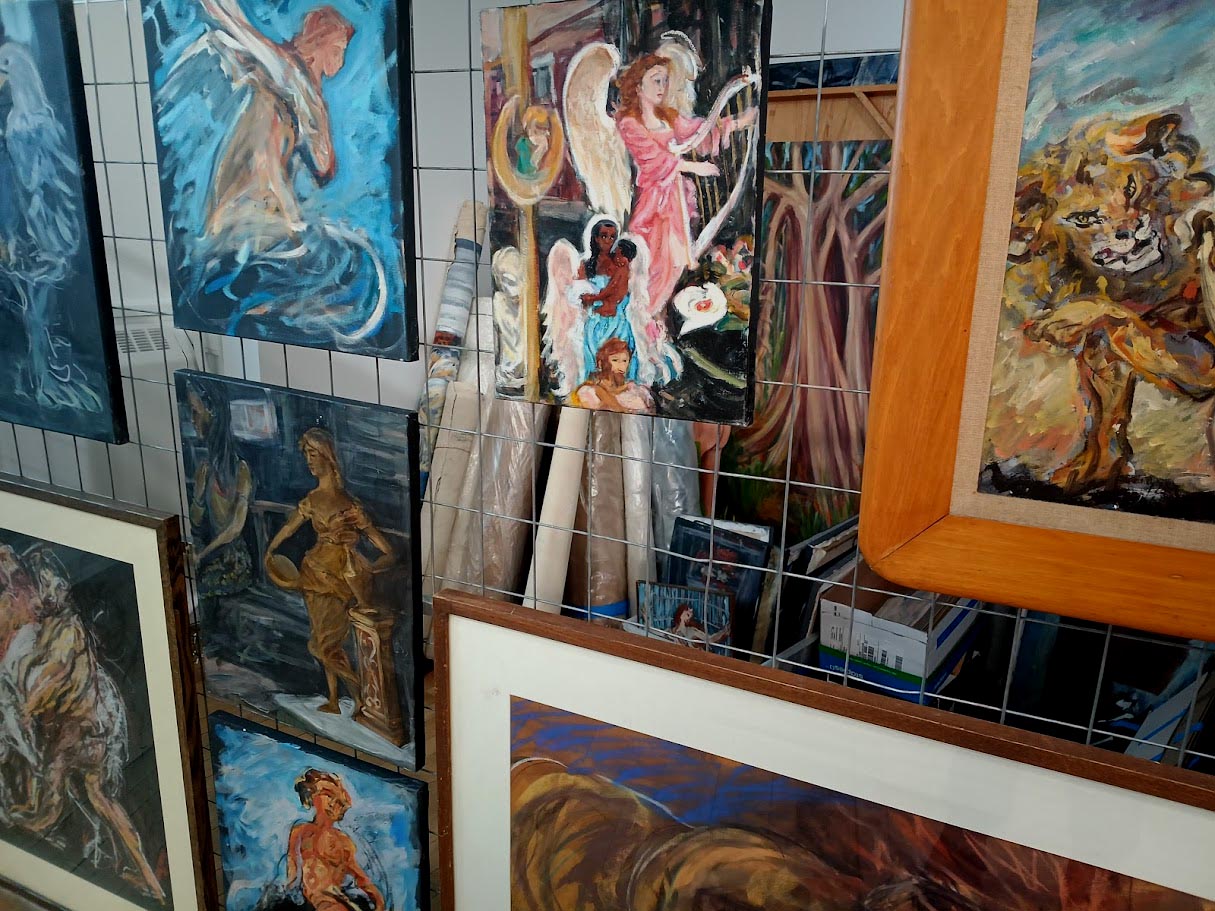
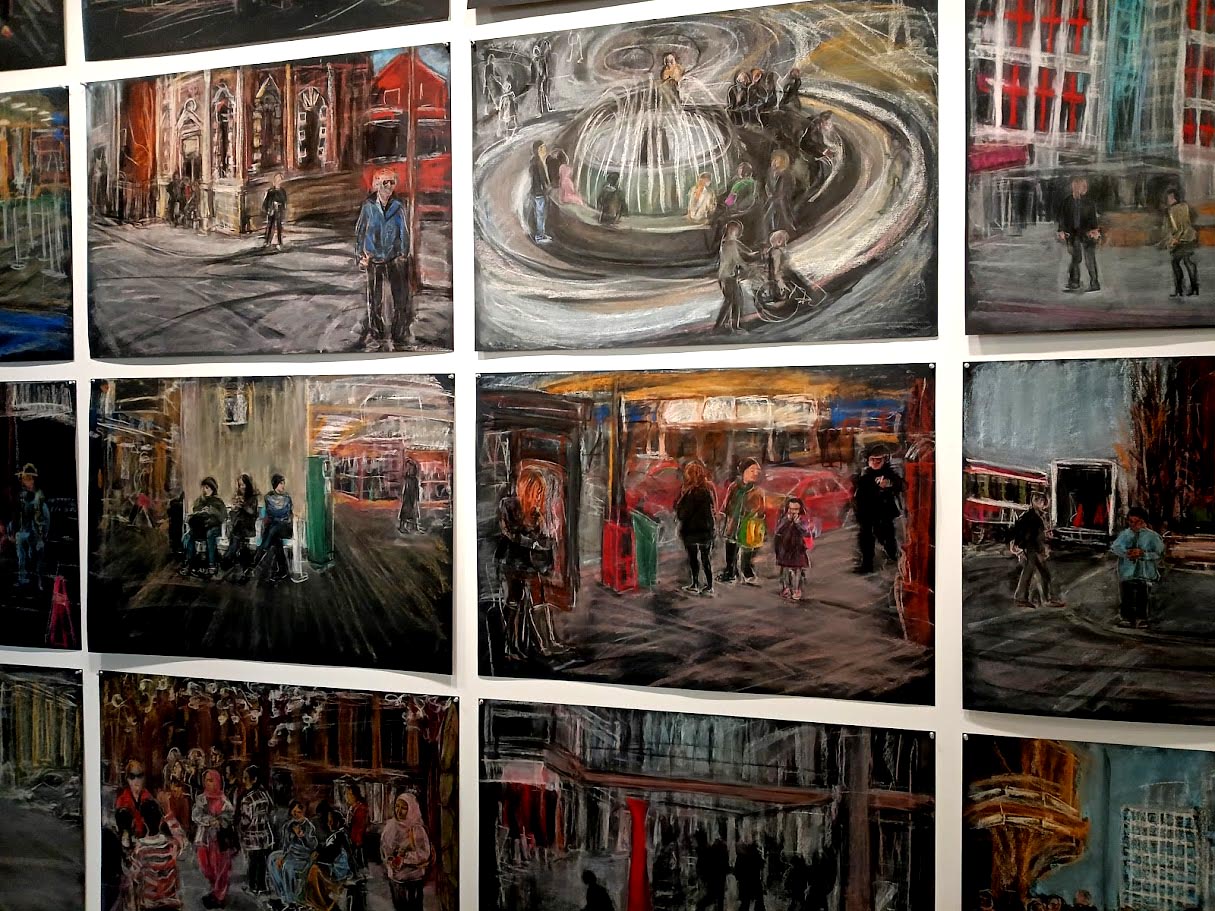
Installation views of Urban Myths

ChromaZone existed from 1981 to ’86, but Sybil Goldstein continued to paint until her death.
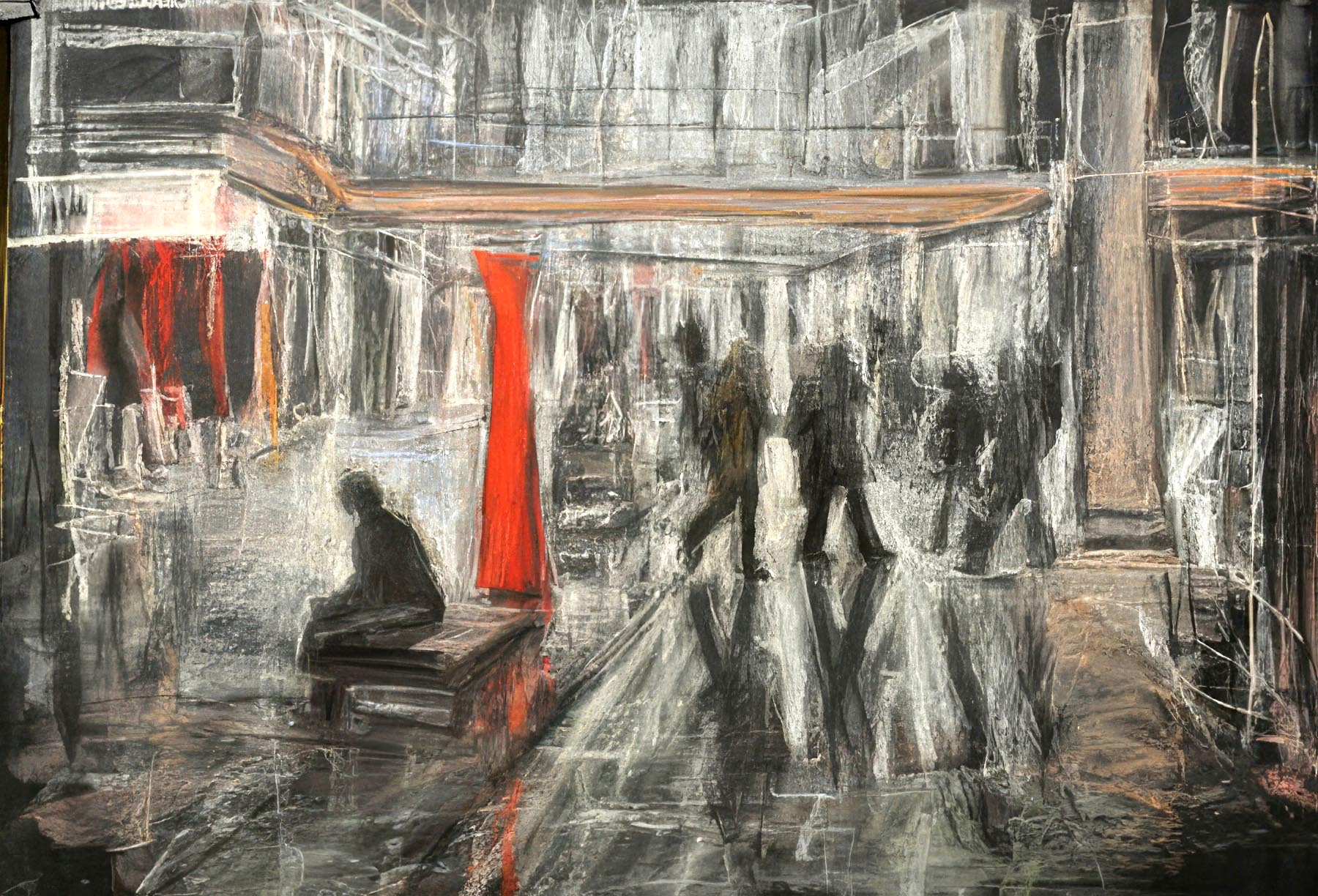
“Eatons Center” by Sybil Goldstein

She painted everything: the streetcars and towers that define Toronto; moonlit nights and sunny meadows in the wilderness; rippling, black Ontario Lakes and rivers studded with ancient rocks; real animals and mythical beasts; friends and strangers.

Particularly in her depictions of people, in urban settings, Sybil Goldstein offers compassion. Weary commuters rising on escalators or waiting patiently in line, shoppers at the Eaton Center and the Dufferin Mall, children playing in fountains, or the homeless, just trying to survive. Often there is an angel hovering nearby or a mysterious, dreamy glow so that all seem touched by something alien and graceful, something evoking the divine, something in all of us, even when we are hanging out in the PATH food court, wondering what to have for lunch.
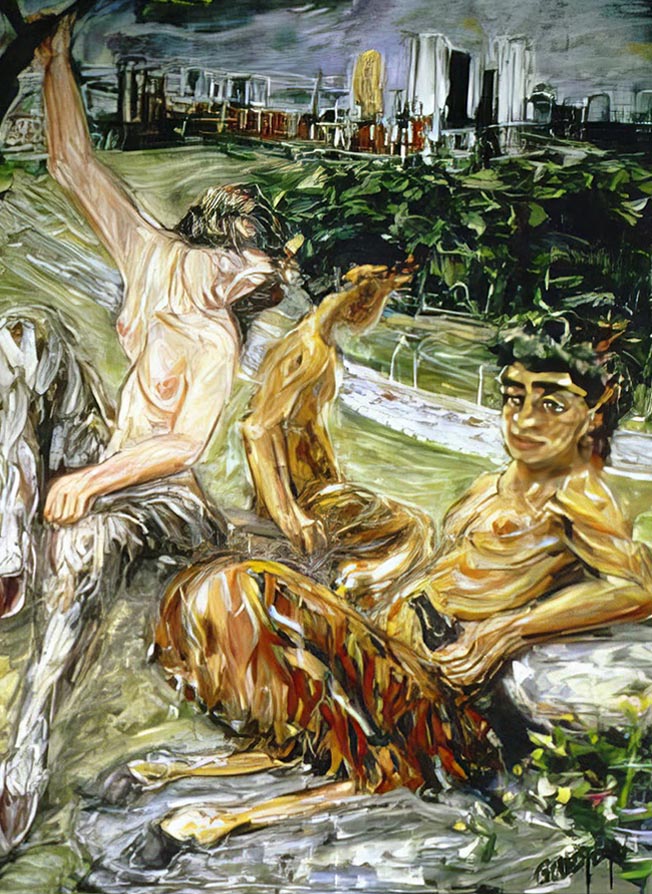
“Satyr Family overlooking the Don Valley” by Sybil Goldstein

October 23, 2014

What did we do to deserve this beautiful, warm day drenched in honey coloured light? People were actually walking around in tank tops as I exited the streetcar on the corner of Dundas and Ossington.

Cooper Cole Gallery

Jeremy Jansen and Graham Collins have filled the Cooper Cole space with bold, urban neo-Minimalist art works.

october 23 029

 I was surprised to see references to arte provera, Germano Celant and Jannis Kounellis in the exhibition notes. Whereas the work does owe a lot to the manifestos and posturing of those Italian artists and critics of the sixties, it has been reinvigorated by these artists with a sophisticated update. The “poor” materials here are scrap metal, various found window frames and window tint polymers and the detritus of printing materials. Like the Minimalists before them these artists are overthrowing representation and symbolism to raise the truth-to-materials flag.

The painting depicted below, by Graham Collins, is made out of canvas, paint, reclaimed wood, glass and window tint

CC_Graham_Collins_Marcy II

Marcy II

The two artist’s pieces mesh well together and create a sleek and airy installation with lots of layers of glare and sheen.

CC_Graham_Collins_Jeremy_Jansen_12

The really interesting part is that on closer inspection it appears that some of the materials have been upcycled so that the work has a distinctly hand-made look to it: the welding is lumpy, the window tint is bubbled, ill-fitting and wrinkled and the wooden frames are smacked together.

CC_Jeremy_Jansen_Note to self

Note to Self (Jeremy Jansen)

CC_Jeremy_Jansen_Flag_1

Flag (Jeremy Jansen)

The aesthetic explored here is that of the cheap and hastily put together; and the materials championed are from industrial parks, DIY auto window tinting shops and down market condo sales centers. It is satisfying to see such a strong visually coherent statement emerge from all this junk.

October 8, 2014

Hart House

Nestled in the U of T campus, just off University Circle, is Hart House, a student activity center which contains a gym and the Justina M. Barnicke Gallery, among other facilities.

John G. Hampton, the curator of the current exhibition at Hart House, titled “Why Can’t Minimal,” for some reason decided to illuminate the lighter side of the Sixties art movement known as Minimalism. (Incidently, when searching for a good Minimalism site I stumbled upon a whole new meaning of the term. Yes, there is, in fact, a second type of Minimalism: it’s an entirely contemporary social movement which advises people on how to get rid of the excess stuff in their lives in order to make room for the essentials.)

Carl Andre, Donald Judd, Sol LeWitt, Dan Flavin, Frank Stella (for his minimalist Black Paintings) are a few of the artists associated with Minimalism. Carl Andre, the ultimate American Minimalist sculptor, likes to say “It’s all the materials… there are no ideas hidden under those plates. You can lift them up but there is nothing there.” No hidden ideas and therefore nothing funny… about zinc plates or a pile of bricks or massive oak cubes.

Rather than actually finding the humour in Minimalism what the curator did was round up some Conceptual artists who commented on utterly humourless Minimalist standards. The result has a particular off-key, dry wit (verging on absurdity) so close to the heart of the Conceptual artist.

Some of the works in this show are delightful: John Boyle-Singfield’s Untitled (Coke Zero) references the Hans Haacke Condensation Cube of 1962, replacing water with Coke Zero. The Coke Zero does create condensation but it has also undergone a gross transformation, breaking down into its elemental components: On top, an evil looking red liquid and below, a suspicious powdery substance.

coke zero

Ken Nicol created Carl Andre Drawer Piece and got into the spirit of “truth to materials” by typing the Carl Andre quote “If a thing is worth doing once, it’s worth doing again” on 1611 index cards.

File piece

I always associate John Baldessari with Cal Arts and a particular brand of flat humour that came out of that school. In his video Baldessari “sings” each of Sol LeWitt’s 35 “Sentences on Conceptual Art” to the tune of popular songs. It must have been Christmas when he made this video because the tune sounds distinctly like a holiday carol.

JB

There is a certain slyness to John Marriott’s various sized cubes surfaced with pigeon-proofing strips. They also achieve a cool elegance in an incidental, i.e. Minimalist, manner.

See below for an installation view and a close up of the pigeon-proofing strips.

cube and spikesspikes


University of Toronto Art Center (UTAC)

A few steps from Hart House is UTAC and an exhibition of the photographs of Allen Ginsberg (1926-1997) called “We are Continually Exposed to the Flashbulb of Death.” This is a fascinating show for anyone with an interest in the Beat Generation.

A recording of Allen Ginsberg reading his 1955 poem “Howl” can be heard throughout the gallery’s rooms.

20141008_155630

It is, of course, primarily as a poet that Allen Ginsberg is known. These photographs however attest to his skill as a photographer (he was mentored in this ability by Robert Frank) and moreover they document a life profoundly rich in relationships, friendships and experiences.

Below, William Burroughs in 1953:

20141008_155046

20141008_155745

Gregory Corso, Paul Bowles and Burroughs in 1961.

From Gary Snyder, Peter Orlovsky, Jack Kerouac and Paul Bowles to Kathy Acker, Rene Ricard, and Michael McLure the pictures in this show depict so many of the literary and intellectual luminaries of the past four of five decades. Each picture includes a description, hand-written by Allen Ginsberg, identifying the subject, the date, the place and the circumstances.

20141008_160458 20141008_155945  20141008_16042220141008_160300

An essay by Louis Kaplan in the exhibition catalogue quotes Ginsberg as follows: “The poignancy of the photograph comes from looking back to a fleeting moment in a floating world.” Captured here in black and white, the humble New York diners and living rooms of the fifties have disappeared forever. This show provides a glimpse of this vanished world and its inhabitants.