October 18, 2025

ERROAR!

The Center for Culture & Technolgy

Lee Sedol is a South Korean former professional Go Player. Nearly ten years ago he ranked 2nd in international Go titles. (Lee Chang-ho, the Stone Buddha, ranked first.)

In 2016 Lee Sedol played a series of matches against AlphaGo, a computer Go program developed by DeepMind, a subsidiary of Google. Go is a complex board game, requiring strategic nuance and creativity.

Out of five games, Lee Sedol won only one. A few years later, he retired.

…losing to AI, in a sense, meant my entire world was collapsing…I could no longer enjoy the game. So I retired.”- Lee Sedol

Go is considered to require player strategy far more complicated than chess.

The artist Xuan Ye, designates this match between AlphaGo and Lee Sedol as an inspiration for their piece ‘The Insider,” included in the Erroar! exhibition at the Center for Culture and Technology.

Detail of “The Insider” by Xuan Ye

In Xuan Ye’s artwork, large textile prints replicate the AI’s infrastructure, the 1920 CPUs and 280 GPUs, from those fateful matches between Lee Sedol and AlphaGo.

There is a slightly nauseating green light cast throughout the exhibition and an incessant one-note hum, which is revealed to be the amplified drone of server fans. (I’ve noticed this particular sound is frequently part of many current media art installations.)

Installation view of “The Insider” by Xuan Ye

Augmented reality reveals enigmatic floating texts from Thomas Metzinger‘s “The Ego Tunnel.” (Thomas Metzinger, a German philosopher, has stated that consciousness is “a low-dimensional projection of the inconceivably richer physical reality surrounding and sustaining us…”)

“The Insider” links AI’s self modelling and the blind spots of human self-awareness, namely, the recursive gap where the subject can never fully grasp itself. – quote from the Erroar! handout

Maybe this artwork is about Lee Sedol’s failure in his faceoff with the more self aware, supremely intelligent, opponent. (I know this feeling: the sense of sinking deeply into defeat! I was recently hacked on Meta and tried to contact that supremely opaque entity. )

In any case, the augmented reality component of the installation was pleasantly glitchy and consequently barely legible.

Another piece in the show, called “Garrulous Guts” is supposed to simulate a “pulsing gastrointestinal system, as it vibrates chemical filled capsules.”

“Garrulous Guts” by Xuan Ye

“Garrulous Guts” video by Xuan Ye

The installation made an irritating racket and I could tell the gallery employee couldn’t wait for me to leave the exhibition so he could flip the switch and silence the damn thing.

I really like the way Xuan Ye references so many interesting thinkers in her texts, which are available in a pamphlet at the show’s venue. “Garrulous Guts” owes something to the thinking of Oswald de Andrade’s 1928 Cannibalist Manifesto, we are told.

Oswald de Andreade in an undated photo

Oswald de Andrade was a Brazilian poet and playwright and a revolutionary social agitator. After hanging around in Europe, and becoming familiar with the avant garde trends in Paris and elsewhere, he returned to Brazil and called for a rejection of dependence on European cultural imports. He founded the Anthropophagists and suggested that Brazilians could devour culture from Europe and mix it with local reality, slyly eluding to the fact that certain Amazonian tribes practised literal cannibalism.

Below is a poem by Oswald de Andrade.

The discovery

We followed our course on that long sea
Until the eighth day of Easter
Sailing alongside birds
We sighted land
the savages
We showed them a chicken
Almost frightening them
They didn’t want to touch it
Then they took it, stupefied
it was fun
After a dance
Diogo Dias
Did a somersault
the young whores
Three or four girls really fit very nice
With long jet-black hair
And shameless tits so high so shapely
We all had a good look at them
We were not in the least ashamed.

The show by Xuan Ye is a response to the theme for 2025–2026 programming at the Center for Culture and Technology. That theme is “Artificial Stupidity.” So refreshing!! Nice to have a break from the drumbeat of media about AI. (Will it kill us all? Is it destroying the minds of youngsters? What are the biases built into these systems? What will all the unemployed people do? Who is going to become very, very rich? …and so on…)

Another piece in the show is called “The Oral Logic.”

Installation view of “The Oral Logic” by Xuan Ye

It features a stylished skull of a saber toothed tiger, gripping a uncoiling poetic text. Sadly, this installation did not seem to be functional during my visit. The blank video screen and static roll of poetic gibberish were baffling in their stillness, and yet, they worked somehow, to amplify the theme of what the artist calls “algorithmic dysfluency.”

Detail of “The Oral Logic” by Xuan Ye

Leaving the exhibition I wandered through the shimmering October light along Philosopher’s Walk on the U of T campus. Xuan Ye’s fascinating essay “Smaller, Slower, Sloppier” made perfect reading to conclude that beautiful fall afternoon.

Philosopher’s Walk

September 21, 2025

“In Praise of the Missing Image”

Biennale d’art contemporain, Montreal

MOMENTA, Biennal d’art contemporain, takes place every two years in Montreal.  I was lucky to have an afternoon to view at least a sliver of this ambitious event, which features 23 artists from 14 countries.

Each MOMENTA — and this is the 19th edition — has a “critical matrix,” and in 2025 it is the idea of unearthing absent or untold narratives.  Titled “In Praise of the Missing Image,” this year’s event displays artworks that were created by rooting around in historical detritus to illuminate an untold story.  

Mary, Queen of the World Cathedral is near Place Ville Marie, the temporary location of the Musee d’art contemporain

I dropped in to the Musee d’art contemporain de Montreal (MAC), one of the organizations participating in MOMENTA. (Incidently, it is temporarily housed in the basement of Place Ville Marie (close to Mary, Queen of the World Cathedral) while the main museum site is under renovation until 2029.)

I was completely engaged by this exhibition!

What was supposed to be a walk-through kept me there for hours.  (Three of the five artists on display showed time-based work, in fact, looking through the MOMENTA catalogue it appears that many, if not most, of the exhibits are some incarnation of video.) 

Joyce Joumaa

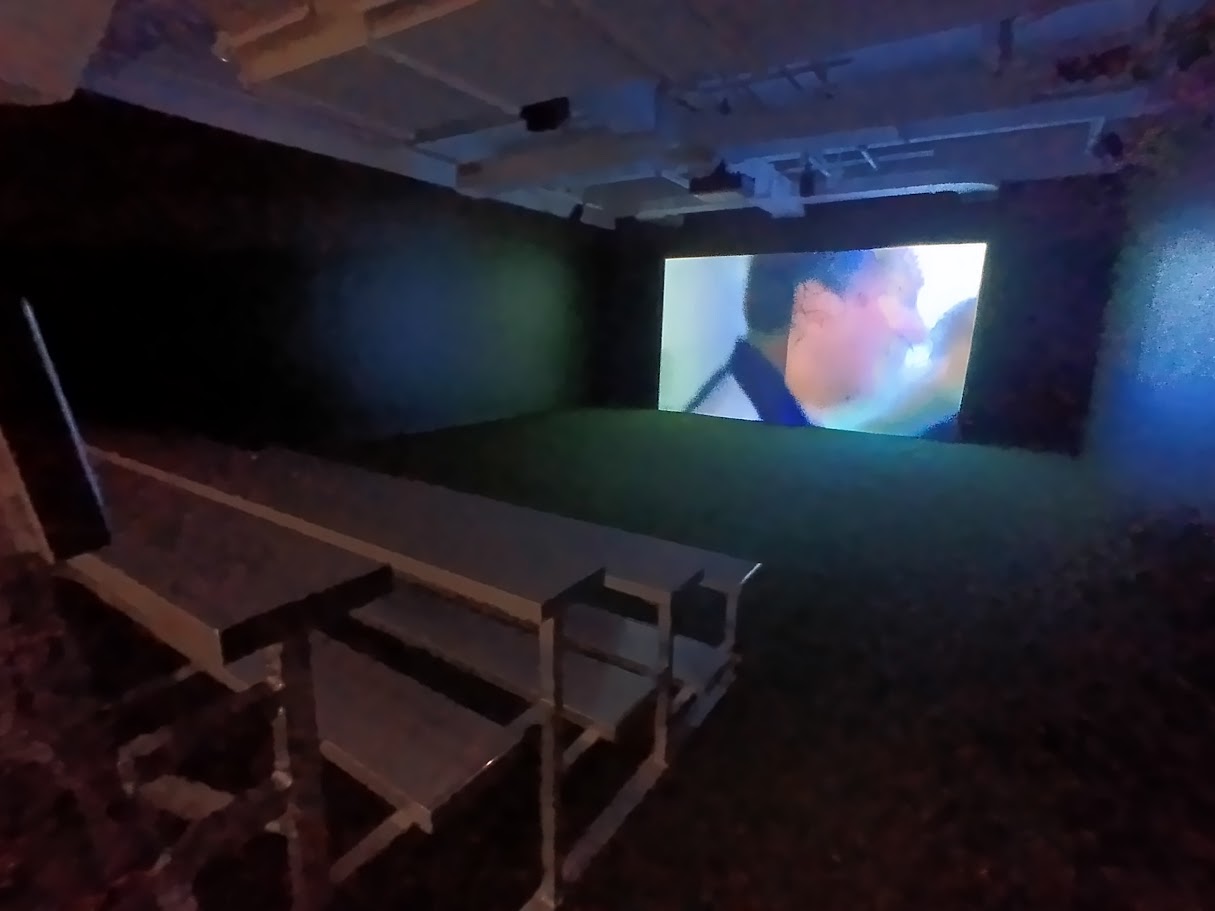
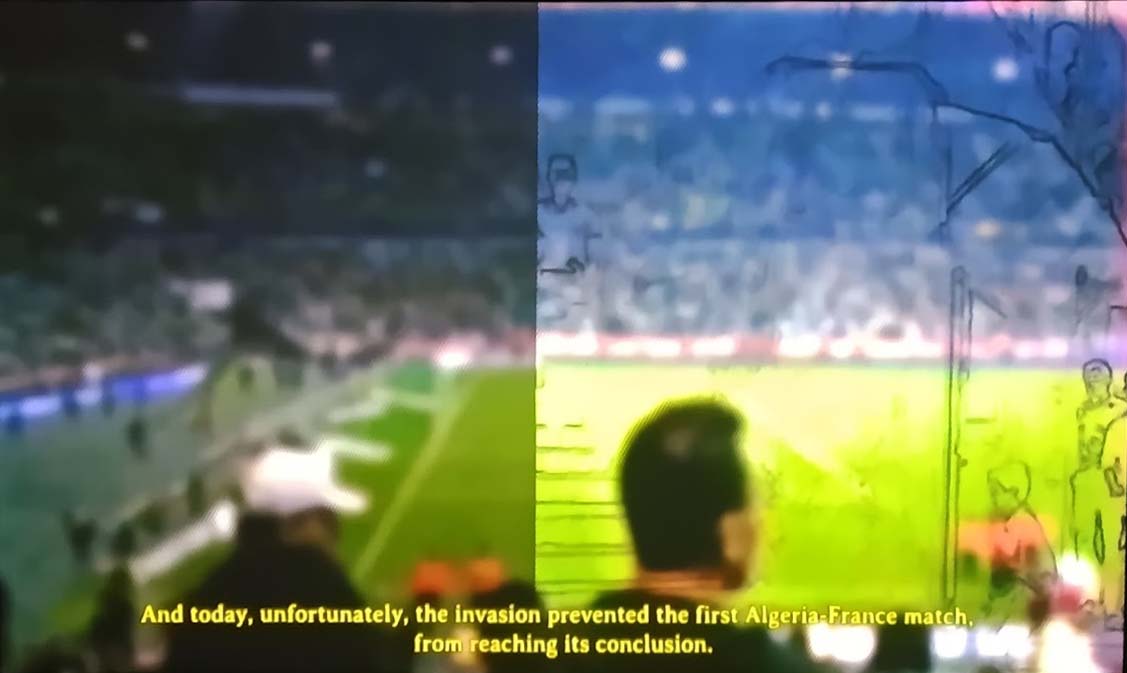
Bleacher style seating has been erected for viewing a video piece by Joyce Joumaa.  This makes a lot of sense since the artwork concerns sports, specifically a 2001 soccer match between France and Algeria.  On a single large screen in the darkened exhibition space an antique looking, blurry, image of the game is displayed.  The broad swaths of vivid green turf are ominously overlaid  with ghostly images from “The Battle of Algiers,” the famous film by director Gillo Pontecorvo, released in 1966.

Installation view of video piece by Joyce Joumaa

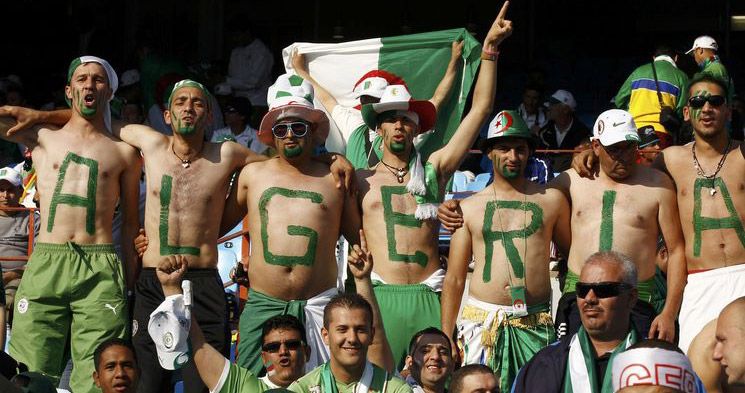
This particular game was highly symbolic.  It was the first time the two countries met on the soccer pitch since 1962. It did not end well. When a group of Algerian marauders stormed the field and disrupted “the beautiful game,” politics crashed the party, somebody called the cops, the match was stopped, and the French press and officials were deeply disappointed.

Still from artwork by Joyce Joumaa. The text reads “And today, unfortunately, the invasion prevented the first Algeria France match from reaching its conclusion.”

A grinding war of independence from 1954 to ’62, in which 1.5M Alergians are said to have died, followed 132 years of vicious French colonial rule. It’s no wonder they didn’t want to play nice.

What’s going on in Algeria now? The country is still recovering from the colonial mess and a subsequent civil war, and also suffering from a continued smouldering insurgency. It does have a large economy, because of oil and gas resources, but Algerian society struggles with crime and corruption.

Sports are an outlet for endless tension and anxiety.

To this day, booing and whistling can be heard when the La Marseillaise is played during French Algerian sporting events.
Toronto raptors fans behave similarly when the US National athem is played, but the game goes on.

Iván Argote

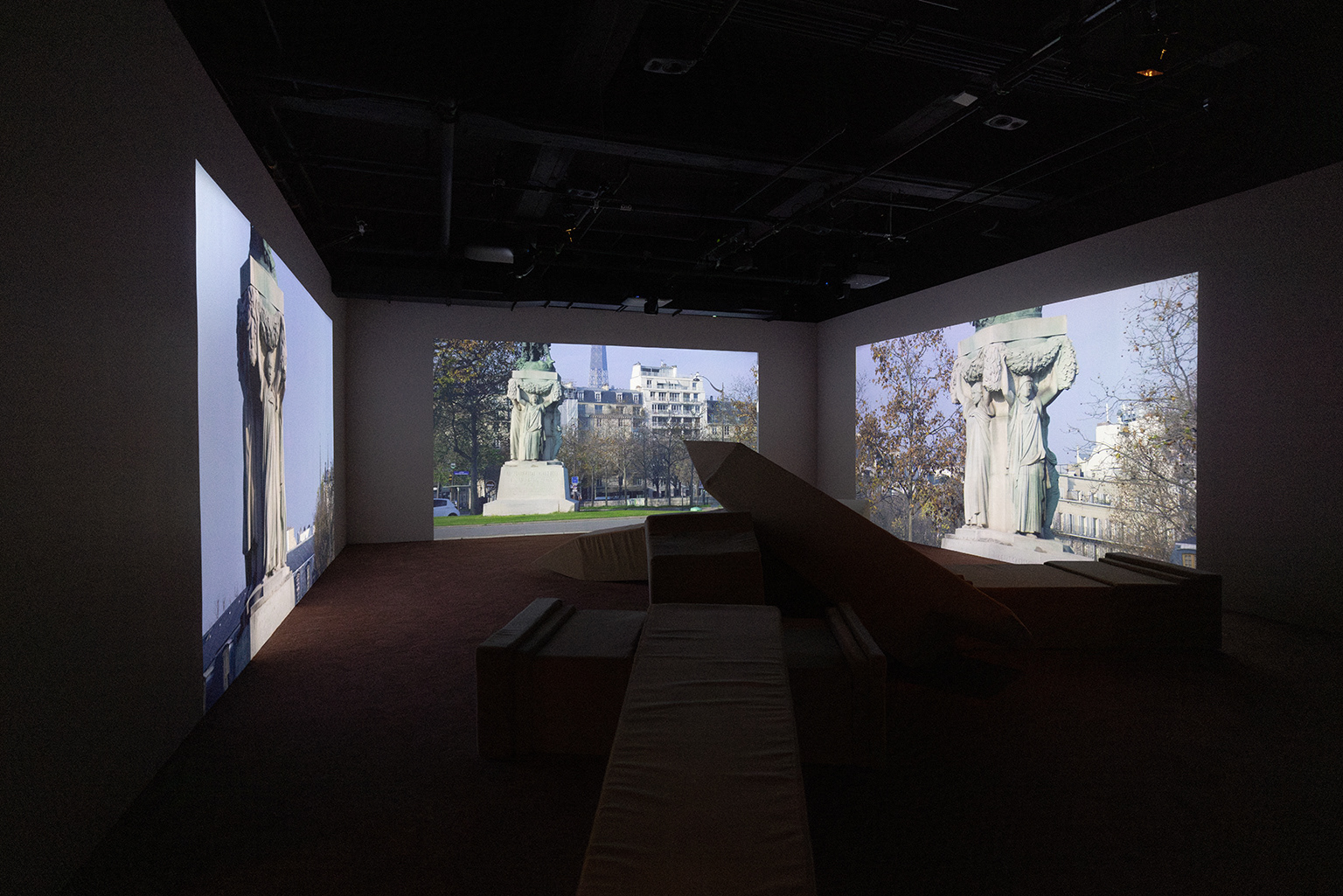
The video work by Iván Argote titled Levitate, contains three interactive channels. These multiple, giant projections surround the viewer, who is afforded a seating environment that’s plush and entirely suitable for comfortable lounging, even though it resembles chunks of shattered stone.

Installation view of Levitate by Iván Argote

The video documents three separate events, referred to as staged interventions. The Flaminio Odelisk is plucked from its historical perch in Rome and dangles from a crane. Similarly a crew arrives, throws up some traffic cones and removes the statue of a notorious French military office Joseph Gallieni, from the spot in Paris where it has stood for more than 100 years. And finally, a giant marble depiction, of Christopher Columbus — one of the defining historics monuments of the city — is driven through the streets of Madrid, on a flatbed truck. In each of these case, mayhem ensues, amid onlookers and social media.

Installation of Levitate by Iván Argote (photo by Michael Patten)
Video of installation by Iván Argote

I really enjoyed watching these famous monuments (supposedly) being toppled! And the extreme reactions.

There was some pithy texts and voiceover that were occasionally evident but they seemed mainly distracting. At this point, we are all too familiar with the looting and pillaging of various national agents and armies, and the erecting of statues to glorify villians. We don’t require a lesson! (In fact, this exhibition does frequently veer into lecturing and moral posturing, and sometimes strikes a tone of art as Sociology.)

Lee Shulman & Omar Victor Diop

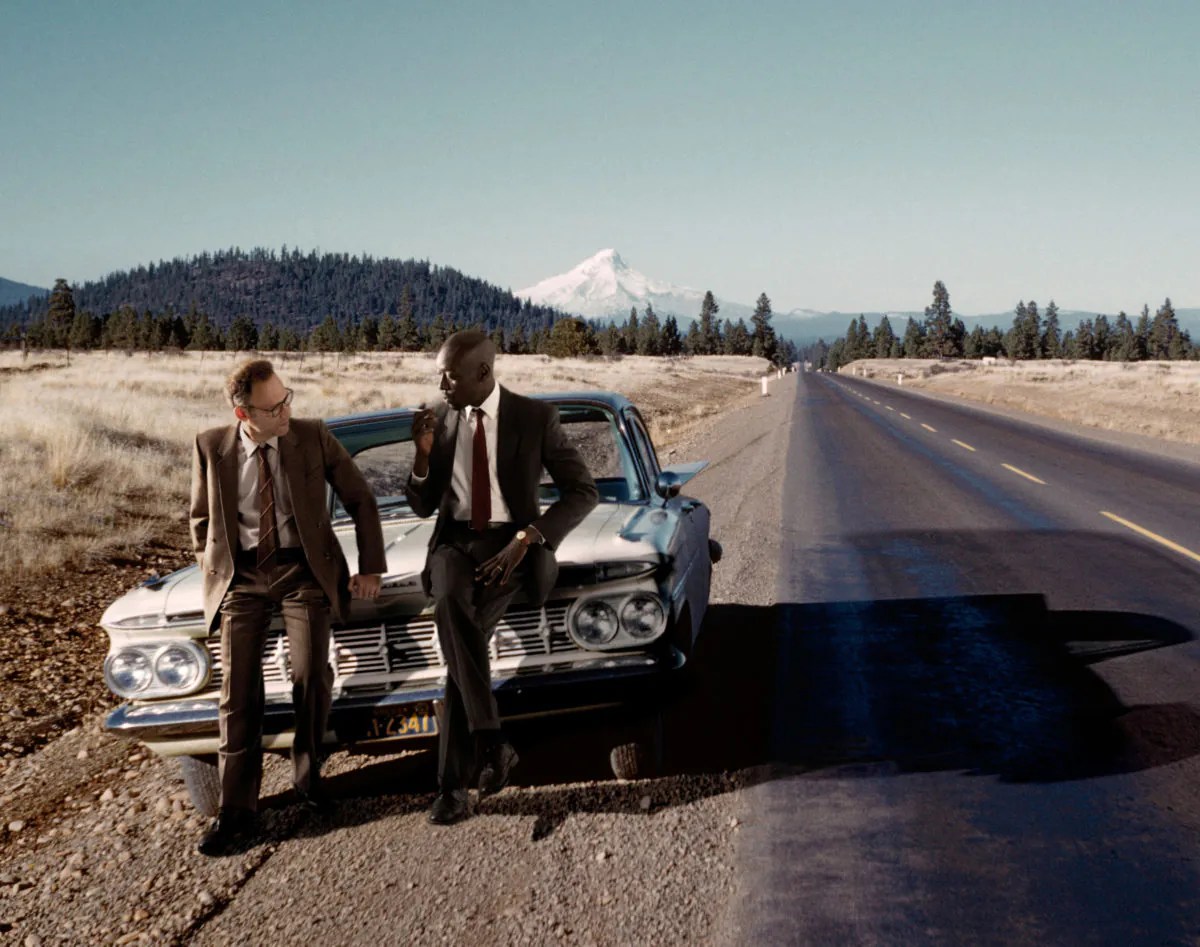
Being There_52-V1 by Lee Shulman & Omar Victor Diop

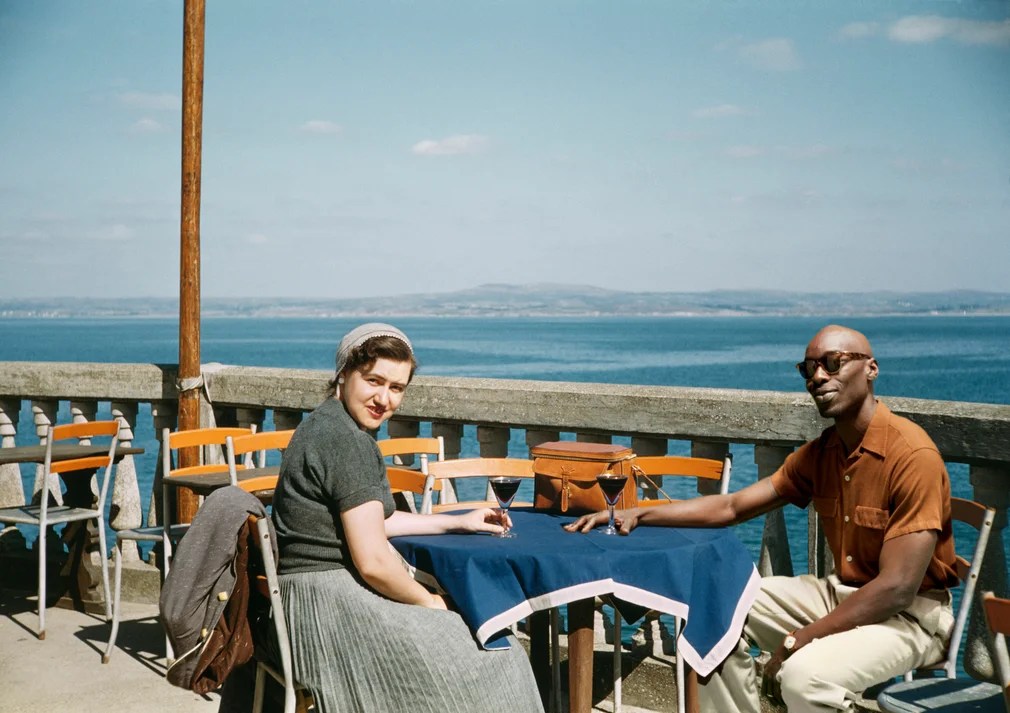
The photo works by Lee Shulman & Omar Victor Diop have a lighthearted appeal. Maybe its the absurdity itself that creates a somewhat uncomfortable underlying sensation. The big American car from the late 50s, the great outdoors, the road, and the slim elegant black man, conversing intently with his white counterpart. Not impossible, but from what we know of that era, unlikely.

Being There_27 by Lee Shulman & Omar Victor Diop

The photos create a mythic past where racism and exclusion did not exist. Omar Victor Diop, who has skillfully inserted himself into this dreamy Hawaiian vacation from the 1960s (above) looks more than a little surprised to find himself there.

Artwork by Lee Shulman & Omar Victor Diop

All the participants in this casual family photo appear relaxed and content, an idyllic afternoon in the outdoors, circa 1955. Except…

Sanaz Sohrabi

Watching the video by Sanaz Sohrabi, I felt like I should be taking notes or at least I should have done the preparatory reading before the class. I could barely keep up. Her video, called An Incomplete Calendar is densely packed and heavily researched.

Still from An Incomplete Calendar by Sanaz Sohrabi

It focuses on the years between 1950 and 1970: involves a Venezualan choir which toured the OPEC states promoting unity; shows some of the Western modern art housed in Iranian cultural edifices; displays an endless parade of stamps, letters, magazines, posters and other archival materials from the era to demonstrate struggles among the oil producing nations. It’s a little overwhelming.

Still from An Incomplete Calendar by Sanaz Sohrabi

Something included in this video that it was really great to learn about was the sculpture by Japanese artist Noriyuki Haraguchi,which is in the Tehran Museum of Contemporary Art. The sculpture consist of a low-slung rectangular steel structure, filled with thick, opaque waste oil with a glossy surface. Haraguchi exhibited the Oil Pool sculpture at “Documenta 6” in 1977 and it was then acquired by the Museum. I love this piece!

OIl Pool by Noriyuki Haraguchi

In a bizarre incident in 2022 a performance artist Yaser Khaseb, accidently plunged into the pool while performing an aerial exhibition. As a result, the Tehran Museum of Contemporary Art fired its director.  The performance artist, although apologetic, was philosophical about the event.  “A work of art can be reborn in contact with other works. From the interaction between two works, a new work can be produced,” he said.

Still from An Incomplete Calendar by Sanaz Sohrabi

Weirdly, I noticed the music or sound in all of the video works at the MAC had a startling simularity. I guess you could call it minimalist: a sort of one-note drone, rising and falling subtlely, sometimes featuring emotionless voiceover.  I guess the viewer is obliged to hear it as a cue, signifying “this is serious.”  Did the trend begin with the Ken Burns Vietnam documentary?  Possibly.

I exited the basement gallery, with its many darkened rooms, into the brilliant sunshine of a Sunday afternoon in beautiful Montreal.

September 21, 2025, Montreal

I was just in time to witness a Pro Palestinian demonstration, moving slowly along St. Catherine, as I slipped into my favourite Montreal Cathedral for a last look before my trip back to TO.

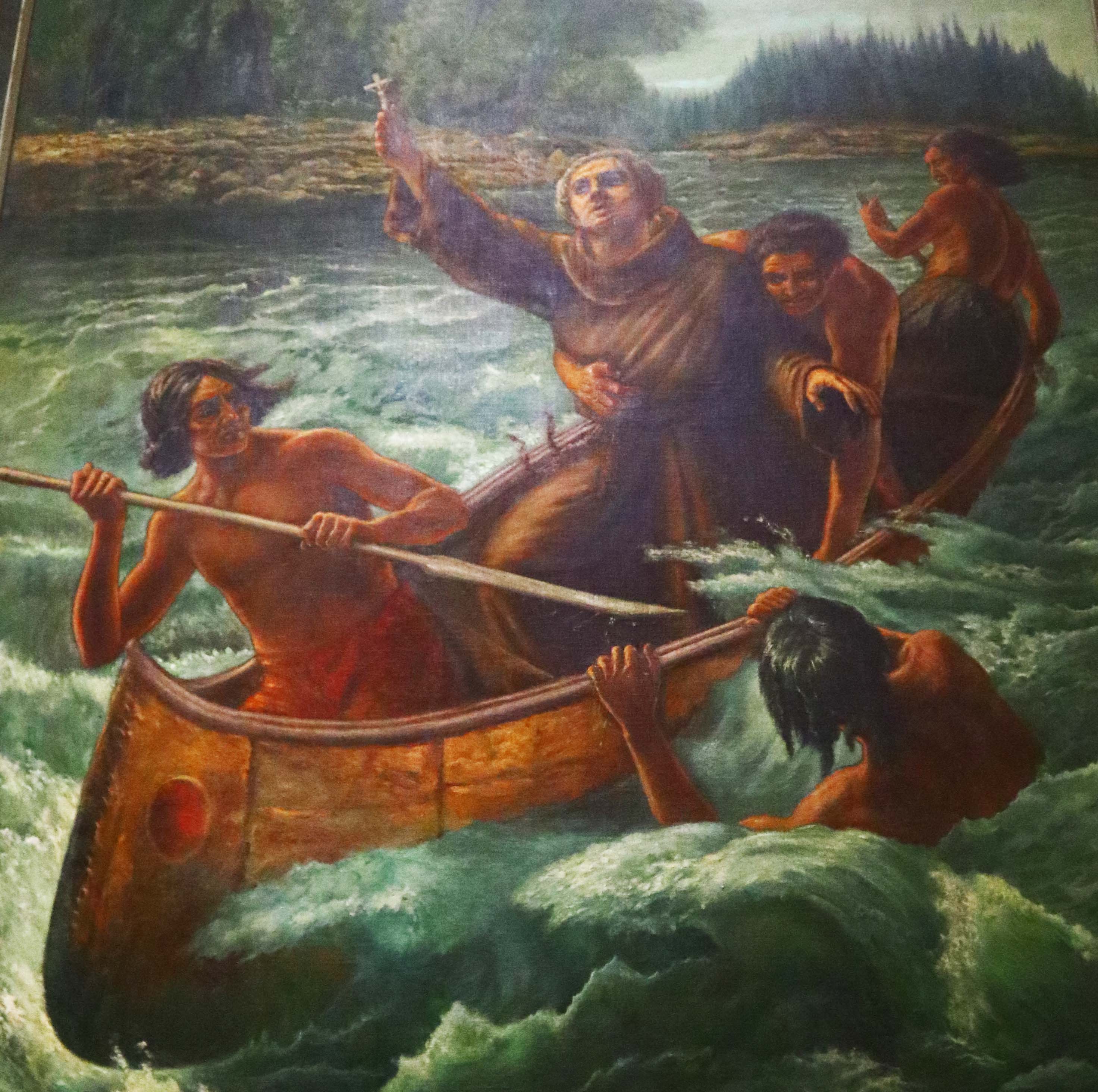
I guess one could call it “living in contradiction,” as is our fate these days, but the paintings in the church appeared to be an extension of the missing images exhibit. Could they have been created by Kent Monkman I wondered? Is this an elaborate ruse?

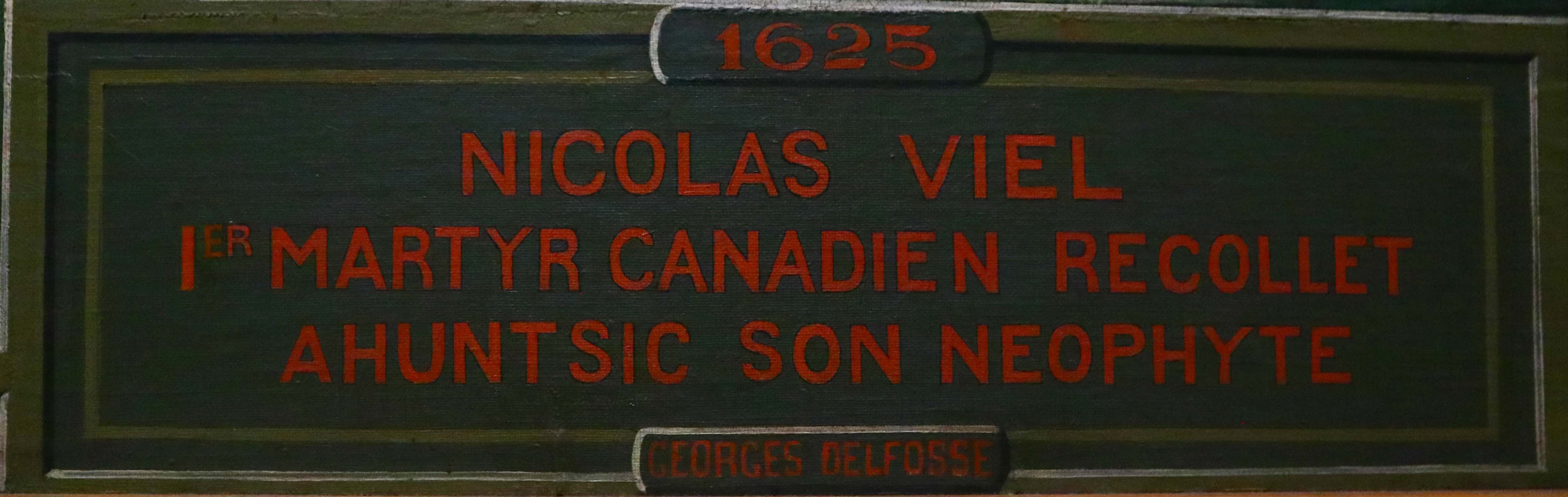
Painting by Georges Delfosse
Painting by George Defosse

But no, I determined. No, apparently not, they are sociological depictions from another era.

June 11, 2025

Report from New York

Jack Whitten: The Messenger

The towering 53rd Street Atrium of the Museum of Modern Art seemed less crowded than during prior visits.  The galleries less packed with frantic visitors.  In fact, the streets themselves seemed less grid-locked and less raucous.  Maybe it’s the “congestion pricing” impact?  Or maybe it’s the policies of the current Administration?

Whatever the reason for the relative tranquillity, it was truly uplifting to wander through the show called Jack Whitten: The Messenger without feeling jostled, and to appreciate the achievements of this artist and more broadly, the achievements of so many American artists, caught now — like the rest of us –in this period of fear and dismay.

 “Black Monolith II (Homage to Ralph Ellison The Invisible Man),” by Jack Whitten

“Acryclic, onion, eggshell, molasses, copper, salt, herbs, rust, coal, ash, chocolate and razor blade.” These are a list of the substances Jack Whitten used to create the painting “Black Monolith II (Homage to Ralph Ellison The Invisible Man”), shown above. The painting, and many others of this period, is composed of hundreds of tiles, cut from sheets of dried acryclic embedded with varied ingredients and assembled into a painting. Jack Whitten called this invented technique “acrylic tesserae.” “Each tesserae is a piece of light,” he said, “The message is coded into the process.”

A lush jazz soundtrack (John Coltrane, Miles Davis and Thelonious Monk and others) plays throughout the show’s galleries, referencing Jack Whitten‘s love of jazz.

Installation view “Jack Whitten: The Messenger” at the Museum of Modern Art

Many of the tributes and dedications he attached to his work honor the black musicians, writers and artists that impacted him during his six decades of living in New York City and making art, which he invariably viewed as experimental.

“Homecoming for Miles Davis” by Jack Whitten
Closer detail of “Homecoming for Miles Davis” by Jack Whitten

Shown above, “Homecoming for Miles Davis” was also made of hardened acrylic tiles, which in this case he spattered with white paint, a la Jackson Pollock, and put together into this dazzling painting, described by the artist as a “cosmic net attempting to capture Miles’ soul.”

“Atopolis: for Eduourd Glissant” by Jack Whitten
Detail of “Atopolis: for Édouard Glissant” by Jack Whitten

The tiles in the painting shown above, named for Édouard Glissant, the French writer, poet, philosopher, and literary critic from Martinique, were infused with metallic, phosporescent and organic materials from aluminum to anthracite.

Repeatedly, this artist states he is interested in innovation. He wants to make abstract art that changes the course of painting.

Trained as a cabinet maker, Jack Whitten, made specialized tools to apply paint. He painted standing up for decades, smoothing paint in layers with a rake-like tool which is on display at the Museum.

Tool used by Jack Whitten to paint
Jack Whitten at work in Studio in the 1970s, using “The Developer”

He called the rake-like tool “The Developer.” He added layer upon layer of paint, raking and merging the color until he had the effect he wanted, which was “sheets of light.”

“Tripping” by Jack Whitten

The photograph above doesn’t convey the startling, glowing, gem-like quality that some of Jack Whitten’s paintings hold. He “combed” the layers of paint to create colours found nowhere else and experimented like an alchemist, adding  recycled glass, pulverized mylar, gold dust and numerous other substances to the paint to get the effect he was after.

In some paintings, the artist would bury items into the gallons of paint he poured onto wood panels. These items — bits of wire or wood, staples, insects, floor sweepings — he called “Disruptors,” since through the raking process they disrupted the smoothed surface to reveal transformations below.

Installation view of “Siberian Salt Grinder” by Jack Whitten
Detail of “Siberian Salt Grinder” by Jack Whitten

I couldn’t help thinking about the giant squeegee paintings by Gerhard Richter. Like Jack Whitten, Gerhard Richter explored the relationship between painting and ph0tography in his earlier works. Later, the element of unpredictability was major in both of these artist’s big beautiful paintings of sweeping horizontals.

“Abstract Painting (726)” by Gerhard Richter

Political turmoil was a factor in the creative development of both men. Gerhard Richter was born in 1932 in Dresden, Germany, into the mayhem of WWII and its aftermath. Jack Whitten was born in 1939 in Bessemer, Alabama, at the height of Jim Crow. He grew up in Civil Rights movement and the era of political assasinations in the USA and, of course, the Vietnam War.

“Black Table Setting (Homage to Duke Ellington)” by Jack Whitten

I particularly liked looking at Jack Whitten’s paintings of screens, or screen-like images.

“Khee II” by Jack Whitten

The painting above is part of his Greek Alphabet Series. It has a mysterious quality of movement, as remote images seem to shift and rearrange themselves from within, like poor reception in an analog TV screen.

“Gamma Group I” by Jack Whitten

Jack Whitten said every colour carries ” a lot of psychological meaning” and he sought to avoid the “story telling” that automatically occured by using colour. His black and white paintings from the Greek Alphabet series of paintings, resemble a flickering screen, dissolving into abstraction.

I say to people, “Take everything you have ever felt, everything you have ever smelled, every sound you have ever heard, every sensation you have ever had that you have felt through your fingertips. Take all of that and compress it.” You would get an understanding of abstraction. – quote from Jack Whitten in the MOMA exhibition notes.

His sculptural work, on the other hand, tells a lot of stories:

Sculptural works by Jack Whitten

…stories about the African diaspora, the history of art in the Mediterranean, trash and found junk, labour and work and many other topics.

Some of his paintings too, are depictions of fragments of a changing world. His painting shown below, which suggests apps on a screen, was made in honour of Obama’s election.

“Apps for Obama” by Jack Whitten

The showstopper, however, for many of the New Yorkers on that relatively quiet day at the Museum of Modern Art, has to be the painting titled “9.11.01.” Jack Whitten witnessed the World Trade Center’s destruction and produced an enormous painting in honour of the victim’s of that event.

“9.11.01” by Jack Whitten
Detail of “9.11.01” by Jack Whitten

I spent some very somber moments in front of this painting, recalling not just the appalling catastrophe of that moment, but the following days and months, when the country, and indeed much of the world, was so unified in the shared shock and horror at that violent act. It seems like a long time ago.

March 19, 2025

Yann Pocreau “The Lapse in Between” at Division Gallery

Yann Pocreau is a photographer who is not really into taking pictures. In his show at the Blouin Division Gallery, he seems so over it: the pointing and clicking to capture a moment in time. In fact, you get the feeling, looking at much of the work of Yann Pocreau, that he has decided there are more than enough photographs in this world.

“A Light Shift 01” by Yann Pocreau

Yann Pocreau often uses found imagery — maybe he rummages through boxes of old snaps and negatives at vintage purveyors — and then he adjusts. He crops what he finds, blows it up, prints on reactive surfaces, floods with zones of subtle colour, double exposes, amplifies flaws and creases.

Detail of “les décalages 01-06” by Yann Pocreau

The result is a tension between form and content that hovers insistently in an appealing and unresolved push and pull. The absence of context creates a new kind of object, simultaneously empty and full of meaning. The piece shown above, for example: What is it all about? Are the family members triumphant survivors of Europe in ruins? Or, are they contented boaters on Lake Simcoe, heading to a summer of cottage renovations? Are the embedded brass diagonals defining the creases of a treasured snapshot — carried for years by someone — honoring a single happy moment prior to disaster? Or, are we shown the brass lines to emphasis the powerful, pictorial composition?

Installation view of “les décalages 01-06” by Yann Pocreau

The title of the artworks above is “les décalages.” The word “décalage” means shift. (“Découpage” is something else entirely. Don’t mix it up.) Lacking context, meaning shifts, gaze shifts and attention shifts.

“The found landscapes (stained views” by Yann Pocreau

The “found landscapes” above are washed lightly with a pale sepia. Otherwise, they are basically unaltered. There is a certain nostalgia inspired by these pictures, and an innocence around imagery. They make me think about family rituals of my childhood, where film was developed, following an outing or vacation, and the snapshots — all of them, no matter how banal — were carefully mounted and labeled in a oversized photo album with a thickly padded cover.

“The lapse (the pool)” by Yann Pocreau

No amount of Photoshop editing or Instagram filters could manufacture this pair of images so rich in narrative potential, and embodying the brief summer of adolescence.

“A light shift 05” by Yann Pocreau

Other works are printed on surface so gleaming, slick and metallic that the original image is impossible to discern (as above.)

“Serendipity” by Yann Pocreau

One of the pieces, titled “Serendipity,” above, is composed of six brass plates under plexiglass. Who knew that brass could be so dense and luxurious?

When brass corrodes, it can undergo dezincification, a process in which zinc is lost and copper is left behind. Mild dezincification may simply cause a cosmetic change, namely, the colour of the surface turning from yellow to pink, but severe dezincification can lead to the weakening of brass and even its perforation. 

— Preventing and Treating the Dezincification of Brass – Canadian Conservation Institute (CCI) Notes 9/13

A slight, shifting glimpse of fushia, emanating from the painted backs of the copper plates, is caught in the plexi. Maybe we are being reminded of the potential for dezincification?

Detail of “fantasme colores – tropicalia” by Yann Pocreau

In a small room at the far end of the gallery were some examples of earlier work by Yann Pocreau. In this tropical dreamscape (above) the image content is a set up for the depiction of light and colour, and the evolution of the work of this artist.

Yann Pocreau “Toward the Light” at The Image Center (Toronto Metropolitan University)

In his show at The Image Center Yann Pocreau moves even further away from what we think of as photography and slips into a kind of reverie on light itself. Subjects disappear entirely and only light is captured and admired.

“Entre le bleu la nuit: Cyanotypes exposed with lunar and solar light (9.5 hours and 45 minutes)” by Yann Pocreau

In this composition in shades of blue, Yann Pocreau uses an early percursor to photography: the cyanotype, in which various iron compounds are exposed to light and fixed with water. (Cyanotypes were used to create industrial blueprints up until very recently.)

“Les Plates Aveugle” (The Blind Plates) by Yann Pocreau

“The Blind Plates” is described as an “inkjet print with applied gold leaf.” In this case it seems irrelevant to use photography at all. It could be a minimalist painting. Why not?

Detail of “Reconciliations (Spectrums)” by Yann Pocreau

The image above was printed on silk. It shimmered very slightly when a passing viewer created a nearly imperceptible breeze.

Installation view of “Lumière 01” by Yann Pocreau

The gallery is dark and the sound of an old fashioned slide projector adds an ASMR element to the show. The slides are simply layers of light and go to the heart of this dreamlike exhibition. I really wished there was somewhere to take a nap in the deserted space.

Detail of “Les Impermanents” by Yann Pocreau

A installation of “pierced cabinet cards” arrayed on an extended light table is another large piece at The Image Center exhibition.

According to Wikipedia “The cabinet card was a style of photograph that was widely used for photographic portraiture after 1870.”

These fascinating cards — pictures of individuals who lived over a hundred years ago, posed with grave formality — have been pierced to display images of stellar constellations, shining through the paper in the darkened gallery. Poetic and empathetic, this piece connects on many levels.

Yann Pocreau explains it best:

My journey over the last few years has been punctuated by exhibitions whose driving force is cosmic vertigo, this new relationship to the world and its phenomena, from the Universe to the center of the Earth. Between a simple dialogue with science, with a certain existentialism, I think and produce projects that attempt to address the macro and micro links that shape and design our environment, our way of understanding it.

— Yann Pocreau

February 21, 2025

The Culture: Hip Hop and Contemporary Art in the 21st Century, at the AGO

It is definitely fun to wander through the AGO’s big, bold show about Hip Hop. The organizers illuminate multiple forms of expression, trying to get at some central defining aspect of what is described as a “musical and pop cultural movement.”

“Black Power ” by Hank Willis Thomas

Clearly, that central something is Black culture, and the overturning of Eurocentric ideas of what can be culturally significant.

Hip Hop, in all its manifestations, may now be global, digital and corporate (absorbed and marketed so heavily, it is, like the show’s title, The culture) and yet, some unique vitality, dynamically expressed by Black, Latine, and Afro-Caribbean youth, in 1970s Bronx, endures to this day. Hip Hop continues to transform, explode and multiply, even against the backdrop of today’s bizarre political denial.

The Culture is organized around six themes: Language, Brand,
Adornment, Tribute, Pose, and Ascension.

Language

Hip-hop is intrinsically an art-form about language: the visual
language of graffiti, a musical language that includes scratching
and sampling, and, of course, the written and spoken word.

— Extracts from exhibition text

The Culture Exhibition

Language, in this show, starts with the spoken word. “Call and-response chants, followed by rap rhymes and lyrics overlaid on tracks, are the foundations of hip-hop music.” (Quote from the exhibition text.)

Music is playing at a decent volume throughout the AGO’s fifth floor.

You can check out the AGO playlist below:

“The Culture” Playlist is available on Spotify

The shows is sprawling, and some of the objects are traditional museum fare.

Art work by Adam Pendleton

The painting by Adam Pendleton (above) has an old school graffiti feel, as per language inscribed on the street. Weirdly, there is no mention of graffiti on the Pace website showcasing the work of Adam Pendleton. His visual art is included in prestigous collections around the world and often described as relating to “process and abstraction.”

“Six Bardos: Transmigration” by Julie Mehretu

More paintings in the show, like that of Julie Mehretu (above) don’t actually contain legible language, but here too, the debt to graffiti is clear. Julie Mehretu’s dealer is the Mariam Goodman Gallery and on the Mariam Goodman website we read about the artist’s “visual articulation of contemporary experience.”

I like the way this show schools us in how to look at certain art, particularly a contemporary painting like those above, i.e they are connected to graffiti.

The Brand, Adornment and Pose sections of the exhibition get a bit intertwined, in my view. They are all about how an individual uses technological communication to define themselves in the public sphere.

Snoop Dog 213 by Craig Boyko

Hip Hop has been around for a long time! Snoop Dog was once the personification of the cool, west coast version of the genre. He went on to host a cooking show with Martha Stewart, and recently performed at Donald Trump’s inauguration.

It’s hard to even remember a time when baggy sweatpants and sneakers were not worn everywhere, by everyone.

Outfit by Too Black Guys

In fact, you could walk through any shopping mall in North America and find an endless assortment of gear attributable to some Hip Hop connection. How about that hoodie I got on sale at Old Navy?

Cardi B
“Cardi B Unity” by Hassan Hajjaj

Cardi B, the reigning Queen of Rap, is the recipient of a vast number of accolades, awards, firsts, and mosts. In this photograph by Hassan Hajjaj she confronts the camera with supreme confidence, portrayed as the “international blend of music, fashion and consumer culture” that she is.

I liked the way the show approaches the matter of pose in the hip hop, particularly as it applies to the women in this arena. Endorsements are power for women, just like for their male counterparts.

Maya Jacket by Moncler

And who can forget the iconic red jacket from Drake’s “Hotline Bling” video? Apparently, the inclusion of this so-called Maya Jacket, by Moncler, in the famous video, locked in the brand’s connection to hip hop culture.

I think I prefer the more unexpected, even daring items in the show, as opposed to the merely manufactured. The piece (below) by Lauren Halsey is a good example.

“auntie fawn on tha 6” by Lauren Halsey

Composed of layers of synthetic hair, in brilliant shades, it has an intensity and power that strikes me as so of the moment and at the same time so reminiscent of some ancient adornment.

I found one piece in the adornment section shocking.

two men seated in room
“Nation” by Deana Lawson
man with dental decoration
Detail of “Nation” by Deana Lawson

This photograph by Deama Lawson contains an inset of George Washington’s false teeth, which were made from the teeth of enslaved Black people. The cheek retractor looks like a kind of torture object me, as repellant as the set of teeth. But that’s not how Deana Lawson sees it.

There is a nobility and majesty of a lot of gold that’s worn, and how it’s appropriated in hip-hop, and how I think hip-hop actually channels ancient kingdoms.

— Deana Lawson, exhibition notes

Ascension

And, of course, you can’t talk about Hip Hop without mentioning the deathiness that hovers on the sidelines and occasionally takes center stage.

“Street Shrine 1: A Notorious Story (Biggie)” by Robert Lugo

This funerary urn featuring a graphic depiction of the Rapper Notorious BIG captures the glamourization of violent death that has haunted the world of hip hop.

Biggie Smalls was murdered in 1997 at the age of 24. According to Wikipedia, Wallace’s funeral was held at the Frank E. Campbell Funeral Chapel in Manhattan on March 18. There were more than 350 mourners at the funeral, including Lil’ Cease, Queen LatifahFlavor FlavMary J. BligeLil’ KimRun-D.M.C.DJ Kool HercBusta RhymesSalt-N-PepaDJ SpinderellaFoxy Brown, and Sister Souljah.  David Dinkins and Clive Davis also attended the funeral.  After the funeral, his body was cremated at the Fresh Pond Crematory in Fresh Pond, Queens, and the ashes were given to his family.

October 26, 2024

Art Toronto – Canada’s Art Fair

This year’s Art Toronto — the 25th Anniversary event — exuded confidence, sophistication and depth. It was great to wander the vast expanse of the Metro Toronto Convention Center and get lost in the labyrinths and eddies of unfettered display.

There were more than 100 exhibitors. Galleries from across the country were represented. I also noticed some European and South American galleries, as well as a number from our friends in the USA.

There were many people-watching opportunities!

This vivacious, well-dressed group attended last year’s Art Toronto and were expected to return again this year, although, sadly, I did not spot them.

This exhibition has the feeling of an exciting shopping mall. What follows is a tiny and utterly subjective view of the tumult of art and commerce that is Art Toronto.

I was definitely happy to see work by favourite artists, from Toronto and elsewhere.

Carol Wainio, in her signature faded, dreamy palette, continued her exploration of haunting folklore from the distant past.

“Direction Home” by Carol Wainio was presented by Paul Petro Contemporary Art
Detail of “Direction Home” by Carol Wainio

There was some Witch Queer Volcanology on display in the form of one of the spectacular Fastwurms textile pieces.

“Sundoro” by Fastwurms was presented at Paul Petro Contemporary Art

I liked looking at the mysterious weapon, lifting off into the mist, by Wanda Koop.

“Seeway – Green with Lights” by Wanda Koop presented by Blouin Division

There were many artist’s works I had not encountered previously. I had questions.

I was trying to figure out what drew the artist, Nicholas Crombach, to this particular shade of red flocking, in his wildly complex sculptural piece. Maybe its a particular representation of vitality? Or maybe he’s referencing the way precious items are sometimes tucked away in red velvet?

Weisels by Nicholas Crombach

I enjoyed the desolate emptiness created by the painter Ulf Puder, in this large work hovering between geometry and realism.

“Sand” by Ulf Puder, shown by Bonne Choice Gallery

The photo piece below, by Kris Munsya, has a cinematic feel of futuristic mutation occuring in a lush, tropical site. I want to know more!

“Airplane Mode – Genetic Bomb” by Kris Munsya exhibited by Galerie Robertson Ares

I was in awe of this extra large lino cut print, produced on hand-made gampy paper. The giant print, by Alex Kumiko Hatanak, was part of an installation at the McMichael Gallery booth.

“Faultines and Loneliness” by Alex Kumiko Hatanaka
Detail of “Faultines and Loneliness” by Alex Kumiko Hatanaka

This photo of a house was fascinating. It looked a lot like a green monopoly piece. I learned it was part of something called the Lenora Drive Project, in which a Willowdale developer allowed artists to get creative with a half dozen condemmed bungalows.

“Title Deed” by An Te Liu presented by Bonne Choice

It took me a while to figure out that An Te Liu, the artist responsible for “Title Deed,” is the same artist who makes the very appealing sculptures, shown at Blouin Division last year.

“Broken Window” by Anahita Norouzi shown by Nicholas Roberts Gallery

Anahita Norouzi‘s photo piece made me want to know more about this barren landscape and the spectacular explosion implanted there.

Detail of “Broken Window” by Anahita Norouzi

There were some special shows put together by individual curators, including a “Focus Exhibition” titled ‘the place to which we return.’ It was described as engaging viewers with ideas of “home” and what that notion means to them.

“Regrounding” by Marigold Santos

The painting above, by Marigold Santos, was part of the “Focus Exhibition.” It was quite stunning to stand before this painting and bask in the field of yellow. The painting of a corpse dissolving into a landscape, although fascinating and intricate, is almost incidental to this powerful sweep of colour.

Detail of “Regrounding” by Marigold Santos
Artwork by Renee Condo presented by Blouin Division

Another piece in the Focus Exhibit is this one by Renee Condo. I’d seen the big, beautiful beadwork pieces by Renee Condo before, at the Blouin Division space. They have a joyful, high-octane buzz and effectively pull beadwork into a contemporary space.

“There Are No Footprints Where I go” by Meryl McMaster

In many indigenous cultures crows are valued for their intelligence and spiritual significance. They are seen as messengers from the spirit world, holders of universal wisdom, and protectors against evil forces.

This piece by Meryl McMaster, also part of the Focus Exhibition, has a quiet power and mystery.

Detail of “There Are No Footprints Where I go” by Meryl McMaster

See more about crows here.

May 5, 2024

DECADE: 10 Years of Creation at Youngplace

Beleaguered, in decline, challenged, crumbling, struggling…. These are some of the words used in the local press and social media to describe the current state of the Toronto art scene. There are many reasons: the pandemic screwed everything up, capricious corporations pulled funding, everything is turned into a condo tower, money just keeps flowing upwards, and a glass of wine costs twenty dollars. But is there something more fundamental going on, could it be the nature of Late Stage Capitalism!?

Painting by Ruth Adler
Assemblage by Ruth Adler from “DECADE” at Koffler Centre for the Arts

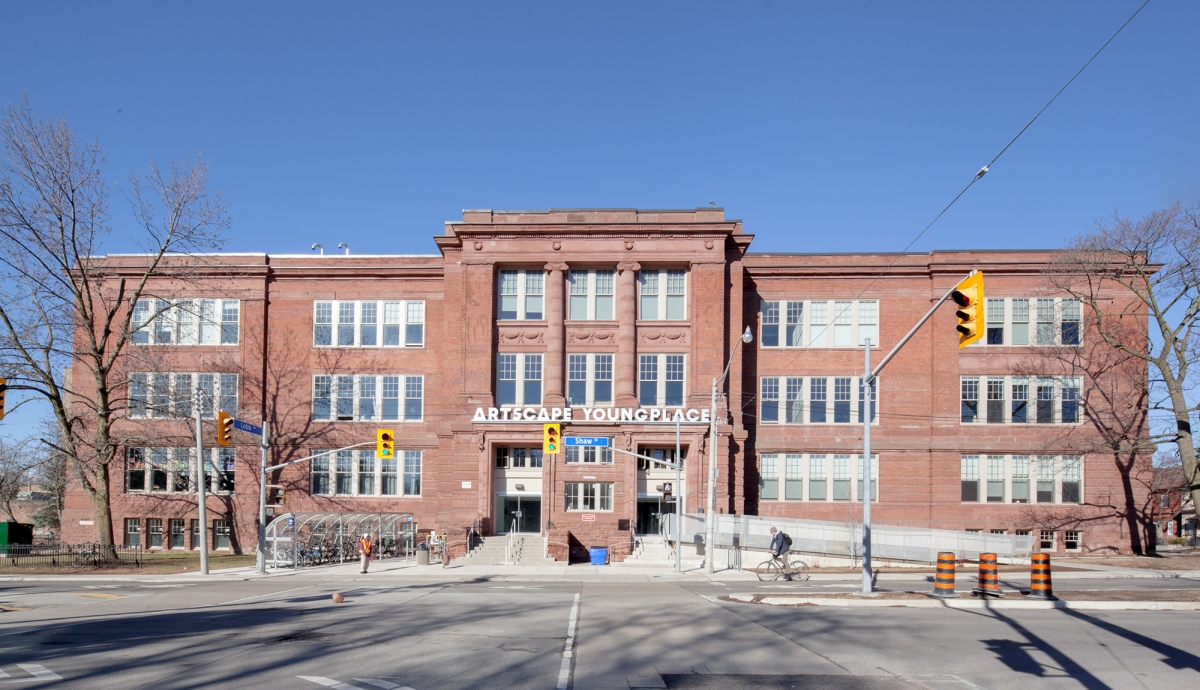
In this context, seeing the exhibition at Koffler Center for the Arts was not just fun, uplifting and hopeful, but also illustrative of the importance of artist’s spaces in this city. The Koffler Center is housed in the Youngplace building, which opened as a cultural center in 2014 and is currently one of the Artscape facilities in Receivership. All the artists in the show are, or were, until recently, part of the Youngplace community.

The stated goal of the exhibition is to shine a light on Youngplace: “this iconic arts hub.”

Painting by Ruth Adler
Assemblage by Ruth Adler

Lining the wall of the entrance to DECADE are fabric and paint assemblages by Ruth Adler. This artwork strikes me as generous, open and approachable. It’s all about surface and shape, colour, pattern and movement. It feels light-hearted and celebratory, and I really like the way this artist repurposes materials.

Ruth Adler has had a studio at Youngplace for 10 years. This fact reminded me of the documentary about Brian Eno I saw this week, at the annual Hot Docs Film Festival. (Actually it was more of a film experience, created using generative technology.) Toward the conclusion of this event Brian Eno talked a lot about the importance of creative ecologies, as opposed to the myth of the solitary genius. I assume this idea of creative community applies to all the artists in this show.

Although she works with many different kinds of materials, Ruth Adler thinks of herself as a painter. Matthew Schofield is another painter in the show. Whenever I see paintings by this artist it feels like he’s tapping into my own memory banks. That’s because he delves into the arena of quirky personal snapshots, family pictures, keepsakes, memorials that are entirely personal, and yet, universal.

Paintings by Matthew Schofield
Painting and detail by Matthew Schofield

These beautiful paintings are tiny, some just 4″x 4.” They are identical in size to the original snapshots. They have a glittering, gemlike quality which is quite mesmerizing. I want to get closer and closer to them, and peer into the captured moments.

Painting by Matthew Schofield

It was very exciting to see the work of Midi Onodera. This artist has some interesting relationships with machines.

Excerpt from Soliliquy bny Midi Onodera

The excerpt above is a hilarious interaction between the artist and a chatbot named Faux Midi.

There is a lot of literature on line these days about how chatbots and GPT entities are prone to all kinds of malfeasance. They are liars, people pleasers who will say anything just to keep talking. They are prone to hallucinations. They can easily be hypnotised to spout misinformation. In other words, these things can’t be trusted! Some of the exchanges between Midi Onodera and Faux Midi make this fact abundantly clear.

The other piece by Midi Onodera was produced especially for the exhibition and weaves together colorized, moving mages of the corridors and stairways of the Youngplace site at 180 Shaw Street. It was wonderful to look at until I started feeling seasick.

Excerpt of 2397 by Midi Onodera

Speaking of weaving, textiles played a big role in the DECADE show.

I was obliged to read the catalogue to know what I was looking at when I viewed the elegant, attenuated weavings by Shabnam K. Ghazi. In fact, these wall hangings are composed of shredded paper which has been woven into a fragile, delicate fabric. The recombined paper contains screenprinted depictions of the artist’s writings, describing her earliest memories.

Wall hangings
Artwork by Shabnam K. Ghazi

In this convoluted, painstaking process the artist has found a way to physically manifest her language and her earliest recollections.

Two pieces by Barbara Astman are in the show. One is a lovely tapestry in muted tones. It takes a while to recognize the fragments of contemporary glamour, fashion and advertising imagery in this piece. The form of tapestry, a traditionally female pursuit, originated in Ancient Egypt. Tapestry weave pieces, using linen, were found in the tombs of both Thutmose IV (d. 1391 or 1388 BC) and Tutankhamen (c. 1323 BC.)

Tapestry
Tapestry by Barbara Astman
“Daily Collage” by Barbara Astman

The other piece by this artist is a collage using news feed type imagery. I really like the way Barbara Astman uses the pictures we are relentlessly bombarded with everyday and repurposes them for her own amusement.

Detail of “Daily Collage” by Barbara Astman

Massive quilts by Carolyn Murphy are on display. They take quilting, another so-called feminine art, into the realm of spare and airy abstraction. These quilts have a Russian Constructivist vibe. The very appealling texture is created by the dense stitching which ambles every which way in curving patterns. It was a good move by the Koffler gallery to place a large sign nearby, stating the obvious: Do Not Touch.

Quilt by Carolyn Murphy

Among my favourite artworks in this show were the paintings by Gillian Iles. She has created a sprawling installation composed of about eight separate paintings, produced on Tyvek and other materials, tied and stretched haphazardly. The installation resembles a temporary dwelling or encampment, ramshackle, derelict and unsafe.

“All and Nothing” by Gillian Iles
Detail of installation by Gillian Iles

Within this structure, Gillian Iles has strewn intense images: Light blasts a tiny, vulnerable tent under the arch of a heavy black night sky; a wrecked, abandoned vehicle is overgrown with random vegetation; a fire nearly out of control towers over onlookers; and — is it dawn or more flames? — something is blazing fiercely through a hidden path in the woods.

Detail of “All and Nothing” by Gillian Iles

Detail of All and Nothing by Gillian Iles
Detail of installation by Gillian Iles

David Liss, the esteemed director/curator of MOCCA, curated the exhibition. In a video loop playing in the gallery he talks about how interacting with art — not on line but in real life — is essential to the human experience. He invites visitors to the show to celebrate Artscape Youngplace and the decade since it was founded, and to “consider and imagine what the next decade will look like.”

September 23, 2023

Erika DeFreitas at Doris McCarthy Gallery: “It’s because of the shimmer, the verge, and the yet.”

In her short remarks at the Doris McCarthy Gallery, Erika DeFreitas explained the title of her current exhibition. She mentioned that “the shimmer” refers to the spiritual; by “the verge” she means the beginning, and “the yet” for her, is the future.

I really like the idea of “the shimmer” in particular. It’s so vague and yet so evocative of something delicate, fleeting and gorgeous, and as I wandered through the show I found the “shimmer” discernable in many of the works on display. Erika DeFreitas explores what could be called the paranormal, with a light, but sure, touch.

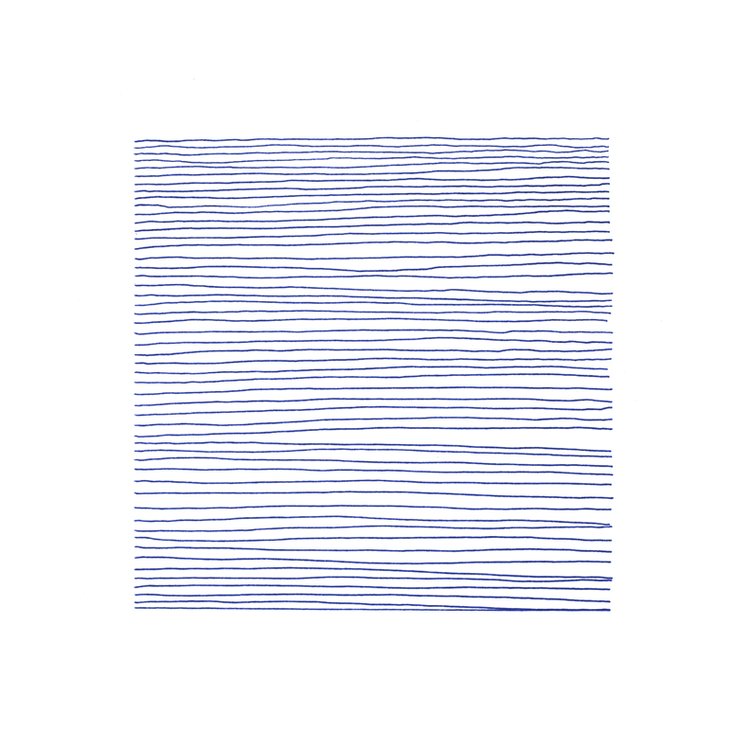
For one thing, she communicates with the dead. In particular, she gets in touch with deceased female artists. During the pandemic lockdowns, Erika DeFreitas describes herself as “conversing” with Agnes Martin, by re-creating a series of approximations of Agnes Martin’s quintessential line drawings.

Picture of line drawing
Detail of art piece by Erika deFreitas titled “the responsibility of the response (in conversation with Agnes Martin)

Another long deceased presence in the show is that of Gertrude Stein, who died in 1946. Erika DeFreitas considers her ongoing series of sculptural works titled “(if you look closely she moves)” as a kind of response to the 1922 play by Gertrude Stein called Objects Lie on a Table.

…DeFreitas asked a psychic medium to request Stein’s permission to collaborate. The medium informed DeFreitas that Stein has been working with her all along.

List of works from the exhibition: description of (if you look closely she moves)
Assemblage by Erika DeFreitas titled (if you closely she moves)

Death is a recurrent subject for this artist.

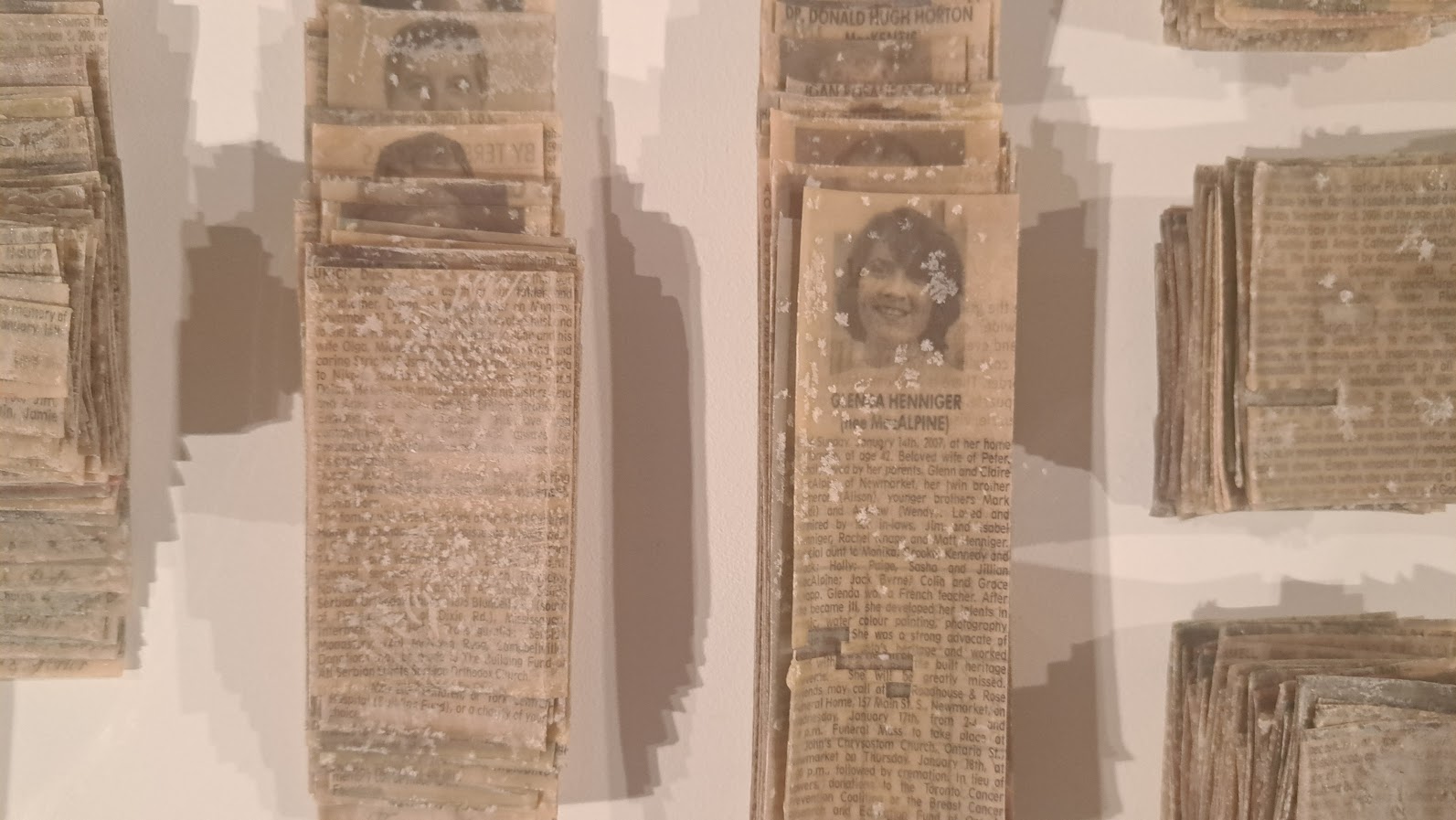
I really liked looking at the piece she did using individual obituaries clipped from newspapers and preserved using beeswax.

Detail of art work by Erika DeFreitas titled “In Lieu of”

The tiny stacks, obsessively ordered, have a tombstone like quality. The viewer is compelled to read the text and gaze at the photos of long dead strangers, sort of like wandering through the Mount Pleasant Cemetery

Detail of artwork by Erika DeFreitas titled “In Lieu of”

Erika DeFreitas is a little more playful when she collaborates with her mother, Cita, or channels her deceased grandmother, Angela.

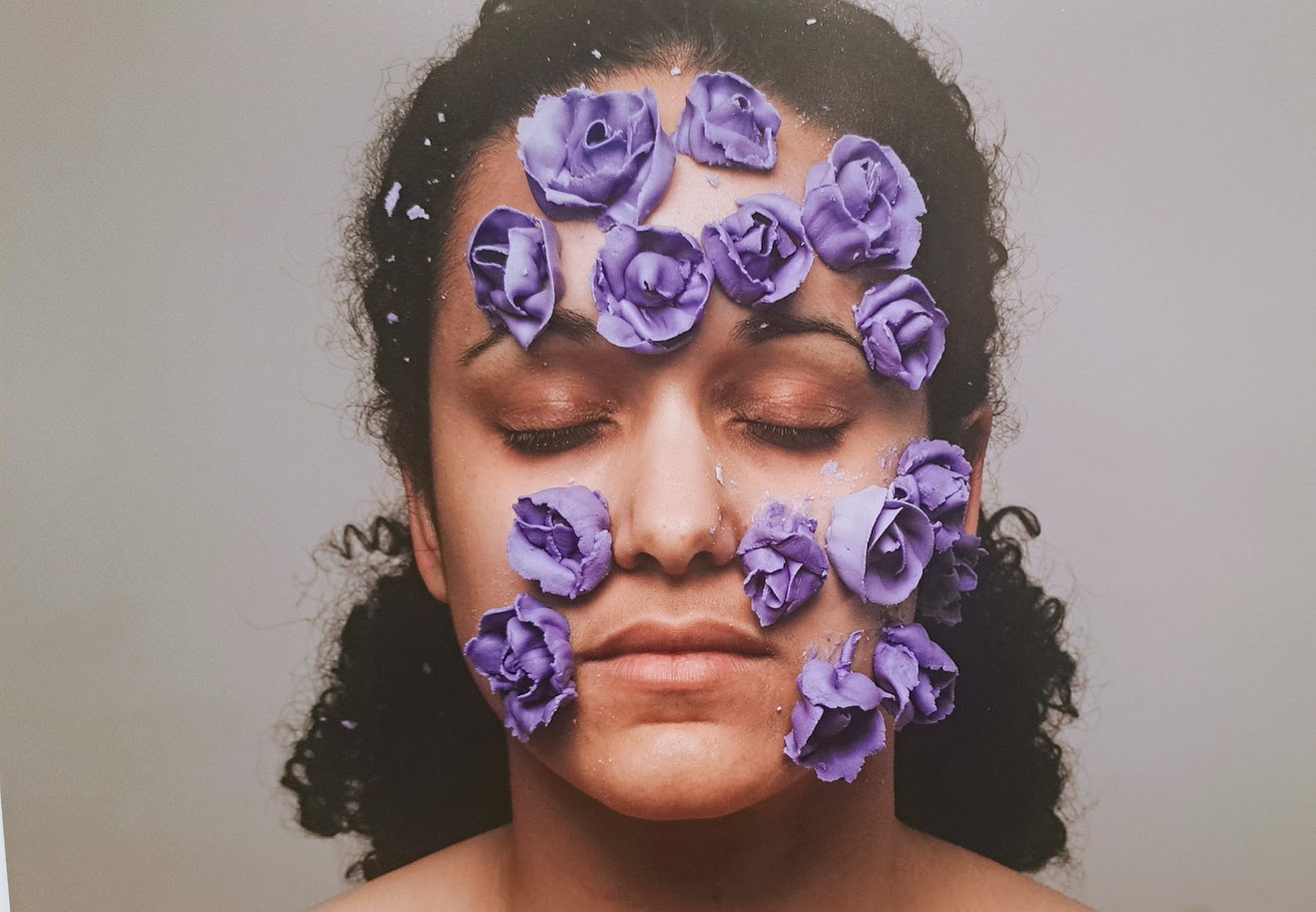
Picture of series of photographs showing decorated faces
Photo series by Erika DeFreitas titled “The Impossible Speech Act”
decorated face
Detail of “The Impossible Speech Act” by Erika DeFreitas

In the photo series above, Erika DeFreitas and her mother have created “death masks” using cake decorating techniques passed down from Angela. The icing sugar hardens but gradually melts against warm (living) flesh.

Apparently Erika DeFreitas’ grandmother, a Trinidadian, would adorn statues of Black Madonnas with jewelry and gorgeous fabrics. Her granddaughter has continued this practice with a contemporary twist.

Detail from “The Black Madonna of Great Echoes” by Erika DeFreitas

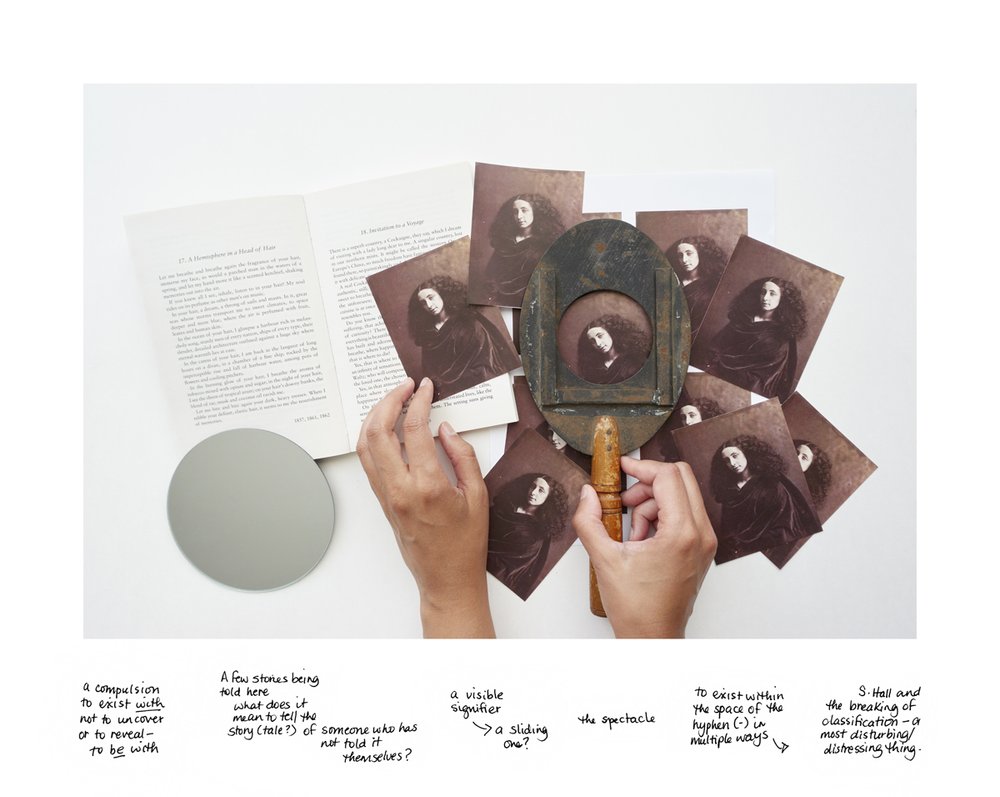
Another long deceased artist that interests Erika deFreitas is Jeanne Duval. (It’s a long story.) There’s a big, complicated piece in the show, featuring many large photographs, and its all about a painting by Gustave Courbet. The full title of this painting is: The Painter’s Studio: A real allegory summing up seven years of my artistic and moral life.  It was painted in 1855 and currently is located in the Musée d’Orsay in Paris, France.

Courbet was a leader of the Realist movement and a rebel against the prevailing cliched Romanticism of the day. Apparently, he was always in political trouble in France and ultimately had to disappear to Switzerland, where he died at the age of 58.

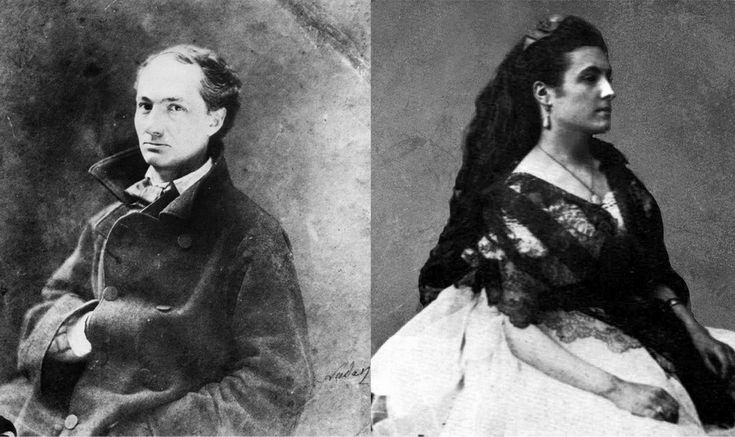
Erika deFreitas focuses on a portrait that is missing from this very famous and massive picture. (It was more than 19 feet wide.) She has done some careful research and found that Jeanne Duval was erased from the picture. Jeanne Duval was Baudelaire’s girlfriend. When they had a fight, the poet — Courbet’s champion — demanded her likeness be removed.

Detail of art work by Erika DeFreitas titled “arriver savant moi, devant moi”
Photographs of paintings and hands
Detail of art work by Erika DeFreitas titled “arriver savant moi, devant moi”

Erika DeFreitas gets deeply into this erasure. It holds a lot of meaning for her. The piece is like a detective’s notes revealing how the artist gets closer and closer to something. To me, although I liked looking at the images and thinking about how things were, this does strike me as art world gossip from about 170 years ago.

photo of Baudelaire and Jeanne Duval
Baudelaire and Jeanne Duval

It’s kind of great, however, that the painting, shown below, is still stirring people up, all these years later.

Painting by Gustave Courbet
The Painter’s Studio: A Real Allegory Summing up seven years of my artistic and moral life” by Gustave Courbet

April 26, 2023

Wolfgang Tillmans – To Look Without Fear

Wednesday nights, 6:00 to 9:00 PM, the Art Gallery of Ontario is free. I went to check out the big, new photography show of work by Wolfgang Tillmans.

The place was crowded, especially the 5th floor, where this show is located, and there is a definite “date night” vibe, as numerous young, stylish couples swan about, having intense conversations concerning “visual democracy” and the “amplification of social awareness,” two themes Wolfgang Tillmans identifies as central to his creative role.

Icestorm by Wolfgang Tillmans

When I Googled this artist’s name I was amazed at how much fawning press he gets. “It was a Monday, and Tillmans, dressed in blue Puma sweatpants, Adidas running shoes, and a navy-blue hooded sweatshirt, was standing next to a conference table, drinking a coffee, with several young employees gathered around him.”  Navy-blue! This was in the New Yorker. It occured to me that a big part of the critical fascination with his work is on the level of personal charisma. It’s hard to separate him from the work.

The reason I started to work with images from the very beginnning was that I wanted to be involved with what was going on in the world

quote from Wolfgang Tillmans, exhibition guide to the “To look without fear” show at the AGO

He is of his time and he knows what’s going on. His attention wanders from subject to subject, always with a enviably casual air: his friends, abstraction, nightlife, architecture, plant life, his friends, technological change, sea and sky, mundane objects, his friends, clothing (on and off), astronomy, the military, abstraction, his friends and more, and more.

Installation shot of “To Look Without Fear” by Wolfgang Tillmans

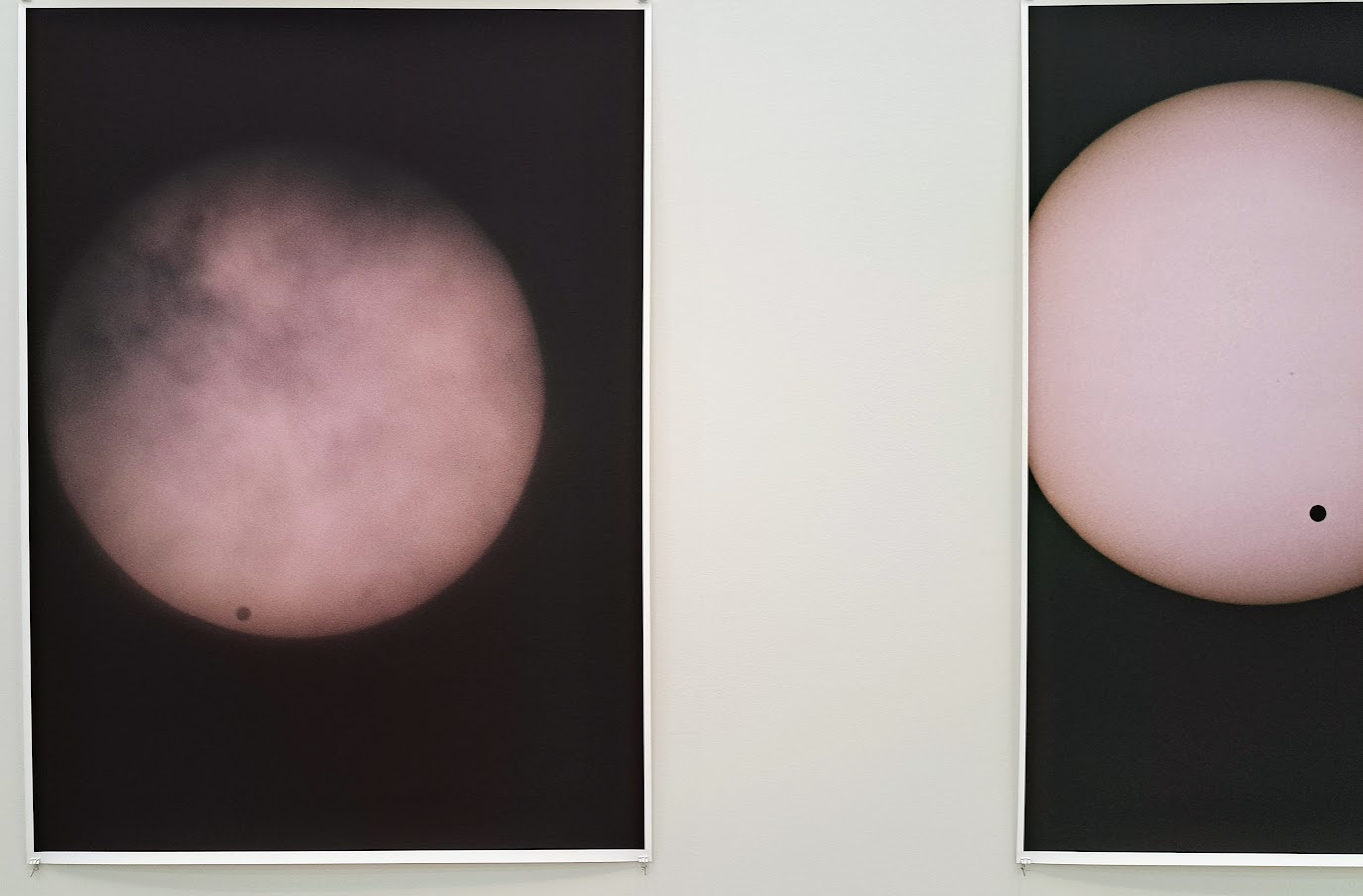
“Venus Transit, edge” by Wolfgang Tillmans

Yes, most of us carry around hundreds of images on our phones, evidence of our passing interests, friends, vacations, ideas of beauty, irony, parrots possibly or today’s lunch, a dress I’m thinking of buying, all sorts of confusion. Every passing interest, even the briefest momentary focus that slips through our visual field, is documented and retained. We hoard images. Or, maybe we post them on Instagram and TikTok. Occasionally a few of our photographs are really good. Wow! They might equal or even surpass the work of Wolfgang Tillmans in how they define the moment — not just our moment — but The Moment.

Wolfgang Tillmans embodies all that, harvesting images and spewing them back. He is Everyman, his interests approximating those of his demographic cohort. (Except he is better, cooler, taller, much more interesting.) And his work is in museums around the world. And, he is the artist. He wants us all to look without fear and so, without judgement, and to really see the world. He is just a messenger, conveying something larger than himself.

Photograph by Wolfgang Tillmans

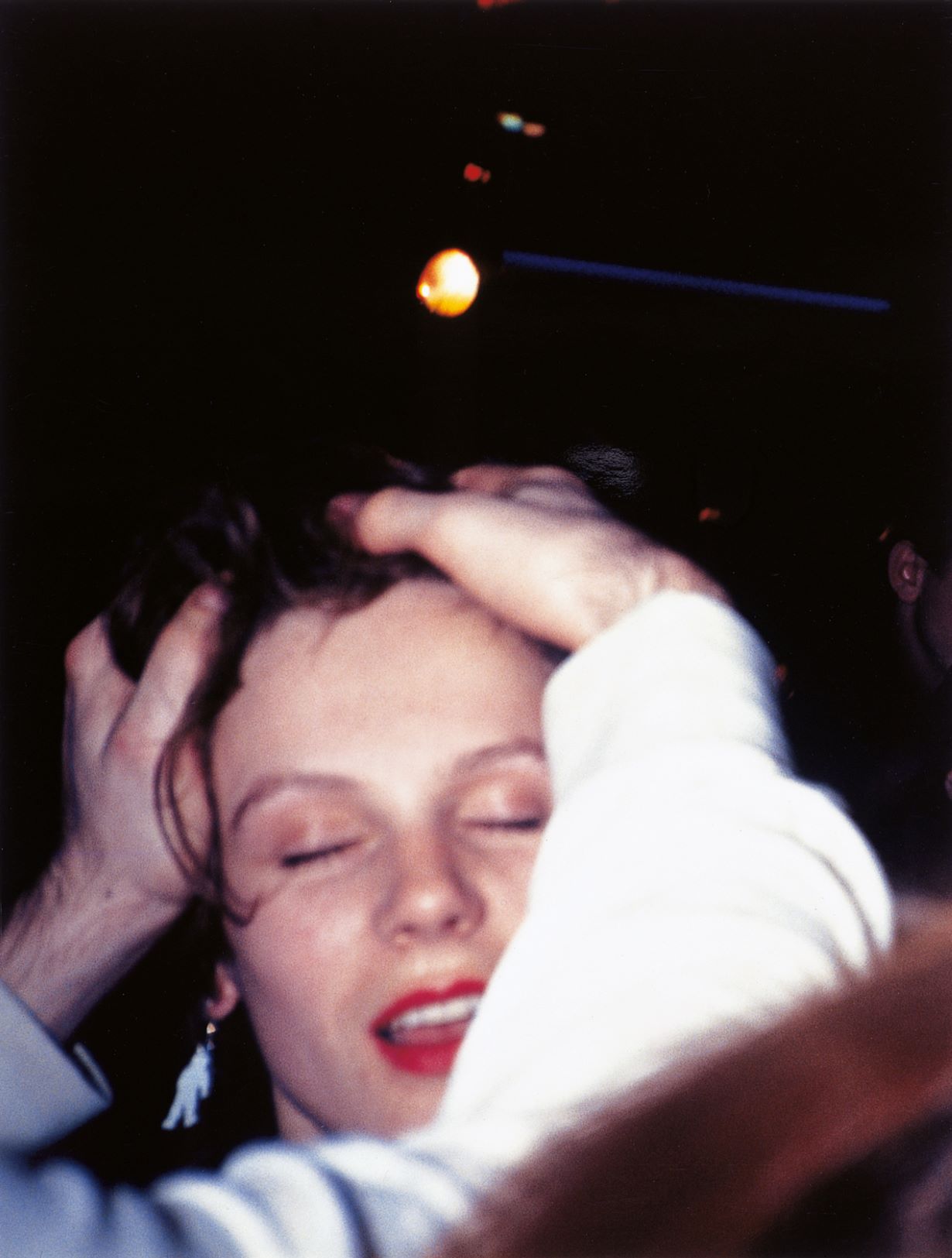
“After Party” by Wolfgang Tillmans

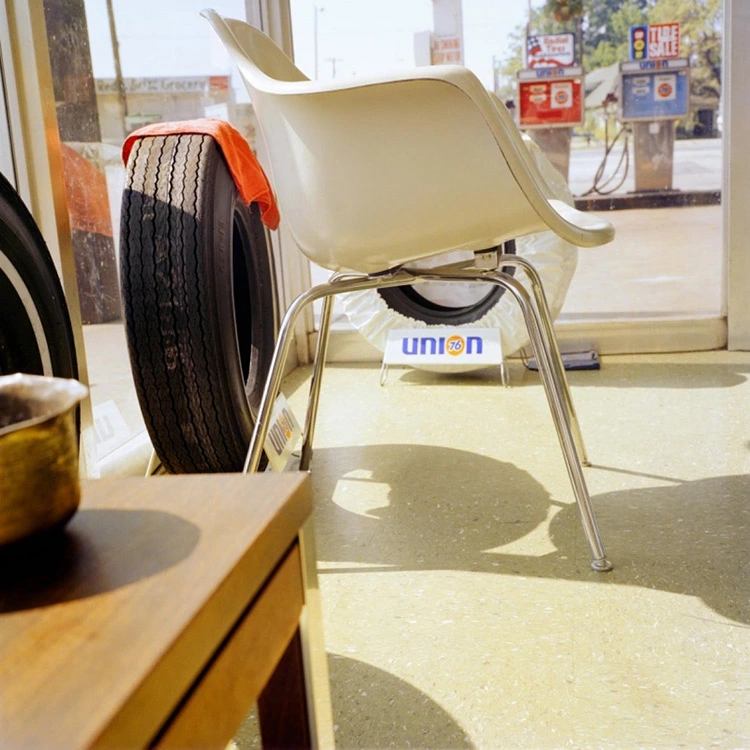
In 2010 I saw a massive exhibition of the photographs of William Eggleston – prints from 1961 to 2008 — at the LA County Museum. In the catalogue from that show, Eggleston is called the “master of color photography, a poet of the mundane, and proponent of the democratic treatment of his subjects.” He definitely has something in common with Wolfgang Tillmans. (Do all photographers have this “democratic” impulse?)

Photograph by William Eggleston

William Eggleston’s daughter, Andra Eggleston, explains his appeal when she talks about growing up in Memphis, where her father’s career began, and how that city shaped his images. “It was a wonderful, magical, dark, rich, beautiful, ugly, complicated place,” she says. (I feel the same way about Winnipeg!) William Eggleston, got it all down, in colour. Wolfgang Tillmans gets it all down too, but nothing as specific as his hometown somewhere in Germany. He taps into his generation’s observations, through representing his restless, wandering attention.

Photograph by Wolfgang Tillmans (Love, hands in air)

This massive show is organized roughly chronilogically. Some of his earliest works are on display, sort of grimey, murky smears of grey made in a copy shop in Germany with a Canon-NP-9030 laser photocopier. (These were made back in the early 80s. He had the confidence to carefully preserve them. Now that is presience.)

Photograph by Wolfgang Tillmans

Some of the prints are beautifully framed, most are unframed, taped to the walls or clipped and hung from pins. Some are ridiculously large, others snapshot size, some glossy, other matte, grouped or single, pulled out of magazines, laid on tabletops under glass.

“Ostgut Free Swimmer” by Wolfgang Tillmans
“I don’t want to get over you” by Wolfgang Tillmans

Sometimes he forgets and tumbles into cliche and naivety, for example, the grid of shots of the Concorde….

Detail of Installation by Wolfgang Tillmans

…or his piece from the Neue Welt (New World) series.

“young man, Jeddah” by Wolfgang Tillmans

But we forgive him, because he says: “the camera is like a tool for me to see and record much more than I can possibly understand in that moment” and we can all relate to that idea.

January 26, 2023

Conceptions of White

What is Whiteness anyway? This is the question posed by the current exhibition at the Art Museum University of Toronto.

We enter the show through the pristine “Portal”, created by Robert Morris in 1964. “Portal” is pure minimalist sculpture, ostensibly stripped of meaning, so neutral as to be almost invisible.

Portal by Robert Morris

The piece encapsulates one of the ideas the show explores: how the concept of White, especially in the art world, is so natural and all-encompassing, it’s virtually unseen.

But wait. Hold on! Before we take that fateful stroll, we are invited to engage with the present — shut up, and check our privileges — through the augmented reality filters created by the “Famous New Media Artist” Jeremy Bailey.

Detail of “Whitesimple” by Jeremy Bailey
Detail of Whitesimple by Jeremy Bailey

In the handout that accompanies the exhibition the curators declare their biracial status and indicate they are seeking a clearer understanding of their own relationship to Whiteness. (Full disclosure: Through Ancestry.ca I traced one of my family branches all the way to Viking marauders sweeping down on the Orkney Islands to commit mayhem. They went on to settle in Manitoba. Some things you don’t want to know.)

On the other hand, I like the way this show acknowledges history at every turn. I agree that the story of the present can only be told by starting from the past.

The exhibition contains a graphic display locating the invention of Whiteness right around the time colonial adventurism, also known as The Age of Discovery, was ramping up. Since colonial logic maintained that a place did not exist unless White Europeans had seen it, it was important to distinguish White from everyone else.

Detail of graphic in Conceptions of White exhibition

Deanna Bowen‘s installation, called “White Man’s Burden” takes a dive into Whiteness and the history of the Canadian cultural elite. Her ambitious and engrossing piece is made up of numerous items from various Canadian archival sources, some hung upside down and/or printed in a negative versions.

Installation view of “White Man’s Burden” by Deanna Bowen

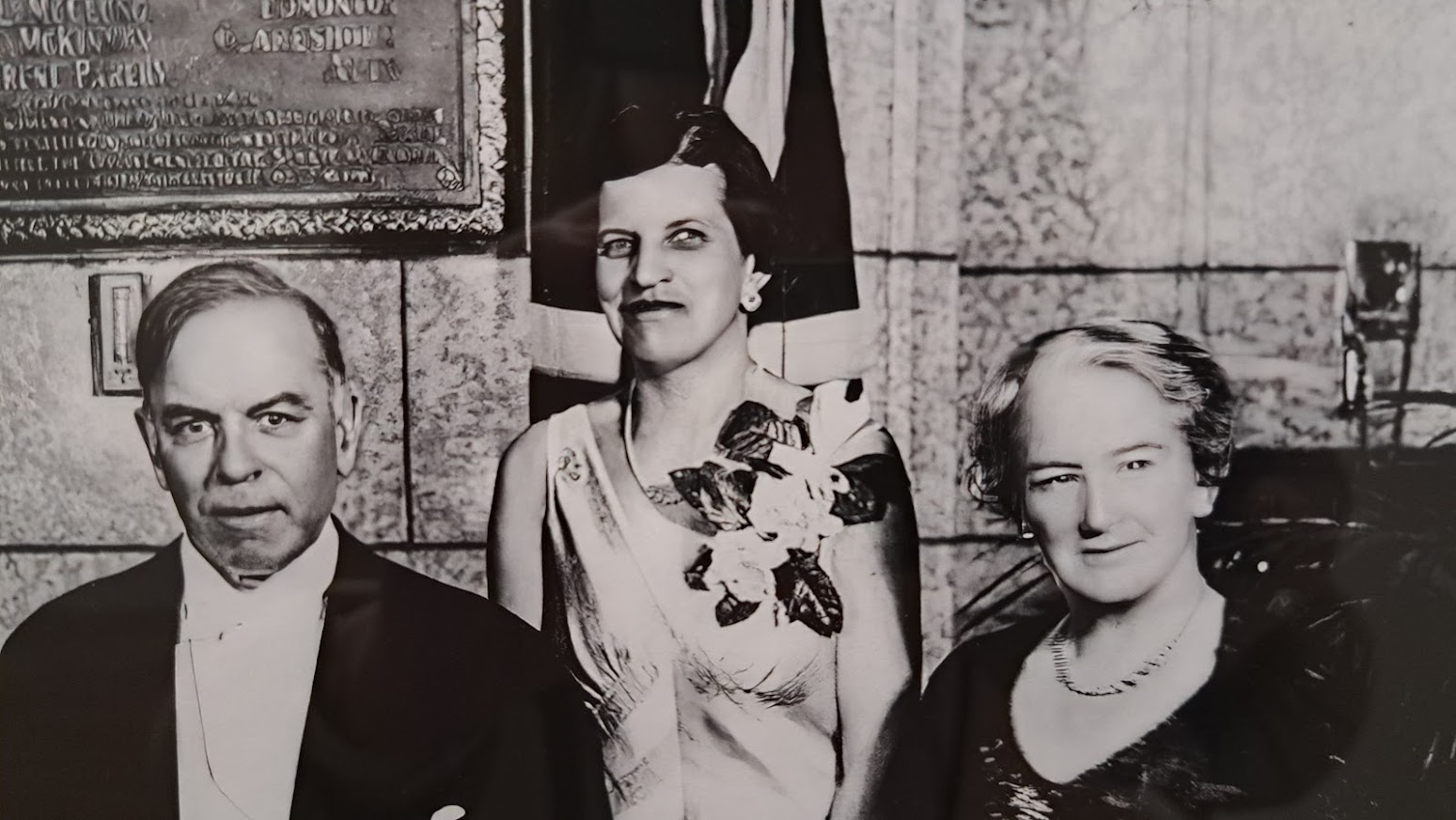
Detail of Deanna Bowen installation, featuring MacKenzie King, and other cultural elites.

According to his biographers MacKenzie King was cold and tactless. During his long political lilfe leading the Liberal Party, King had several close female friends, including Joan Patteson, a married woman with whom he spent some of his leisure time.

There are many fascinating images and documents in Deanna Bowen’s work: the cover of the T.C. Douglas master’s thesis, for instance, titled “The Problems of the Subnormal Family” in which Douglas recommended several eugenic policies, including the sterilization of “mental defectives and those incurably diseased;” or, a newspaper clipping describing the “objects and purposes” of the Kanadian Klu Klux Klan, including a membership pitch.

Detail from “White Man’s Burden” by Deanna Bowen

There is a wonderful complexity to this artwork. Deanna Bowen leaves it up to the viewer to solve the puzzle of images, covering hundreds of years of violence, vanity, greed and hubris.

Conversely, the vinyl wall installation by Ken Gonzales-Day is simple, direct and deeply horrifying.

“The Wonder Gaze” by Ken Gonzales-Day

The piece is from a series titled Erased Lynchings in which Ken Gonzales-Day reproduced souvenir lynching postcards — a thing in certain southern states — after digitally removing the victims.

The video piece by Howardena Pindell, free white and 21, in which the artist — speaking to the camera in a frank, casual, somewhat bemused style — relates numerous incidents of routine rascist behaviour which she has personally experienced. The video is all the more disturbing because of her blase delivery .

You can watch the whole thing here:

Link to Howardena Pindell video, “free whitge and 21”

Both Nell Painter and Fred Wilson examine the tropes of art history to shed some light on White.

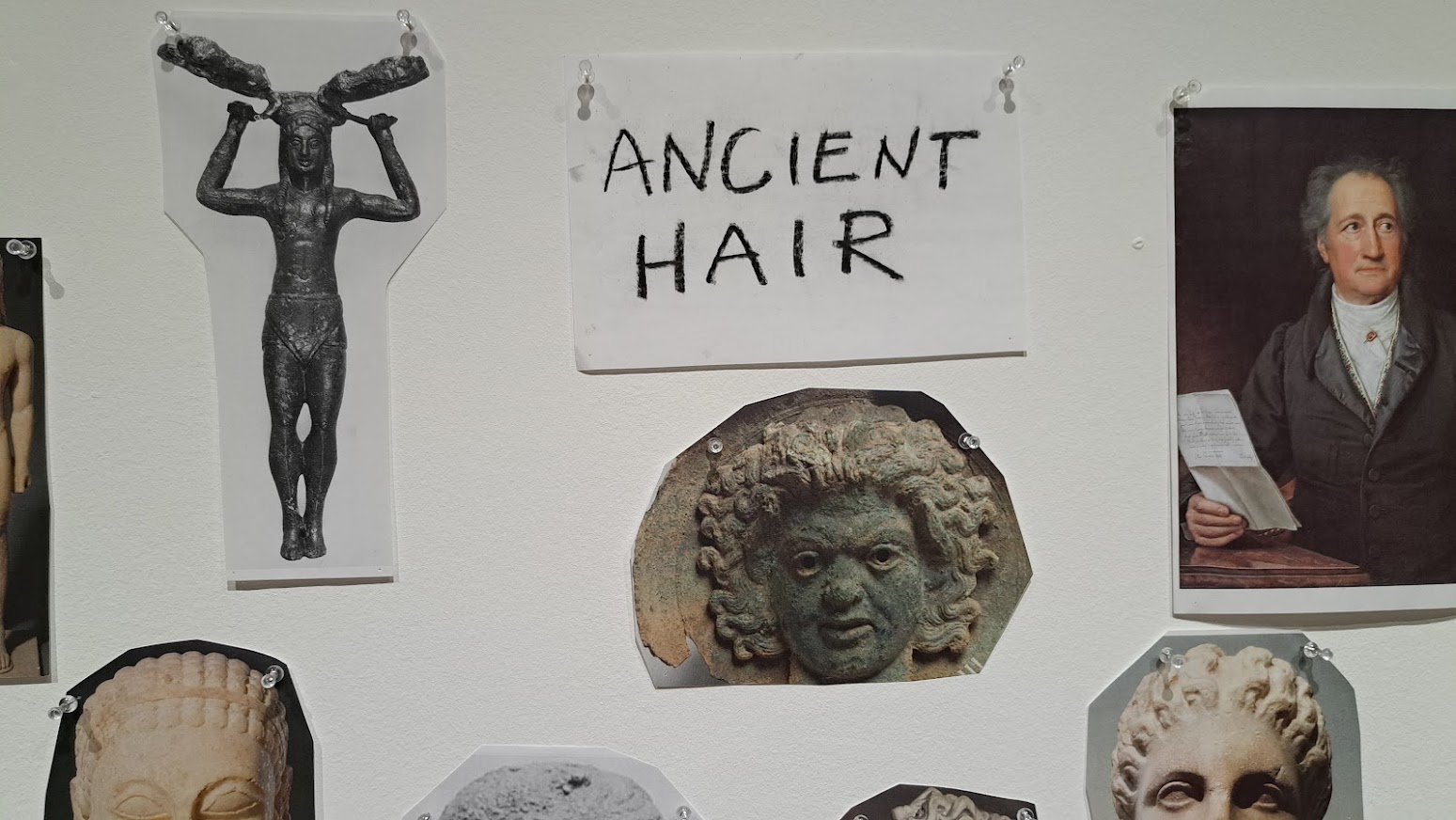
Detail of “Ancient Hair” by Nell Painter

It is as if Nell Painter cut up a Survey of Western Art textbook, scrawled some trenchant questions onto 81/2 by 11 sheets of bond, and pinned the whole thing to the nearest wall. I like the ad hoc feel of this piece. The idea is to just get the ideas out as quickly as possible and to hell with all the niceties of framing and smoothing, tweaking and hanging.

Installation view of “Ancient Hair” by Nell Painter
Detail of “Ancient Hair” by Nell Painter

Fred Wilson puts objects together, transforming their meaning through proximity. In this case, milk glass, white porcelain and china, copies of “classic statuary,”– some broken and toppled — and kitschy items like the white nubian goddess and the black “mammy” cookie jar are arrayed. Looking at this collection of items, each charged with social, cultural and historical meaning, we wonder, which objects belong and which don’t? And why?

Detail from “Love and Loss in the Milky Way” by Fred Wilson
Installation view of “Love and Loss in the Milky Way” by Fred Wilson

I spent some time watching the The White Album, a video piece by Arthur Jafa. Composed largely of found footage, with an original soundtrack that has a chilling, dirgelike quality, this artwork is mesmerizing as it drills deep into the contemporary psyche and unearths a rich and sometimes terrifying vein of emotions.

Excerpt from The White Album by Arthur Jafa

Like the show’s curators, now is apparently a time for me to seek a clearer understanding of Whiteness.

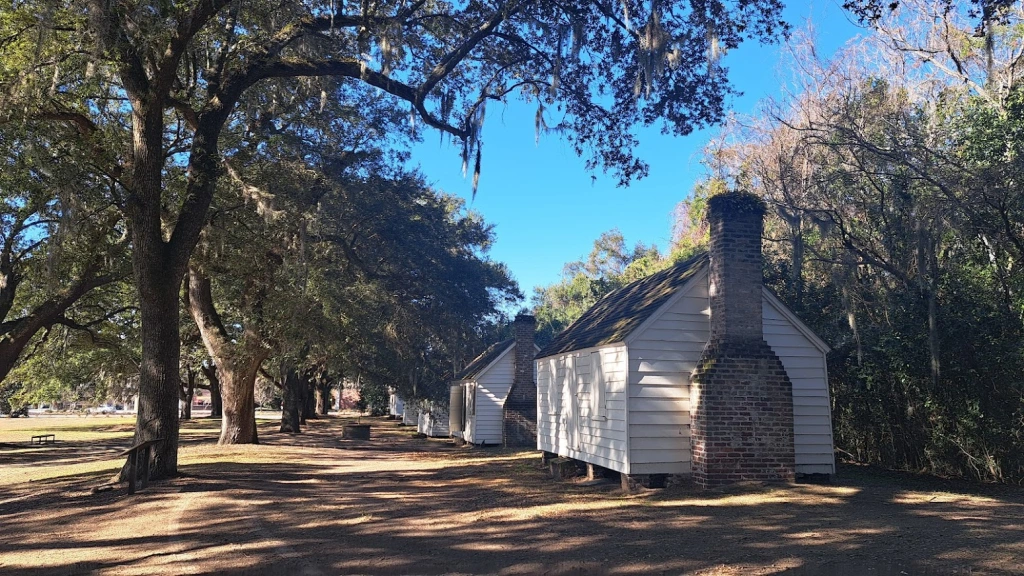
Earlier this month I happened to take a tour of the McLeod Plantation, on James Island, on the outskirts of Charleston, South Carolina. Unlike previous trips to the American South, where I heard alot about French antiques and hoop skirts, the tour at the McLeod plantation was an unflinching description of rape, torture, brutality and exploitation that endured into the 1990s.

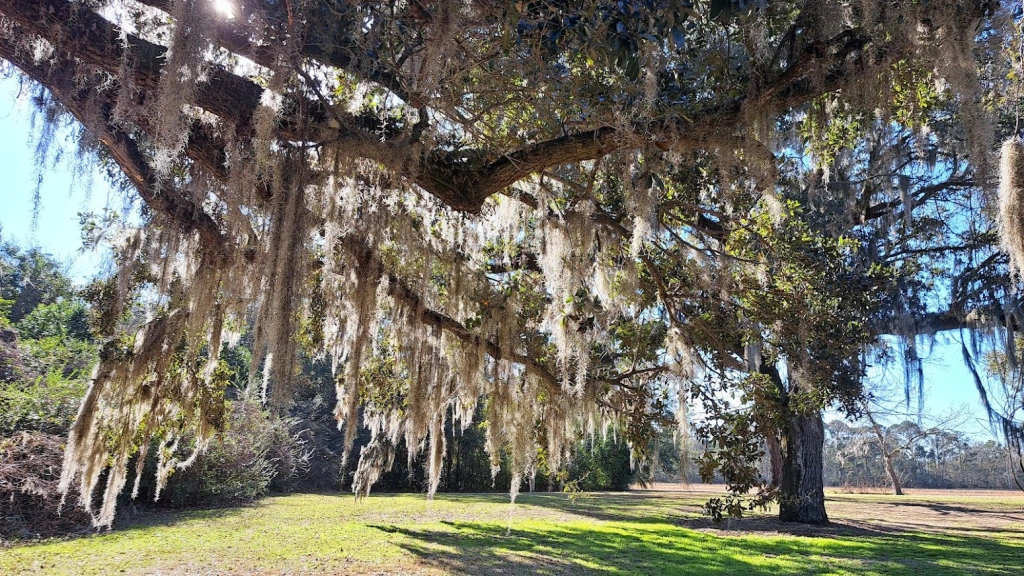
Spanish moss on the 100 year old oaks at the McLeod Plantation, James Island, South Carolina

Homes of the enslaved, at the McLeod Plantation, James Island, South Carolina

Spanish moss wafted in the beautiful old trees, and the fields — where sea island cotton was once grown — were green in mid-January.