Tim Whiten at Olga Korper Gallery
The title of Tim Whiten’s exhibition at the Olga Korper Gallery is “Transpire.”
What does it mean?
After spending time at the gallery, on a snowy, darkening, late Tuesday afternoon, I decided it must mean something is happening or has happened, and these things I’m looking at, are the residue.
So, what is happening? Well…life. And, Tim Whiten reminds us, life is finite. Our days are numbered. Human skulls, reliquaries, coffins and remnants of the past are scattered about the show, to keep us in the right mindset.

Observing the human skull — clearly real and covered in gold leaf — near the entrance to the Olga Korper Gallery, was unsettling. Resting in a scalloped-edged, glass bowl, the grinning object appears to wear a ruff collar, like some Valesquez subject from the 1600s.

The bowl is placed on a purple base, supported by yet another ornate object, an elaborate sconce, with a lot of brass flourishes.
This tableau made me think of the glamorous monster in Guillermo del Toro’s Frankenstein, in particular, the scene where he solemnly reads the poem by Percy Bysshe Shelley, about Ozymandias. (“My name is Ozymandias, King of Kings: Look on my works, ye Mighty, and despair!)

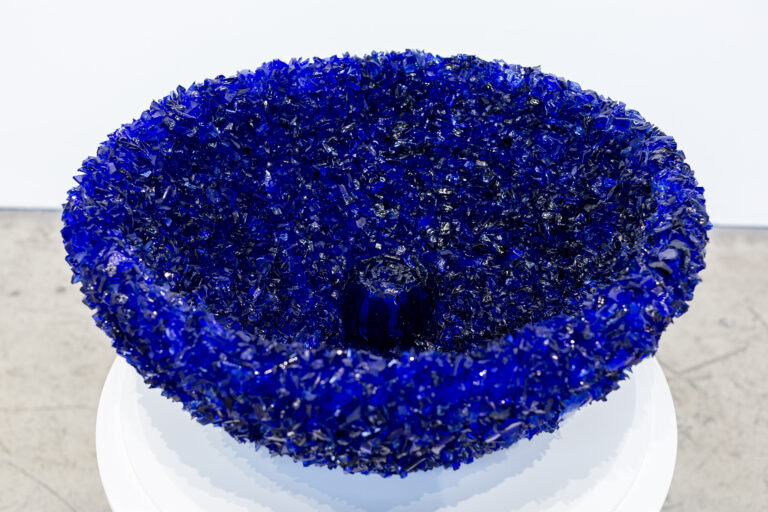
Death imagery is everywhere in this exhibition. An object resembling a house rests on the floor, bristling with crushed cobalt blue glass. It has walls, and a peaked roof, and a chimney, but there is no entrance to this house, and there is no exit. Aha, it’s a coffin. And it’s closed.

The piece below is a corn broom, coated in glittering, blue light. It’s a humble object, possibly once owned, used and touched by a departed presence and now, elevated to the status of a spiritual relic, a tangible memorial.

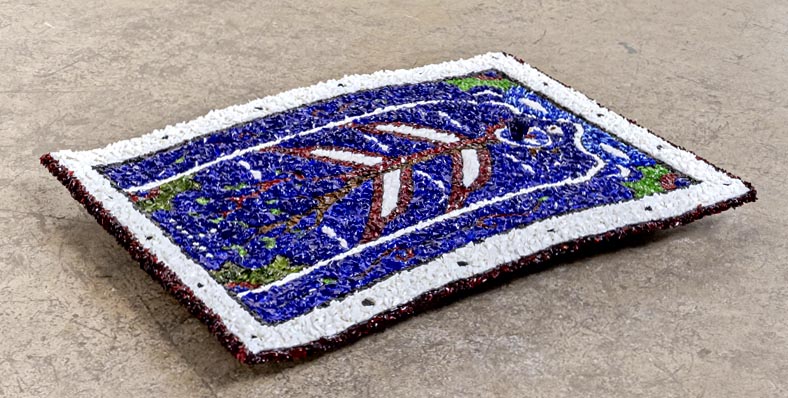
The cobalt blue that Tim Whiten uses throughout the show is deep and radiant.
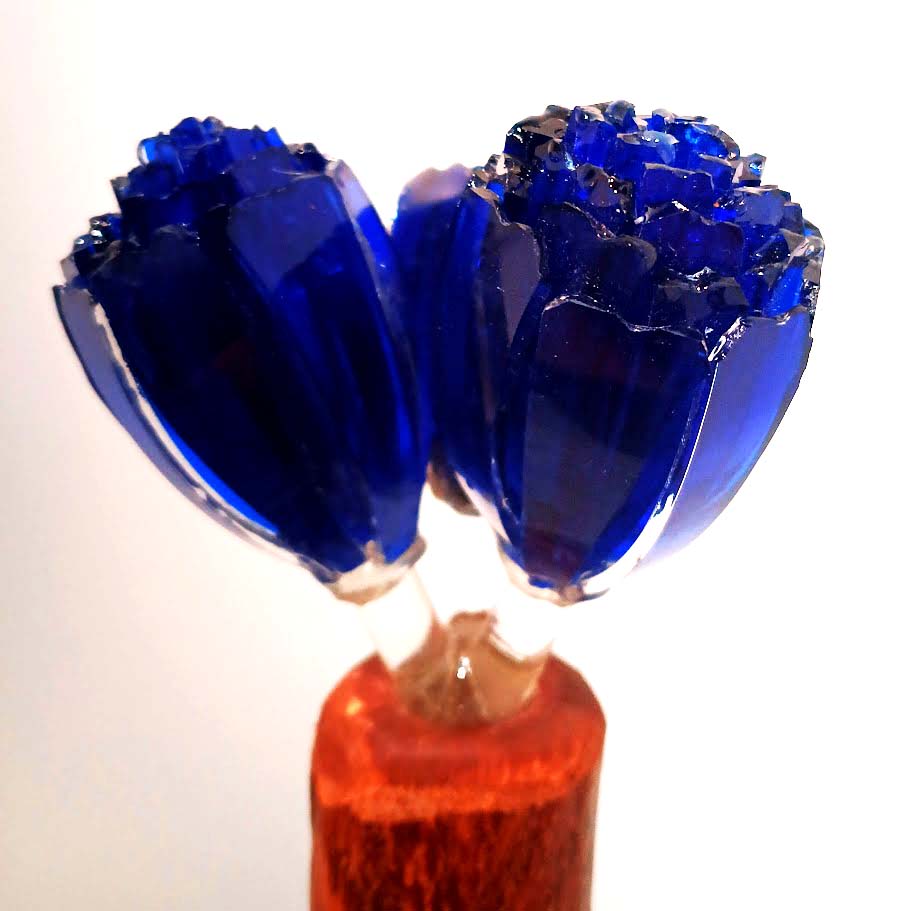
In many cultures, deep blue, has significance. The Turkish Nazar Boncugu (Evil Eye amulet), for example, is a talisman that can protect against evil spirits.

In Catholic churches the Virgin Mary is depicted in blue glass as the pure and tranquil “light of heaven.”

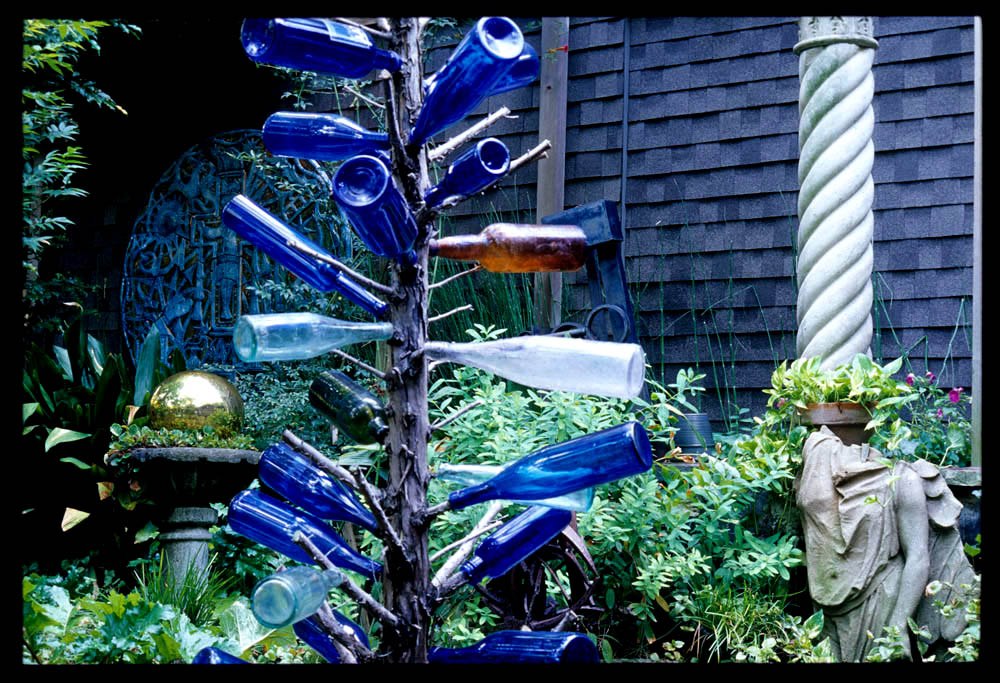
In Africa, deep blue glass was used to mark graves. Enslaved people brought this tradition to the United States.
“When African slaves arrived in the U.S., they created bottle trees from dead trees or large limbs next to their quarters and adorned them with glass bottles scavenged from garbage piles,” Doreen Howard wrote on Almanac.com. “Blue bottles were coveted, because they repelled evil and trapped night spirits to be destroyed by the rising sun. Many Milk of Magnesia bottles ended up on trees!”
“The Southern Legend of Blue Window Panes” by KellyKazek.com
Blue is also linked to deep meditation, spiritual awakening, and a connection with higher realms. And, in this show, the objects and the sizzling blue, not only refer to death and decay. They also provide an escape to the infinite, manifest in portals, flying carpets, spiritual secrets, and meditative drawings.
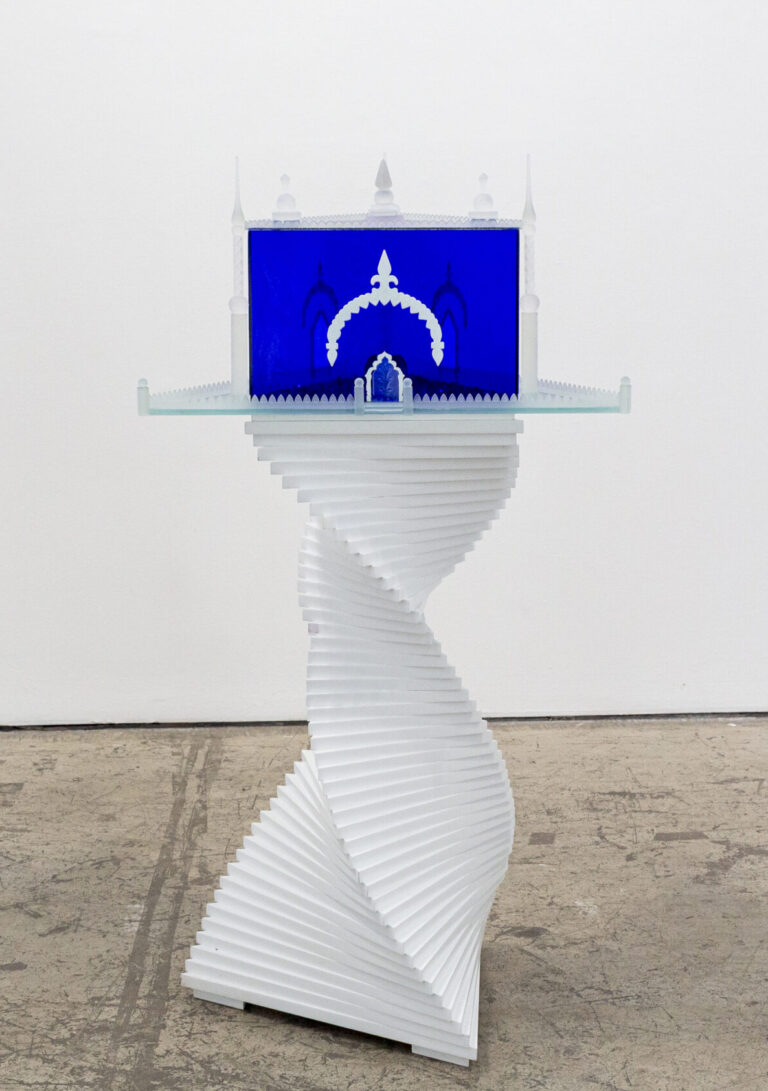
A twisted spiral staircase leads to another house. This one is an exquisite, etched glass temple It has a slightly open door. It is nearly vibrating with vivid blue light.

The shape of a book is composed of milky, etched glass, and within is cobalt coloured glass. So maybe the blue glass is knowledge and knowledge is light?

I was informed that Tim Whiten chooses not to call himself an artist. He identifies as a maker of cultural objects. I’m not sure what the difference is. To me, the obsessive exploration and experimention, and the unique and beautiful objects he creates, are very much in line with notions of the contemporary artist.
Some of the drawings make me think of Process Art from the 1960s and 70s. Just picturing how they had to be made makes me nervous. Tim Whiten would have to be walking a meditative tightrope to create these flawless images.


One of my favourite pieces in the show is displayed on the floor, like a colourful, molten carpet. But it’s not quite flat on the floor. It is slightly elevated and arrayed as a very subtle S-curve. Yes, it appears to be flying!

 annetteandquebec