Museum of Contemporary Art (MOCA)
Bharti Kher
“Bones”
Spending some time with the work of Bharti Kher, made me realize I don’t read art magazines nearly enough. When exactly I got out of the habit I can’t recall, but it is certain that I am uninformed when it comes to the work of this celebrated artist.
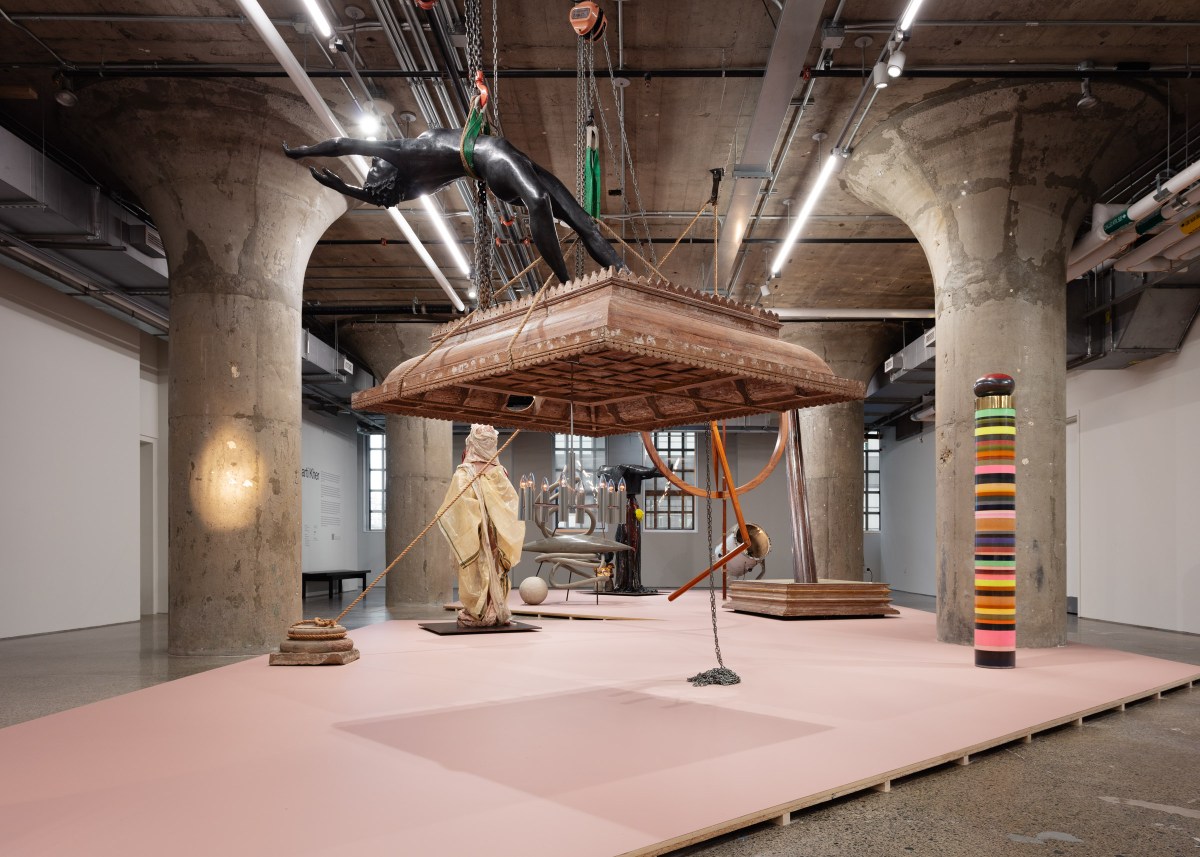
The installation of Bharti Kher’s work, on the Third Floor of the MOCA building on Sterling Road, is initially baffling: a disparate collection of objects, some approaching classical human form, others purely abstract and monolithic, with references that could be industrial, organic, mythic or scientific. Some of the objects appear to be “ready mades,” either modified and combined with other things or materials to create entirely new forms, or, they could be left “as is.”
Almost all the pieces contain some element highlighting feats of balance.
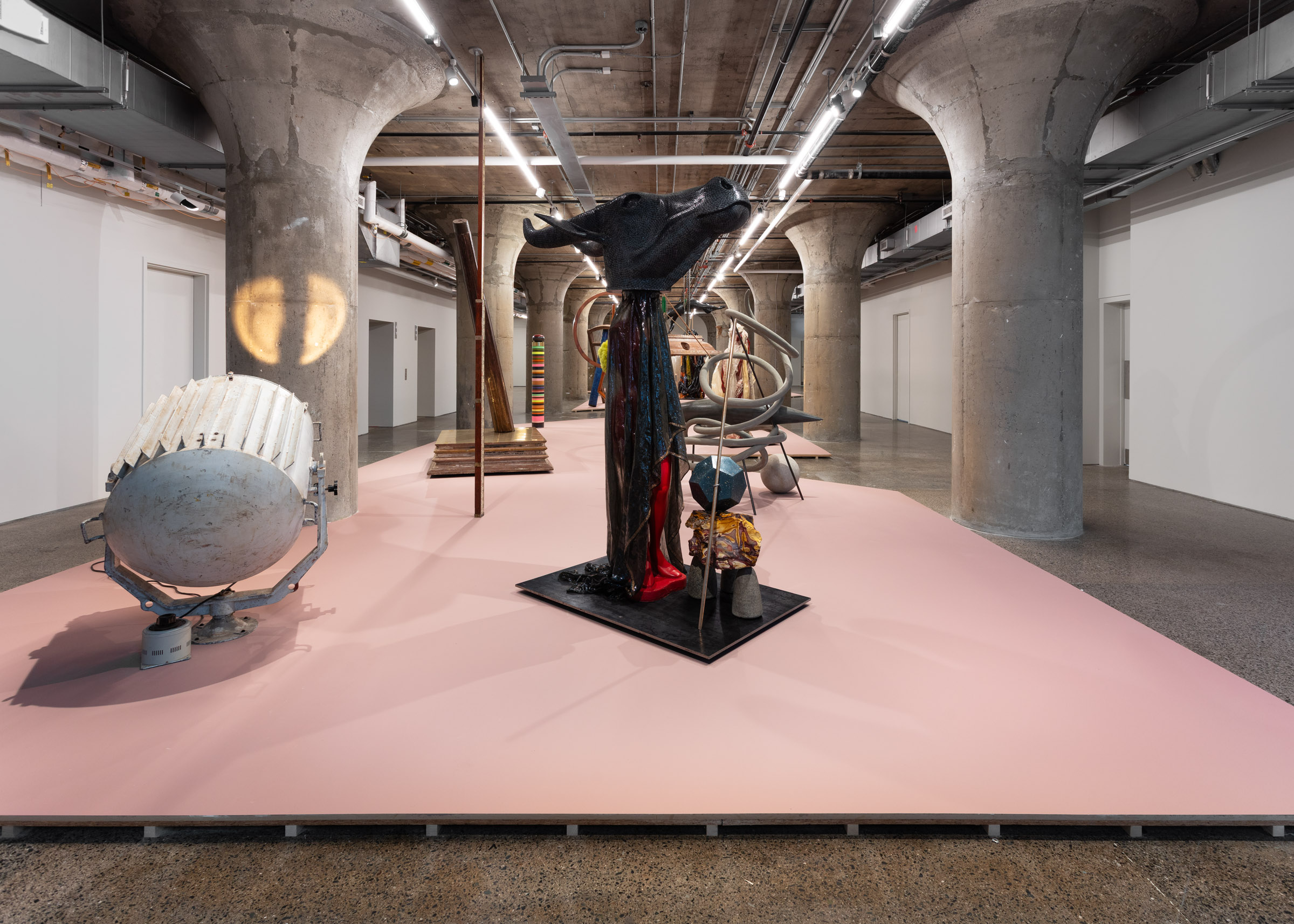
I had to see the works individually to appreciate them as a whole.
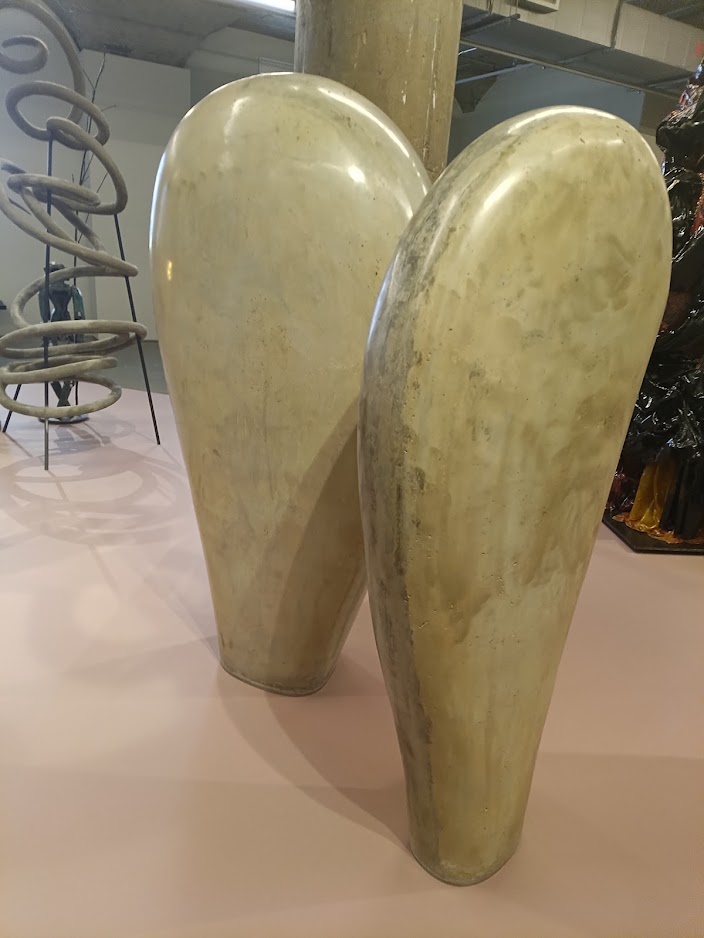
It’s impossible not to start attaching narratives to the giant, gleaming forms (above.) Are they fossilized remains of a young Stegosaurus? Did they lay at the bottom of a river bed for the past 65 million years to achieve that gorgeous patina? And how is it they don’t just topple over?
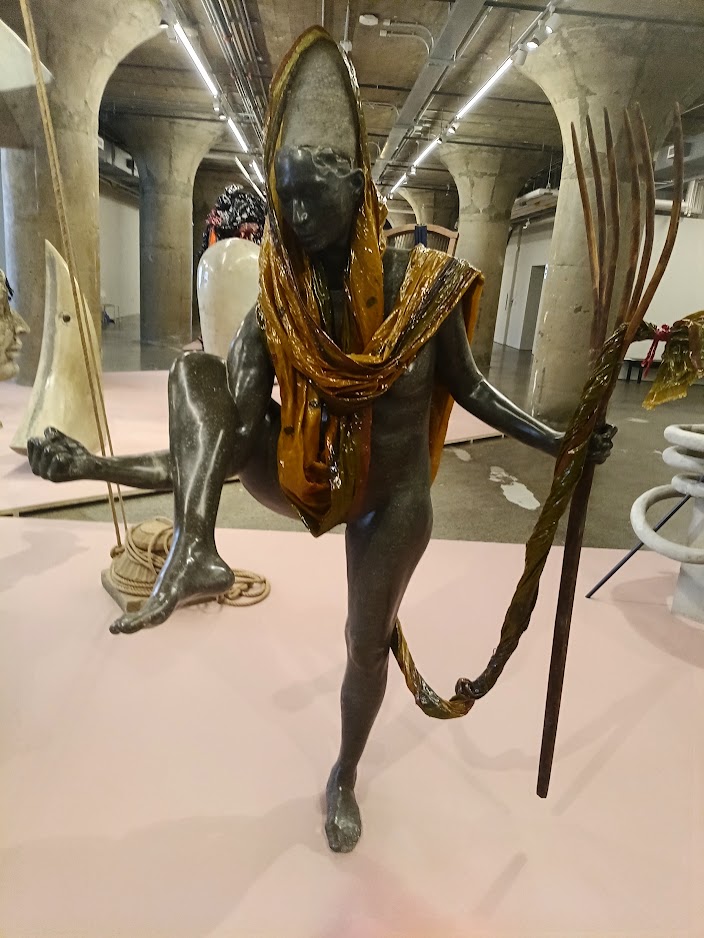
The sculpture above is identified as “The Messenger.” Possibly, it is Lord Krishna, in disguise. One thing we can be sure of: it is loaded with symbolism, like all Hindu statuary. “The left leg might represent the firm foundation of the material world, while the lifted right leg could symbolizes spiritual grace, divine play, and detachment from worldly illusions.”
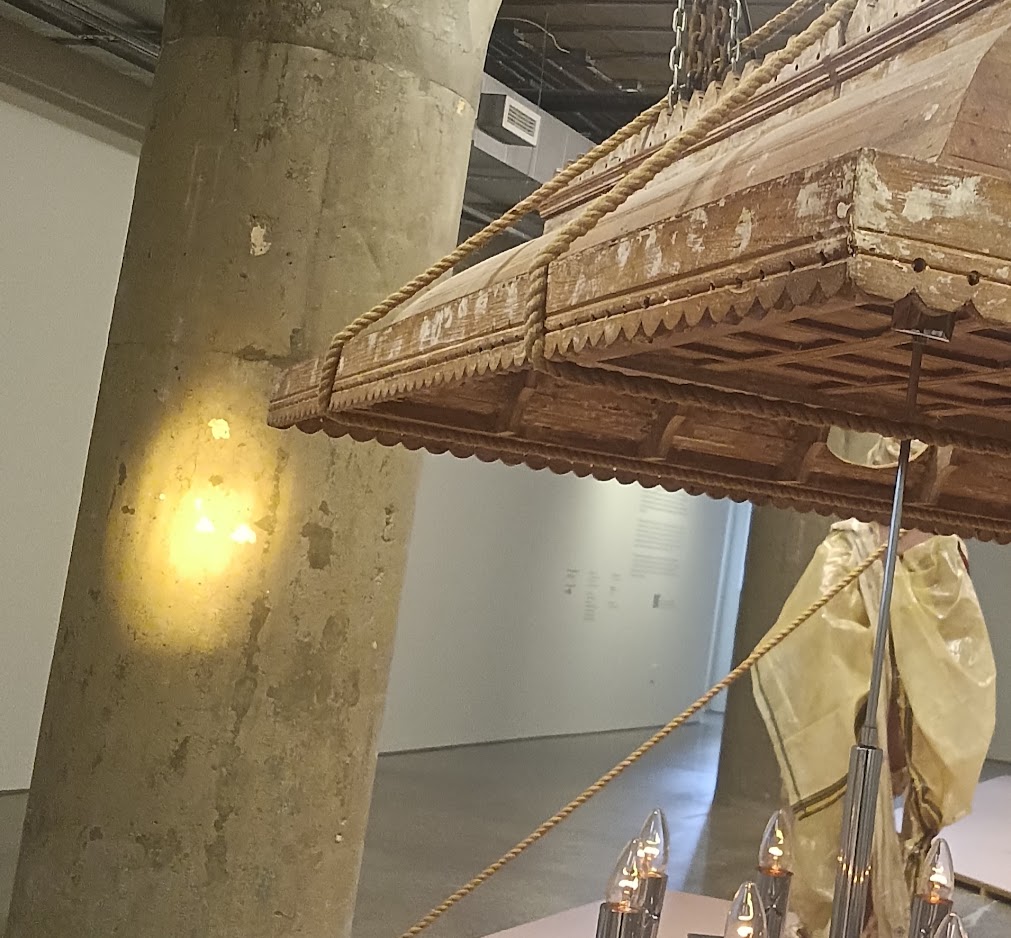
The “Flying, Falling, Dreaming” sculpture (below), or assemblage, as it is referred to in the exhibition notes, has the startling feeling of extreme loss of control. The ceiling, with its lit chandelier, is about to collapse, the bronze figure is perilously off balance and cascading into oblivion, and the slender chains, ropes and pulleys that attempt to hold it all in place are about to lose their grip.
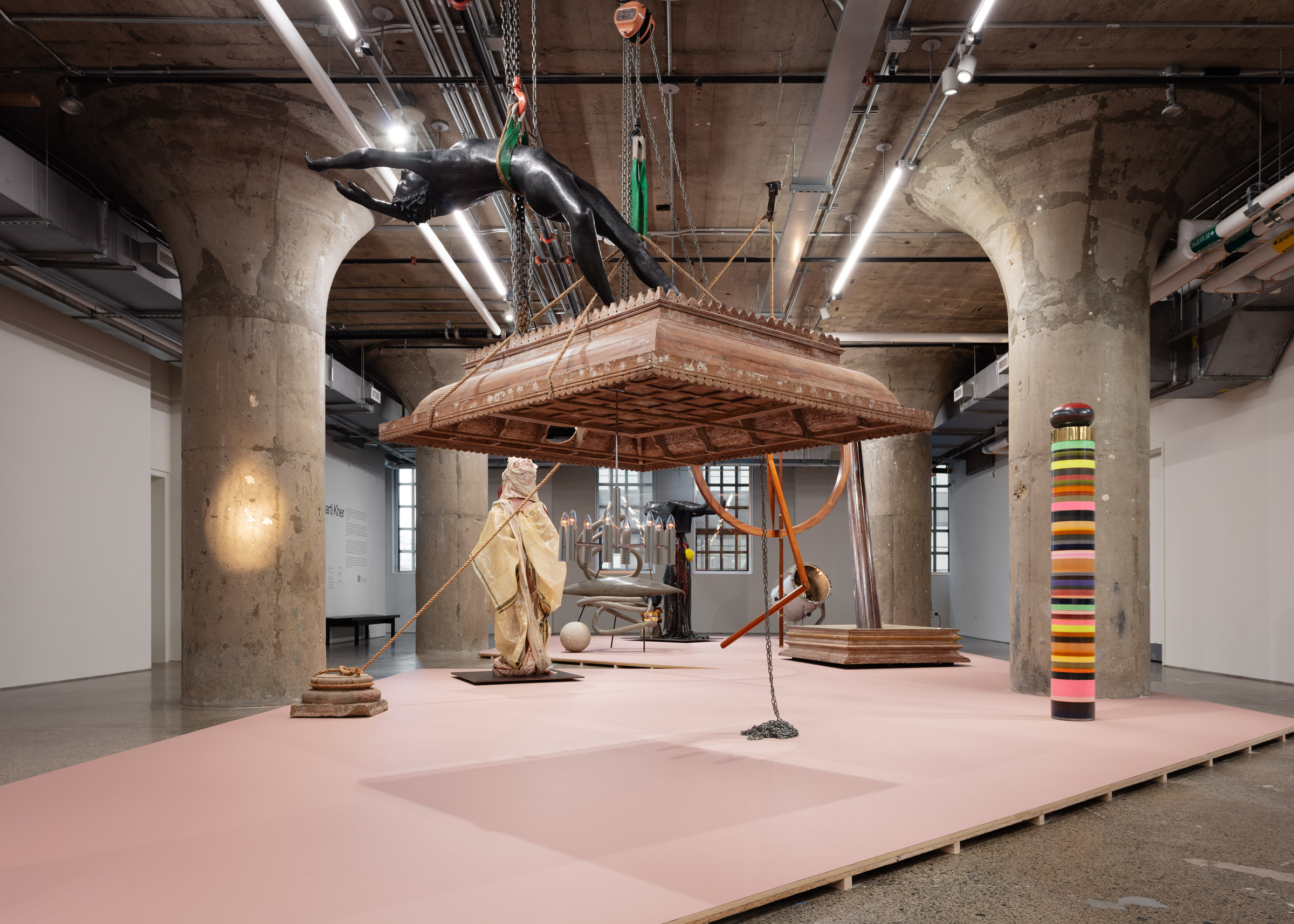
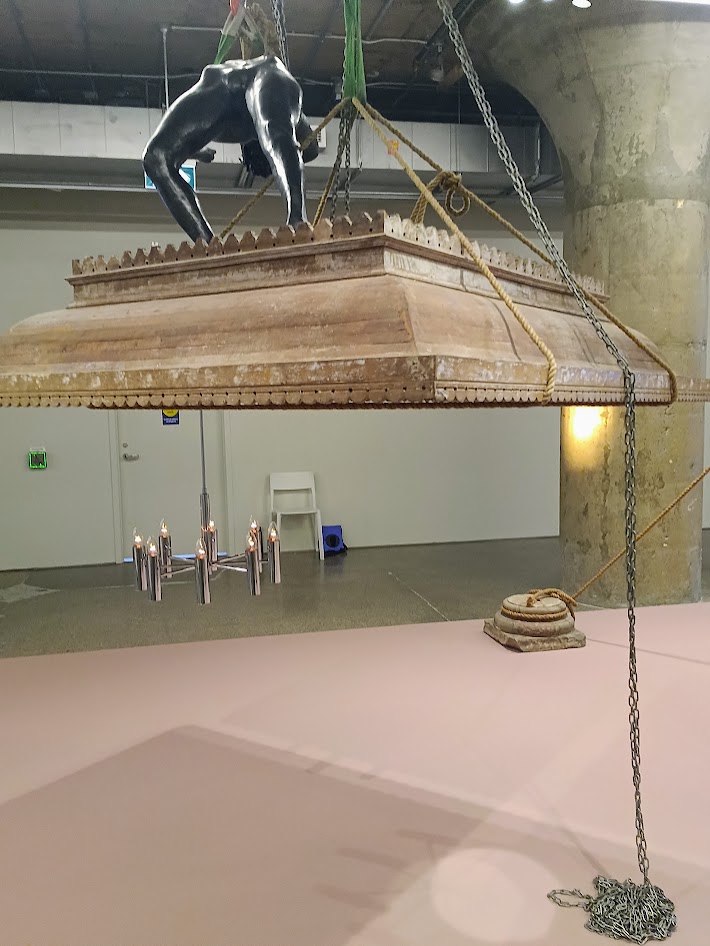
It’s definitely one of the highlights of the show.
Other objects are much more mundane.
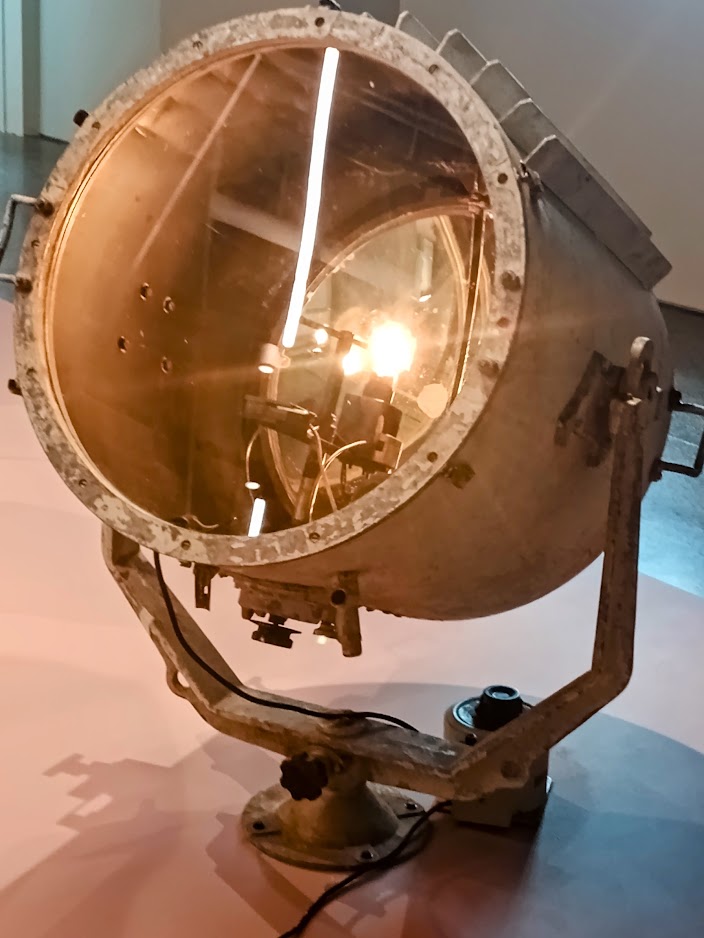
A few of these massive industrial lights are scattered around the exhibition. Bharti Kher focuses them on the famous pillars — always a presence in the MOCA exhibits — just a few meters away.
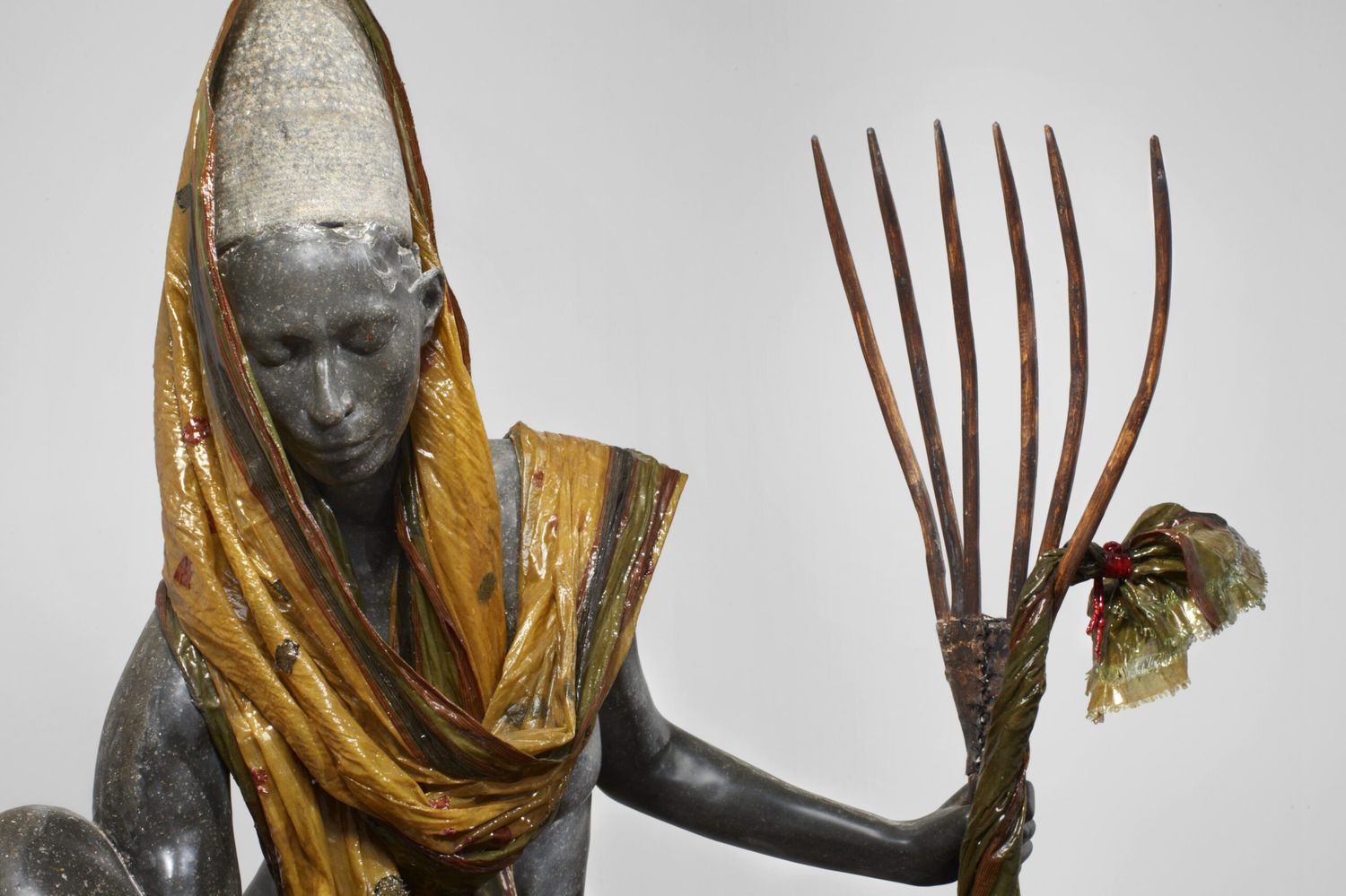
The cow, of course, is a sacred animal in India. Here, a massive bovine head is balanced on a human frame, slim and female and draped in polymer treated saris. (It did occur to me that the giant head could be dangerously oppressive, perched atop the slight figure. Could this be an inference about the dominant religion in India? I don’t know.) A small, mysterious stack of items is arrayed before the imposing figure. Are these offerings made to a deity?
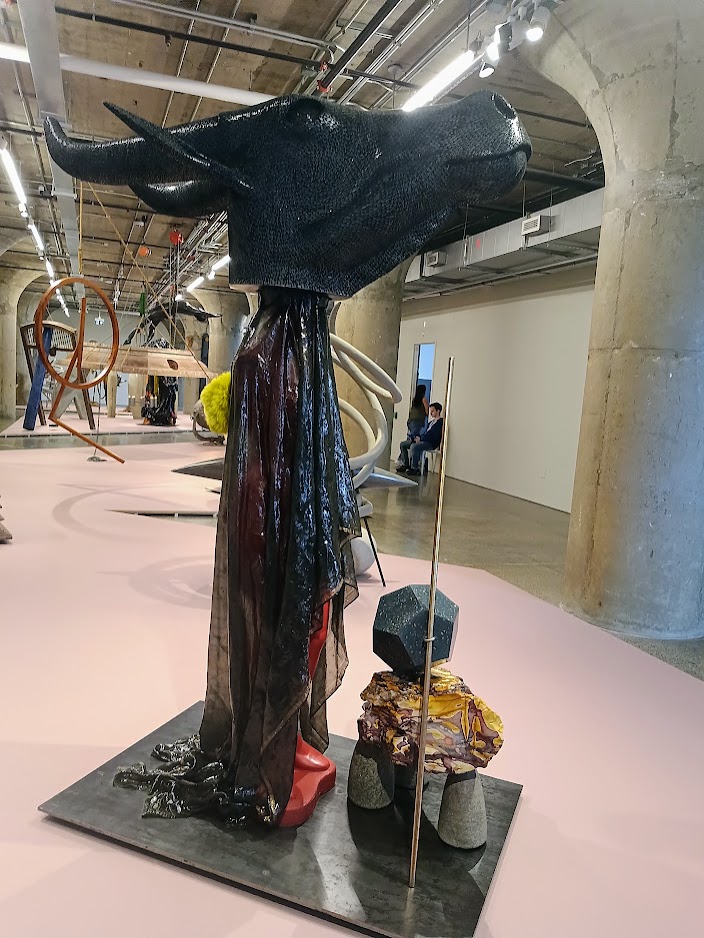
I learned there are numerous breeds of cows indigenous to India. The breed known as Gir looks similar to to Bharti Kher’s sculptural depiction.

In Hindu mythology cows symbolize love and care for all living beings and harmony with nature. I really like the way this artist brings the ancient symbols of Hinduism into contemporary art. She taps into a sense of dramatic grandeur that is very appealing.
On the main floor of MOCA Bharti Kher takes familiar objects and alters them into arresting new forms.
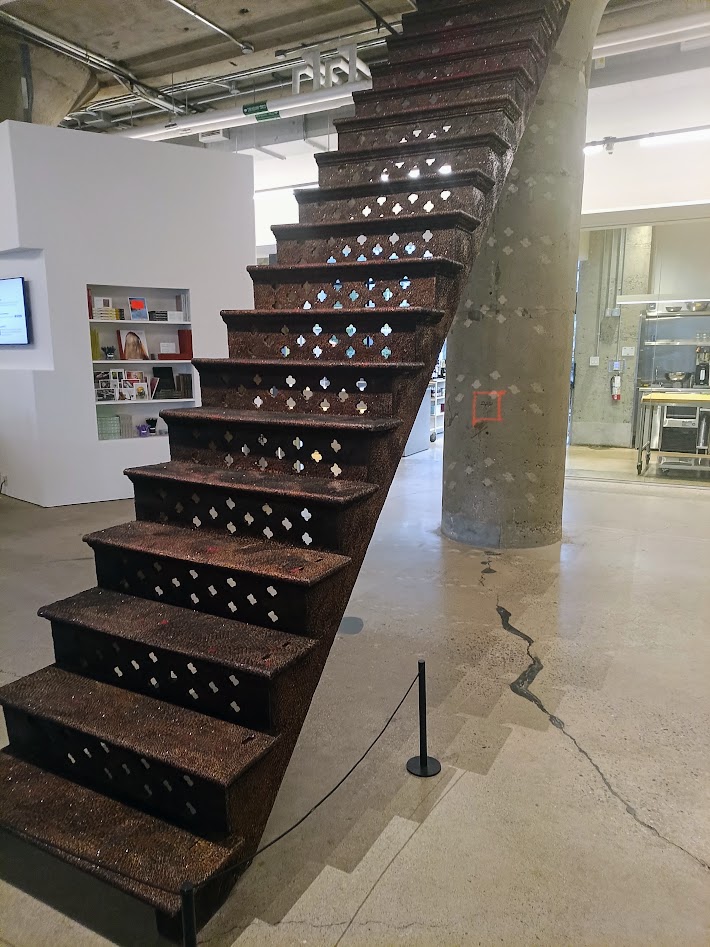
The staircase sculpture is an object with a history. The title seems to suggest there is some remnant of the past carried in this inanimate object. It’s true. The staircase to nowhere, is filled with narrative potential.
The smashed mirror shards, decorated with thousands of bindis, did not impress me as much as some of the other work.
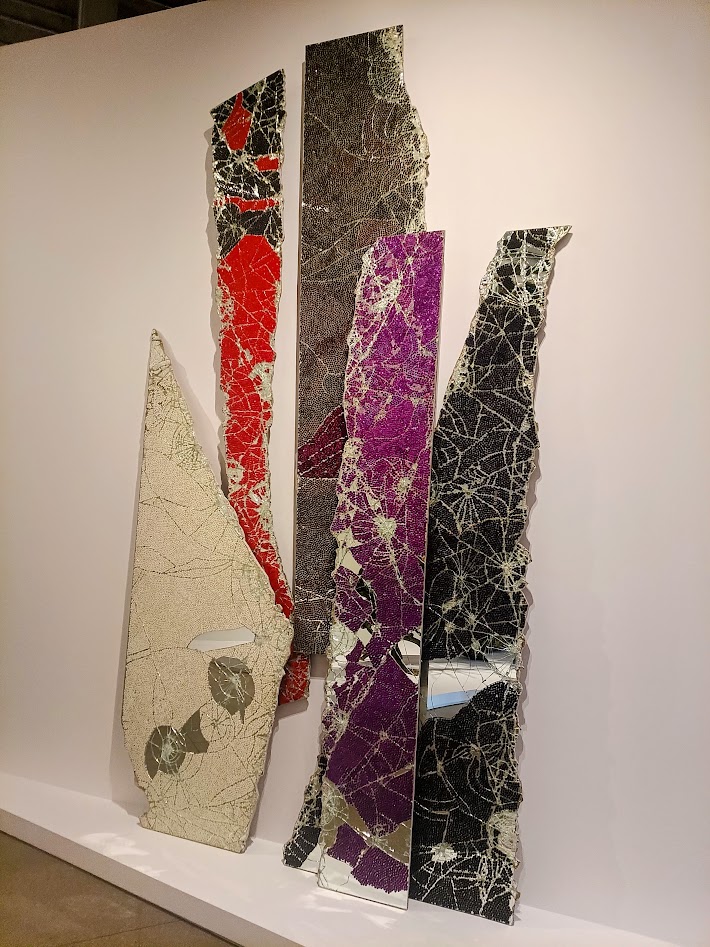
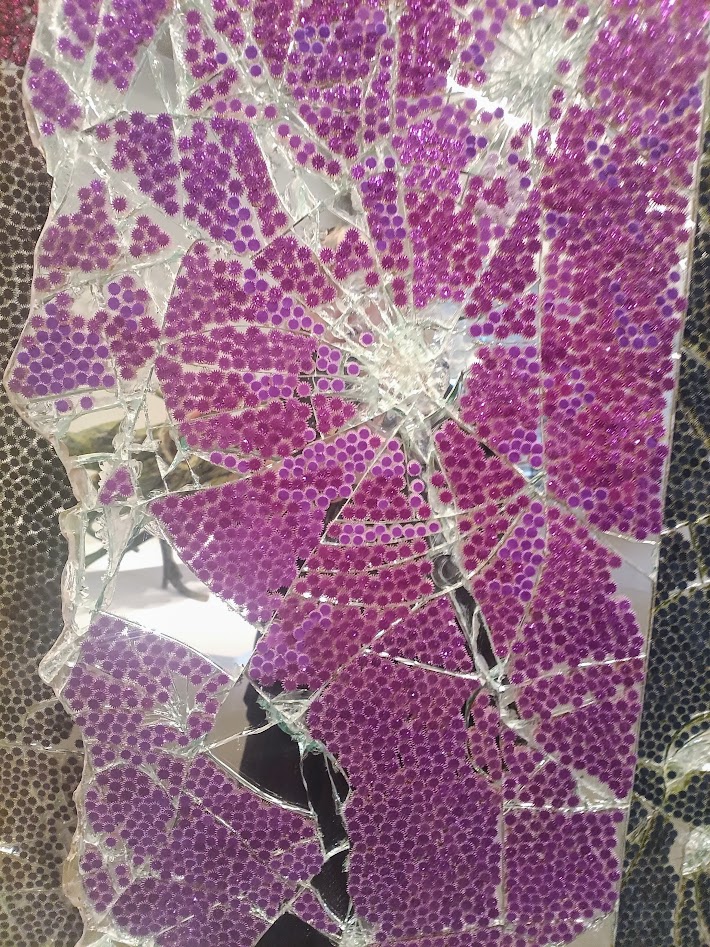
For centuries, the mirror has reflected and distorted reality. Its power is evident in the superstitions surrounding its breakage, as well as customs of covering it as a sign of mourning.
— quote from Bharti Kher
I get that that, but, what I kept thinking, was how tedious it must have been to glue all those hundreds of thousands of bindis in place.

