Where Walls Meet Sky
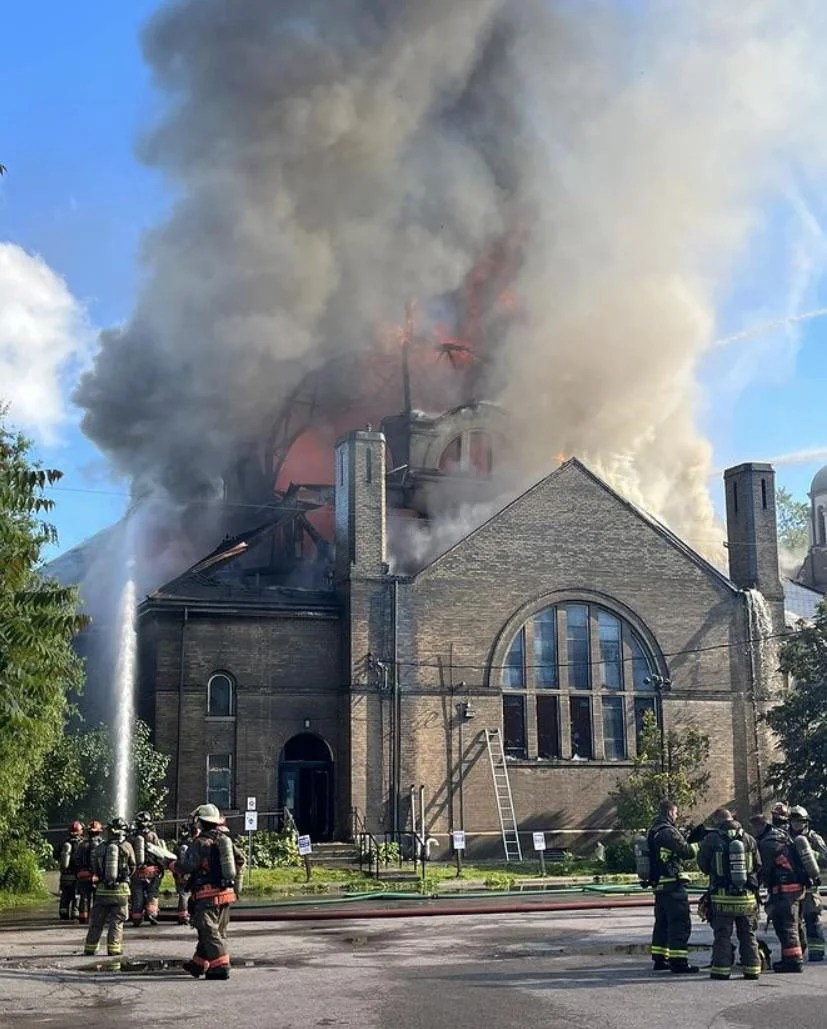
St. Anne’s Anglican Church was largely destroyed by fire on June 9, 2024. The exhibition “Where Walls Meet Sky” grapples with the catastrophic fire and its aftermath.
The church now lacks a roof, and the Tyvek wrapped walls, within the ruins, are a surprise. I was expecting smokey, blackened remains, but no, everything is hidden in a wrap of stark, shiny, brilliant white Tyvek, held together with thin red strips of tape and decorated with brand identifiers.
Tyvek. It’s a brand name for a synthetic, paper-like material made from high-density polyethylene fibers. Tyvek, manufactured by DuPont, is light and strong and repels water while allowing moisture vapor to pass through.
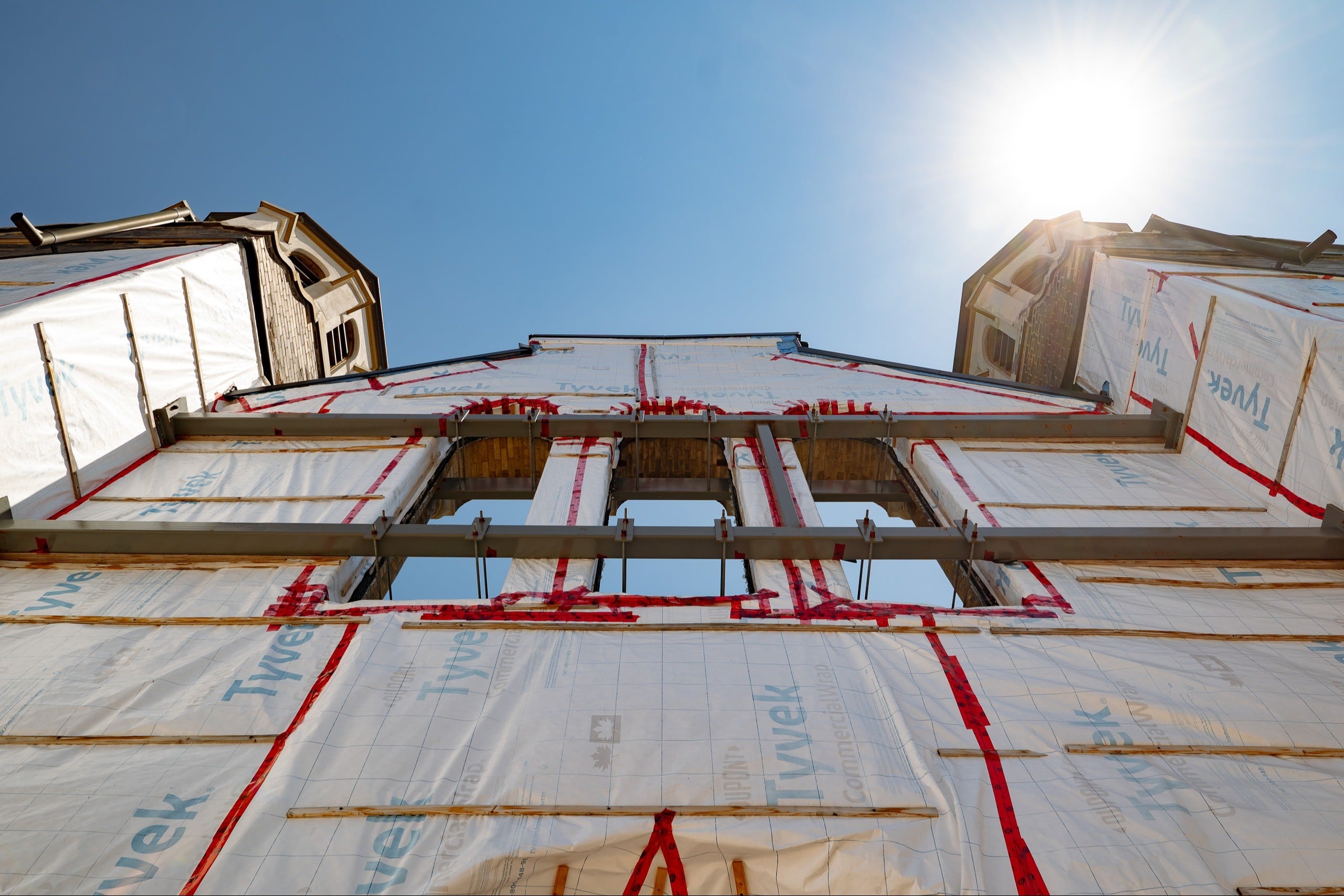
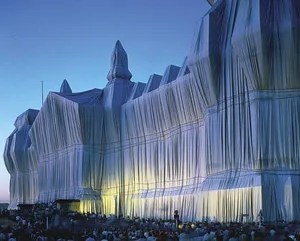
The brilliant daylight and the Tyvek give the environment the feel of a lab: it’s functional, sterile, and mundane. (The fact that it is wrapped, however, did make me think of the soft, draped, voluptuous extravaganzas executed by Christo and Jeanne-Claude.)
Rui Pimenta, of Art Spin, is the curator of the show. In his notes on the exhibition he talks about “renewal, resilience and memory” and “how communities endure.”
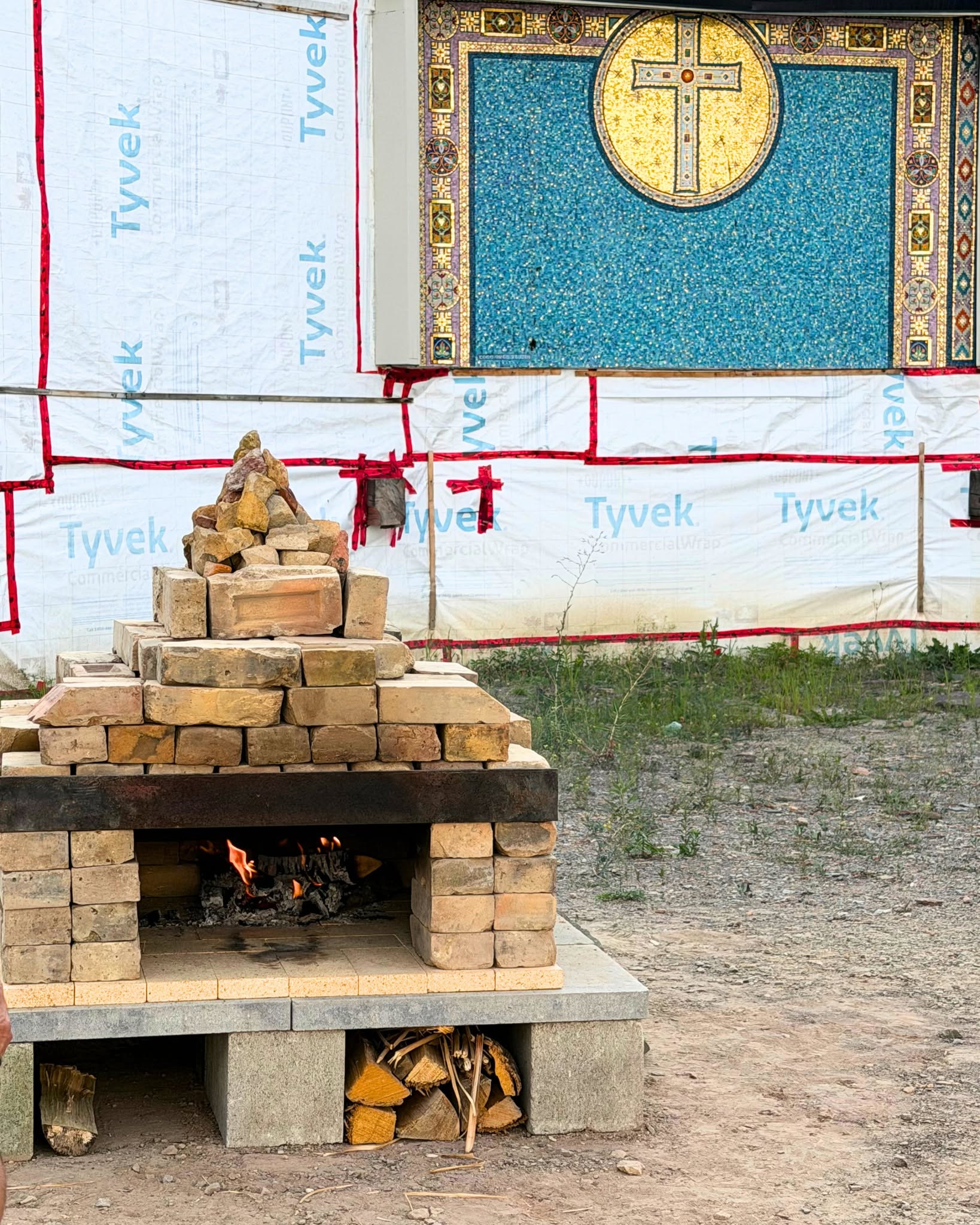
The idea of sustaining a community in the face of a tragedy is manifest in a beautifully direct way through a work by Sacha Bassil. The artist (and owner of Flour Power Saj) has created a sculptural oven constructed from bricks found on site after the fire. On Saturdays and Sundays from noon to 4pm, Sacha Bassil bakes flatbread in this oven and shares it with site visitors.
Look up! The piece by Sofia Escobar consists of three sculptures placed in the Tyvek wrapped window openings high up on the church face, where once stained-glass was seen. The sculpture is an apt re-imagining of the imagery that once occupied these spaces.
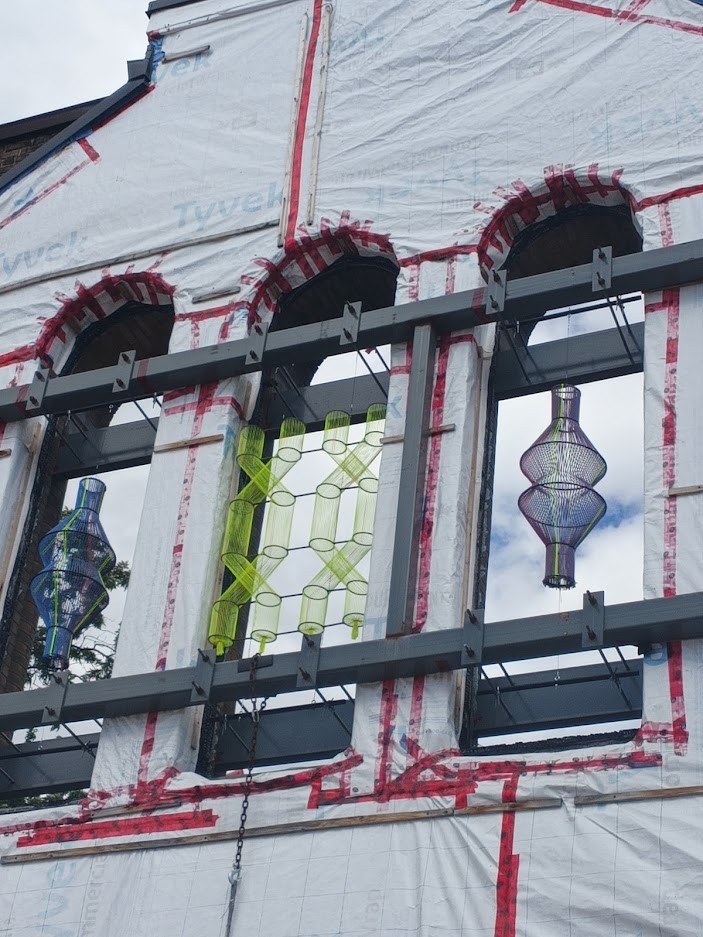
The colorful objects, made from steel and nylon rope, have a delicate lightness. They are kinetic and abstract and they shimmered in the afternoon sun.
I really liked looked at the piece by John Dickson. Three suspended weights are made of a kind of rubber that seems to absorb light, so that there mysterious blackness and heaviness is amplified.
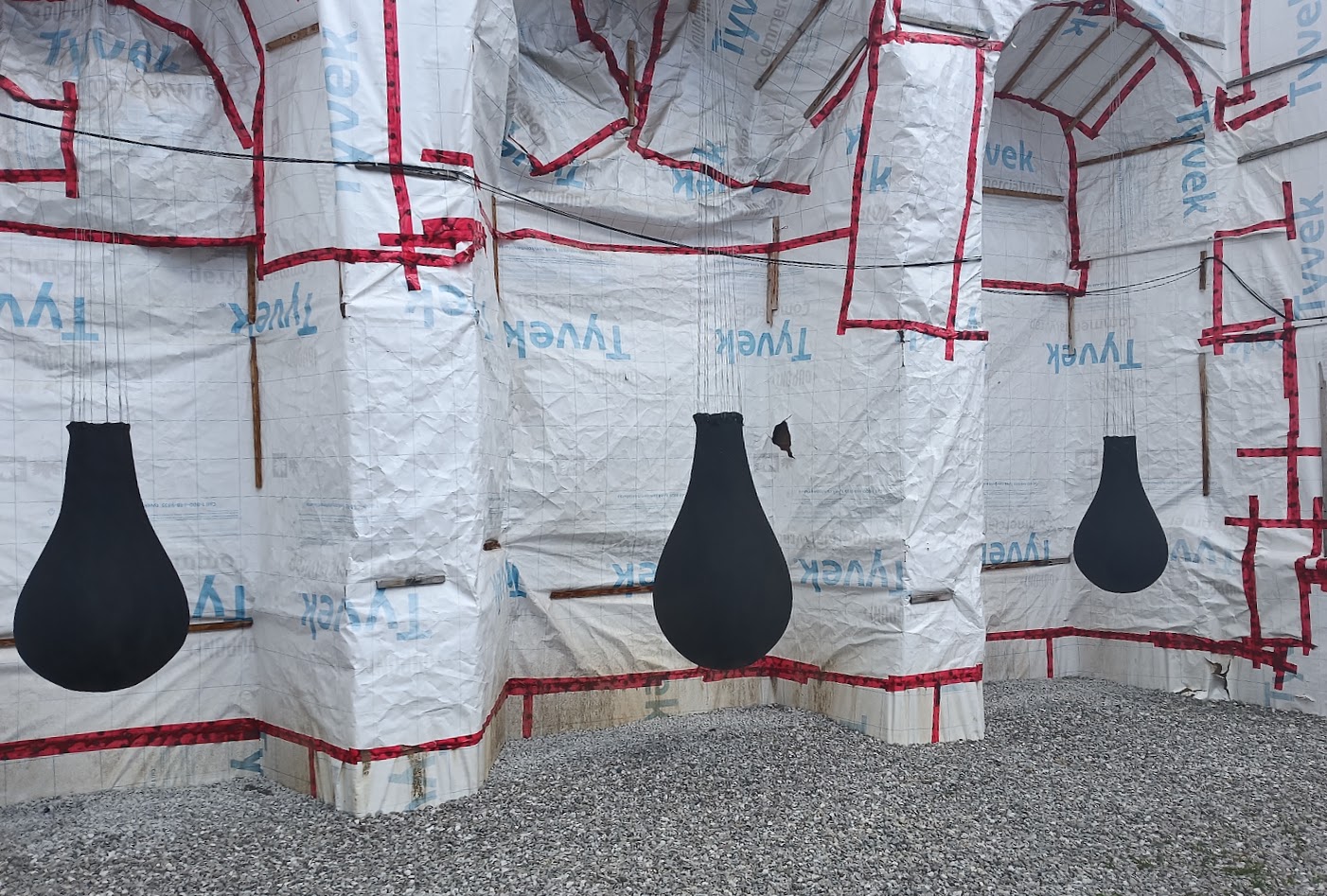
The word “trinity,” of course, has a particular significance in the Christian lexicon. These objects seemed to flicker between containing some vestige of that meaning while also evoking the idea of destruction, as in wrecking balls.
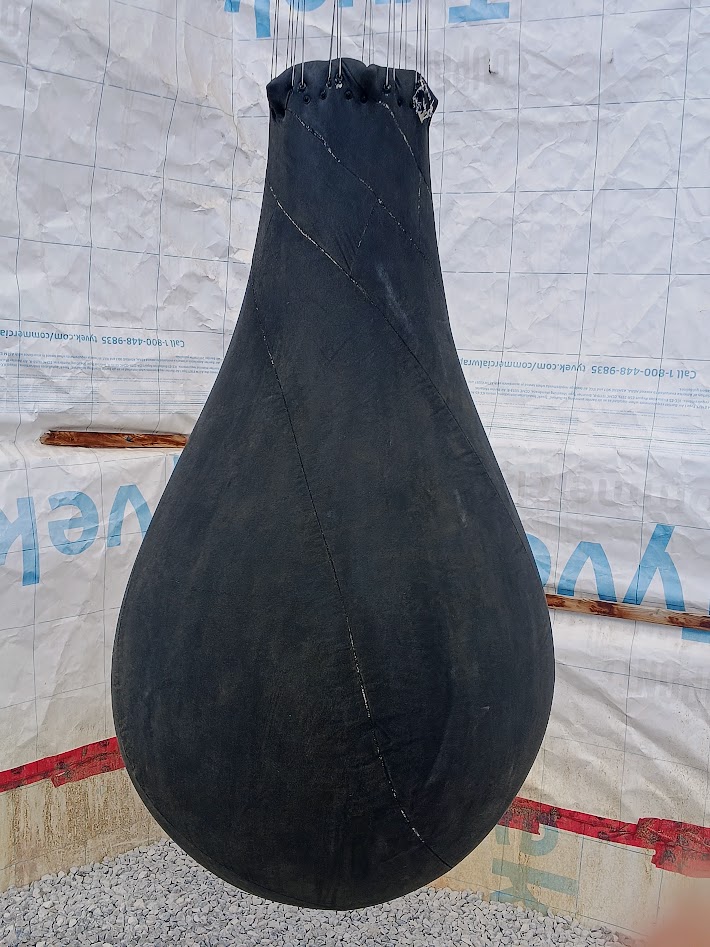
There is an undeniable feeling of menace here. Why am I thinking about that “Oppenheimer” movie? Oh right, “Trinity” was the code name for the atom bomb tests. What payload lies within?
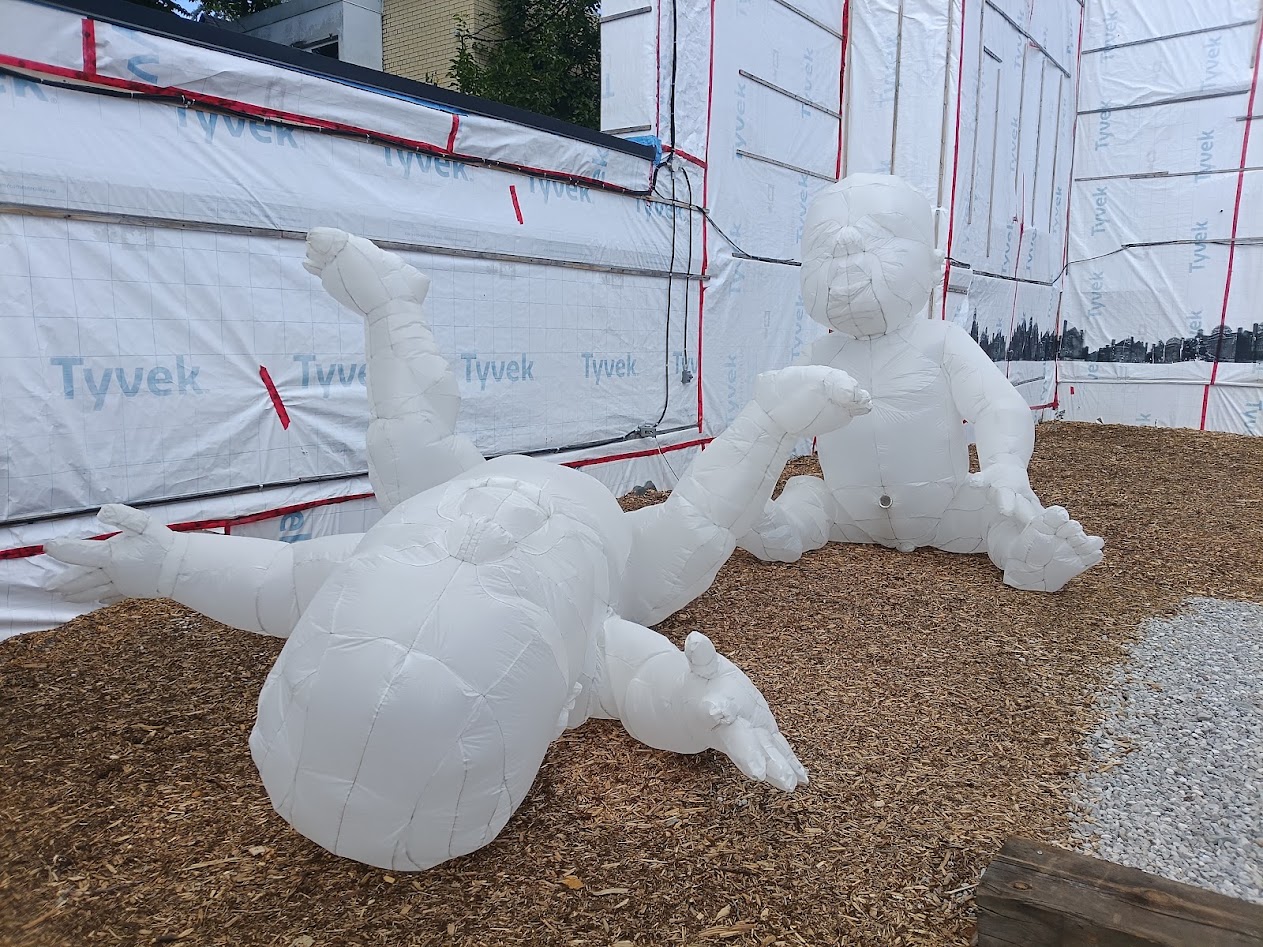
Nearby, the giant white babies by Max Streicher tipped and rolled in the breeze. Babies: the literal depiction of renewal, but also of greedy innocence and careless demand. The future is on the move and we have to get out of the way!
The piece by Eunice Luk turns our attention away from our own sense of loss to a wider, more generous consciousness. The artist describes her work as expanding “ecological awareness.”
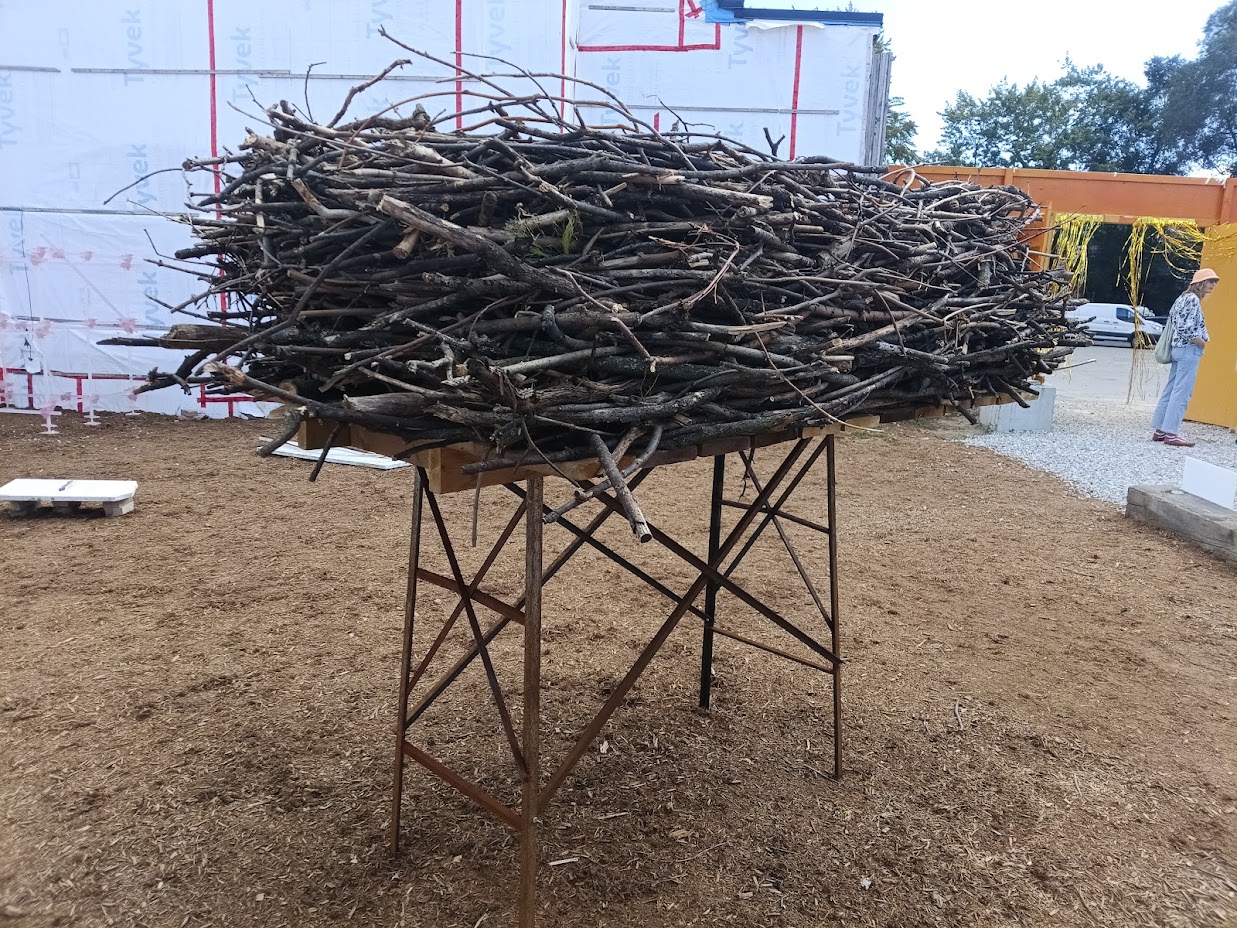
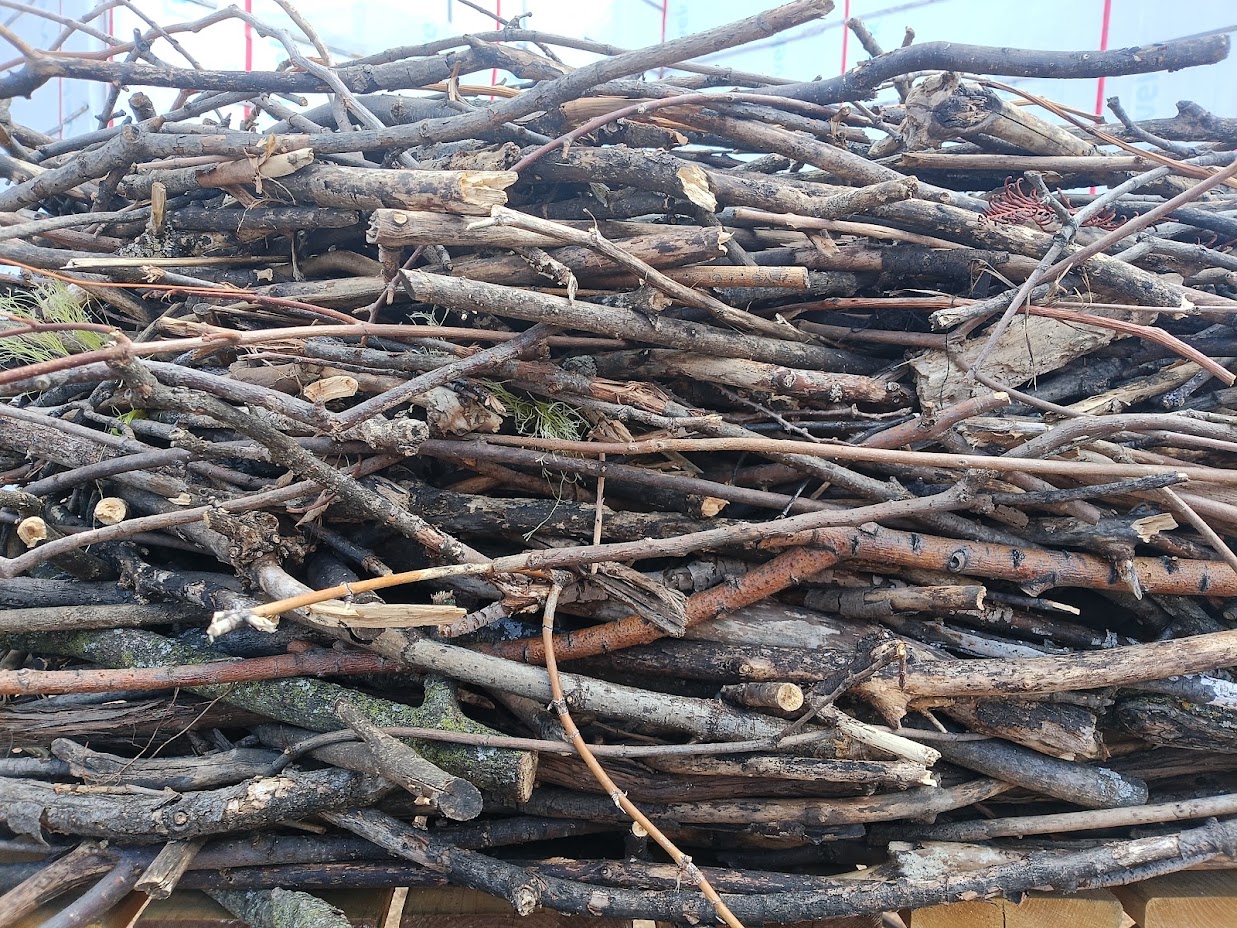
The dense weave of branches, reminiscent of the homes of so many creatures, gives the impression that a visitor from another species created this reminder that habitat loss is massive and accelerating, in this country and around the world.
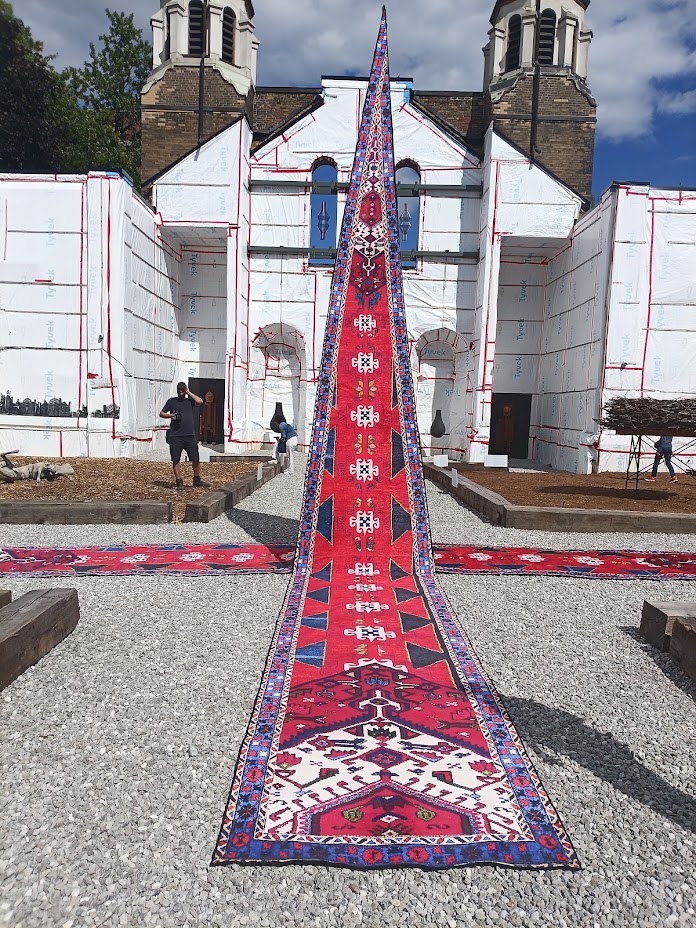
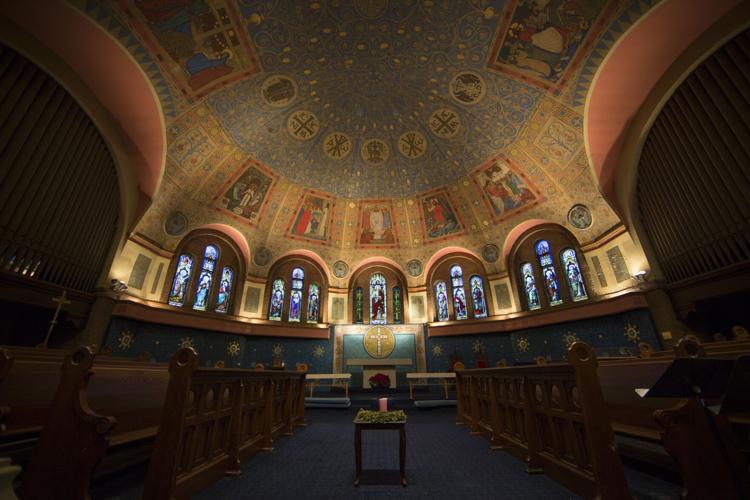
St. Anne’s opened in 1908. I learned its architectural style is called Byzantine Revival. It was inspired by the Hagia Sophia in Istanbul. I also learned that the church contained a number of religious murals created by J.E.H. MacDonald (of the Group of Seven) and various other artists of that era.
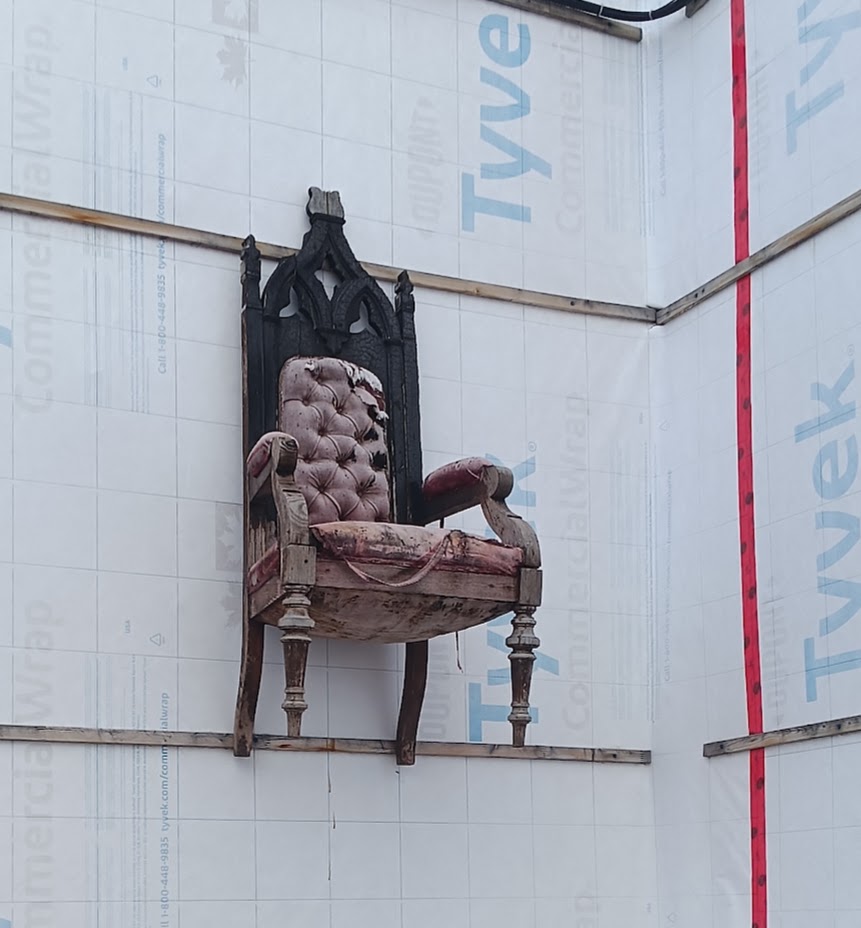
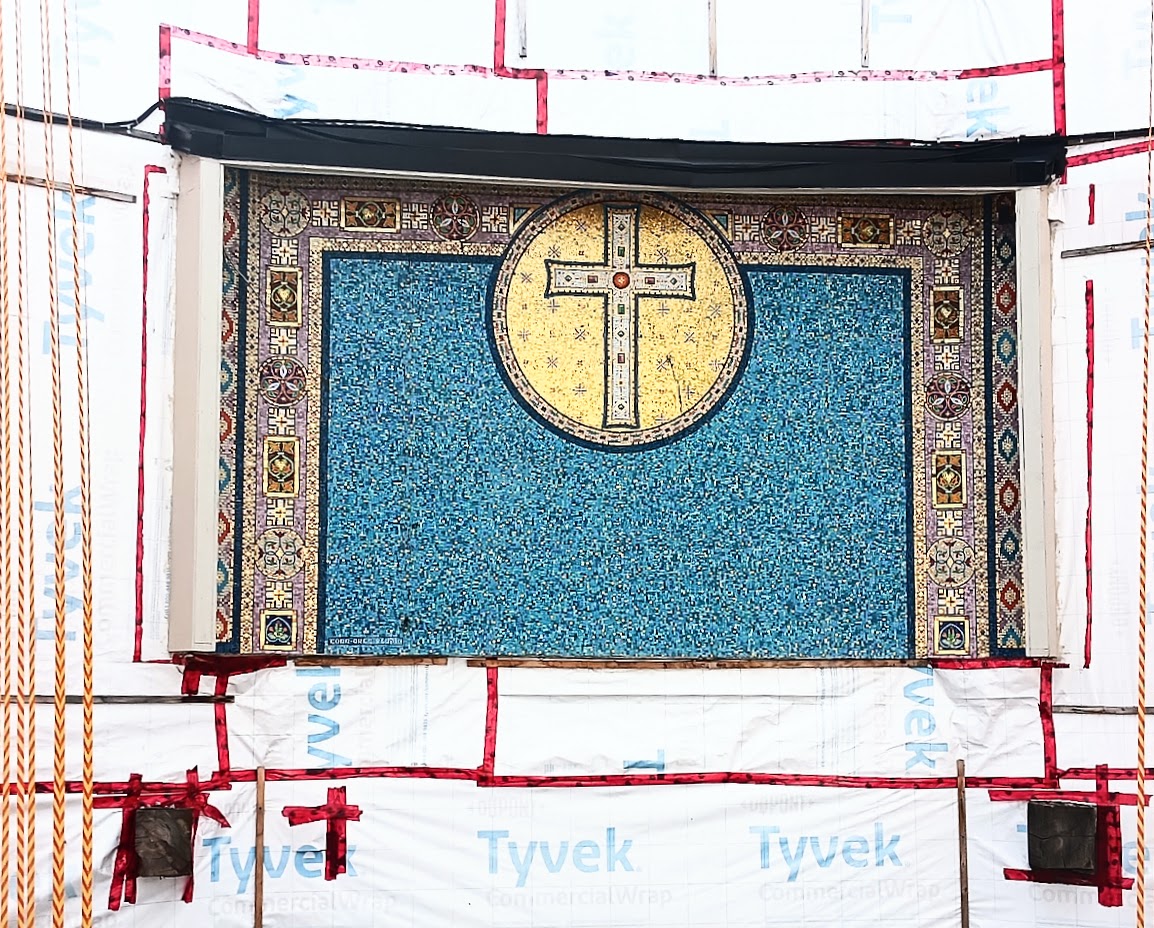
One of the mosaics, which looks like it was behind the church’s altar, survived. It has becomes part of the exhibition, along with items like charred beams, a single ornate chair and stacks of bricks.
A restoration effort is underway to save five of the murals. The other artworks are lost.
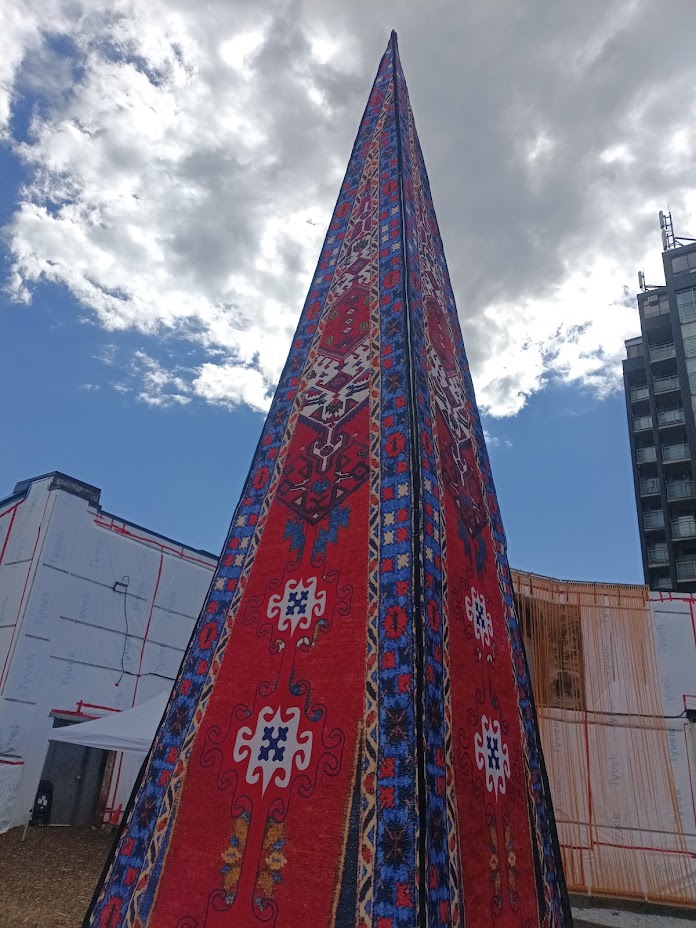
Work by David Jensenius, Gareth Licty, Julia Campisi, Noel Middleton, and Sandra Brewster is also in the show.

